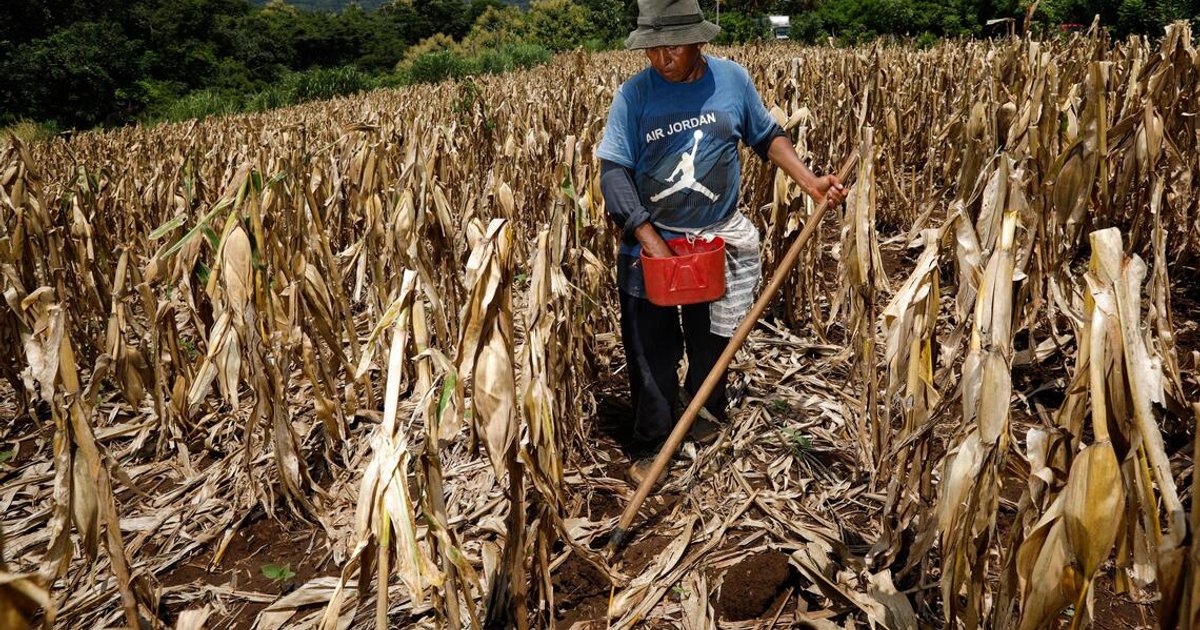
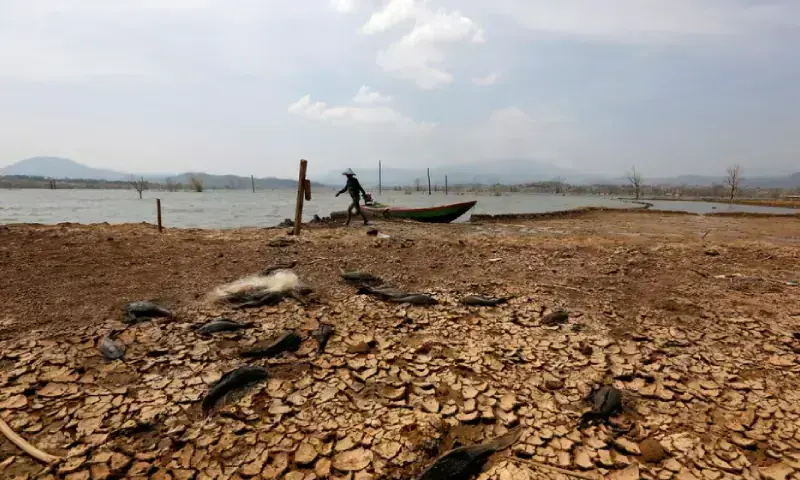
Photo via The Straits Times

El Nino sets temperature record in key Pacific zone: EU monitor

Read the original at The Straits Times ↗
Cite

The Straits Times. (2026, October 12). El Nino sets temperature record in key Pacific zone: EU monitor. The Straits Times. https://www.straitstimes.com/world/el-nino-sets-temperature-record-in-key-pacific-zone-eu-monitor

Dated when The Aporia collected the article, usually within hours of publication. Check the original for its exact date and byline.

The Straits Times · collected 2026-10-12 · by The Straits Times

Quick Summary

The EU's climate monitor reported on October 12 that sea surface temperatures in the Pacific's Nino3.4 region reached an all-time high of 29.70 degrees Celsius in September, surpassing previous El Niño events. This record indicates the current El Niño is exceptionally strong despite concerns over historical comparison due to climate change-induced ocean warming. While Copernicus acknowledges that the new event hasn't yet peaked and uses a revised index to compare intensities accurately, it still confirms this year's temperatures are setting global records for both sea surface and air temperatures globally.
Written by AI on 2026-10-12, from this article's own text only (the story summary below draws on all the coverage).

AI analysis

Story summary

In October 2026, the EU’s climate monitor reported that an intensifying El Niño set a new temperature record in September for a key zone of the Pacific known as Nino3.4, with sea surface temperatures reaching an "all-time high" of 29.70°C, surpassing previous strong events from 1982/1983, 1997/1998, and 2015/2016. Despite this milestone, the Copernicus Climate Change Service stated it could not yet confirm that the current El Niño is the strongest ever recorded. This weather pattern raises sea temperatures in the tropical Pacific, increasing risks of droughts and floods while exacerbating human-induced global warming, making it a significant concern for climate change mitigation efforts aimed at limiting temperature rises to below 2°C or ideally to 1.5°C above pre-industrial levels as agreed upon in the Paris Agreement.

Written for “El Nino Temperature Record” on 2026-11-04, grounded in this article and the 1 other(s) covering the same event.

Story

📰 El Nino Temperature Record
Environment · 2 article(s) covering the same event. See how they differ ↓

Compared with similar articles

This article reads unscored and hedges 10% of its claims. Each row says how that neighbour differs.
The Hindu
Hedges 2 of 20 claims Outlet record 77/100
Daily Mail
Hedges 7 of 27 claims Outlet record 69/100
“The articles discuss different aspects and time periods of the intensifying El Niño phenomenon.”
Dawn
Hedges 1 of 20 claims Outlet record 72/100
“The articles refer to different time points and outcomes regarding El Niño's impact: one predicts intensification leading up to December peak, while the other reports a temperature record set in September.”
How this article was measured signals, leaning charts, publisher record, byline, topics and claims

Signals How these are calculated →

Claims extracted
21
sentences that state something as happening or true
Uncertain
10%
2 of 21 hedged ("reportedly", "may", "according to")
Leaning
not political
takes no side on a contested political question
Publisher signals
66/100
The Straits Times's corrections and hedging, across everything collected from it. Not a measure of accuracy.
Outlets on this story
2
Environment
Same framing elsewhere
1
articles that frame the event the way this one does
Analyzed 2026-10-12 · how these are computed

How this is being covered How these are calculated →

Article leaning vs. publisher reliability
Source leaning vs. consistency

Publisher

The Straits Times · 4402 article(s) · 5 correction(s) detected
Running correction rate · 5 correction(s)

Who wrote this

The Straits Times
2887 article(s) here · 1 carrying a prediction
🔮 That meant the Democratic wave was deep enough to sweep away Republican lawmakers who might normally have sailed to reelection.
2026-11-04 · assertive framing · Seven numbers that explain Democrats' US midterm rout
🔮 US House Speaker Mike Johnson will not seek minority leadership post
🔮 Trump's intervention to grant the boy's mother, Doris Adu Gyamfi, a visa followed a phone call with New York Mayor Zohran Mamdani, who requested his help to allow her to attend her son's funeral with relatives •
🔮 It is not immediately clear how US President Donald Trump’s loss of control over Congress will shape the course of the United States’ eight-month-old conflict with Iran.
🔮 Prior to the attack, Ozon said in a financial results release last week that it expected to lose 30.1 billion roubles ($367 million) from drone attacks across 11 sites.
🔮 With the arrest of over 300 people last weekend outside the US embassy in London, plus two dozen or so outside the Supreme Court on Wednesday, the figure is now more than 4,000 – though any resulting charges could be dropped if the ban is overturned.
🔮 The election outcome could also have broad implications for the US fiscal outlook as well as sectors such as defence, healthcare and banking.
🔮 It is not immediately clear how US President Donald Trump's loss of control over Congress will shape the course of his country's eight-month-old conflict with Iran.
🔮 One of Musk's biggest challenges could be slower approvals for the data centers crucial to tapping the $28.5 trillion addressable market that SpaceX touted to investors ahead of its IPO.
🔮 “The voters have delivered a mandate for change and it is change they will get.”
Also by The Straits Times
Nothing else under this byline is closely related to this article, so these are simply their most recent.
All 2887 articles by The Straits Times →

Topics

AFP Copernicus El Nino PARIS the El Nino

Subjects

Copernicus PERSON · 5× AFP ORG · 3× PARIS GPE · 2× Carlo Buontempo PERSON · 1× Japan GPE · 1× Nations ORG · 1× The Copernicus Climate Change Service ORG · 1× the United Nations ORG · 1×

Narrative

Global forecasters have been warning for months that the El Nino in 2026 would likely become the strongest ever observed and the latest record has tumbled even before the episode’s expected peak later in the year. The warming phase of a natural climate cycle, El Nino raises sea temperatures in the tropical Pacific, triggering changes in weather that can increase the risk of drought and flooding, and exacerbate man-made global warming.
framing: assertive · carried by 1 article(s) · first seen 2026-10-12
🔮 Global forecasters have been warning for months that the El Nino in 2026 would likely become the strongest ever observed and the latest record has tumbled even before the episode’s expected peak later in the year. The warming phase of a natural climate cycle, El Nino raises sea temperatures in the tropical Pacific, triggering changes in weather that can increase the risk of drought and flooding, and exacerbate man-made global warming.
2026-10-12 · The Straits Times
El Nino sets temperature record in key Pacific zone: EU monitor · assertive framing

Claims (21 extracted, 2 hedged)

El Nino sets temperature record in key Pacific zone: EU monitor asserted
Nino → set → zone
An intensifying El Nino broke a temperature record in a key zone of the Pacific in September, the EU’s climate monitor said on Oct 12, in another sign the weather pattern is gaining exceptional strength. asserted
pattern → intensify → strength
Global forecasters have been warning for months that the El Nino in 2026 would likely become the strongest ever observed and the latest record has tumbled even before the episode’s expected peak later in the year. The warming phase of a natural climate cycle, El Nino raises sea temperatures in the tropical Pacific, triggering changes in weather that can increase the risk of drought and flooding, and exacerbate man-made global warming. asserted
that → warn → warming
The Copernicus Climate Change Service said sea surface temperatures in a tell-tale El Nino monitoring region of the Pacific, known as Nino3.4, had reached an “all-time high” of 29.70 deg C in September. asserted
temperatures → say → September
This exceeded the peak temperatures of previously strong El Nino events of 1982/1983, 1997/1998 and 2015/2016, “underscoring the exceptional intensity of the current El Nino”, the EU monitor said. But in a statement to AFP, Copernicus said it “cannot yet say that the current El Nino is the strongest ever recorded”. asserted
Nino → exceed → AFP
As climate change raises ocean temperatures, it can make recent El Nino events appear stronger than past ones, complicating historical comparisons. Copernicus said it had adopted a new index, which accounts for the warming of tropical oceans, that suggested the current event is not yet stronger than past ones. uncertain
event → raise → ones
But the values observed in September “point to an already exceptionally strong El Nino, especially given that the event has not yet reached its peak”, Copernicus told AFP. asserted
Copernicus → observe → AFP
Not all forecasters use the same scale to interpret El Nino. asserted
forecasters → use → Nino
On Oct 9, Japan’s weather agency said that El Nino conditions had reached their “strongest intensity on record”, with temperatures in the phenomenon’s monitoring area 4 deg C above normal. asserted
conditions → say → normal
As El Nino gathers strength, global average sea surface temperatures hit a record 21.05 deg C for September, topping the previous high of 20.92 deg C for the same month in 2023, according to Copernicus. uncertain
temperatures → gather → Copernicus
Overall, the world experienced its second-hottest September on record, with surface air temperatures averaging 16.27 deg C, the EU service said. asserted
service → experience → C
September was 1.63 deg C hotter than the pre-industrial average, a period defined as 1850-1900. asserted
September → define → 1850
Nations agreed at the 2015 UN climate talks in Paris to keep global warming “well below” 2 deg C above pre-industrial levels, while pursuing efforts to limit it to 1.5 deg C, in order to limit the effects of climate change. asserted
Nations → agree → change
But the United Nations declared in September that the long-term 1.5 deg C target would be missed in a matter of years. asserted
target → declare → years
“We are in a new run of months above 1.5 deg C, and with a strong El Nino still intensifying it is likely to last into 2027,” Copernicus director Carlo Buontempo said in a statement. asserted
Buontempo → intensify → statement
“Crossing the Paris Agreement’s long-term limit is only a matter of time. asserted
Crossing → cross → time
How far we overshoot, and for how long, is still up to us,” he said. asserted
he → overshoot → us
Scientists say it is crucial to reduce greenhouse gas emissions from fossil fuels to limit the period of “overshoot” above 1.5 deg C and bring temperatures back down as quickly as possible. asserted
it → say → temperatures
Experts have warned that this El Nino would likely push global temperatures to a new record in 2027. asserted
Nino → warn → 2027
El Nino warms surface temperatures in the central and eastern equatorial Pacific Ocean, bringing worldwide changes in winds, pressure and rainfall patterns. asserted
Nino → warm → patterns
It typically takes place every two to seven years and lasts around nine to 12 months. asserted
It → take → months

💬Give feedback · no sign-in needed

No sign-in needed for now. Your note is sent without a name, so it cannot be answered.

🕘History 🎫Support