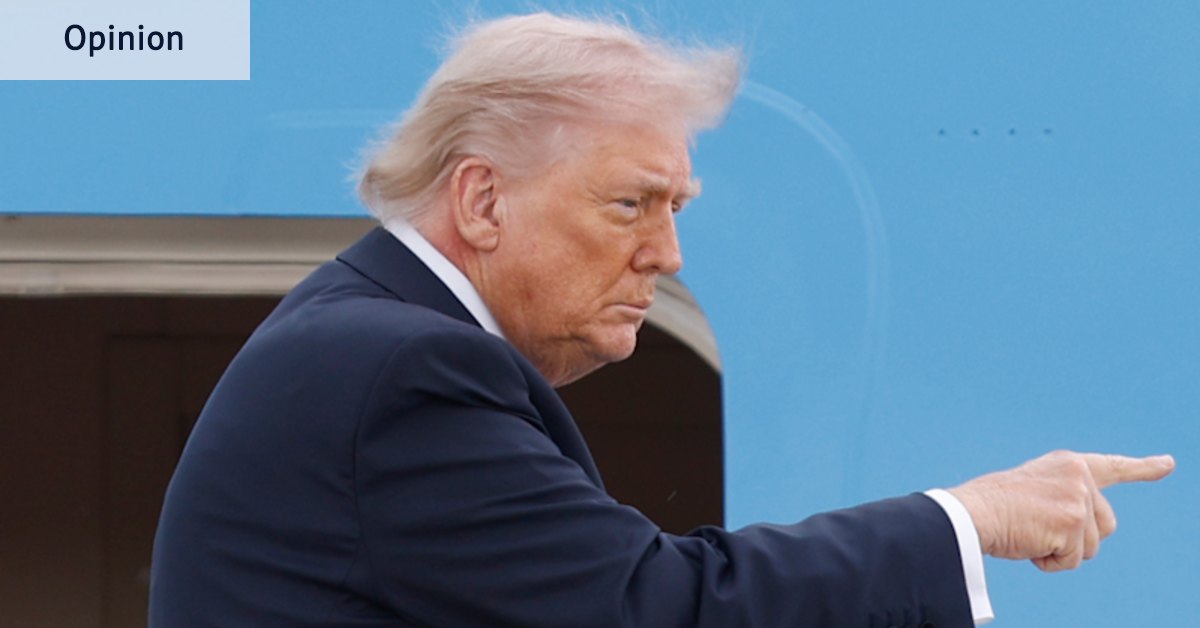
Photo via The Sydney Morning Herald

Don’t blame Ukraine: Prices go up and up, thanks to Trump’s wars

Read the original at The Sydney Morning Herald ↗
Cite

Bartholomeusz, S. (2026, October 13). Don’t blame Ukraine: Prices go up and up, thanks to Trump’s wars. The Sydney Morning Herald. https://www.smh.com.au/business/the-economy/don-t-blame-ukraine-prices-go-up-and-up-thanks-to-trump-s-wars-20261013-p614ze.html?ref=rss&utm_medium=rss&utm_source=rss_feed

Dated when The Aporia collected the article, usually within hours of publication. Check the original for its exact date and byline.

The Sydney Morning Herald · collected 2026-10-13 · by Stephen Bartholomeusz

Quick Summary

The article criticizes former President Donald Trump for his role in escalating inflation rates in the U.S., particularly through his decision to go to war with Iran, which led to significant increases in oil and fuel costs. It also highlights how Trump's tariffs have further contributed to rising consumer prices, as a study by the New York Fed shows that about 90% of these tariffs were passed on to consumers and businesses, leading to higher import prices and indirect price hikes for domestic goods. The article emphasizes that these factors are likely to influence the Federal Reserve’s decision-making regarding interest rates in light of upcoming midterm elections where inflation is a key issue.
Written by AI on 2026-10-13, from this article's own text only (the story summary below draws on all the coverage).

AI analysis

Story summary

Donald Trump's trade and military policies, including his tariffs and Middle East conflicts, have significantly contributed to rising inflation in the United States. The latest expected data for September shows that headline inflation might rise from 3.4% in August to 3.6% or 3.7%, with core inflation either steady at 2.5% or slightly declining to 2.4%. This disparity highlights the impact of higher energy prices, particularly gasoline and diesel, which surged following Trump's actions against Iran. Oil prices rose from around $US70 a barrel before February attacks by the US and Israel on Iran to over $US106 a barrel today. These economic pressures are among the key issues ahead of the upcoming midterm elections.

Written for “Trump Wars Inflation” on 2026-11-02, grounded in this article and the 0 other(s) covering the same event.

Story

📰 Trump Wars Inflation
Politics · 1 article(s) covering the same event.

Compared with similar articles

This article reads leans left and hedges 9% of its claims. Each row says how that neighbour differs.
Washington Examiner
⚖️ Leans left Hedges 1 of 49 claims Outlet record 70/100
“The articles discuss different aspects of rising diesel fuel costs and their causes, with Article A focusing on the Russia-Ukraine war's contribution and Article B criticizing Trump for blaming Ukraine.”
Washington Examiner
⚖️ Leans strongly right further right than this Hedges 3 of 38 claims Outlet record 70/100
“The articles discuss different aspects of Trump's impact on inflation and his attempts to influence public perception, but do not describe the same specific incident or time frame.”
ABC News (AU)
⚖️ Leans left Hedges 3 of 41 claims Outlet record 68/100
“The articles discuss different aspects of Trump's stance on Ukraine and Russia, with distinct focuses and timelines.”
Daily Mail
Hedges 2 of 22 claims Outlet record 68/100
“While both articles discuss Trump's deal with Putin regarding diesel fuel and its impact, Article A focuses more on the economic and political implications for inflation and midterm elections, while Article B emphasizes the panic among Republicans about defending this deal.”
ABC News (US)
⚖️ Leans left Hedges 2 of 34 claims Outlet record 70/100
“The articles discuss inflation but refer to different time periods and focus on distinct aspects; Article A mentions Trump's deal with Putin and blames him for polling woes, while Article B focuses specifically on factors that pushed up September inflation.”
CBS News
Hedges 3 of 5 claims Outlet record 66/100
“While both articles discuss inflation and its impact on U.S. voters in the context of upcoming midterm elections, they describe different aspects: Article A focuses on Trump's blame-shifting strategy regarding Ukraine and anticipated future data release, while Article B reports on actual released government data for September.”
Washington Examiner
⚖️ Leans left Hedges 1 of 15 claims Outlet record 70/100
“Article A discusses expectations for inflation data before its release, while Article B reports on actual inflation figures that have already been released and analyzed.”
BBC News
⚖️ Leans left Hedges 2 of 39 claims Outlet record 68/100
“The articles discuss different aspects of inflation in the context of mid-term elections, but they are not reporting on a single identical incident. Article A sets up expectations for upcoming inflation data while Article B reports on actual released figures.”
Al Jazeera
Hedges 4 of 25 claims Outlet record 60/100
“The articles discuss different aspects of inflation and its causes, with Article A focusing on political blame and Trump's deal, while Article B reports the actual economic data released by the Bureau of Labor Statistics.”
The Sydney Morning Herald
⚖️ Leans left Hedges 8 of 38 claims Outlet record 61/100
“The articles discuss inflation data and its impact on midterms but refer to different dates and aspects of the economic situation.”
How this article was measured signals, leaning charts, publisher record, byline, topics and claims

Signals How these are calculated →

Claims extracted
46
sentences that state something as happening or true
Uncertain
9%
4 of 46 hedged ("reportedly", "may", "according to")
Leaning
Leans left
of the writing, not the subject · beta estimate
Publisher signals
61/100
The Sydney Morning Herald's corrections and hedging, across everything collected from it. Not a measure of accuracy.
Outlets on this story
1
Politics
Same framing elsewhere
1
articles that frame the event the way this one does
Analyzed 2026-10-13 · how these are computed

How this is being covered How these are calculated →

Article leaning vs. publisher reliability
Source leaning vs. consistency

Publisher

The Sydney Morning Herald · 5826 article(s) · 15 correction(s) detected
Running correction rate · 15 correction(s)

Who wrote this

Stephen Bartholomeusz
20 article(s) here · 1 carrying a prediction
🔮 Alphabet and Meta have, between them, raised almost $US90 billion of new equity since June and have programs that could raise a further $US100 billion.
2026-11-02 · assertive framing · Wall Street on edge after $1.4 trillion wipeout
🔮 If the US Federal Reserve Board had met a day or two later, would it have left interest rates on hold?
🔮 Anthropic has launched the prospectus for what may be the biggest-ever initial public offering – and the fate of the entire US artificial intelligence complex may rest on it.
🔮 Next week the lower house of the Swiss parliament will debate a proposal from their colleagues in the upper house that would force the bank to capitalise its offshore subsidiaries almost entirely with equity.
2026-10-21 · assertive framing · Could a 164-year-old Swiss giant quit Switzerland?
🔮 Earlier this month, Firmus, a data centre operator, yanked what would have been Australia’s second-largest initial public offering – after investors balked at the $44 billion valuation and the very pricey capitalisation of revenues and earnings from projects that are still on drawing boards.
2026-10-19 · assertive framing · Wall Street’s boom is sitting on a shaky foundation
🔮 Given that the core issue in the election is affordability, the headline rise in the rate in September of 0.6 per cent – a material increase on the 0.4 per cent rise in August – and the year-on-year increase in prices of 3.7 per cent (3.4 per cent previously) couldn’t have come at a worse time for Donald Trump and the Republicans.
🔮 What would it look like if demand for government and corporate debt rose rapidly even as its cost surged?
🔮 When the latest inflation data is released on Wednesday morning in the US, it is expected to show that the inflation rate in the world’s largest economy rose again in September, adding to the cost-of-living pressures that are the key issue in the midterms.
🔮 Donald Trump announced a deal last Friday under which Russia will supply the US and the global market with diesel that Russia may not have and America doesn’t need.
🔮 A delegation of European Union trade negotiators is in Beijing, hoping to avert what could be a full-scale trade confrontation with China.
Also by Stephen Bartholomeusz
Wall Street on edge after $1.4 trillion wipeout
2026-11-02 · The Sydney Morning Herald
Could a 164-year-old Swiss giant quit Switzerland?
2026-10-21 · The Sydney Morning Herald
Nothing else under this byline is closely related to this article, so these are simply their most recent.
All 20 articles by Stephen Bartholomeusz →

Topics

Fed Iran Israel Ukraine the Federal Reserve Bank’s

Subjects

Trump PERSON · 6× Fed ORG · 3× Iran GPE · 2× Donald Trump’s PERSON · 1× Israel GPE · 1× Open Market Committee ORG · 1× The New York Fed ORG · 1× Ukraine GPE · 1× Vladimir Putin PERSON · 1× the Federal Reserve Bank’s ORG · 1×

Narrative

Most of Trump’s baseline tariffs on the rest of the world were implemented, with delays, in the middle of last year. Having been deemed illegal by the Supreme Court in February, those “Liberation Day” tariffs were quickly replaced by interim tariffs with a uniform rate of 10 per cent, until they were in turn displaced by the “forced labour” tariffs of either 10 per cent or 12.5 per cent on 60 economies that Trump announced in July this year.
framing: assertive · carried by 1 article(s) · first seen 2026-10-13
🔮 When the latest inflation data is released on Wednesday morning in the US, it is expected to show that the inflation rate in the world’s largest economy rose again in September, adding to the cost-of-living pressures that are the key issue in the midterms.
2026-10-13 · The Sydney Morning Herald
Don’t blame Ukraine: Prices go up and up, thanks to Trump’s wars · assertive framing

Claims (46 extracted, 4 hedged)

Donald Trump’s “diesel-for-sanctions” deal with Vladimir Putin is an indication of how desperate he has become in the lead-up to next month’s midterm elections. asserted
he → become → elections
Rather than seeking to shift blame for his polling woes to Ukraine, he should look in the mirror. asserted
he → seek → mirror
When the latest inflation data is released on Wednesday morning in the US, it is expected to show that the inflation rate in the world’s largest economy rose again in September, adding to the cost-of-living pressures that are the key issue in the midterms. asserted
that → release → midterms
The consensus among US economists is that headline inflation will have risen from August’s 3.4 per cent to 3.6 per cent or 3.7 per cent, with “core” inflation (excluding energy and food costs) either steady or edging up from 2.5 per cent to 2.4 per cent. asserted
inflation → rise → cent
That disparity between headline and core rates points to the major factor in the persistently high US inflation rate -- the surge in gasoline and diesel prices that has occurred as a result of Trump’s decision to go to war in the Middle East. asserted
that → point → East
The day before the February attacks by the US and Israel on Iran, oil was trading at $US70 a barrel. asserted
oil → trade → US70
US gasoline prices average $US2.28 a gallon on the eve of the attacks. asserted
prices → average → attacks
Today, they average $US4.35 a gallon. asserted
they → average → US4.35
Diesel cost, on average, about $3.80 a gallon on February 27. asserted
Diesel → cost → February
As has often been the case with Trump, his ego and impulses – in this case the desire to bend the Fed to his will, or in the war with Iran, his expectations of an easy and glorious victory – undermine his ambitions. asserted
ego → bend → ambitions
Those increased costs not only feed directly into households’ costs of living, but they also, over time, bleed into the wider economy as the delayed impact on transport costs and agricultural production flows through and impacts consumer prices and corporate margins. asserted
impact → increase → prices
When the members of the Federal Reserve Bank’s Open Market Committee meet in a fortnight to decide whether to raise their policy rate for a second successive meeting, however, they won’t just be considering the direct and indirect costs of energy. asserted
they → meet → energy
The focus on energy costs has tended to relegate the other major Trump-inspired source of inflation to the sidelines of discussion - but, as with fuel prices, the impact of his tariffs is still working its way through the US economy. asserted
impact → tend → economy
The New York Fed produced a research paper last year that concluded that about 90 per cent of Trump’s 2025 tariffs were passed through to US import prices and were absorbed by domestic businesses and consumers. asserted
cent → produce → businesses
Last week, the Fed researchers produced an update. asserted
researchers → produce → update
They found that for every percentage point increase in average tariffs, consumer prices increased by about a quarter of a per cent after one year. asserted
prices → find → year
About two-thirds of the effect arose because tariffs raised the prices of imported goods, while the rest arose indirectly as US companies paid more for imported parts and materials and because US producers raised their prices when competing imports cost more. asserted
imports → arise → more
A good illustration of the second round effects of the tariffs is steel, where Trump imposed a 50 per cent tariff on imports in February last year. asserted
Trump → impose → February
US steel prices have risen faster than anywhere else in the world, with hot-rolled coil prices up more than half. asserted
prices → rise → world
That’s great and immensely profitable for the handful of US domestic steel mills, but not so great for downstream manufacturers and, ultimately, US consumers. asserted
That → ’ → manufacturers
The Fed analysis found that the direct effect of higher import prices flowed through quite quickly. asserted
effect → find → prices
About half the increased costs were in place after three months and all of them by six months, with retailers taking a few months to lift their prices. asserted
retailers → increase → prices
The indirect effects – the increased input costs to US manufacturers – took longer to surface. asserted
effects → increase → manufacturers
In the first six months, US producer prices rose slightly, but the response then builds and roughly doubles over the next six months, they said. asserted
they → rise → months
Most of Trump’s baseline tariffs on the rest of the world were implemented, with delays, in the middle of last year. Having been deemed illegal by the Supreme Court in February, those “Liberation Day” tariffs were quickly replaced by interim tariffs with a uniform rate of 10 per cent, until they were in turn displaced by the “forced labour” tariffs of either 10 per cent or 12.5 per cent on 60 economies that Trump announced in July this year. asserted
Trump → implement → July
There are, of course, other sector-specific tariffs that Trump imposed last year on “national security” and other grounds, like those on steel and aluminium, but the significant point here is that the tariffs have been a moving feast and that the delay before their full impact on end-prices is felt means they are still feeding into the inflation rate. asserted
they → be → rate
The Fed researchers said that, in a scenario where a 10 per cent tariff is imposed on all imports (which is the base case for Trump’s forced labour tariffs) consumer goods prices would be 2.6 per cent higher after 12 months, or about a quarter of the tariff increase. asserted
prices → say → increase
Thus, the impact of both higher energy costs as a result of the war on Iran and higher consumer goods prices due to Trump’s tariffs is still flowing through the US economy. asserted
impact → flow → economy
The inflation rate also isn’t being helped by the massive investments being made in artificial intelligence and its flow-on effects to the prices of capital, semiconductors, construction costs and electricity and water. asserted
rate → help → capital
AI companies are spending about $US750 billion ($1.1 trillion) this year and are forecast to spend at least another $US2 trillion (if the boom in the sector lasts) over the next two years. asserted
boom → spend → years
In the long run, AI may (or may not) increase productivity and decrease inflation rates but, in the near term, the frenzy adds to inflation. uncertain
frenzy → increase → inflation
Trump’s deal with Putin will have a minor impact on US diesel prices, if any. asserted
deal → have → prices
The volumes of diesel are too small to have a material effect. asserted
volumes → have → effect
If the war in Iran ended tomorrow, it would have a much greater impact, even though it might take months and, in some instances years, for the damage done to infrastructure in the Middle East and confidence in passing through the Strait of Hormuz to be fully remedied and supplies of oil and refined products to be fully restored. uncertain
supplies → end → oil
Similarly, if Trump stopped announcing new tariffs, or better still withdrew all those he’s put in place or has announced, the inflation rate would subside and probably be very close to the Fed’s 2 per cent target. asserted
rate → stop → target
Unless there is an increase in the inflation rate above expectations this week, the Fed is likely to sit on its hands later this month rather that raise rates again days before the midterms. asserted
Fed → be → midterms
Market expectations have fallen back from a near-certainty of another 25 basis point increase following Fed chairman Kevin Warsh’s hawkish commentary after last month’s meeting. asserted
expectations → fall → meeting
They are now pricing in a less than 20 per cent chance that the Fed will move again this month. asserted
Fed → price → chance
A rate rise is fully priced in for December. asserted
rise → price → December
In any event, a cut in interest rates to the 1 per cent or less that Trump consistently calls for aren’t going to happen while the inflation rate remains pumped up by his war and tariffs – unless he can find another solution. And he thinks he has one. asserted
he → call → one
…and 6 more, not listed.

💬Give feedback
🕘History 🎫Support