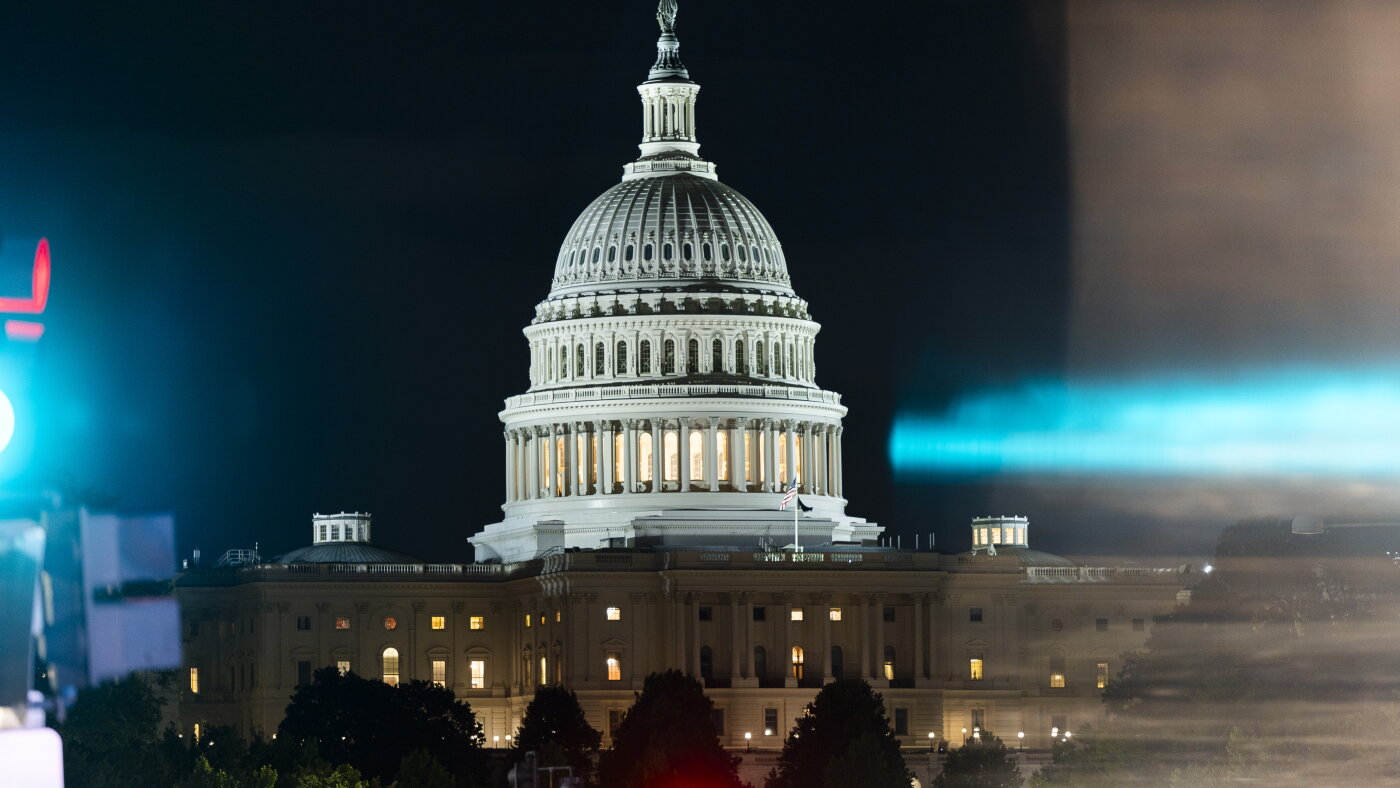
Photo via NPR

Polls are a snapshot, and other helpful things to remember during the midterm elections

Read the original at NPR ↗
Cite

Montanaro, D. (2026, October 13). Polls are a snapshot, and other helpful things to remember during the midterm elections. NPR. https://www.npr.org/2026/10/13/nx-s1-5996916/2026-election-midterms-polls-horse-race

Dated when The Aporia collected the article, usually within hours of publication. Check the original for its exact date and byline.

NPR · collected 2026-10-13 · by Domenico Montanaro

Quick Summary

The article addresses common misconceptions about election polls, emphasizing their role as snapshots rather than predictors of outcomes. It highlights Democrats' current favorability in winning both the House and Senate based on recent trends but cautions against overreliance on polls due to potential margins of error and varying quality. The piece offers tips for interpreting polls, including seeking transparency from pollsters and focusing on deeper insights beyond just top-line race results.
Written by AI on 2026-10-13, from this article's own text only (the story summary below draws on all the coverage).

AI analysis

Story summary

Polls ahead of the midterm elections create a lot of anticipation, confusion, and anxiety among Americans. As of now, Democrats are seen as favorites to win the House and have a chance at winning the Senate, which was initially considered unlikely. This view is based on recent polls showing shifts in voter preferences toward Democrats over several months. However, it's important to remember that polls reflect a snapshot of public opinion at a specific time and should not be taken as definitive predictions. Additionally, they often come with margins of error; for instance, if one candidate has a 3 percentage-point lead, the true gap could range from a 5-point advantage to a 1-point deficit. Understanding these nuances helps voters make sense of the complex data leading up to election day.

Written for “Midterm Elections Advice” on 2026-11-01, grounded in this article and the 0 other(s) covering the same event.

Story

📰 Midterm Elections Advice
Politics · 1 article(s) covering the same event.

Compared with similar articles

This article reads unscored and hedges 4% of its claims. Each row says how that neighbour differs.
Washington Examiner
⚖️ Leans right Hedges 6 of 29 claims Outlet record 70/100
“The articles discuss similar themes related to election polling but describe different perspectives and timelines, not the same specific incident.”
Washington Examiner
⚖️ Leans strongly right Hedges 2 of 45 claims Outlet record 70/100
“The articles discuss different aspects of election coverage and sentiment, not the same specific incident or time.”
NPR
Hedges 2 of 42 claims Outlet record 60/100
“Article A discusses general polling trends and public reaction to them during midterms, while Article B focuses on specific voter sentiment and regret towards Trump in swing states.”
Fox News
Hedges 3 of 37 claims Outlet record 69/100
“Article A discusses general considerations about polls during midterm elections, while Article B focuses on a specific polling failure in Michigan's primary election.”
Silver Bulletin
Hedges 5 of 62 claims
“The articles discuss different aspects of election polling at distinct times and do not describe the same specific incident.”
Washington Examiner
Hedges 0 of 1 claims Outlet record 70/100
“The articles discuss different aspects of polling without focusing on a single specific incident.”
The Guardian
Hedges 0 of 3 claims Outlet record 66/100
“The articles discuss different aspects of election polling and voter behavior, without describing the same specific incident or time.”
The Dispatch
⚖️ Leans left Hedges 0 of 9 claims Outlet record 61/100
“The articles discuss general themes related to midterms but describe different content: one about interpreting polls, the other about political sentiment and anti-incumbent wave.”
How this article was measured signals, leaning charts, publisher record, byline, topics and claims

Signals How these are calculated →

Claims extracted
24
sentences that state something as happening or true
Uncertain
4%
1 of 24 hedged ("reportedly", "may", "according to")
Leaning
not political
takes no side on a contested political question
Publisher signals
60/100
NPR's corrections and hedging, across everything collected from it. Not a measure of accuracy.
Outlets on this story
1
Politics
Same framing elsewhere
1
articles that frame the event the way this one does
Analyzed 2026-10-13 · how these are computed

How this is being covered How these are calculated →

Article leaning vs. publisher reliability
Source leaning vs. consistency

Publisher

NPR · 992 article(s) · 3 correction(s) detected
Running correction rate · 3 correction(s)

Who wrote this

Domenico Montanaro
5 article(s) here · 1 carrying a prediction
🔮 Get the latest on the midterms & more in the NPR App Ahead of Election Day, there are a lot of questions about what might happen, what the implications of different outcomes might be and even what it's like to cover elections.
🔮 Mississippi and Nebraska are also more competitive than Republicans would like, but GOP candidates are favored there.
🔮 But, there are indications of why a potential wave could be limited, a new NPR/PBS News/Marist poll finds.
🔮 If a poll has a 3 percentage-point margin of error, this means that candidate could have a 5-point lead or be losing by a point.
🔮 The Cook Political Report forecasts a five-to-15-seat net gain for Democrats at this point.
Also by Domenico Montanaro
Nothing else under this byline is closely related to this article, so these are simply their most recent.

Topics

Americans Democrats House Senate the Great American Biennial Polling Freakout

Subjects

Americans NORP · 1× Democrats NORP · 1× House ORG · 1× Senate ORG · 1×

Narrative

There is so much more underneath those top-line numbers, from job approval ratings and who is most motivated to vote, to which party is more trusted to handle the issues people care about most — and so much more.
framing: assertive · carried by 1 article(s) · first seen 2026-10-13
🔮 If a poll has a 3 percentage-point margin of error, this means that candidate could have a 5-point lead or be losing by a point.

Claims (24 extracted, 1 hedged)

Polls are a snapshot, and other helpful things to remember during the midterm elections This is about the time of year when the country engages in the Great American Biennial Polling Freakout. asserted
country → remember → Freakout
A few weeks before an election, lots of people start to really engage. asserted
lots → start → people
They read headlines showing this candidate or that candidate leading a race. asserted
candidate → read → race
People wonder who's going to win and whether the polls are right or wrong. asserted
polls → wonder → ?
And it all often leads to a blend of anticipation mixed with confusion and anxiety. asserted
it → lead → confusion
All that needs to be known from the polls at this point is that over the last several months, the compass needle has moved more in Democrats' direction. asserted
needle → need → direction
They are the favorites to win the House and are within striking distance of winning the Senate, something that was seen as a long shot when this election cycle began. asserted
cycle → win → shot
That's based not just on the polls but on conversations with campaigns and on-the-ground reporting. asserted
That → base → ground
But here are some tips and things to remember as the deluge of polls comes your way: asserted
deluge → remember → polls
1. Polls are not meant to be predictive. asserted
Polls → mean → ?
They are snapshots in time of when those surveys were conducted. asserted
surveys → conduct → time
They're also not as precise and specific as people want them to be. asserted
them → want → ?
Remember: Polls have margins of error. asserted
Polls → remember → error
So when someone has a 2-point lead, that's not a lead at all. asserted
that → have → lead
If a poll has a 3 percentage-point margin of error, this means that candidate could have a 5-point lead or be losing by a point. uncertain
candidate → have → point
Good pollsters show their work with detailed methodology pages. asserted
pollsters → show → pages
If you can't find a methodology, that's a red flag. asserted
that → find → methodology
There is less money for those local outlets to pay for polling, which can be very expensive. asserted
which → be → polling
Polls are best when measuring attitudes over time to help inform us of how Americans are feeling and thinking about key issues. asserted
Americans → measure → issues
There is so much more underneath those top-line numbers, from job approval ratings and who is most motivated to vote, to which party is more trusted to handle the issues people care about most — and so much more. asserted
people → be → issues
The fact is that many of these races are expected to be close. asserted
many → expect → races
Millions of votes are not yet cast, and anyone professing to know exactly what's going to happen is lying. asserted
what → cast → votes
When you're looking at who's up and who's down, just remember that horse-race polling is like sprinkles on top of a bowl of ice cream. asserted
polling → look → cream
Lots of people like sprinkles, but if all you eat is the sprinkles, you just wind up with a mouth full of wax without ever getting to the good stuff. asserted
you → like → stuff

💬Give feedback
🕘History 🎫Support