Photo via The Straits Times

Egypt's Baha'i minority is running out of space to bury their dead

Read the original at The Straits Times ↗
Cite

The Straits Times. (2026, October 13). Egypt's Baha'i minority is running out of space to bury their dead. The Straits Times. https://www.straitstimes.com/world/middle-east/egypts-bahai-minority-is-running-out-of-space-to-bury-their-dead

Dated from the outlet's own feed. Check the original for its byline.

The Straits Times · collected 2026-10-13 · by The Straits Times

Quick Summary

Egypt's Baha'i community, estimated at a few thousand members in a country of about 110 million people, is facing severe difficulties finding burial sites for their dead due to bureaucratic restrictions. The only remaining cemetery near Cairo is nearly full, and requests for additional burial grounds have been rejected by local authorities without explanation. This issue highlights broader challenges faced by the Baha'i community, including difficulty in obtaining marriage certificates and other civil documents, as mainstream Islam regards Baha’i faith as heretical. Despite government assurances of religious freedom and coexistence, practical barriers persist, complicating daily life for this minority group.
Written by AI on 2026-10-13, from this article's own text only (the story summary below draws on all the coverage).

AI analysis

Story summary

The Baha'i community in Egypt is facing severe challenges with burial spaces as their only remaining cemetery in Cairo fills up rapidly. The tightly packed graves highlight the broader bureaucratic obstacles and societal marginalization that Baha'is experience, including issues with education, pensions, and marriage registration. Joumana Labib, a 25-year-old architect, expressed concern over the lack of alternative burial sites if their current cemetery becomes full. With an estimated thousands of followers in Egypt among a population of about 100 million, Baha'is constitute a tiny minority in predominantly Muslim Egypt, where mainstream Islamic scholars view their faith as heretical despite constitutional guarantees of religious freedom.

Written for “Baha'i Burial Rights Egypt” on 2026-11-04, grounded in this article and the 0 other(s) covering the same event.

Story

📰 Baha'i Burial Rights Egypt
World · 1 article(s) covering the same event.

Compared with similar articles

Nothing to compare against. No article is close enough to this one for the pipeline to have linked or judged the pair.
How this article was measured signals, leaning charts, publisher record, byline, topics and claims

Signals How these are calculated →

Claims extracted
33
sentences that state something as happening or true
Uncertain
6%
2 of 33 hedged ("reportedly", "may", "according to")
Leaning
withheld
no quote in the article backed the model's score
Publisher signals
66/100
The Straits Times's corrections and hedging, across everything collected from it. Not a measure of accuracy.
Outlets on this story
1
World
Same framing elsewhere
1
articles that frame the event the way this one does
Analyzed 2026-10-13 · how these are computed

How this is being covered How these are calculated →

Article leaning vs. publisher reliability
Source leaning vs. consistency

Publisher

The Straits Times · 4378 article(s) · 5 correction(s) detected
Running correction rate · 5 correction(s)

Who wrote this

The Straits Times
2870 article(s) here · 1 carrying a prediction
🔮 US midterms: International politicians react to Democrats winning Governments and politicians around the world reacted to the Democrats winning the US midterm elections, a result that could have major implications for global trade, security and energy prices.
🔮 Additional files will be uploaded by February 2027 but the files are far from complete, as many were destroyed in 1956 during Hungary's anti-Soviet uprising and also in 1988-1989.
🔮 Leo will spend two days in Uruguay, three in Argentina and nearly a week in Peru, where he will celebrate outdoor Masses expected to draw millions, address political leaders, join youth vigils and reach remote Andean communities by helicopter.
🔮 South Africa says US midterm results usher in new era JOHANNESBURG, Nov 4 - South African President Cyril Ramaphosa said on Wednesday that the results from midterm elections in the United States would usher in a new era in world relations, after millions of voters delivered a scathing rebuke to President Donald Trump.
2026-11-04 · assertive framing · South Africa says US midterm results usher in new era
🔮 Trump told The New York Times in an interview that he was “absolutely willing to accept those results” and was prepared to work with Democrats.
🔮 The Israeli electoral authorities on Nov 4 rejected allegations promoted by Israeli Prime Minister Benjamin Netanyahu of fraud by Arab parties, who could hold the key to removing him from power after a divisive vote.
🔮 Puente's resignation will only become effective once it is published in the official state gazette, but the exact timeline for this remains unclear.
🔮 Combining Hinojosa’s victory with those of other Democrats who won gubernatorial races from Georgia to Ohio and Pennsylvania could leave half of proposed AI data centre additions across the US vulnerable to stricter local scrutiny and pushback.
🔮 Rogers also devoted significant effort to courting Jewish voters who may have been uneasy with El-Sayed’s opposition to US military aid for Israel and his characterisation of Israel’s actions in Gaza as genocide.
🔮 Trump and Vice-President J.D. Vance visited Texas several times ahead of Election Day, attempting to rally support for Paxton. But Paxton’s ethical issues may have proven too much.
Also by The Straits Times
Nothing else under this byline is closely related to this article, so these are simply their most recent.
All 2870 articles by The Straits Times →

Topics

Alexandria Baha'i CAIRO Egypt Port Said

Subjects

Baha'i NORP · 10× Egypt GPE · 7× CAIRO GPE · 4× Alexandria GPE · 3× Baha'is NORP · 3× Port Said GPE · 3× EIPR ORG · 2× Islamic NORP · 2× God PERSON · 1× Joumana Labib PERSON · 1×

Narrative

The Egyptian constitution guarantees religious freedom, though mainstream Islamic scholars view the Baha'i faith as heretical and officials are often reluctant in practice to recognise religions outside the main Abrahamic faiths.
framing: assertive · carried by 1 article(s) · first seen 2026-10-13
🔮 If that happens, we would have no other places where we can bury," said Joumana Labib, a 25-year-old architect whose extended family is buried there.
2026-10-13 · The Straits Times
Egypt's Baha'i minority is running out of space to bury their dead · assertive framing

Claims (33 extracted, 2 hedged)

Egypt's Baha'i minority is running out of space to bury their dead CAIRO, Oct 13 - asserted
minority → run → dead
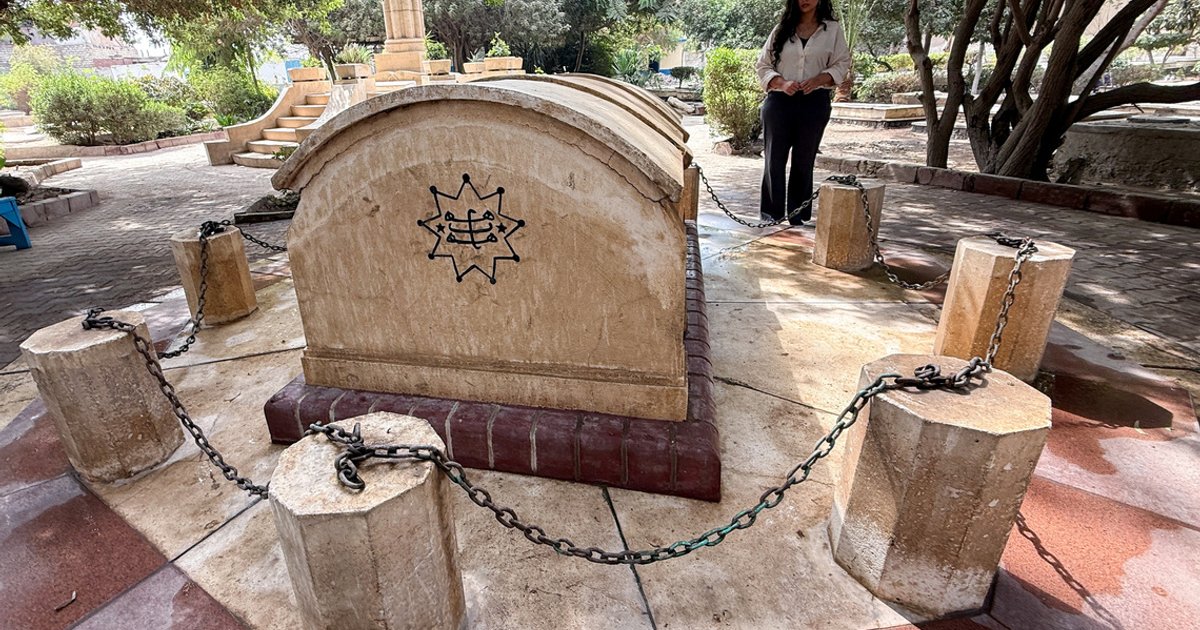
In a Cairo cemetery shaded by palms and tangled shrubs, pale graves are packed so tightly that in some places only narrow strips of sand and broken pavement separate one family’s plot from the next. asserted
strips → shade → next
This is the last remaining burial place of Egypt's Baha'i community, a religious minority long on the margins of official life, and it is quickly running out of room. asserted
it → remain → room
As it fills, the cemetery has become a symbol for the community of the bureaucratic obstacles and restrictions they say complicate everything from school enrollment to pensions and marriage registration. asserted
they → fill → pensions
"God forbid that this area becomes completely full. asserted
area → forbid → ?
If that happens, we would have no other places where we can bury," said Joumana Labib, a 25-year-old architect whose extended family is buried there. asserted
family → happen → places
The Baha'i faith, whose members are scattered across different continents and believe their 19th century founder Baha'u'llah is a prophet, was brought to Egypt by merchants in the 1860s, not long after it originated in Iran. asserted
it → scatter → Iran
With current numbers in Egypt estimated in the thousands, they are a tiny minority in a mainly Muslim country of about 110 million. asserted
they → estimate → million
The Egyptian constitution guarantees religious freedom, though mainstream Islamic scholars view the Baha'i faith as heretical and officials are often reluctant in practice to recognise religions outside the main Abrahamic faiths. asserted
officials → guarantee → faiths
BURIAL REQUIRED WITHIN ONE-HOUR JOURNEY asserted
BURIAL → require → JOURNEY
While Islamic tradition requires burial within a day, Baha'i practices allow a body to be moved no more than one hour from the place of death, creating particular challenges. asserted
body → require → challenges
Burial grounds once used by Baha'is in the port cities of Alexandria and Port Said have been filled or reassigned over the years, leaving many families to transport bodies to Cairo, according to the Egyptian Initiative for Personal Rights (EIPR), a leading Cairo-based rights group. Community members say requests for new burial grounds in Alexandria and Port Said — where much of Egypt's Baha'i community lives — have been rejected without clear written explanations, said Marina Samir, who heads EIPR's freedom of religion and belief work. uncertain
who → use → work
"Death becomes, instead of a time when people are trying to comprehend their loss, a logistical process," Samir said. asserted
Samir → become → loss
Egypt's government information agency and the governorates of Alexandria and Port Said did not respond to requests for comment. asserted
agency → respond → comment
Last year, in a response to a UN human rights report, Egypt's government said it "does not impose any restrictions on personal belief or religious affiliation, including adherence to the Baha’i faith". asserted
it → say → faith
Based on government data, there were "sufficient burial sites to meet the needs of all citizens", it said. asserted
it → base → citizens
President Abdel Fattah al-Sisi has repeatedly stressed the need for religious coexistence and said the state works tirelessly to fight discrimination and promote tolerance. asserted
state → stress → tolerance
A landmark 2009 court ruling allowed those who do not follow Islam, Christianity or Judaism to leave a dash in the religion field on their identity documents. asserted
who → allow → documents
The change allowed Baha'is to avoid declaring a faith they do not follow, but still left them facing practical difficulties. asserted
they → allow → difficulties
One of the biggest is establishing Baha'i marriages in official records. asserted
One → establish → records
Baha'i couples are often registered as "single" even after decades together, which can complicate child registration, inheritance, pensions, health insurance and family records. asserted
which → register → registration
Hanan Kamal El-Din, 65, said her identity card describes her as single, although she married in a Baha'i ceremony 45 years ago and has two children in their 40s. asserted
she → say → 40s
"What harm would recognising this marriage do to society?" she said. asserted
she → recognise → society
Like other Baha'is, she won an individual court ruling recognising her marriage in 2020. asserted
she → win → 2020
But that decision was overturned by a higher court in January this year, a ruling other Baha'i couples now fear could affect them as well. uncertain
couples → overturn → them
Ahmed Helmy, 49, also won a court ruling allowing his documents to show he was married, but said his wife has already been removed from the family section of his account on the government’s digital services platform. asserted
wife → win → platform
He worries his status on his identity card will revert to "single" when he next renews it. asserted
he → worry → it
"If I do not have proof of marriage, I cannot add my wife to health insurance," he said. asserted
he → have → insurance
"Anything I own, my wife won't be able to inherit. asserted
wife → own → ?
Anything she owns, I won't be able to inherit. asserted
I → own → ?
" For Labib, the community's shrinking burial space and the bureaucratic hurdles are connected by the same demand: to be treated as an equal citizen. asserted
space → shrink → citizen
"I am not asking anyone to accept my religion," she said. asserted
she → ask → religion
"I am asking them to accept me as a person in this country." asserted
I → ask → country

💬Give feedback · no sign-in needed

No sign-in needed for now. Your note is sent without a name, so it cannot be answered.

🕘History 🎫Support