That is 0 articles you have read today.
The Aporia is free and carries no advertising, so readers are the only
thing paying for it. If you are getting this much out of it, a small
donation is what keeps it independent.
You have read 0 articles today.
That is more than the 15 a day The Aporia gives away,
and well past what it can carry on nothing. Your allowance resets at
midnight.
There is no advertising here and nothing about you is sold, so readers
are the only thing paying for it. If the site is worth this much of
your day, it is worth a few dollars.
Everything else stays open: the front page, the
directory and search do
not count against this, and neither does re-opening something you have
already read today.
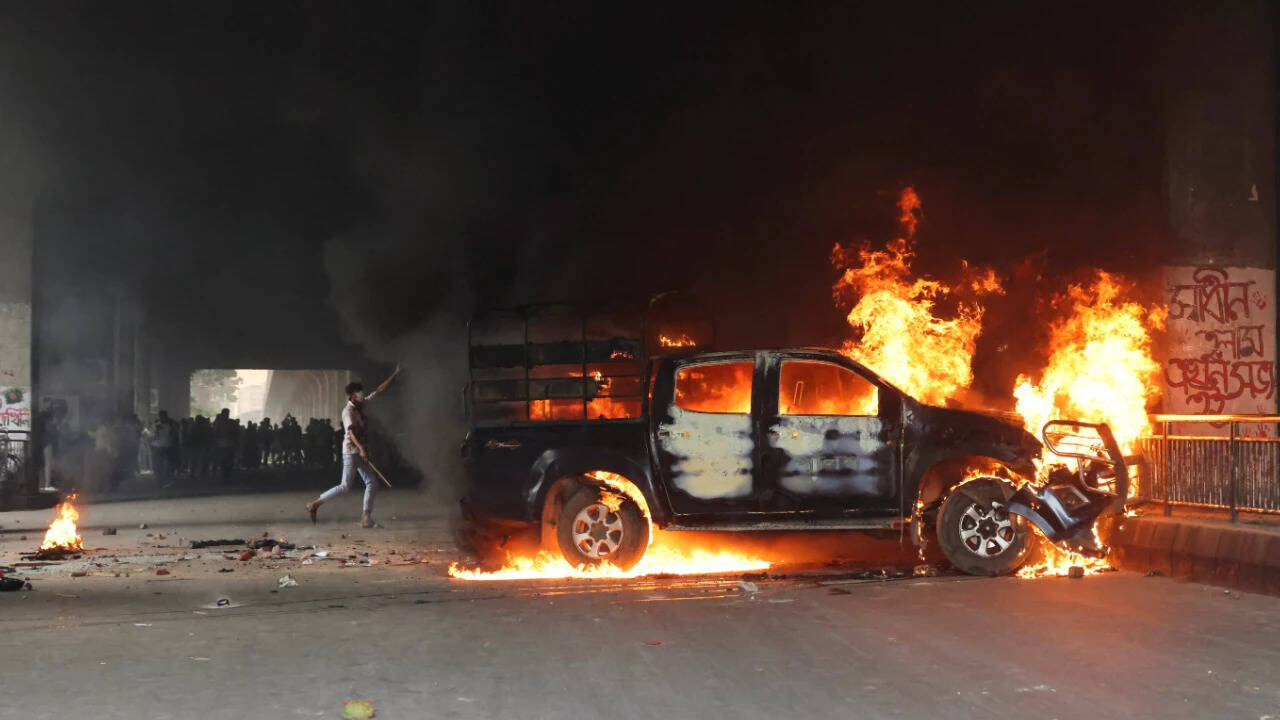
Photo via Al Jazeera
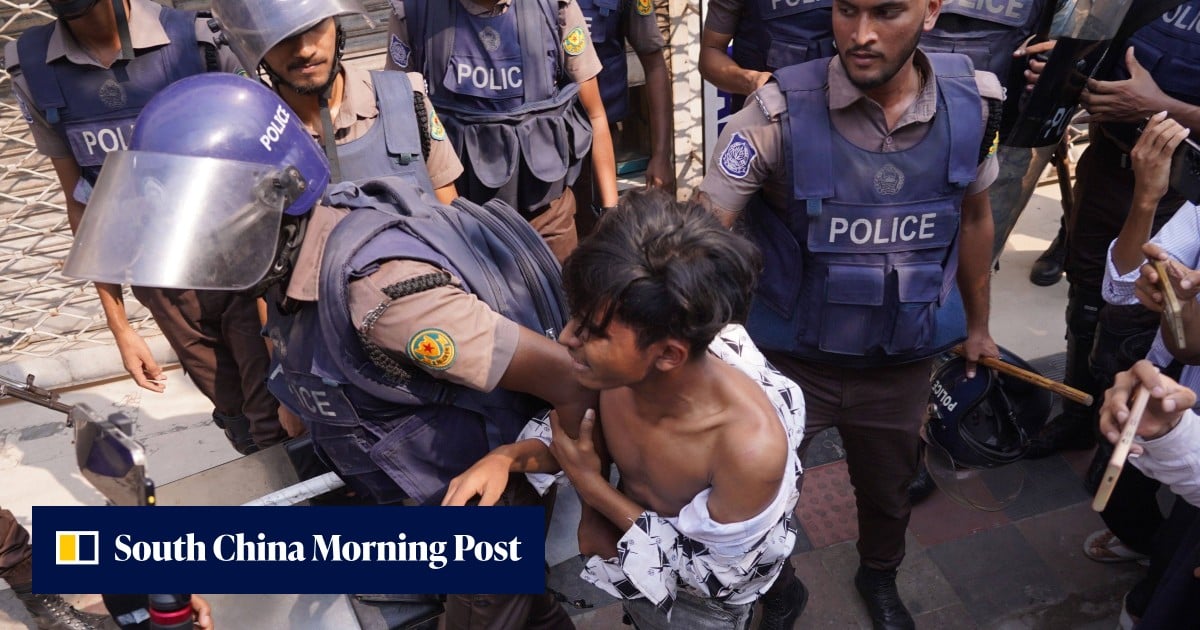
Bangladesh workers clash with police in protests over low pay
Bangladesh workers clash with police in protests over low pay. (2026, November 1). Al Jazeera. https://www.aljazeera.com/video/newsfeed/2026/11/1/bangladesh-workers-clash-with-police-in-protests-over-low-pay?traffic_source=rss
“Bangladesh workers clash with police in protests over low pay.” Al Jazeera, 1 Nov. 2026, https://www.aljazeera.com/video/newsfeed/2026/11/1/bangladesh-workers-clash-with-police-in-protests-over-low-pay?traffic_source=rss.
“Bangladesh workers clash with police in protests over low pay.” Al Jazeera, November 1, 2026. https://www.aljazeera.com/video/newsfeed/2026/11/1/bangladesh-workers-clash-with-police-in-protests-over-low-pay?traffic_source=rss.
Dated from the outlet's own feed. Check the original for its byline.
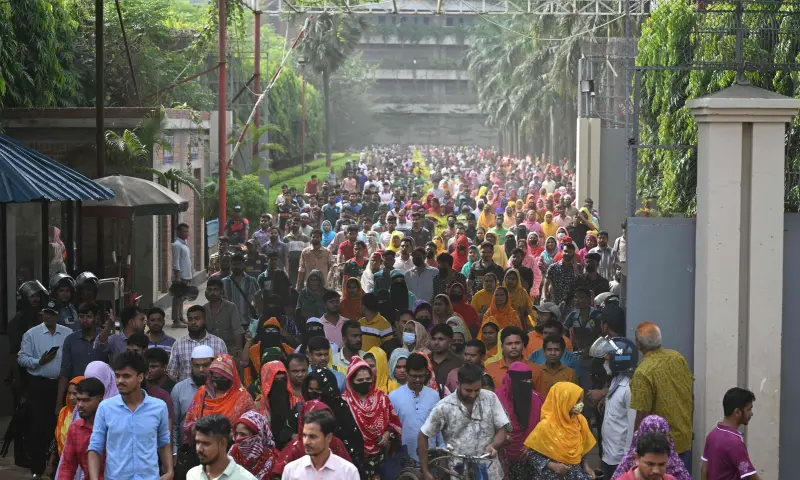
Garment workers in Dhaka, Bangladesh, clashed with police during a protest over low wages and increasing living costs. The demonstrators are part of an essential workforce that drives the country's economic engine through its thriving textile industry.
Written by AI on 2026-11-01,
from this article's own text only (the story summary below draws on all the coverage).
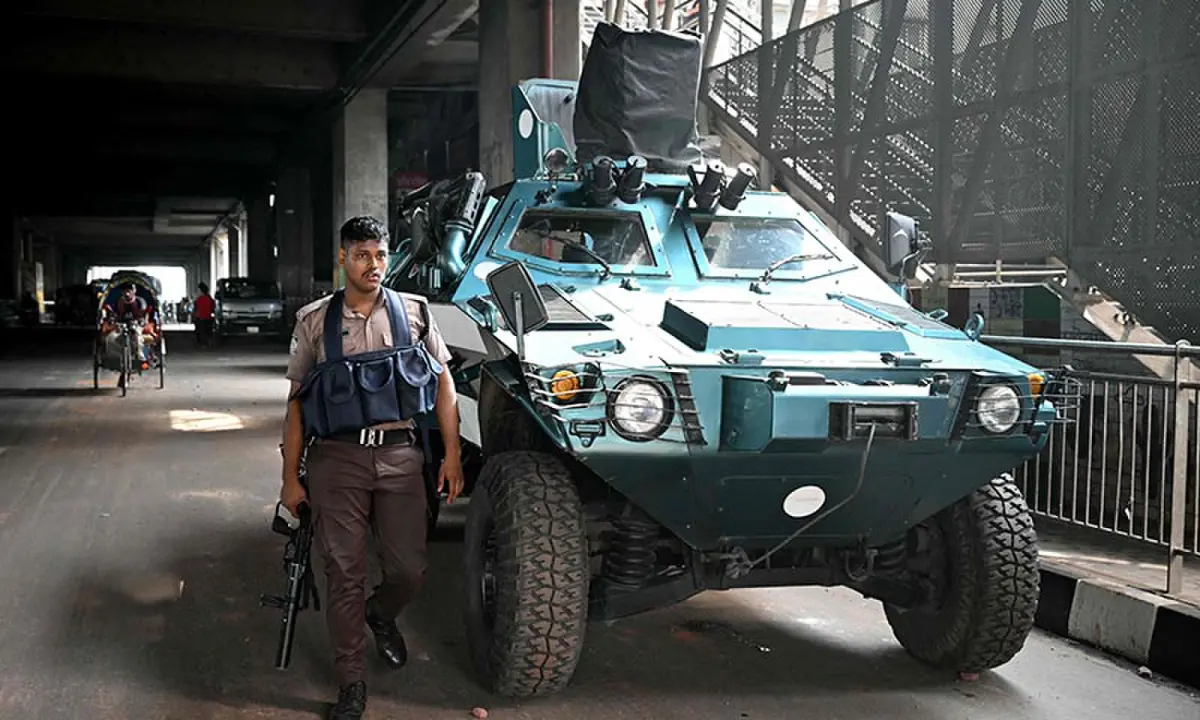
As of November 3, 2026, garment workers in Bangladesh have staged a fourth day of protests demanding a significant increase in their minimum monthly wage from 12,500 taka to 30,000 taka. Thousands of protesters have clashed with police and vandalized factories across Dhaka and Gazipur, prompting authorities to deploy paramilitary forces and close hundreds of garment factories. The unrest has disrupted transportation links and factory operations, raising concerns among industry officials about potential delays in shipments and damage to Bangladesh’s reputation as a reliable sourcing hub for global apparel orders. Despite the government forming a new wage board on November 1st, protests continue, defying calls from authorities to end demonstrations.
Written for “Bangladesh Garment Workers Protests” on 2026-11-21,
grounded in this article and the 10 other(s) covering the same event.
One AI summary per outlet of its latest article on this story, written from that article alone and checked against it. Open the article for the outlet's own words.
Al JazeeraThis outlet1 Nov
Garment workers in Dhaka, Bangladesh, clashed with police during a protest over low wages and increasing living costs. The demonstrators are part of an essential workforce that drives the country's economic engine through its thriving textile industry.
Bangladesh workers clash with police in protests over low pay (this article)3 articles from Al Jazeera on this storyThe Hindu3 Nov

Garment workers in Bangladesh have continued their protests into a fourth day, demanding a significant wage increase despite government efforts to curb the unrest. Clashes between protesters and police resulted in property damage and injuries; over 58 police officers were hurt while protesters reported numerous injuries as well. The demonstrations, occurring in industrial suburbs around Dhaka including Gazipur and…
Garment workers in Bangladesh continued their fourth day of wage protests on Tuesday, disrupting factory operations and transportation links. Despite the government forming a six-member wage board to review salaries, demonstrations intensified with clashes reported across industrial belts near Dhaka. Workers demand a minimum monthly wage increase from 12,500 taka to 30,000 taka ($245), citing rising living costs and…
Garment workers in Bangladesh are staging violent protests demanding a significant increase in their minimum monthly wage from 12,500 taka to 30,000 taka. Clashes have occurred in industrial areas like Mirpur and Konabari, leading to vandalism and road blockages that prompted authorities to deploy police and Border Guard Bangladesh units to restore order. The protests began on Saturday and intensified over the…
Thousands of Bangladeshi garment workers protested on Monday for a significant wage increase, blocking major highways and clashing with police. The protests occurred across industrial hubs like Gazipur and Mirpur, with some workers vandalizing vehicles and others being dispersed by tear gas. With around 4 million people employed in the country’s garment sector, which contributes more than 80% of Bangladesh's export…
In Bangladesh, hundreds of garment factories have closed due to worker protests demanding higher minimum wages, with demonstrators blocking roads and clashing violently with police. Workers are seeking a monthly wage increase from 13,000 taka ($105) to 30,000 taka ($242), citing rising living costs. The unrest has affected production in an industry employing four million workers and generating nearly $40 billion…
Violent protests have erupted in Bangladesh's garment industry as workers demand a sharp increase in their minimum monthly wage from 12,500 taka to 30,000 taka.
4 outlets
Framing
How the first headlines put it
Stated as fact3
The headlines (3)
Bangladesh forms wage board as garment workers protest Al Jazeera · stated as fact
Violent protests rock Bangladesh garment hubs as workers demand a steep pay hike Times of India · stated as fact
Bangladesh forms wage board as garment workers keep up protests The Hindu · stated as fact
“The articles describe different phases of an ongoing situation: one reports on a protest clash with police, while the other discusses factory reopenings and industry concerns in its aftermath.”
Leans strongly left
further left than thisHedges 3 of 28 claimsOutlet record 67/100
“While both articles discuss protests by Bangladeshi garment workers over low pay and working conditions, Article A reports on a specific clash with police in Dhaka, while Article B provides a broader overview of the situation including past weeks' actions.”
Bangladesh workers clash with police in protests over low pay
Dozens of garment workers in Bangladesh clashed with police in the capital Dhaka as they protested against low pay and the rising cost of living.
asserted
they → clash → living
Give feedback · no sign-in needed
No sign-in needed for now. Your note is sent without a name, so it cannot be answered.