Gulf region on edge as Qatar leads talks with Iran to stave off new U.S. attacks

Read the original at NPR ↗
Cite

Batrawy, A. (2026, November 1). Gulf region on edge as Qatar leads talks with Iran to stave off new U.S. attacks. NPR. https://www.npr.org/2026/11/01/nx-s1-6023237/gulf-leaders-meet-in-qatar-in-effort-to-stave-off-new-escalation-in-u-s-and-iran-war

Dated from the outlet's own feed. Check the original for its byline.

NPR · collected 2026-11-02 · by Aya Batrawy

Quick Summary

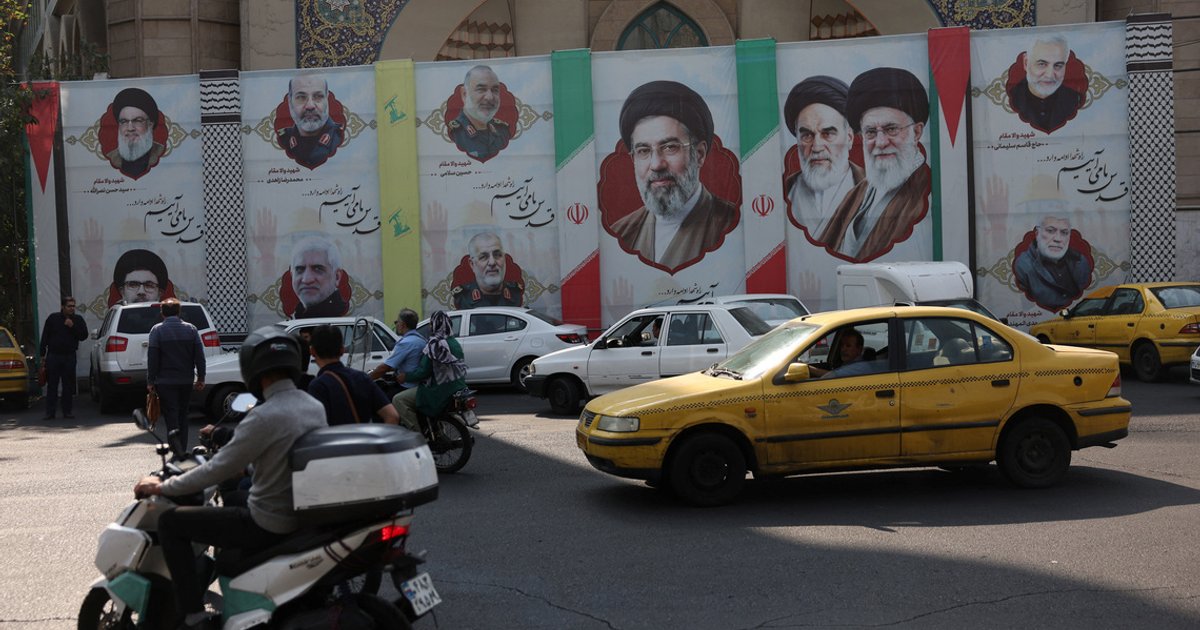
Qatar has been mediating between the United States and Iran over the past 72 hours to prevent potential new attacks following recent developments. The situation in the Gulf region remains tense, with President Trump indicating that while significant damage has been done to Iran’s military capabilities and nuclear program, he is not in immediate rush for further action post-elections. Details of Qatar's mediation efforts are sparse, but there have been discussions about a potential two-day plan involving Iran refraining from attacking ships in the Strait of Hormuz to facilitate direct talks between Washington and Tehran.
Written by AI on 2026-11-02, from this article's own text only (the story summary below draws on all the coverage).
See how they differ ↓

AI analysis

Story summary

As of November 4, 2026, Persian Gulf leaders fear a new escalation between the United States and Iran would be more destructive than previous conflicts. Egypt's Foreign Minister Badr Abdelatty expressed extreme concern on October 31 during a security forum in Bahrain, where regional diplomats warned that renewed war could cause significant damage. Meanwhile, Qatari mediators are working to broker an agreement; Iranian negotiators have been in Doha for three days of talks aimed at ending the U.S.-Israeli war on Iran. Despite fresh US strikes and threats against shipping through the Strait of Hormuz complicating efforts, Qatar remains hopeful a deal can be reached, with its foreign ministry spokesperson Majed al-Ansari affirming both sides' commitment to diplomacy.

Written for “US and Iran Resume Peace Talks” on 2026-11-21, grounded in this article and the 34 other(s) covering the same event.

How they differ

16 outlets covered “US and Iran Resume Peace Talks”.

What each outlet says

One AI summary per outlet of its latest article on this story, written from that article alone and checked against it. Open the article for the outlet's own words.

NPRThis outlet2 Nov

Qatar has been mediating between the United States and Iran over the past 72 hours to prevent potential new attacks following recent developments. The situation in the Gulf region remains tense, with President Trump indicating that while significant damage has been done to Iran’s military capabilities and nuclear program, he is not in immediate rush for further action post-elections. Details of Qatar's mediation…

Gulf region on edge as Qatar leads talks with Iran to stave off new U.S. attacks (this article)
Al Jazeera3 Nov

Qatar’s foreign ministry spokesperson Majed al-Ansari expressed optimism about the possibility of the United States and Iran reaching an agreement. He noted that regional neighbors and international partners are collaborating to facilitate this deal, emphasizing both parties' dedication to achieving a diplomatic resolution.

Qatar remains hopeful the US and Iran can reach a deal →8 articles from Al Jazeera on this story
The Straits Times3 Nov

Iran's President Masoud Pezeshkian announced on November 2 that Iran's supreme leader, Ayatollah Khamenei, has granted the government additional authority to pursue peace talks with the US and Israel, amid growing tensions over Iran’s nuclear program and sanctions. This development comes as regional nations intensify diplomatic efforts; Brent crude oil prices dropped nearly 10%, trading below $106 a barrel in London…

Iran’s Khamenei gives government powers to hold talks on war →6 articles from The Straits Times on this story
New York Post2 Nov

Iranian Foreign Minister Abbas Araqchi stated that peace talks between Iran and the US, mediated by Qatar, are currently intense as both sides present their conditions. Despite diplomatic efforts, President Trump has warned of potential military action against Iran if a resolution is not reached quickly, emphasizing his desire to conclude negotiations soon due to upcoming midterm elections.

US and Iran resume ‘very intensive’ peace talks on ending war — as Trump threatens new strikes →3 articles from New York Post on this story
The Hindu2 Nov

On November 2, 2026, Iran announced its readiness to reopen the Strait of Hormuz within two days if the U.S. agrees to certain demands, signaling a potential de-escalation after months of blockade during their ongoing conflict. This offer follows intense diplomatic efforts by regional and international mediators to prevent further military confrontation. U.S. President Donald Trump responded with threats at midterm…

Iran says ready to reopen Hormuz in two days if U.S. agrees to demands →3 articles from The Hindu on this story
Toronto Star1 Nov

At a security forum in Manama, Bahrain, United Arab Emirates presidential adviser Anwar Gargash expressed hope for diplomatic solutions to ease tensions between the U.S. and Iran, noting that military options would only complicate the current situation. The UAE has faced over 3,000 drone and missile attacks from Iran since February, emphasizing the need for diplomacy. Gargash stressed the importance of political…

United Arab Emirates says military solutions offer no quick off-ramps to crisis with Iran →2 articles from Toronto Star on this story
Show 10 more outlets
Euronews3 Nov

Qatar’s foreign ministry spokesperson Majed Al Ansari expressed hope for an interim agreement between the US and Iran during a briefing in Doha on Tuesday, despite recent US strikes near the Strait of Hormuz. Al Ansari noted that mediators from Qatar exchanged proposals directly with both Washington and Tehran over the past week following talks in Tehran. He emphasized that building trust through ongoing…

Qatar sees 'hope' for US-Iran deal despite fresh US strikes as mediators exchange proposals in real time →2 articles from Euronews on this story
Dawn3 Nov

President Trump signaled progress in talks with Iran to prevent further escalation, as oil prices dropped by over seven percent due to optimism about potential diplomacy. However, the Wall Street Journal reported that the U.S. had conducted recent secret strikes against Iranian targets, contradicting earlier diplomatic overtures. Meanwhile, Iran offered to reopen the Strait of Hormuz under strict conditions and…

US signals progress in Iran talks to avert flare-up →2 articles from Dawn on this story
South China Morning Post1 Nov

A senior official from the United Arab Emirates expressed hope for diplomatic progress between Iran and the US during indirect talks facilitated by Gulf countries in Qatar. However, Anwar Gargash, a diplomatic adviser to the UAE president, emphasized that the country remains prepared for potential negative outcomes amid threats of renewed conflict in the Middle East.

US-Iran talks: UAE ‘braced for the worst’, hoping for diplomacy →
The Guardian1 Nov

Gulf state officials are preparing for potentially negative outcomes as they await Washington's response to an Iranian proposal to reopen the Strait of Hormuz and restart negotiations regarding Iran’s nuclear program. Qatar is mediating talks in Doha, with discussions focusing on releasing over $6 billion in frozen Iranian assets. Despite recent missile strikes near the strait and continued tensions, both sides are…

Negotiators ‘braced for worst’ over US-Iran talks to reopen strait of Hormuz →
CBS News2 Nov

Mediators led by Qatar have held three days of closed-door talks between the U.S. and Iran to prevent further conflict, but public threats continue from both sides. President Trump warned he has more targets in Iran to "take care of," while Iran's Supreme Leader Khamenei stated there would be no geographical limits on retaliation if war resumes. Israeli Prime Minister Netanyahu reportedly urged Trump to resume…

Push for U.S.-Iran deal punctuated by threats to resume fighting →
The Independent2 Nov

Iran announced on Monday that it has a two-day plan to reopen the Strait of Hormuz for shipping traffic and resume nuclear talks with the United States if its conditions are met. These demands include lifting sanctions and agreeing to a ceasefire involving Lebanon. Meanwhile, the UN migration agency reported over 300,000 people in Yemen have fled due to renewed conflict between Houthi rebels and Saudi-backed…

Iran has a 2-day plan to reopen Strait, resume nuclear talks with US, and other Mideast news →
Semafor2 Nov

Gulf officials at a summit in Bahrain emphasized the importance of diplomacy to resolve regional security issues but expressed concern over their limited influence on key decisions. Despite initial disagreements earlier in the year, there was consensus among Gulf states and diplomats supporting Qatar’s mediation efforts with Iran and opposing further US military action against Iran due to potential destructive…

Gulf states united in call for diplomacy to end war →
Times of India2 Nov

Iranian President Masoud Pezeshkian stated that Iran’s Supreme Leader, Ayatollah Khamenei, has granted his government permission to pursue peace talks with the United States. This comes as Iran plans a two-day process to reopen the Strait of Hormuz for maritime traffic and resume nuclear negotiations with the U.S., though this plan is contingent upon the U.S. meeting specific demands including lifting sanctions on…

Iran's supreme leader gave government 'certain authorities' over peace talks with US: Pezeshkian →
ABC News (AU)2 Nov

Iran's Foreign Minister Abbas Araghchi announced that "intensive" negotiations are underway with the United States to prevent a return to war, despite threats from President Donald Trump. These diplomatic efforts have led to a significant drop of over six percent in global oil prices on Monday due to increased optimism about resolving the conflict. Iran is also considering reopening the strategically important…

Iran says 'intensive' negotiations underway with US to avert war →
Los Angeles Times4 Nov

At a security summit in Bahrain, Persian Gulf leaders expressed deep concern over the possibility of renewed conflict between the U.S. and Iran, warning that such a war could be more devastating than previous tensions. Diplomats from Egypt and the UAE emphasized the potential dangers and destruction another round of fighting would bring to food and energy security. Despite mixed signals from both Washington and…

Persian Gulf leaders fear a renewed U.S.-Iran war as diplomacy sputters →

Where they agree and split

Agreed

Reported by outlets on both sides of the middle

Iranian negotiators were in Doha on Sunday (November 1, 2026) for a third consecutive day of talks with Qatari mediators aimed at pushing for a deal to end the U.S.-Israeli war on Iran, an official briefed on the discussions told Reuters.

5 outlets
Show 3 more

Mr. Trump has repeatedly hinted he is considering resuming attacks on Iran after the midterm elections.

4 outlets

"Any act of aggression against Iran, any military attack against Iran, by whatever means, will be met with a powerful, immediate and comprehensive response from us," Mr. Baqaei said.

4 outlets

Oman's ruler Sultan Haitham bin Tariq discussed the war with Chinese President Xi Jinping during a visit to Beijing on Monday (November 2), an Omani foreign ministry statement said.

4 outlets

Framing

How the first headlines put it

Attributed to a source2
Stated as fact2
The headlines (4)

Egypt fears escalation in Iran war would be more destructive, foreign minister says The Straits Times · attributed to a source

Iran FM says US outreach a ‘positive step’ as delegation in Qatar for talks Al Jazeera · attributed to a source

Mideast leaders call for calm as fears mount of a renewed war in the region, and other Mideast news Toronto Star · stated as fact

US, Iran race to revive Qatar talks as Trump weighs new strikes after midterms New York Post · stated as fact

Words to watch (1)

United Arab Emirates says military solutions offer no quick off-ramps to crisis with Iran Toronto Star

The full story: what happened, how it changed, and all 35 articles →

Compared with similar articles

This article reads leans left and hedges 11% of its claims. Each row says how that neighbour differs.
The Guardian
Hedges 2 of 15 claims Outlet record 64/100
“The articles describe different events occurring at different times: one discusses a report about past defense strategies and damage from Iranian attacks, while the other covers current diplomatic efforts to prevent potential future U.S. strikes on Iran.”
The Straits Times
Leans left Hedges 1 of 21 claims Outlet record 64/100
New York Post
Leans right further right than this Hedges 6 of 16 claims Outlet record 66/100
Al Jazeera
Leans left Hedges 7 of 53 claims Outlet record 60/100
“The articles describe different events - one discusses a proposed non-aggression pact among Gulf states, while the other covers Qatar's mediation efforts to prevent U.S. attacks on Iran.”
The Guardian
Leans left Hedges 2 of 22 claims Outlet record 64/100
Toronto Star
Hedges 5 of 37 claims Outlet record 65/100
New York Post
Hedges 2 of 11 claims Outlet record 66/100
An opening Same event
Dawn
Leans strongly left further left than this Hedges 4 of 21 claims Outlet record 66/100
Toronto Star
Hedges 0 of 3 claims Outlet record 65/100
“While both articles discuss tensions in the Middle East, Article A reports on calls for peace at a security forum in Bahrain, while Article B focuses on Qatar's mediation efforts to prevent U.S. attacks on Iran over a period of 72 hours leading up to midterms.”
Al Jazeera
Leans left Hedges 7 of 40 claims Outlet record 60/100
“The articles describe overlapping but different time frames and levels of detail regarding diplomatic efforts between Iran, Qatar, and the U.S.”

Story

US and Iran Resume Peace Talks
Politics · 35 article(s) covering the same event. Compare every outlet's account →
How this article was measured signals, leaning charts, publisher record, byline, topics and claims

Signals How these are calculated →

Claims extracted
57
sentences that state something as happening or true
Uncertain
11%
6 of 57 hedged ("reportedly", "may", "according to")
Leaning
Leans left
of the writing, not the subject · beta estimate
Publisher signals
60/100
NPR's corrections and hedging, across everything collected from it. Not a measure of accuracy.
Outlets on this story
35
Politics
Same framing elsewhere
1
articles that frame the event the way this one does
Analyzed 2026-11-02 · how these are computed

How this is being covered How these are calculated →

Article leaning vs. publisher reliability
Source leaning vs. consistency

Publisher

NPR · 1384 article(s) · 5 correction(s) detected
Running correction rate · 5 correction(s)

Who wrote this

Aya Batrawy
4 article(s) here · 1 carrying a prediction
More limited strikes that could rapidly escalate The U.S. is sending a third aircraft carrier with thousands of troops to the region, leaving open the possibility of another planned military escalation.
That would include basically the Iranians not attacking ships in the Strait of Hormuz to allow for direct talks to begin again between Washington and Tehran.
And it says that number will likely rise as frontline fighting moves.
Why Houthi gains in Yemen could push gas prices even higher DUBAI, United Arab Emirates -
Also by Aya Batrawy
Nothing else under this byline is closely related to this article, so these are simply their most recent.

Topics

Iran Israel Qatar Tehran U.S.

Subjects

Iran GPE · 18× U.S. GPE · 6× BATRAWY PERSON · 5× Qatar GPE · 5× Trump PERSON · 5× PFEIFFER PERSON · 4× Bahrain GPE · 3× Israel GPE · 3× Aya PERSON · 2× Aya Batrawy PERSON · 2×

Narrative

We really have to deal with this crisis with a lot of wisdom, with political tools being our main tools and with the understanding that military solutions will only complicate the current, very complicated scene that we have and will not actually bring any quick off-ramp to the solution.
framing: assertive · carried by 1 article(s) · first seen 2026-11-02
That would include basically the Iranians not attacking ships in the Strait of Hormuz to allow for direct talks to begin again between Washington and Tehran.

Claims (57 extracted, 6 hedged)

Gulf region on edge as Qatar leads talks with Iran to stave off new U.S. attacks Qatar has been leading intense mediation efforts over the past 72 hours to prevent a new round of possible U.S. attacks on Iran after Tuesday's midterm elections. asserted
Qatar → lead → elections
The uncertainty has the entire Gulf region on edge. asserted
uncertainty → have → edge
Meanwhile, the U.S. and Israel are planning for possible strikes on Iran after Tuesday's midterms, and Qatar has been leading intense mediation efforts over the past 72 hours to try to prevent that from happening. asserted
Qatar → plan → that
The uncertainty of what comes next has the entire Gulf region on edge. asserted
what → come → edge
NPR's international correspondent Aya Batrawy is in Bahrain, and she's with us to talk about all this. asserted
she → talk → this
To start us off, a two-part question - what do these mediation efforts look like, and what has President Trump said, if anything, about how likely another attack on Iran is? asserted
attack → start → Iran
So Qatar has been really tight-lipped about what's been going on. asserted
what → go → ?
They did have some mediators visiting Tehran, and also Iran had a delegation in Doha, Qatar - all of this over the past 72 hours. asserted
Iran → have → hours
But Iran's foreign minister, Abbas Araghchi, today, was quoted in Iranian state media saying there's still no definitive conclusion to these mediation efforts. asserted
minister → quote → efforts
But he said there is talk of a two-day plan. asserted
he → say → plan
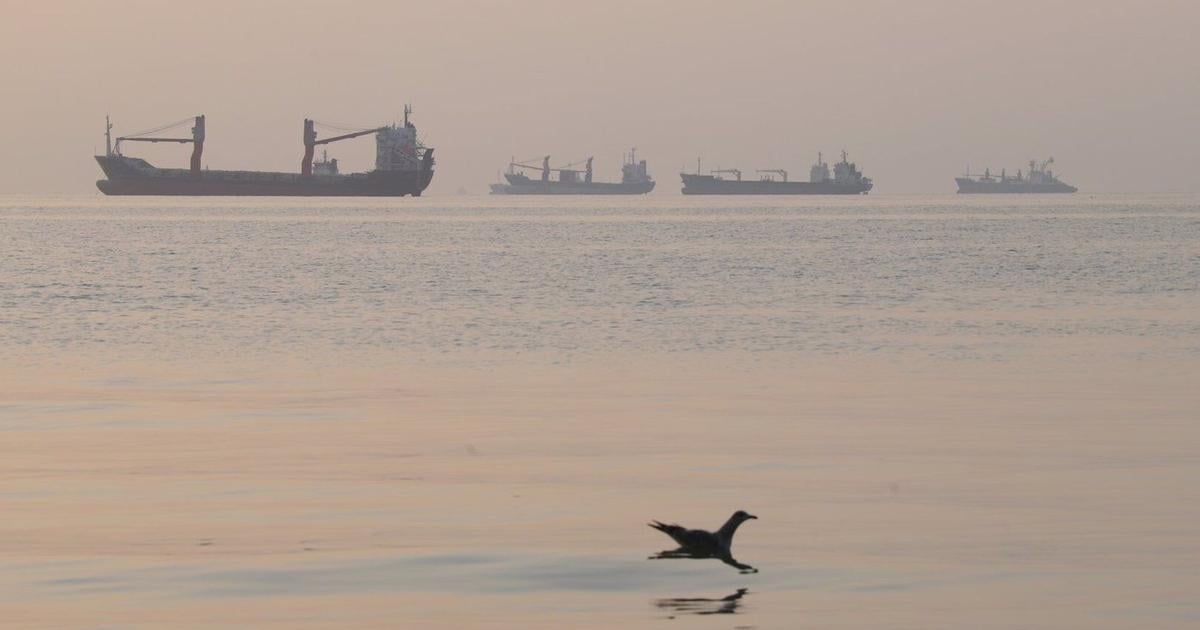
That would include basically the Iranians not attacking ships in the Strait of Hormuz to allow for direct talks to begin again between Washington and Tehran. asserted
talks → include → Washington
And Trump was asked about the possibility of restarting the war with Iran. asserted
Trump → ask → Iran
He was at a Halloween party at Mar-a-Lago, and he said, we're not in that much of a hurry. asserted
we → say → hurry
We've knocked out almost every piece of military equipment there. asserted
We → knock → equipment
We've knocked out a lot of their manufacturing capabilities. asserted
We → knock → capabilities
We've knocked out the nuclear. asserted
We → knock → nuclear
We've knocked out their nuclear. asserted
We → knock → nuclear
We still have to take care of, I would say, one or two sites, but we can do that in 10 minutes. asserted
we → have → minutes
So as you heard there, President Trump isn't really saying what he might do after Tuesday's elections. uncertain
he → hear → elections
Now, everyone I have been speaking to in the Gulf - from senior European diplomats to Arab military generals - no one has any idea what Trump will do, but the lives of tens of millions of people in the Gulf hinge on his decision. asserted
lives → speak → decision
And we have heard President Trump say many times that Iran is essentially finished. asserted
Iran → hear → ?
We heard him say that again in the cut you just played for us. asserted
you → hear → us
Based on your reporting, how true is that? asserted
that → base → reporting
I mean, Iran was hit hard after the U.S. and Israel launched this war eight months ago, killing the country's supreme leader, top military commanders, taking out many of its ships, missile production sites. asserted
U.S. → mean → ships
But even after eight months of war and crippling U.S. economic sanctions, the war has not toppled Iran's regime as Israel said it was its stated goal. asserted
it → topple → regime
And Iran's Revolutionary Guard force is still very capable of inflicting pain on Gulf Arab countries. asserted
force → inflict → countries
These are some of the world's most important oil and gas producers, and this war and Iran's closure of the Strait of Hormuz has caused oil and gas prices to rise globally. asserted
prices → cause → Hormuz
Aya, you said that Iran could inflict pain on other Gulf Arab countries. uncertain
Iran → say → countries
Is Iran saying what it would do if it's attacked again? asserted
it → say → what
The message from Iran's supreme leader, Mojtaba Khamenei, to senior commanders of Iran's armed forces this weekend is that any threat to the country must be met with an immediate response that is, quote, "without geographical limitations." asserted
that → meet → limitations
Now, Iran's state media says this means that any new Israeli or U.S. attacks on Iran will inflict even greater damage than we have already seen. asserted
we → say → damage
We mentioned that you are in Bahrain. asserted
you → mention → Bahrain
Are you seeing signs of damage? asserted
you → see → damage
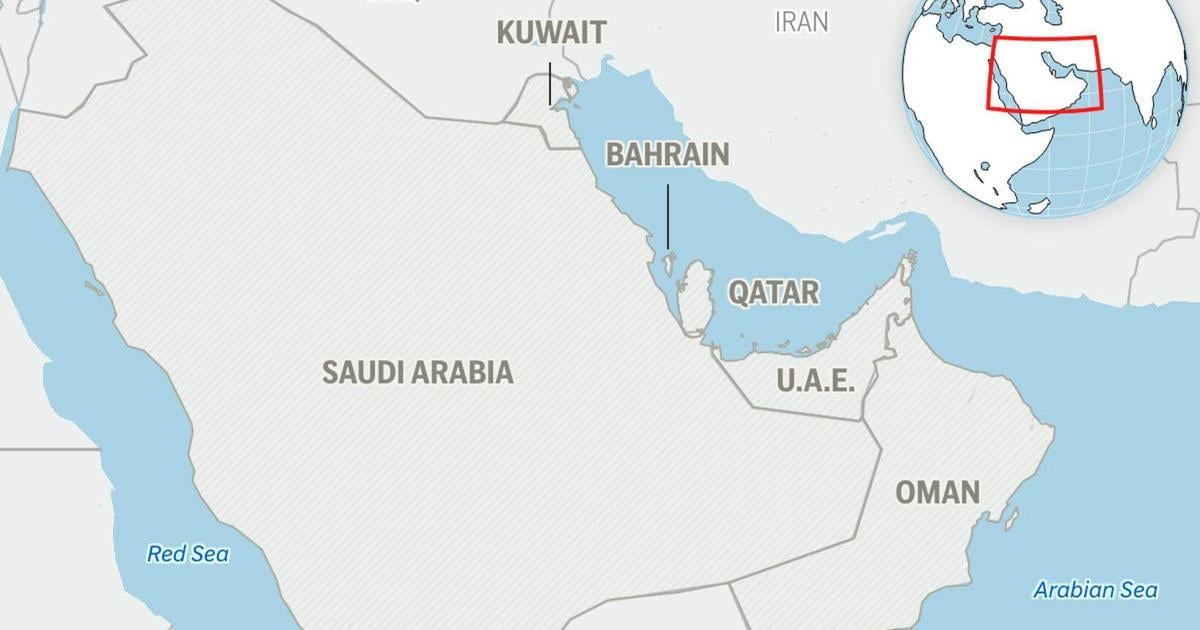
But on the first day of this war on February 28, Iran hit back at U.S. military sites across the region, and they hit here on the 5th Fleet's logistics hub and warehouses. asserted
they → hit → hub
So you can't take photos of facilities like this here in Bahrain that have been hit, but you can see the damage to the 5th Fleet's hub right there from the highway. asserted
you → take → highway
I could see radar equipment that had been hit, and I could see charred and blackened warehouses where the 5th Fleet logistics hub is. uncertain
hub → see → warehouses
And there used to be 8,000 military personnel on this base before the war, and now it's down to less than a hundred. asserted
it → use → hundred
And today, Bahrain's foreign minister, Abdullatif Al Zayani, spoke of the many missiles and drones fired at his country by Iran, not just at U.S. military sites but also civilian infrastructure asserted
minister → speak → sites
And he noted that Iran's Revolutionary Guard this month has made new threats to hit undersea internet cables that carry data through the Strait of Hormuz to Gulf States if a war resumes. asserted
war → note → States
This follows the same pattern we have seen at sea - a shared artery is being used as a tool of pressure and threat. asserted
artery → follow → pressure
…and 17 more, not listed.

Give feedback · no sign-in needed

No sign-in needed for now. Your note is sent without a name, so it cannot be answered.

History Support