Photo via Toronto Star

New Zealand votes in an election expected to be tight after a tense campaign

Read the original at Toronto Star ↗
Cite

Graham-mclay, C. (2026, November 5). New Zealand votes in an election expected to be tight after a tense campaign. Toronto Star. https://www.thestar.com/news/world/australia/new-zealand-votes-in-an-election-expected-to-be-tight-after-a-tense-campaign/article_9e66ac66-d491-5db9-aff4-42e423816abe.html

Dated from the outlet's own feed. Check the original for its byline.

Toronto Star · collected 2026-11-05 · by Charlotte Graham-mclay

Quick Summary

New Zealand held its general election on October 26, with results due Saturday evening. The race is tight between the incumbent center-right National Party led by Christopher Luxon and the opposition center-left Labour Party headed by Chris Hipkins. Both parties face challenges after three years of conservative governance marred by economic issues such as high unemployment and cost-of-living pressures. Analysts predict neither major party will secure a simple majority, potentially giving smaller, more populist parties significant influence in forming a governing coalition.
Written by AI on 2026-11-05, from this article's own text only (the story summary below draws on all the coverage).
See how they differ ↓

AI analysis

Story summary

On November 7, 2026, New Zealand held a tightly contested general election with no clear winner emerging. The ruling centre-right National Party and the main opposition Labour Party ended up in a deadlock, with neither securing enough seats to govern alone. This has left the country facing weeks of negotiations for coalition-building among smaller parties like ACT and NZ First, which could determine who forms the next government. The election was marked by voter disillusionment and a shift towards minor parties as major parties failed to address key issues such as living costs, unemployment, and healthcare effectively.

Written for “New Zealand Election Too Close To Call” on 2026-11-21, grounded in this article and the 13 other(s) covering the same event.

How they differ

11 outlets covered “New Zealand Election Too Close To Call”.

What each outlet says

One AI summary per outlet of its latest article on this story, written from that article alone and checked against it. Open the article for the outlet's own words.

Toronto StarThis outlet5 Nov

New Zealand held its general election on October 26, with results due Saturday evening. The race is tight between the incumbent center-right National Party led by Christopher Luxon and the opposition center-left Labour Party headed by Chris Hipkins. Both parties face challenges after three years of conservative governance marred by economic issues such as high unemployment and cost-of-living pressures. Analysts…

New Zealand votes in an election expected to be tight after a tense campaign (this article)
BBC8 Nov

New Zealand voters participated in a closely contested election on Saturday amid a climate of widespread disillusionment and apathy. Young voters in particular expressed feelings of fatigue and cynicism towards the political process. The election results show a record number of voters abandoning major parties, leading to an unprecedentedly tight race with smaller parties like the Greens, Act Party, and Opportunity…

'Flat', 'tired', 'cynical': Unusually gloomy Kiwis deliver New Zealand's tightest election in years →2 articles from BBC on this story
The Guardian8 Nov

New Zealand's recent election concluded without a clear winner, requiring coalition negotiations to form the next government. As of now, Christopher Luxon’s National party and its right-wing partners could potentially form a majority with 67 seats out of 130. Meanwhile, Chris Hipkins' Labour-led left-wing bloc has secured 56 seats. The newly emerged Opportunity party, led by Qiu-Lae Wong, holds seven seats and may…

New Zealand election coalition talks will likely take weeks – as it happened →2 articles from The Guardian on this story
The Hindu8 Nov

New Zealand's election on November 7, 2026, remains undecided as early results show neither the National Party nor Labour securing enough seats for majority rule. With voter concerns centered around economic hardships and high living costs exacerbated by global issues, both parties are competing to form a coalition with minor parties like Opportunity, which is projected to win over five percent of the vote. As of…

New Zealand vote still too close to call as results trickle in →2 articles from The Hindu on this story
South China Morning Post5 Nov

The upcoming New Zealand election may influence the country’s foreign policy and defence priorities regarding its relationship with Washington. With major parties closely contesting the vote on Saturday, the direction of these policies will likely depend on smaller parties that could be part of a coalition government. Robert Patman, an international relations professor at the University of Otago, notes that a…

Will New Zealand’s election reshape its ‘softly-softly’ approach to Trump? →
Al Jazeera5 Nov

New Zealand is preparing for a closely contested general election on November 7, with polls showing the National Party and Labour Party nearly tied. The mixed-member proportional (MMP) system means neither party is likely to secure enough seats to govern alone, necessitating support from smaller parties. Prime Minister Christopher Luxon of the National Party is seeking re-election after leading his party back to…

New Zealand braces for knife-edge election: What you need to know →
Show 5 more outlets
ABC News (AU)5 Nov

New Zealand voters head to the polls as the election campaign concludes with Prime Minister Christopher Luxon trying to secure a second term despite economic challenges and rising living costs. His main challenger is Christopher Hipkins, who aims to regain the position he briefly held in 2023. Polls indicate that cost of living, inflation, and the economy are top concerns for nearly two-thirds of voters, with many…

What matters to NZ voters? Economy, living costs, and then daylight →
NPR8 Nov

New Zealand's recent election resulted in no clear winner, leaving leaders to negotiate for weeks before forming a government. The conservative National party and the center-left Labour party are both short of a majority, with minor parties holding key leverage due to their increased representation. A new entrant, Opportunity led by Qiulae Wong, secured seven seats, complicating negotiations further as it remains…

No clear winner in New Zealand election, as leaders prepare for weeks of talks →
Euronews8 Nov

New Zealand is tallying votes after a closely contested election where the main issues were cost-of-living concerns and economic stability. Prime Minister Christopher Luxon’s National Party and Chris Hipkins’ Labour Party are nearly tied, with Labour slightly ahead at 29.71% to the National Party's 29.41%, based on partial results. The Green Party and ACT New Zealand are also significant players, each securing over…

New Zealand counts votes in razor-thin election after campaign centred on cost of living →
The Independent8 Nov

New Zealand’s recent general election ended in a deadlock between the ruling centre-right National Party and the main opposition Labour Party, both polling around 29% of the vote with only a few thousand votes separating them. The smaller parties, including the Greens, ACT, NZ First, Opportunity, and TPM, could play significant roles in forming a coalition government. Christopher Luxon’s National Party is leading…

Relative newcomer emerges as kingmaker after New Zealand election yields deadlock →
Deutsche Welle9 Nov

In New Zealand's recent general election, the incumbent center-right National Party and the opposition Labour Party are in a tight race, each holding around 30% of the vote as over 95% of ballots have been counted. The National Party currently leads by about 3,500 votes but holds only a slim majority in parliament, necessitating potential coalition-building with smaller parties like New Zealand First and ACT to form…

New Zealand election too close to call with over 95% of votes counted →

Where they agree and split

Framing

How the first headlines put it

Stated as fact4
The headlines (4)

Will New Zealand’s election reshape its ‘softly-softly’ approach to Trump? South China Morning Post · stated as fact

New Zealand braces for knife-edge election: What you need to know Al Jazeera · stated as fact

What matters to NZ voters? Economy, living costs, and then daylight ABC News (Australia) · stated as fact

New Zealand votes in an election expected to be tight after a tense campaign Toronto Star · stated as fact

The full story: what happened, how it changed, and all 14 articles →

Compared with similar articles

This article reads leans left and hedges 12% of its claims. Each row says how that neighbour differs.
The Hindu
Leans left Hedges 7 of 42 claims Outlet record 78/100
South China Morning Post
Leans right further right than this Hedges 1 of 3 claims Outlet record 62/100
ABC News (AU)
Leans left Hedges 6 of 74 claims Outlet record 67/100
The Guardian
Leans left Hedges 6 of 34 claims Outlet record 64/100
“Article A describes the uncertainty after preliminary results were released, while Article B discusses the tense campaign leading up to the election day.”
Toronto Star
Hedges 6 of 29 claims Outlet record 64/100
“Article A describes the final day of voting and the unusual law banning political discussion, while Article B discusses the tense campaign and uncertainty about election results expected to be announced on Saturday.”
Deutsche Welle
Hedges 5 of 15 claims Outlet record 95/100
Al Jazeera
Hedges 8 of 61 claims Outlet record 60/100
“Article A discusses the upcoming election on November 7, while Article B reports on voting already occurring on that day.”
BBC News
Hedges 0 of 4 claims Outlet record 65/100
“Both articles discuss the upcoming New Zealand election but do not describe the same specific incident or occurrence.”
The Guardian
Hedges 7 of 55 claims Outlet record 64/100
“The articles describe different stages of the election process in New Zealand, with Article A focusing on the voting day and the tense campaign leading up to it, while Article B discusses the post-election uncertainty and coalition talks.”
The Sydney Morning Herald
Leans left Hedges 4 of 33 claims Outlet record 61/100
“Article A reports on the voting day and tense campaign of New Zealand's election, while Article B discusses broader issues at stake in the upcoming election.”

Story

New Zealand Election Too Close To Call
Politics · 14 article(s) covering the same event. Compare every outlet's account →
How this article was measured signals, leaning charts, publisher record, byline, topics and claims

Signals How these are calculated →

Claims extracted
41
sentences that state something as happening or true
Uncertain
12%
5 of 41 hedged ("reportedly", "may", "according to")
Leaning
Leans left
of the writing, not the subject · beta estimate
Publisher signals
64/100
Toronto Star's corrections and hedging, across everything collected from it. Not a measure of accuracy.
Outlets on this story
14
Politics
Same framing elsewhere
1
articles that frame the event the way this one does
Analyzed 2026-11-05 · how these are computed

How this is being covered How these are calculated →

Article leaning vs. publisher reliability
Source leaning vs. consistency

Publisher

Toronto Star · 16472 article(s) · 31 correction(s) detected
Running correction rate · 31 correction(s)
2026-11-17
Correction
2026-10-26
Correction
2026-10-24
Correction
2026-10-07
Correction
2026-09-24
Correction

Who wrote this

Charlotte Graham-mclay
8 article(s) here · 1 carrying a prediction
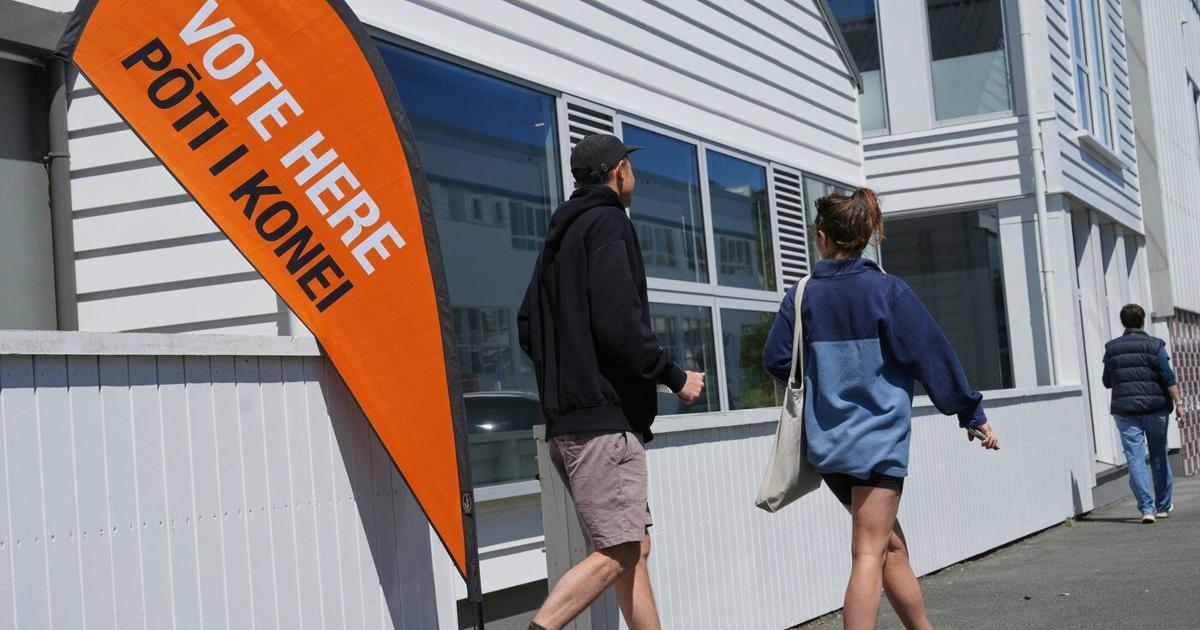
Polling stations opened Saturday at 9 a.m. and will close at 7 p.m.
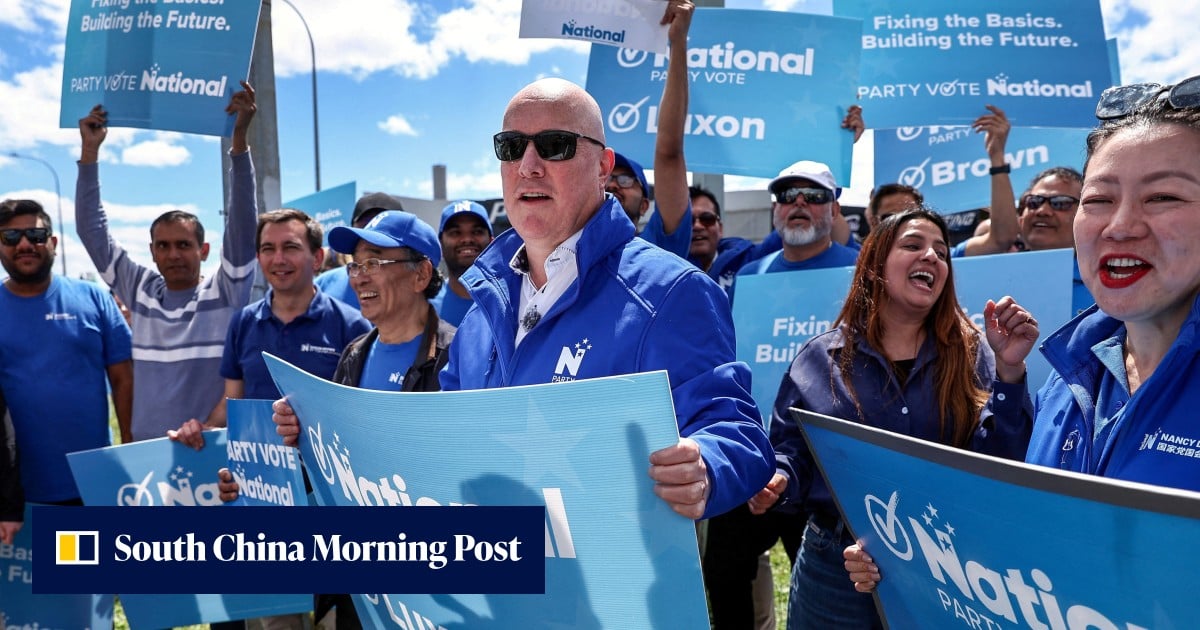
WELLINGTON, New Zealand (AP) — New Zealand’s election results will be announced Saturday after a tense campaign left the main contenders neck and neck with no clear route to victory for either, as voters evaluated three years of conservative rule.
Many also said they hoped Australia’s easygoing culture of approachable politicians wouldn’t change.
The government’s Charities Registration Board said Tuesday that the group’s charitable status will be revoked for three years beginning Sept. 23.
Also by Charlotte Graham-mclay
Nothing else under this byline is closely related to this article, so these are simply their most recent.
All 8 articles by Charlotte Graham-mclay →

Topics

Labour National New Zealand New Zealand’s WELLINGTON

Subjects

Luxon PERSON · 6× New Zealand’s GPE · 6× Labour ORG · 5× National ORG · 5× New Zealand GPE · 4× Hipkins PERSON · 3× ACT ORG · 2× Chris Hipkins PERSON · 1× Christopher Luxon PERSON · 1× WELLINGTON GPE · 1×

Narrative

While he highlights trade deals signed during his tenure, economic recovery has been slow and unemployment reached an 11-year high in the September quarter. New Zealand’s stubbornly steep costs of living send thousands of people each year to live in the country’s larger, wealthier neighbor Australia. “You’ve got an incumbent coalition government which is struggling with the same incumbency problems that we’re seeing in our Western democracies around the world,” said Ben Thomas, a former National government press secretary and now the director of a public affairs firm.
framing: assertive · carried by 1 article(s) · first seen 2026-11-05
WELLINGTON, New Zealand (AP) — New Zealand’s election results will be announced Saturday after a tense campaign left the main contenders neck and neck with no clear route to victory for either, as voters evaluated three years of conservative rule.

Claims (41 extracted, 5 hedged)

WELLINGTON, New Zealand (AP) — New Zealand’s election results will be announced Saturday after a tense campaign left the main contenders neck and neck with no clear route to victory for either, as voters evaluated three years of conservative rule. asserted
voters → announce → rule
Analysts don’t expect a simple majority for either the governing coalition, led by the center-right National party, or the opposition bloc led by center-left Labour. asserted
Analysts → expect → Labour
The uncertainty may reflect voter discontent about both major parties as economic problems linger following international shocks that have buffeted New Zealand’s trade-based economy. uncertain
that → reflect → economy
There’s also growing support for politicians on the ideological flanks, a global trend that has gathered pace in New Zealand later than elsewhere. asserted
that → ’ → Zealand
An unclear result could throw greater power to minor, more populist parties. uncertain
result → throw → parties
The National leader Christopher Luxon faces a tough fight for a second term as prime minister after facing two confidence votes among his own lawmakers this year. asserted
leader → face → lawmakers
Meanwhile, Labour’s Chris Hipkins seeks a second chance at power after a resounding defeat three years ago. asserted
Hipkins → seek → defeat
Voting began Oct. 26 with results due for release after polling places close Saturday evening. asserted
places → begin → release
New Zealand has a single house of government, and there are no states. asserted
Zealand → have → government
The central government, elected for three-year terms, holds ultimate sway over the country’s direction. asserted
government → elect → direction
Luxon was elected on pledges of growth that haven’t materialized Neither major party leader has managed to connect strongly with voters, analysts said. asserted
analysts → elect → voters
Luxon’s party won the 2023 election on pledges to reverse New Zealand’s post-pandemic economic malaise. asserted
party → win → malaise
While he highlights trade deals signed during his tenure, economic recovery has been slow and unemployment reached an 11-year high in the September quarter. New Zealand’s stubbornly steep costs of living send thousands of people each year to live in the country’s larger, wealthier neighbor Australia. “You’ve got an incumbent coalition government which is struggling with the same incumbency problems that we’re seeing in our Western democracies around the world,” said Ben Thomas, a former National government press secretary and now the director of a public affairs firm. asserted
Thomas → highlight → firm
However, Hipkins and his Labour party, who are pledging to ease living costs and fund New Zealand’s struggling public healthcare system, haven’t surged in support either. asserted
who → pledge → support
Neither Labour nor National has recorded more than 30% of the vote in polls close to Nov. 7. asserted
Labour → record → Nov.
“I think there is a broader mistrust in the electorate of both of our traditional two major parties,” said Thomas. asserted
Thomas → think → parties
That sentiment has been a windfall for smaller parties that Luxon or Hipkins would rely upon to form a governing coalition. asserted
Luxon → rely → coalition
The vote is an appraisal of New Zealand’s most right-wing modern government New Zealanders don’t elect prime ministers. asserted
Zealanders → elect → ministers
Instead they cast two votes, one for their preferred party and one to select a local representative. asserted
they → cast → representative
To govern, a coalition of parties must hold more than half of parliament’s seats. asserted
coalition → govern → seats
The total number of seats is determined by official calculations on election night based on quirks of the country’s vote. asserted
number → determine → vote
National in 2023 joined with two right-wing parties, populist New Zealand First and libertarian ACT, to form the country’s most conservative modern government. asserted
National → join → government
Detractors of Luxon, a business executive who entered parliament in 2020, note his political inexperience compared to the leaders in his power-sharing deal. asserted
who → enter → deal
In particular, the minor parties sought to repeal legal recognition of Indigenous Māori rights. asserted
parties → seek → rights
About 100,000 people marched on Parliament to oppose one of the measures secured by ACT in its governing deal with Luxon. asserted
people → march → Luxon
The power that the smaller parties won from Luxon, said Bernard Hickey, an economic and political analyst, “created this surprise, I think, for many voters that the tail was wagging the dog for the first time. asserted
tail → win → time
Labour hasn’t capitalized on flagging support for rival On Hipkins’ side, the left-wing Green party has also experienced strong support. asserted
party → capitalize → support
Hipkins, a career politician, was thrust into the premiership nine months before the 2023 election when his predecessor Jacinda Ardern quit. asserted
predecessor → thrust → election
Labour hasn’t surged in popularity since losing that vote. asserted
Labour → surge → vote
“Whoever is in government after November 7 … will have to reckon with much more assertive minor parties that want much greater concessions and much more influence than they’ve had in the past,” Thomas said. asserted
Thomas → have → past
A novice politician could decide who governs Election deadlocks have previously seen the two blocs race to establish a coalition deal by wooing a minor party that holds the balance of power. uncertain
that → decide → power
Recent polls suggest Saturday’s election could yield such a result if The Opportunity Party is elected to Parliament for the first time. uncertain
Party → suggest → time
The group’s candidates are centrist, socially liberal technocrats who favor a land tax, universal basic income and pro-environment measures. asserted
who → favor → tax
The party’s new leader, 38-year-old Qiulae Wong, who has worked in business but not in politics, has pledged to negotiate first with whichever party wins the most votes if she holds the tiebreaker role. asserted
she → work → role
Luxon has ruled out governing with Opportunity. asserted
Luxon → rule → Opportunity
Analysts say, however, that both major party leaders would likely answer the phone if Wong held the only path to power on election night. asserted
Wong → say → night
A fractured result could signal a change to centrist New Zealand politics A loss for a single-term government like Luxon’s would be unprecedented in modern times in a country where second terms are all but guaranteed. uncertain
terms → signal → country
Voters in the South Pacific nation of 5 million people had before 2023 favored long alternating stretches of National and Labour-led governments. asserted
Voters → favor → governments
That was seen as reflecting a largely contented public who believed the country was going in the right direction. asserted
country → see → direction
The sentiment lingered in New Zealand long after countries such as the United States and Britain began to experience political fracture; but it swung sharply to a negative mood for the first time five years ago in the pandemic era as global tumult increased. Thomas, the analyst, said that the public is “certainly more polarized than ever.” asserted
public → linger → era
…and 1 more, not listed.

Give feedback · no sign-in needed

No sign-in needed for now. Your note is sent without a name, so it cannot be answered.

History Support