Photo via Euronews

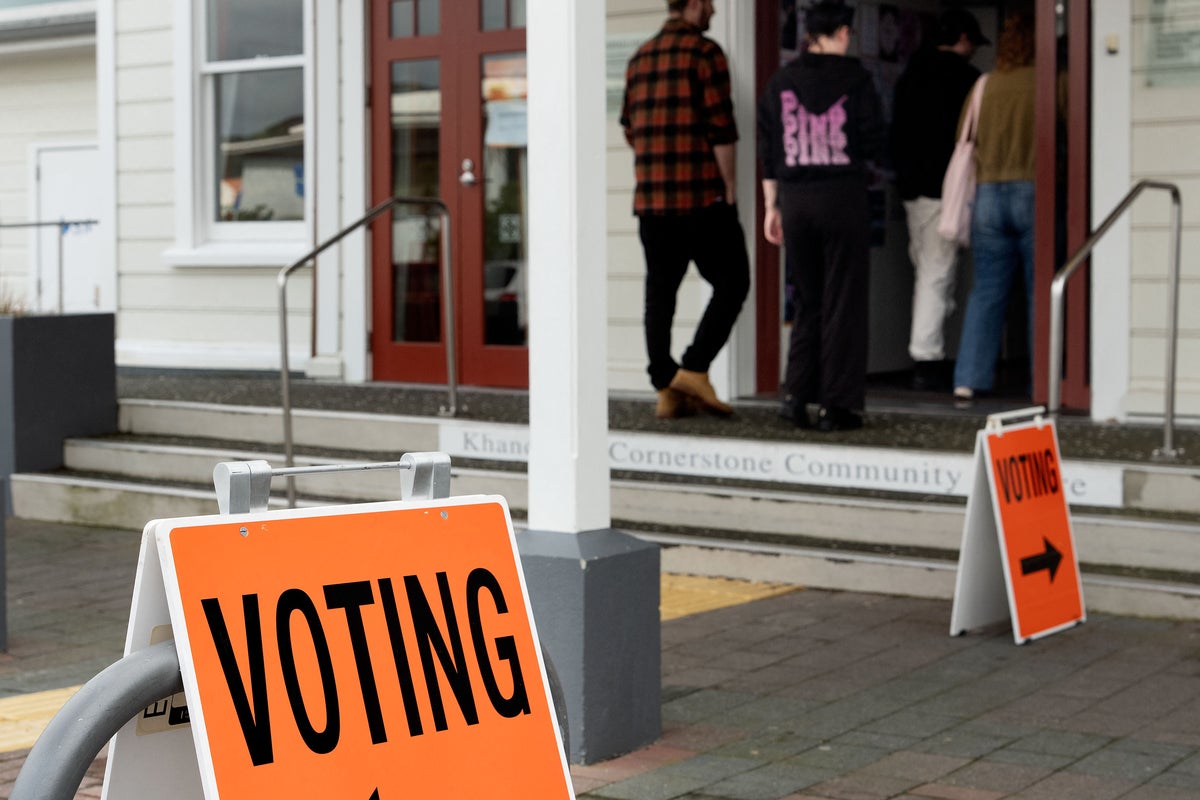
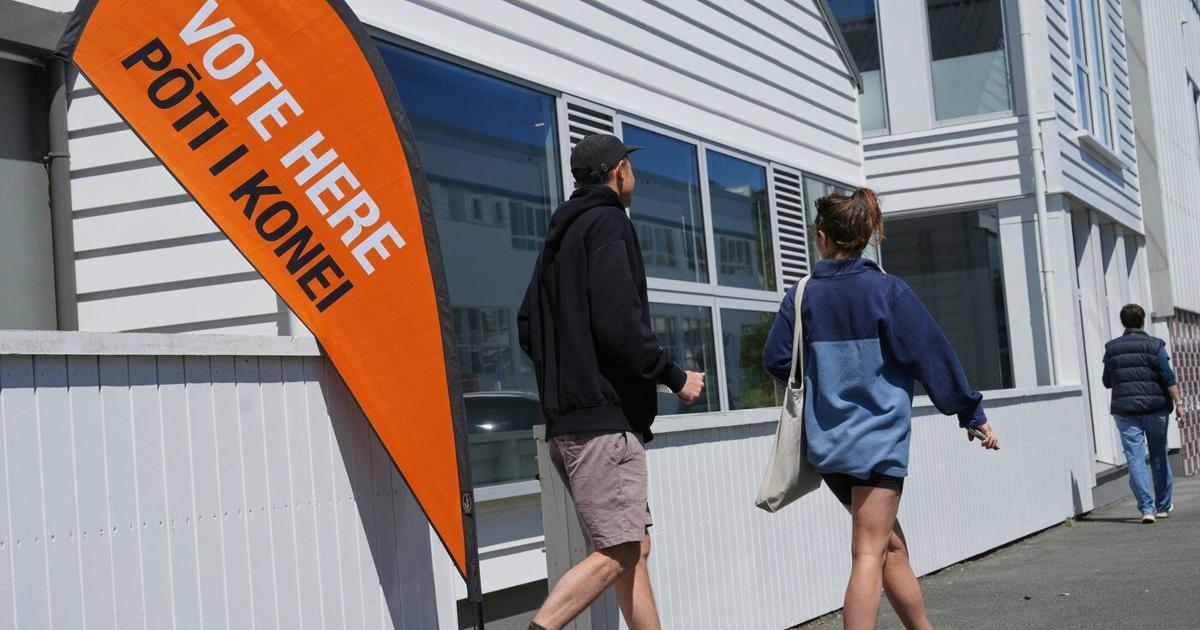
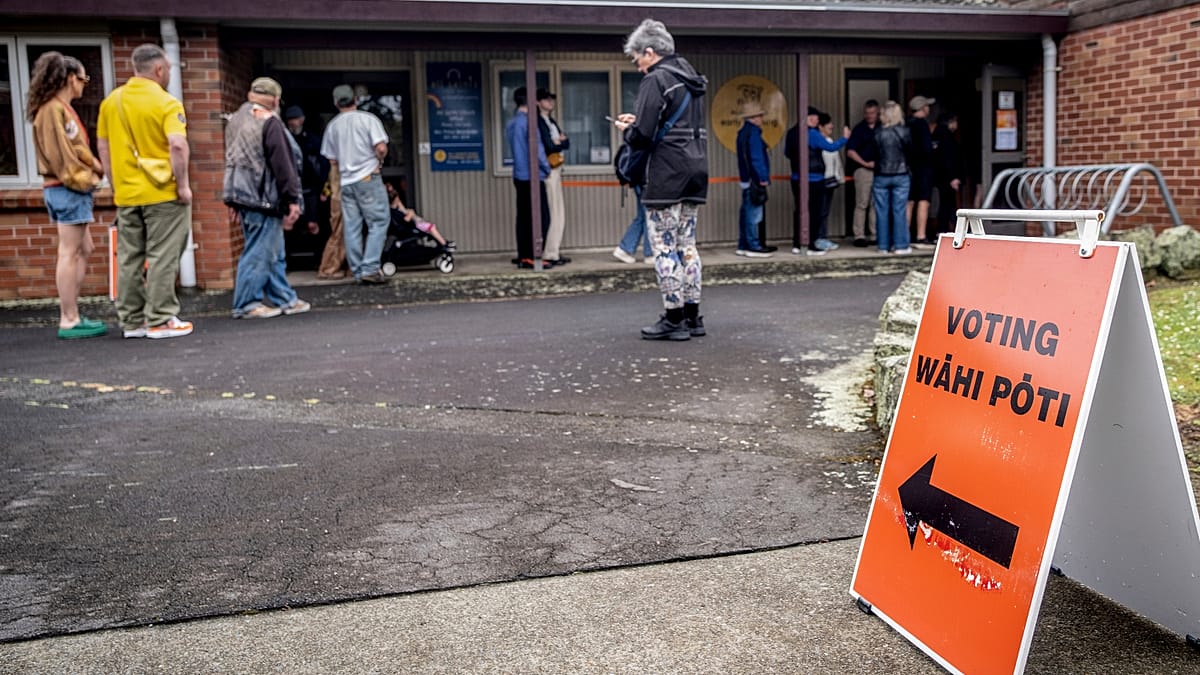
New Zealand counts votes in razor-thin election after campaign centred on cost of living

Read the original at Euronews ↗
Cite

Rennolds, N. (2026, November 7). New Zealand counts votes in razor-thin election after campaign centred on cost of living. Euronews. https://www.euronews.com/2026/11/07/new-zealand-counts-votes-in-razor-thin-election-after-campaign-centred-on-cost-of-living

Dated from the outlet's own feed. Check the original for its byline.

Euronews · collected 2026-11-08 · by Nathan Rennolds

Quick Summary

New Zealand is tallying votes after a closely contested election where the main issues were cost-of-living concerns and economic stability. Prime Minister Christopher Luxon’s National Party and Chris Hipkins’ Labour Party are nearly tied, with Labour slightly ahead at 29.71% to the National Party's 29.41%, based on partial results. The Green Party and ACT New Zealand are also significant players, each securing over 10% of votes counted so far. With no party likely to secure a majority, forming the next government will require coalition-building between parties.
Written by AI on 2026-11-08, from this article's own text only (the story summary below draws on all the coverage).
See how they differ ↓

AI analysis

Story summary

On November 7, 2026, New Zealand held a tightly contested general election with no clear winner emerging. The ruling centre-right National Party and the main opposition Labour Party ended up in a deadlock, with neither securing enough seats to govern alone. This has left the country facing weeks of negotiations for coalition-building among smaller parties like ACT and NZ First, which could determine who forms the next government. The election was marked by voter disillusionment and a shift towards minor parties as major parties failed to address key issues such as living costs, unemployment, and healthcare effectively.

Written for “New Zealand Election Too Close To Call” on 2026-11-21, grounded in this article and the 13 other(s) covering the same event.

How they differ

11 outlets covered “New Zealand Election Too Close To Call”.

What each outlet says

One AI summary per outlet of its latest article on this story, written from that article alone and checked against it. Open the article for the outlet's own words.

EuronewsThis outlet8 Nov

New Zealand is tallying votes after a closely contested election where the main issues were cost-of-living concerns and economic stability. Prime Minister Christopher Luxon’s National Party and Chris Hipkins’ Labour Party are nearly tied, with Labour slightly ahead at 29.71% to the National Party's 29.41%, based on partial results. The Green Party and ACT New Zealand are also significant players, each securing over…

New Zealand counts votes in razor-thin election after campaign centred on cost of living (this article)
BBC8 Nov

New Zealand voters participated in a closely contested election on Saturday amid a climate of widespread disillusionment and apathy. Young voters in particular expressed feelings of fatigue and cynicism towards the political process. The election results show a record number of voters abandoning major parties, leading to an unprecedentedly tight race with smaller parties like the Greens, Act Party, and Opportunity…

'Flat', 'tired', 'cynical': Unusually gloomy Kiwis deliver New Zealand's tightest election in years →2 articles from BBC on this story
The Guardian8 Nov

New Zealand's recent election concluded without a clear winner, requiring coalition negotiations to form the next government. As of now, Christopher Luxon’s National party and its right-wing partners could potentially form a majority with 67 seats out of 130. Meanwhile, Chris Hipkins' Labour-led left-wing bloc has secured 56 seats. The newly emerged Opportunity party, led by Qiu-Lae Wong, holds seven seats and may…

New Zealand election coalition talks will likely take weeks – as it happened →2 articles from The Guardian on this story
The Hindu8 Nov

New Zealand's election on November 7, 2026, remains undecided as early results show neither the National Party nor Labour securing enough seats for majority rule. With voter concerns centered around economic hardships and high living costs exacerbated by global issues, both parties are competing to form a coalition with minor parties like Opportunity, which is projected to win over five percent of the vote. As of…

New Zealand vote still too close to call as results trickle in →2 articles from The Hindu on this story
South China Morning Post5 Nov

The upcoming New Zealand election may influence the country’s foreign policy and defence priorities regarding its relationship with Washington. With major parties closely contesting the vote on Saturday, the direction of these policies will likely depend on smaller parties that could be part of a coalition government. Robert Patman, an international relations professor at the University of Otago, notes that a…

Will New Zealand’s election reshape its ‘softly-softly’ approach to Trump? →
Al Jazeera5 Nov

New Zealand is preparing for a closely contested general election on November 7, with polls showing the National Party and Labour Party nearly tied. The mixed-member proportional (MMP) system means neither party is likely to secure enough seats to govern alone, necessitating support from smaller parties. Prime Minister Christopher Luxon of the National Party is seeking re-election after leading his party back to…

New Zealand braces for knife-edge election: What you need to know →
Show 5 more outlets
ABC News (AU)5 Nov

New Zealand voters head to the polls as the election campaign concludes with Prime Minister Christopher Luxon trying to secure a second term despite economic challenges and rising living costs. His main challenger is Christopher Hipkins, who aims to regain the position he briefly held in 2023. Polls indicate that cost of living, inflation, and the economy are top concerns for nearly two-thirds of voters, with many…

What matters to NZ voters? Economy, living costs, and then daylight →
Toronto Star5 Nov

New Zealand held its general election on October 26, with results due Saturday evening. The race is tight between the incumbent center-right National Party led by Christopher Luxon and the opposition center-left Labour Party headed by Chris Hipkins. Both parties face challenges after three years of conservative governance marred by economic issues such as high unemployment and cost-of-living pressures. Analysts…

New Zealand votes in an election expected to be tight after a tense campaign →
NPR8 Nov

New Zealand's recent election resulted in no clear winner, leaving leaders to negotiate for weeks before forming a government. The conservative National party and the center-left Labour party are both short of a majority, with minor parties holding key leverage due to their increased representation. A new entrant, Opportunity led by Qiulae Wong, secured seven seats, complicating negotiations further as it remains…

No clear winner in New Zealand election, as leaders prepare for weeks of talks →
The Independent8 Nov

New Zealand’s recent general election ended in a deadlock between the ruling centre-right National Party and the main opposition Labour Party, both polling around 29% of the vote with only a few thousand votes separating them. The smaller parties, including the Greens, ACT, NZ First, Opportunity, and TPM, could play significant roles in forming a coalition government. Christopher Luxon’s National Party is leading…

Relative newcomer emerges as kingmaker after New Zealand election yields deadlock →
Deutsche Welle9 Nov

In New Zealand's recent general election, the incumbent center-right National Party and the opposition Labour Party are in a tight race, each holding around 30% of the vote as over 95% of ballots have been counted. The National Party currently leads by about 3,500 votes but holds only a slim majority in parliament, necessitating potential coalition-building with smaller parties like New Zealand First and ACT to form…

New Zealand election too close to call with over 95% of votes counted →

Where they agree and split

Framing

How the first headlines put it

Stated as fact4
The headlines (4)

Will New Zealand’s election reshape its ‘softly-softly’ approach to Trump? South China Morning Post · stated as fact

New Zealand braces for knife-edge election: What you need to know Al Jazeera · stated as fact

What matters to NZ voters? Economy, living costs, and then daylight ABC News (Australia) · stated as fact

New Zealand votes in an election expected to be tight after a tense campaign Toronto Star · stated as fact

The full story: what happened, how it changed, and all 14 articles →

Compared with similar articles

This article reads unscored and hedges 0% of its claims. Each row says how that neighbour differs.
The Independent
Hedges 5 of 17 claims Outlet record 59/100
The Hindu
Leans left Hedges 7 of 42 claims Outlet record 78/100
Deutsche Welle
Hedges 5 of 15 claims Outlet record 95/100
NPR
Leans left Hedges 8 of 44 claims Outlet record 60/100
The Guardian
Leans left Hedges 6 of 34 claims Outlet record 64/100
BBC News
Leans left Hedges 5 of 68 claims Outlet record 65/100
The Hindu
Hedges 2 of 26 claims Outlet record 78/100
Toronto Star
Hedges 6 of 29 claims Outlet record 65/100
“Article A describes the final day of voting on November 6th, while Article B reports on early results and outcomes after the election period.”
ABC News (AU)
Leans left Hedges 6 of 74 claims Outlet record 67/100
“The first article describes the campaign leading up to an election, while the second discusses voting day and early results.”
Toronto Star
Leans left Hedges 5 of 41 claims Outlet record 65/100
“The articles refer to the voting process and early results of an election, but differ in timing and details provided. ARTICLE A focuses on the tense campaign and voter evaluation before the announcement, while ARTICLE B mentions early results showing a neck-and-neck race.”

Story

New Zealand Election Too Close To Call
Politics · 14 article(s) covering the same event. Compare every outlet's account →
How this article was measured signals, leaning charts, publisher record, byline, topics and claims

Signals How these are calculated →

Claims extracted
20
sentences that state something as happening or true
Uncertain
0%
0 of 20 hedged ("reportedly", "may", "according to")
Leaning
not political
takes no side on a contested political question
Publisher signals
60/100
Euronews's corrections and hedging, across everything collected from it. Not a measure of accuracy.
Outlets on this story
14
Politics
Same framing elsewhere
1
articles that frame the event the way this one does
Analyzed 2026-11-08 · how these are computed

How this is being covered How these are calculated →

Article leaning vs. publisher reliability
Source leaning vs. consistency

Publisher

Euronews · 1563 article(s) · 1 correction(s) detected
Running correction rate · 1 correction(s)

Who wrote this

Nathan Rennolds
79 article(s) here · 1 carrying a prediction
A new agreement is expected to be published on Saturday.
2026-11-21 · assertive framing · Fossil fuel row sees COP31 talks spill into overtime
Trump, who has embarked on a campaign to remodel Washington since his return to the White House in January 2025, has said the structure would be turned into a "top grade military complex."
And I think mostly for the people in the world, he is a killer," Zelenskyy told CNN in response to a question about Trump's comment, while also warning that such descriptions could ease pressure on Putin.
Moving the deadline will require a change to this law.
Kirsten Davies, the defence department's chief information officer, is set to take over from Cairncross on a temporary basis, the source said.
"Such strikes, especially those that target civilian infrastructure such as Wildberries, have actually probably hardened the Russian public's resolve and the Kremlin's own willingness to escalate," he continued.
"He was rushed to a specialist equine hospital for emergency veterinary treatment, but sadly could not be saved." Baker posted a later statement saying he was "deeply distressed by the handling of So You Are's remains." "He was a much-loved horse, and he deserved to be treated with dignity and respect after his death," he said, adding that he understood that the REC Equine Specialists veterinary practice had launched an investigation into the incident.
US President Donald Trump said on Monday that he may meet with North Korean Supreme Leader Kim Jong-un in China this week.
There were 166 passengers and six crew members on board the Copa plane when the incident occurred, it continued, adding that it regretted "any inconvenience and concern this situation may have caused" and that the safety of its passengers and crew members remained its priority.
Speaking to the media on the sidelines of the summit, Carney said his government would work quickly to finalise the deal and that it would come into force in 2027.
Also by Nathan Rennolds
Nothing else under this byline is closely related to this article, so these are simply their most recent.
All 79 articles by Nathan Rennolds →

Topics

Māori New Zealand New Zealand's New Zealanders Rotorua

Subjects

Māori NORP · 6× Rotorua GPE · 3× National Party ORG · 2× New Zealand GPE · 2× New Zealand's GPE · 2× New Zealanders NORP · 2× Waiariki GPE · 2× Chris Hipkins PERSON · 1× Christopher Luxon PERSON · 1× the Labour Party ORG · 1×

Narrative

Prime Minister Christopher Luxon and his National Party-led right-wing coalition are hoping to secure a second term as they face off against main challenger Chris Hipkins of the Labour Party.
framing: assertive · carried by 1 article(s) · first seen 2026-11-08
None of the parties on the ballot are expected to secure a majority in parliament.

Claims (20 extracted, 0 hedged)

In New Zealand, people cast a party vote as well as an electorate vote in a general election. asserted
people → cast → election
With their electorate vote, New Zealanders vote for a candidate to represent their local electorate in parliament. asserted
Zealanders → vote → parliament
They also vote for the party they want to be in government. asserted
they → vote → government
Early results in New Zealand's general election show a neck-and-neck race between the country's two main parties following a campaign that centred on the cost of living and the economy. asserted
that → show → living
Prime Minister Christopher Luxon and his National Party-led right-wing coalition are hoping to secure a second term as they face off against main challenger Chris Hipkins of the Labour Party. asserted
they → lead → Party
With polls closed and the vote count underway, the outcome is too close to call. asserted
outcome → close → ?
Labour is edging ahead on 29.71% of votes to the National's 29.41% at the time of writing. asserted
Labour → edge → writing
The Green Party is next on 13.96% of votes, followed by National Party coalition partners ACT New Zealand on 10.63% and the New Zealand First Party on 9.41%. asserted
Party → follow → %
Just over 42% of votes have been counted so far. asserted
% → count → votes
None of the parties on the ballot are expected to secure a majority in parliament. asserted
None → expect → parliament
In New Zealand, people cast a party vote as well as an electorate vote in a general election. asserted
people → cast → election
With their electorate vote, New Zealanders vote for a candidate to represent their local electorate (voting area) in parliament. asserted
Zealanders → vote → parliament
They also vote for the party they want to be in government. asserted
they → vote → government
People of Māori descent are able to choose between the general roll and the Māori roll. asserted
People → choose → roll
Selecting the Māori roll means a voter picks a candidate in the Māori electorate they live in. asserted
they → select → electorate
If they opt for the general roll, they vote for a candidate in the general electorate. asserted
they → opt → electorate
As an example, someone who lives in Rotorua on New Zealand's North Island that chose the Māori roll would vote in the Waiariki electorate. asserted
that → live → electorate
The candidate who won the most votes in the Māori electorate of Waiariki would then become their local MP. asserted
who → win → Waiariki
If they chose the general roll, they would vote in the Rotorua electorate. asserted
they → choose → electorate
The person who won the most votes in the general electorate of Rotorua would become their local MP. asserted
who → win → Rotorua
Give feedback · no sign-in needed

No sign-in needed for now. Your note is sent without a name, so it cannot be answered.

History Support