Photo via Deutsche Welle

New Zealand election too close to call with over 95% of votes counted

Read the original at Deutsche Welle ↗
Cite

Jones, T., & Inayatullah, S. D. (2026, November 7). New Zealand election too close to call with over 95% of votes counted. Deutsche Welle. https://www.dw.com/en/new-zealand-election-too-close-to-call-with-over-95-of-votes-counted/a-79883056?maca=en-rss-en-world-4025-rdf

Dated from the outlet's own feed. Check the original for its byline.

Deutsche Welle · collected 2026-11-09 · by Timothy Jones, Saim Dušan Inayatullah

Quick Summary

In New Zealand's recent general election, the incumbent center-right National Party and the opposition Labour Party are in a tight race, each holding around 30% of the vote as over 95% of ballots have been counted. The National Party currently leads by about 3,500 votes but holds only a slim majority in parliament, necessitating potential coalition-building with smaller parties like New Zealand First and ACT to form a government. Prime Minister Cristopher Luxon claims a path to forming the next government, while Labour leader Chris Hipkins calls for compromise and common ground among political rivals. The final results, including special votes, are expected on November 27, which could shift the balance of power in parliament.
Written by AI on 2026-11-09, from this article's own text only (the story summary below draws on all the coverage).
See how they differ ↓

AI analysis

Story summary

On November 7, 2026, New Zealand held a tightly contested general election with no clear winner emerging. The ruling centre-right National Party and the main opposition Labour Party ended up in a deadlock, with neither securing enough seats to govern alone. This has left the country facing weeks of negotiations for coalition-building among smaller parties like ACT and NZ First, which could determine who forms the next government. The election was marked by voter disillusionment and a shift towards minor parties as major parties failed to address key issues such as living costs, unemployment, and healthcare effectively.

Written for “New Zealand Election Too Close To Call” on 2026-11-21, grounded in this article and the 13 other(s) covering the same event.

How they differ

11 outlets covered “New Zealand Election Too Close To Call”.

What each outlet says

One AI summary per outlet of its latest article on this story, written from that article alone and checked against it. Open the article for the outlet's own words.

Deutsche WelleThis outlet9 Nov

In New Zealand's recent general election, the incumbent center-right National Party and the opposition Labour Party are in a tight race, each holding around 30% of the vote as over 95% of ballots have been counted. The National Party currently leads by about 3,500 votes but holds only a slim majority in parliament, necessitating potential coalition-building with smaller parties like New Zealand First and ACT to form…

New Zealand election too close to call with over 95% of votes counted (this article)
BBC8 Nov

New Zealand voters participated in a closely contested election on Saturday amid a climate of widespread disillusionment and apathy. Young voters in particular expressed feelings of fatigue and cynicism towards the political process. The election results show a record number of voters abandoning major parties, leading to an unprecedentedly tight race with smaller parties like the Greens, Act Party, and Opportunity…

'Flat', 'tired', 'cynical': Unusually gloomy Kiwis deliver New Zealand's tightest election in years →2 articles from BBC on this story
The Guardian8 Nov

New Zealand's recent election concluded without a clear winner, requiring coalition negotiations to form the next government. As of now, Christopher Luxon’s National party and its right-wing partners could potentially form a majority with 67 seats out of 130. Meanwhile, Chris Hipkins' Labour-led left-wing bloc has secured 56 seats. The newly emerged Opportunity party, led by Qiu-Lae Wong, holds seven seats and may…

New Zealand election coalition talks will likely take weeks – as it happened →2 articles from The Guardian on this story
The Hindu8 Nov

New Zealand's election on November 7, 2026, remains undecided as early results show neither the National Party nor Labour securing enough seats for majority rule. With voter concerns centered around economic hardships and high living costs exacerbated by global issues, both parties are competing to form a coalition with minor parties like Opportunity, which is projected to win over five percent of the vote. As of…

New Zealand vote still too close to call as results trickle in →2 articles from The Hindu on this story
South China Morning Post5 Nov

The upcoming New Zealand election may influence the country’s foreign policy and defence priorities regarding its relationship with Washington. With major parties closely contesting the vote on Saturday, the direction of these policies will likely depend on smaller parties that could be part of a coalition government. Robert Patman, an international relations professor at the University of Otago, notes that a…

Will New Zealand’s election reshape its ‘softly-softly’ approach to Trump? →
Al Jazeera5 Nov

New Zealand is preparing for a closely contested general election on November 7, with polls showing the National Party and Labour Party nearly tied. The mixed-member proportional (MMP) system means neither party is likely to secure enough seats to govern alone, necessitating support from smaller parties. Prime Minister Christopher Luxon of the National Party is seeking re-election after leading his party back to…

New Zealand braces for knife-edge election: What you need to know →
Show 5 more outlets
ABC News (AU)5 Nov

New Zealand voters head to the polls as the election campaign concludes with Prime Minister Christopher Luxon trying to secure a second term despite economic challenges and rising living costs. His main challenger is Christopher Hipkins, who aims to regain the position he briefly held in 2023. Polls indicate that cost of living, inflation, and the economy are top concerns for nearly two-thirds of voters, with many…

What matters to NZ voters? Economy, living costs, and then daylight →
Toronto Star5 Nov

New Zealand held its general election on October 26, with results due Saturday evening. The race is tight between the incumbent center-right National Party led by Christopher Luxon and the opposition center-left Labour Party headed by Chris Hipkins. Both parties face challenges after three years of conservative governance marred by economic issues such as high unemployment and cost-of-living pressures. Analysts…

New Zealand votes in an election expected to be tight after a tense campaign →
NPR8 Nov

New Zealand's recent election resulted in no clear winner, leaving leaders to negotiate for weeks before forming a government. The conservative National party and the center-left Labour party are both short of a majority, with minor parties holding key leverage due to their increased representation. A new entrant, Opportunity led by Qiulae Wong, secured seven seats, complicating negotiations further as it remains…

No clear winner in New Zealand election, as leaders prepare for weeks of talks →
Euronews8 Nov

New Zealand is tallying votes after a closely contested election where the main issues were cost-of-living concerns and economic stability. Prime Minister Christopher Luxon’s National Party and Chris Hipkins’ Labour Party are nearly tied, with Labour slightly ahead at 29.71% to the National Party's 29.41%, based on partial results. The Green Party and ACT New Zealand are also significant players, each securing over…

New Zealand counts votes in razor-thin election after campaign centred on cost of living →
The Independent8 Nov

New Zealand’s recent general election ended in a deadlock between the ruling centre-right National Party and the main opposition Labour Party, both polling around 29% of the vote with only a few thousand votes separating them. The smaller parties, including the Greens, ACT, NZ First, Opportunity, and TPM, could play significant roles in forming a coalition government. Christopher Luxon’s National Party is leading…

Relative newcomer emerges as kingmaker after New Zealand election yields deadlock →

Where they agree and split

Framing

How the first headlines put it

Stated as fact4
The headlines (4)

Will New Zealand’s election reshape its ‘softly-softly’ approach to Trump? South China Morning Post · stated as fact

New Zealand braces for knife-edge election: What you need to know Al Jazeera · stated as fact

What matters to NZ voters? Economy, living costs, and then daylight ABC News (Australia) · stated as fact

New Zealand votes in an election expected to be tight after a tense campaign Toronto Star · stated as fact

The full story: what happened, how it changed, and all 14 articles →

Compared with similar articles

This article reads unscored and hedges 33% of its claims. Each row says how that neighbour differs.
Euronews
Hedges 0 of 20 claims Outlet record 60/100
The Independent
Hedges 5 of 17 claims Outlet record 59/100
Toronto Star
Leans left Hedges 5 of 41 claims Outlet record 64/100
BBC News
Hedges 0 of 4 claims Outlet record 65/100
“Article A describes the context and issues of the upcoming election, while Article B reports on the results after a significant portion of votes have been counted.”
NPR
Leans left Hedges 8 of 44 claims Outlet record 60/100
The Guardian
Leans left Hedges 6 of 34 claims Outlet record 64/100
The Guardian
Hedges 7 of 55 claims Outlet record 64/100
The Hindu
Leans left Hedges 7 of 42 claims Outlet record 78/100
The Hindu
Hedges 2 of 26 claims Outlet record 78/100
Al Jazeera
Hedges 8 of 61 claims Outlet record 60/100
“Article A describes the context and lead-up to the election, while Article B reports on the results after a significant portion of votes were counted.”

Story

New Zealand Election Too Close To Call
Politics · 14 article(s) covering the same event. Compare every outlet's account →
How this article was measured signals, leaning charts, publisher record, byline, topics and claims

Signals How these are calculated →

Claims extracted
15
sentences that state something as happening or true
Uncertain
33%
5 of 15 hedged ("reportedly", "may", "according to")
Leaning
not political
takes no side on a contested political question
Publisher signals
95/100
Deutsche Welle's corrections and hedging, across everything collected from it. Not a measure of accuracy.
Outlets on this story
14
Politics
Same framing elsewhere
1
articles that frame the event the way this one does
Analyzed 2026-11-09 · how these are computed

How this is being covered How these are calculated →

Article leaning vs. publisher reliability
Source leaning vs. consistency

Publisher

Deutsche Welle · 740 article(s) · 0 correction(s) detected
No corrections detected for this publisher. That may mean careful reporting, or simply that nothing has been checked.

Who wrote this

Timothy Jones
28 article(s) here · 1 carrying a prediction
The man is set to be sentenced on March 17.
The company has said it was "not aware" of any outside interference that could have been behind the outage, blaming the problem on server issues.
2026-11-14 · assertive framing · Microsoft says all services working again
According to preliminary results, the three parties are set to net a total 67 seats in parliament, amounting to a wafer-thin majority.
Last week, Trump said, "we may do another little Epic Fury," referring to the US-Israeli attacks on Tehran in February that triggered the war.
"European Central Bank President Christine Lagarde today informed the Governing Council and the president of the European Council Antonio Costa that she will step down from her position on 7 February 2027," the ECB said in a statement.
Record low turnout in Sunday's Bulgarian elections mean voters are expected to head to the polls on November 1 to cast ballots in a presidential run-off.
A win for Iotova would give a boost for Radev, who also advocates dialogue with Moscow.
There was a deliberate act, it would appear," he told ABC.
Babis called the result "catastrophic." "We certainly didn't expect that we wouldn't win a single Senate seat in this election," he said, but vowed to nonetheless go ahead with his government's agenda.
French President Emmanuel Macron condemned the violence in a post on X and warned: "Those who have broken, attacked the prefectures as well as businesses, looted even our town halls, will be prosecuted and punished."
Also by Timothy Jones
Microsoft says all services working again
2026-11-14 · Deutsche Welle
Nothing else under this byline is closely related to this article, so these are simply their most recent.
All 28 articles by Timothy Jones →
Saim Dušan Inayatullah
3 article(s) here · 1 carrying a prediction
According to preliminary results, the three parties are set to net a total 67 seats in parliament, amounting to a wafer-thin majority.
Kyiv Mayor Vitali Klitschko confirmed the strikes on the Northern Bridge, adding that the Ukrainian capital found itself in an "extremely difficult" situation regarding power, heating and water supplies.
Dispute over Oyo's successor However, the question of that successor has aroused considerable controversy, and it was in doubt until late on Friday who would carry out that rite.
2026-09-14 · assertive framing · Uganda lays 'boy king' Oyo to rest amid succession row
Also by Saim Dušan Inayatullah
Nothing else under this byline is closely related to this article, so these are simply their most recent.

Topics

Labour National Party New Zealand New Zealand's The National Party

Subjects

New Zealand GPE · 4× New Zealand's GPE · 3× The National Party ORG · 3× Labour ORG · 2× National Party ORG · 2× ACT ORG · 1× Chris Hipkins PERSON · 1× Cristopher Luxon PERSON · 1× Labour Party ORG · 1× New Zealand First ORG · 1×

Narrative

The party is projected to get seven seats, putting it past the 5% threshold to enter parliament for the first time since it was founded in 2017. Luxon has previously ruled out cooperating with the Opportunity Party. New Zealand has a mixed-member proportional system that requires voters to tick two options: a party and a local electoral candidate. Electorate winners earn a seat in parliament, which typically has 120 seats, unless a so-called "overhang" leads to more lawmakers being returned to parliament, along with the highest-ranked members of the party based on their national party vote. Preliminary results on Saturday showed that parliament is set to expand to 130 seats because of the overhang, making it the largest parliament in New Zealand history. The vote took against a backdrop of high prices for basic goods and the highest unemployment in more than a decade. The voting took place under New Zealand's strict laws banning media reporting and political campaigning on the final day.
framing: mixed · carried by 1 article(s) · first seen 2026-11-09
According to preliminary results, the three parties are set to net a total 67 seats in parliament, amounting to a wafer-thin majority.
2026-11-09 · Deutsche Welle
New Zealand election too close to call with over 95% of votes counted · mixed framing

Claims (15 extracted, 5 hedged)

The two main parties were effectively deadlocked in New Zealand's close-fought general elections on Saturday, with the rising cost of living and general economic problems the main issues at stake. asserted
cost → deadlocke → stake
Results with 95% votes counted showed the ruling center-right National Party and the opposition Labour Party neck-and-neck with just under 30% of the vote. asserted
Party → count → vote
The National Party held a slim lead of about 3,500 votes more than Labour late on Saturday night. asserted
Party → hold → night
PM claims 'pathway' to power as opposition calls for 'common ground' uncertain
opposition → claim → ground
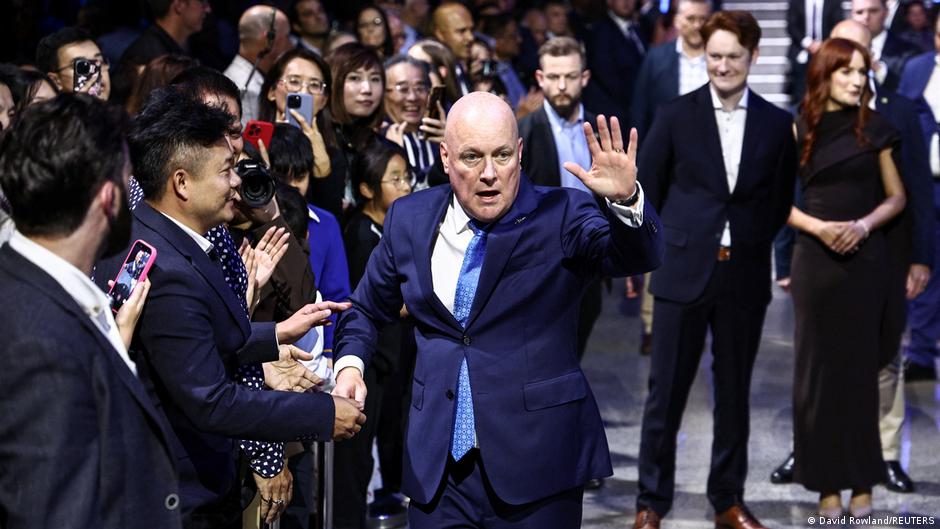
Incumbent Prime Minister Cristopher Luxon, who heads the National Party, said that his party "is once again the largest party in parliament, and we have a pathway to forming the next government." The National Party currently governs in coalition with the pro-business ACT and the right-wing populist New Zealand First. asserted
Party → head → ACT
According to preliminary results, the three parties are set to net a total 67 seats in parliament, amounting to a wafer-thin majority. uncertain
parties → accord → majority
Labour leader Chris Hipkins said that New Zealand's politicians would need to find "common ground" after the results showed neither his party nor the ruling National Party were likely to form a governing majority on their own. "New Zealand has spoken. asserted
Zealand → say → own
It may take us a little bit longer to figure out exactly what it is that you've said," Hipkins told supporters. uncertain
Hipkins → take → supporters
"Our next parliament is going to require all of us to compromise, to work together, and to find common ground. asserted
parliament → go → ground
" What to know about the election results in New Zealand Special votes, including those cast from people overseas, are to be counted over the next three weeks. asserted
votes → know → weeks
The votes typically benefit left-leaning parties and have shifted preliminary election results over the last three elections. asserted
votes → benefit → elections
Final results are expected to be released on November 27. asserted
results → expect → November
If the right-wing bloc fails to hold on to its slim majority, the centrist Opportunity Party could act as a kingmaker. uncertain
Party → fail → kingmaker
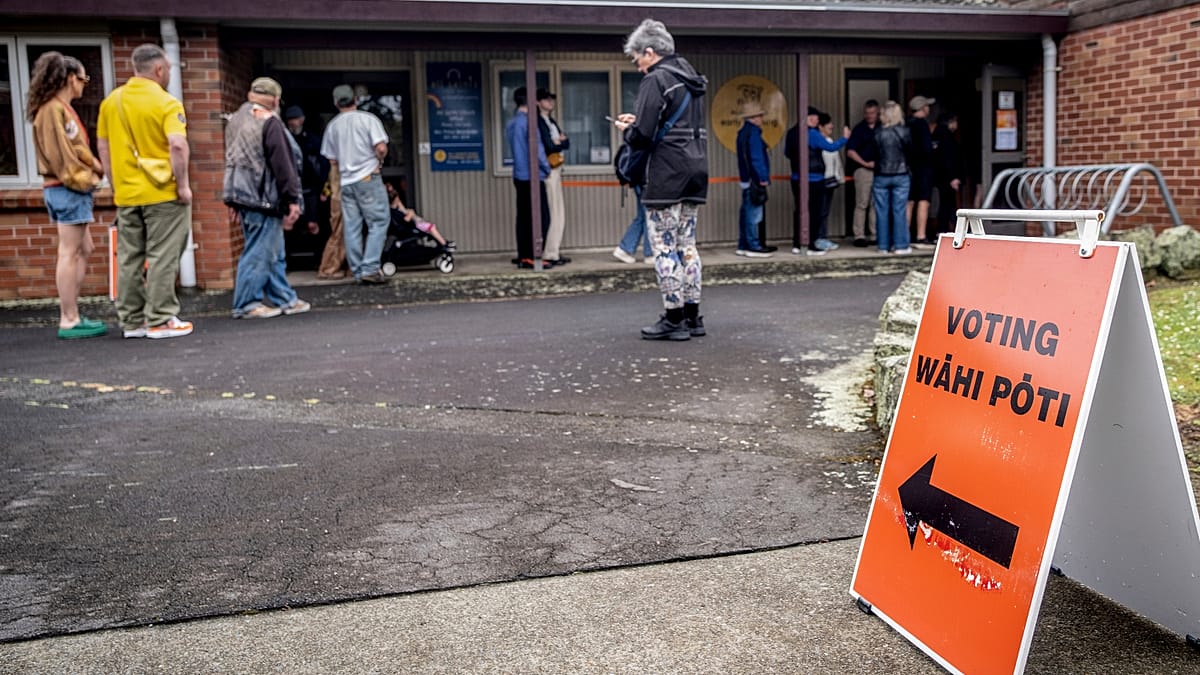
The party is projected to get seven seats, putting it past the 5% threshold to enter parliament for the first time since it was founded in 2017. Luxon has previously ruled out cooperating with the Opportunity Party. New Zealand has a mixed-member proportional system that requires voters to tick two options: a party and a local electoral candidate. Electorate winners earn a seat in parliament, which typically has 120 seats, unless a so-called "overhang" leads to more lawmakers being returned to parliament, along with the highest-ranked members of the party based on their national party vote. Preliminary results on Saturday showed that parliament is set to expand to 130 seats because of the overhang, making it the largest parliament in New Zealand history. The vote took against a backdrop of high prices for basic goods and the highest unemployment in more than a decade. The voting took place under New Zealand's strict laws banning media reporting and political campaigning on the final day. asserted
voting → project → day
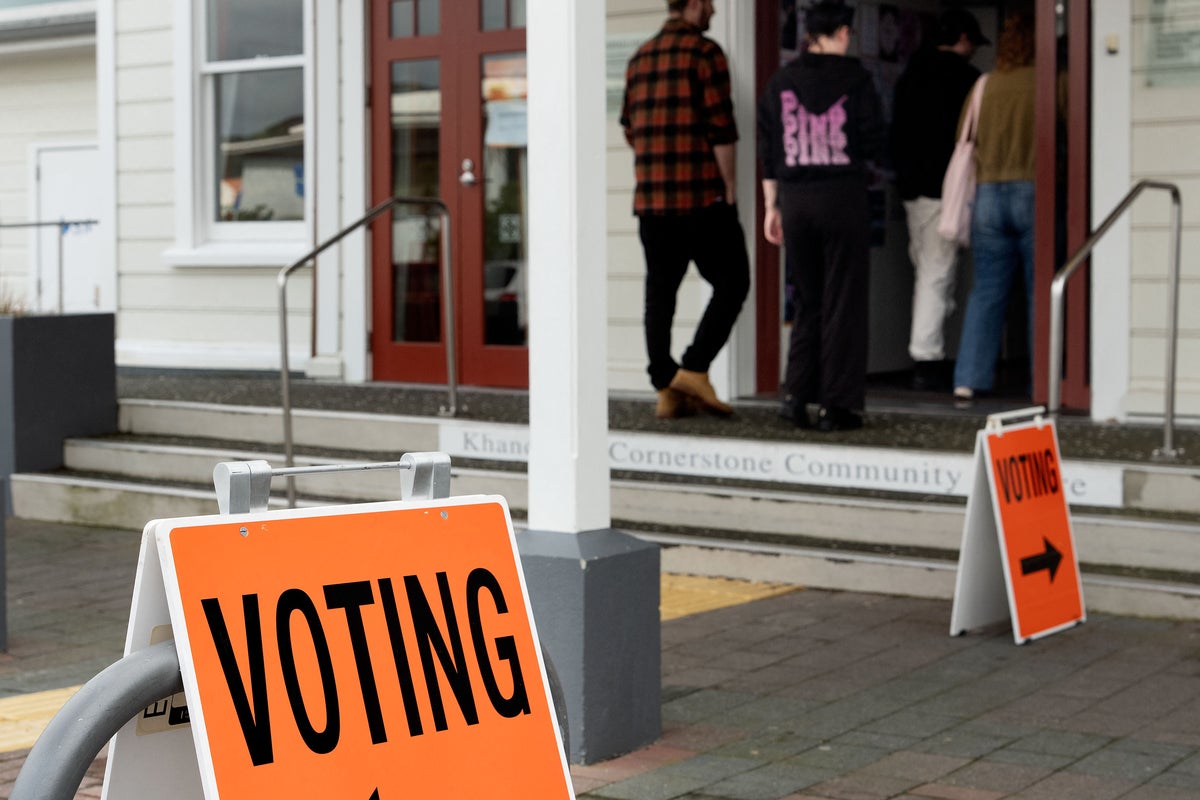
New Zealanders have, however, been able to cast their votes since October 26, with almost 1.7 million of the country's 3.8 million eligible voters already casting their ballots by Thursday, according to the electoral commission. uncertain
million → cast → commission
Give feedback · no sign-in needed

No sign-in needed for now. Your note is sent without a name, so it cannot be answered.

History Support