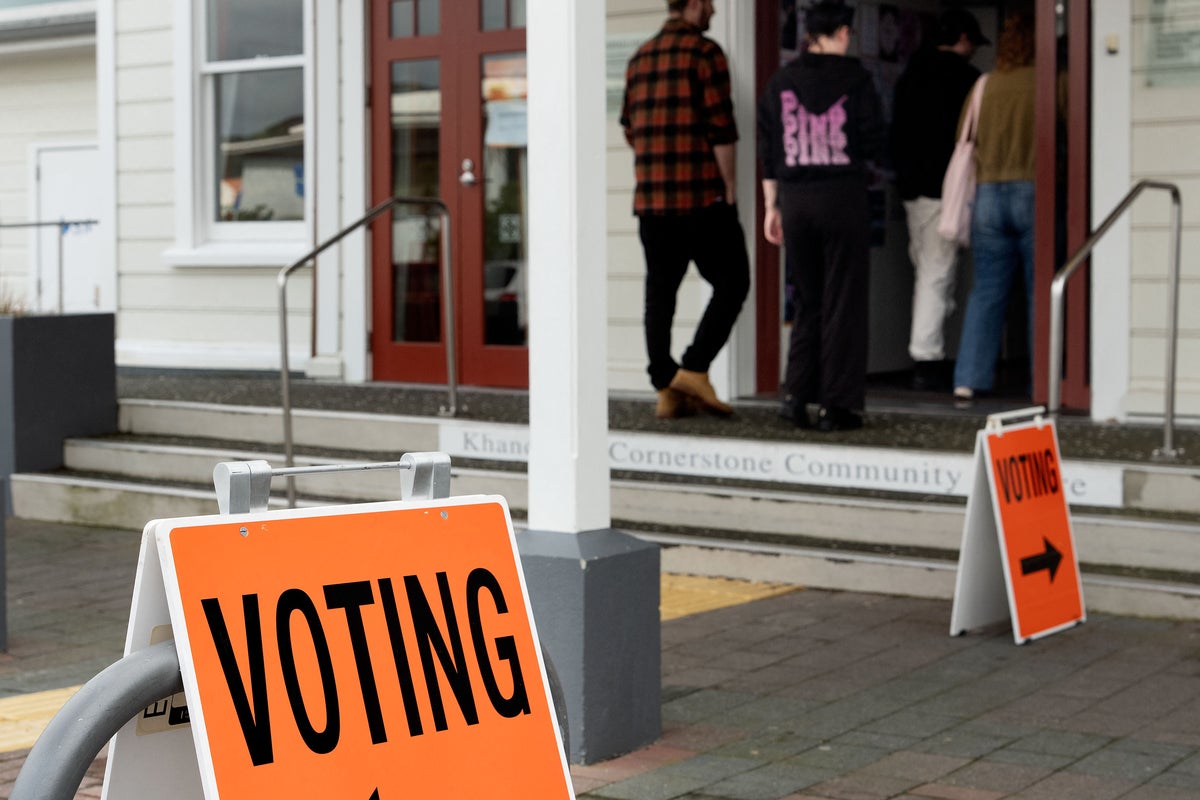
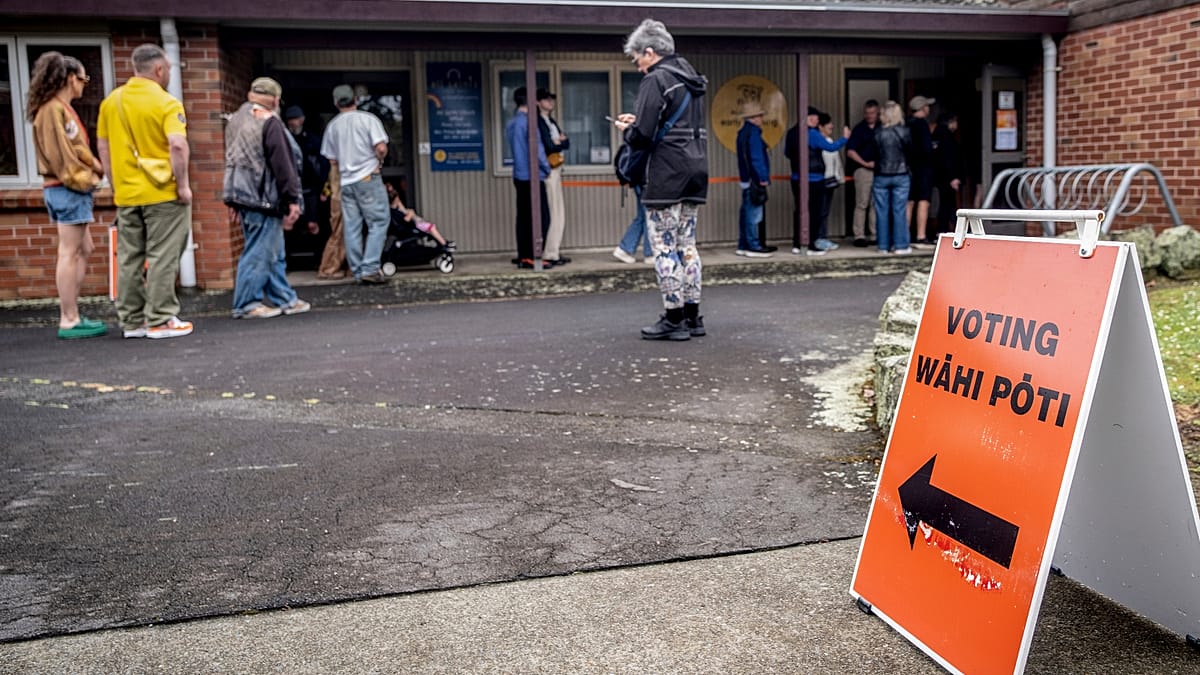
Photo via The Guardian

NZ election 2026: New Zealand faces weeks of uncertainty with results ‘too close to call’

Read the original at The Guardian ↗
Cite

Auckland, E. C. i. (2026, November 8). NZ election 2026: New Zealand faces weeks of uncertainty with results ‘too close to call’. The Guardian. https://www.theguardian.com/world/2026/nov/07/new-zealand-election-too-close-to-call-vote-count

Dated from the outlet's own feed. Check the original for its byline.

The Guardian · collected 2026-11-08 · by Eva Corlett in Auckland

Quick Summary

New Zealand’s election results remain uncertain as neither the incumbent right-wing coalition nor the opposition left bloc secured a clear victory. Preliminary counts show the National party leading with 42 seats, followed by Act and New Zealand First with smaller but critical numbers, totaling 67 seats. However, special votes yet to be counted could shift these outcomes, potentially altering the governing dynamics. Prime Minister Christopher Luxon acknowledged that the final government shape might not be known until November 27, while Labour leader Chris Hipkins expressed hope for his party’s prospects as well.
Written by AI on 2026-11-09, from this article's own text only (the story summary below draws on all the coverage).
See how they differ ↓

AI analysis

Story summary

On November 7, 2026, New Zealand held a tightly contested general election with no clear winner emerging. The ruling centre-right National Party and the main opposition Labour Party ended up in a deadlock, with neither securing enough seats to govern alone. This has left the country facing weeks of negotiations for coalition-building among smaller parties like ACT and NZ First, which could determine who forms the next government. The election was marked by voter disillusionment and a shift towards minor parties as major parties failed to address key issues such as living costs, unemployment, and healthcare effectively.

Written for “New Zealand Election Too Close To Call” on 2026-11-20, grounded in this article and the 13 other(s) covering the same event.

How they differ

11 outlets covered “New Zealand Election Too Close To Call”.

What each outlet says

One AI summary per outlet of its latest article on this story, written from that article alone and checked against it. Open the article for the outlet's own words.

The GuardianThis outlet8 Nov

New Zealand’s election results remain uncertain as neither the incumbent right-wing coalition nor the opposition left bloc secured a clear victory. Preliminary counts show the National party leading with 42 seats, followed by Act and New Zealand First with smaller but critical numbers, totaling 67 seats. However, special votes yet to be counted could shift these outcomes, potentially altering the governing dynamics…

NZ election 2026: New Zealand faces weeks of uncertainty with results ‘too close to call’ (this article)2 articles from The Guardian on this story
BBC8 Nov

New Zealand voters participated in a closely contested election on Saturday amid a climate of widespread disillusionment and apathy. Young voters in particular expressed feelings of fatigue and cynicism towards the political process. The election results show a record number of voters abandoning major parties, leading to an unprecedentedly tight race with smaller parties like the Greens, Act Party, and Opportunity…

'Flat', 'tired', 'cynical': Unusually gloomy Kiwis deliver New Zealand's tightest election in years →2 articles from BBC on this story
The Hindu8 Nov

New Zealand's election on November 7, 2026, remains undecided as early results show neither the National Party nor Labour securing enough seats for majority rule. With voter concerns centered around economic hardships and high living costs exacerbated by global issues, both parties are competing to form a coalition with minor parties like Opportunity, which is projected to win over five percent of the vote. As of…

New Zealand vote still too close to call as results trickle in →2 articles from The Hindu on this story
South China Morning Post5 Nov

The upcoming New Zealand election may influence the country’s foreign policy and defence priorities regarding its relationship with Washington. With major parties closely contesting the vote on Saturday, the direction of these policies will likely depend on smaller parties that could be part of a coalition government. Robert Patman, an international relations professor at the University of Otago, notes that a…

Will New Zealand’s election reshape its ‘softly-softly’ approach to Trump? →
Al Jazeera5 Nov

New Zealand is preparing for a closely contested general election on November 7, with polls showing the National Party and Labour Party nearly tied. The mixed-member proportional (MMP) system means neither party is likely to secure enough seats to govern alone, necessitating support from smaller parties. Prime Minister Christopher Luxon of the National Party is seeking re-election after leading his party back to…

New Zealand braces for knife-edge election: What you need to know →
ABC News (AU)5 Nov

New Zealand voters head to the polls as the election campaign concludes with Prime Minister Christopher Luxon trying to secure a second term despite economic challenges and rising living costs. His main challenger is Christopher Hipkins, who aims to regain the position he briefly held in 2023. Polls indicate that cost of living, inflation, and the economy are top concerns for nearly two-thirds of voters, with many…

What matters to NZ voters? Economy, living costs, and then daylight →
Show 5 more outlets
Toronto Star5 Nov

New Zealand held its general election on October 26, with results due Saturday evening. The race is tight between the incumbent center-right National Party led by Christopher Luxon and the opposition center-left Labour Party headed by Chris Hipkins. Both parties face challenges after three years of conservative governance marred by economic issues such as high unemployment and cost-of-living pressures. Analysts…

New Zealand votes in an election expected to be tight after a tense campaign →
NPR8 Nov

New Zealand's recent election resulted in no clear winner, leaving leaders to negotiate for weeks before forming a government. The conservative National party and the center-left Labour party are both short of a majority, with minor parties holding key leverage due to their increased representation. A new entrant, Opportunity led by Qiulae Wong, secured seven seats, complicating negotiations further as it remains…

No clear winner in New Zealand election, as leaders prepare for weeks of talks →
Euronews8 Nov

New Zealand is tallying votes after a closely contested election where the main issues were cost-of-living concerns and economic stability. Prime Minister Christopher Luxon’s National Party and Chris Hipkins’ Labour Party are nearly tied, with Labour slightly ahead at 29.71% to the National Party's 29.41%, based on partial results. The Green Party and ACT New Zealand are also significant players, each securing over…

New Zealand counts votes in razor-thin election after campaign centred on cost of living →
The Independent8 Nov

New Zealand’s recent general election ended in a deadlock between the ruling centre-right National Party and the main opposition Labour Party, both polling around 29% of the vote with only a few thousand votes separating them. The smaller parties, including the Greens, ACT, NZ First, Opportunity, and TPM, could play significant roles in forming a coalition government. Christopher Luxon’s National Party is leading…

Relative newcomer emerges as kingmaker after New Zealand election yields deadlock →
Deutsche Welle9 Nov

In New Zealand's recent general election, the incumbent center-right National Party and the opposition Labour Party are in a tight race, each holding around 30% of the vote as over 95% of ballots have been counted. The National Party currently leads by about 3,500 votes but holds only a slim majority in parliament, necessitating potential coalition-building with smaller parties like New Zealand First and ACT to form…

New Zealand election too close to call with over 95% of votes counted →

Where they agree and split

Framing

How the first headlines put it

Stated as fact4
The headlines (4)

Will New Zealand’s election reshape its ‘softly-softly’ approach to Trump? South China Morning Post · stated as fact

New Zealand braces for knife-edge election: What you need to know Al Jazeera · stated as fact

What matters to NZ voters? Economy, living costs, and then daylight ABC News (Australia) · stated as fact

New Zealand votes in an election expected to be tight after a tense campaign Toronto Star · stated as fact

The full story: what happened, how it changed, and all 14 articles →

Compared with similar articles

This article reads leans left and hedges 18% of its claims. Each row says how that neighbour differs.
The Hindu
Leans left Hedges 7 of 42 claims Outlet record 78/100
The Guardian
Hedges 7 of 55 claims Outlet record 64/100
The Independent
Hedges 5 of 17 claims Outlet record 59/100
Toronto Star
Leans left Hedges 5 of 41 claims Outlet record 64/100
“Article A describes the uncertainty after preliminary results were released, while Article B discusses the tense campaign leading up to the election day.”
NPR
Leans left Hedges 8 of 44 claims Outlet record 60/100
Euronews
Hedges 0 of 20 claims Outlet record 60/100
The Hindu
Hedges 2 of 26 claims Outlet record 78/100
Deutsche Welle
Hedges 5 of 15 claims Outlet record 95/100
ABC News (AU)
Hedges 6 of 56 claims Outlet record 67/100
“Article A describes Qiulae Wong canvassing voters for an upcoming election, while Article B discusses the uncertainty of the election results after voting has occurred.”
South China Morning Post
Leans right further right than this Hedges 1 of 3 claims Outlet record 62/100
“While both articles discuss New Zealand's election in 2026, they describe different aspects of the event: one focuses on foreign policy implications and potential coalition formation, while the other covers the preliminary results and uncertainty following the vote.”

Story

New Zealand Election Too Close To Call
Politics · 14 article(s) covering the same event. Compare every outlet's account →
How this article was measured signals, leaning charts, publisher record, byline, topics and claims

Signals How these are calculated →

Claims extracted
34
sentences that state something as happening or true
Uncertain
18%
6 of 34 hedged ("reportedly", "may", "according to")
Leaning
Leans left
of the writing, not the subject · beta estimate
Publisher signals
64/100
The Guardian's corrections and hedging, across everything collected from it. Not a measure of accuracy.
Outlets on this story
14
Politics
Same framing elsewhere
1
articles that frame the event the way this one does
Analyzed 2026-11-09 · how these are computed

How this is being covered How these are calculated →

Article leaning vs. publisher reliability
Source leaning vs. consistency

Publisher

The Guardian · 3712 article(s) · 8 correction(s) detected
Running correction rate · 8 correction(s)

Who wrote this

Eva Corlett in Auckland
2 article(s) here · 1 carrying a prediction
New Zealand could be facing a weeks-long wait to know the shape of its next government, after its nail-biting election failed to hand a decisive victory to either the incumbent rightwing coalition or opposition left bloc.
The New Zealand police assistant commissioner, Michael Johnson, on Tuesday confirmed the man was in the country on a student visa for 175 days, from 30 November 2018 to 23 May 2019.
Also by Eva Corlett in Auckland
Nothing else under this byline is closely related to this article, so these are simply their most recent.

Topics

Greens Labour National New Zealand New Zealand First

Subjects

National ORG · 5× New Zealand GPE · 4× Greens ORG · 3× Labour ORG · 3× New Zealand First ORG · 3× Opportunity ORG · 3× Auckland GPE · 2× Hipkins PERSON · 2× Te Pāti Māori NORP · 2× Christopher Luxon PERSON · 1×

Narrative

On preliminary results, the centre-right National party, led by the prime minister, Christopher Luxon, managed to secure enough seats to govern alongside its traditional coalition partners, the libertarian Act and populist New Zealand First parties. But with some seats won by very slim margins, and special votes yet to be counted, that success is precarious, resulting in an election too close to call until official results are released on 27 November.
framing: assertive · carried by 1 article(s) · first seen 2026-11-09
New Zealand could be facing a weeks-long wait to know the shape of its next government, after its nail-biting election failed to hand a decisive victory to either the incumbent rightwing coalition or opposition left bloc.

Claims (34 extracted, 6 hedged)

New Zealand could be facing a weeks-long wait to know the shape of its next government, after its nail-biting election failed to hand a decisive victory to either the incumbent rightwing coalition or opposition left bloc. uncertain
election → face → coalition
On preliminary results, the centre-right National party, led by the prime minister, Christopher Luxon, managed to secure enough seats to govern alongside its traditional coalition partners, the libertarian Act and populist New Zealand First parties. But with some seats won by very slim margins, and special votes yet to be counted, that success is precarious, resulting in an election too close to call until official results are released on 27 November. asserted
results → lead → November
Special votes include overseas votes and ballots cast outside a voter’s electorate. asserted
votes → include → electorate
In 2023, 600,000 such votes were made, 21% of the total. asserted
votes → make → total
These votes tend to favour the left – in 2023, special votes resulted in Te Pāti Māori (the Māori party) and the Greens gaining three seats between them. asserted
Māori → tend → them
With nearly 100% of the regular votes counted on Saturday night, National secured 42 seats, Act 13 and New Zealand First 12. asserted
First → count → seats
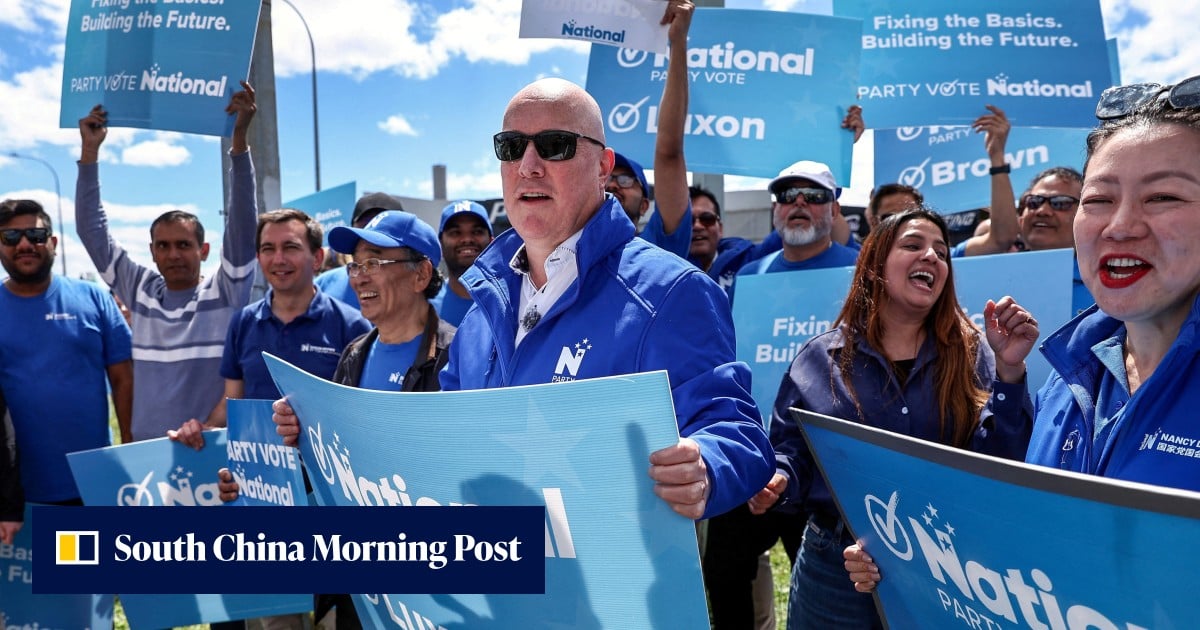
Speaking to a room full of the party faithful at Auckland’s Viaduct events centre just before midnight, Luxon said the results were “too close to call” and the special votes would need to be counted before negotiations could begin. uncertain
negotiations → speak → midnight
National was still the largest party in parliament, he said, and had “a pathway to forming the next government”. asserted
he → say → government
National pipped Labour by 0.02% in the party vote. asserted
National → pip → vote
Labour, led by Chris Hipkins, secured 35 seats, while its traditional coalition partners the Greens won 16 and Te Pāti Māori five. asserted
Māori → lead → 16
Even with the seven seats from the centrist newcomer party, Opportunity, the left bloc is three seats short of forming a government. asserted
bloc → form → government
Before a rowdy crowd of supporters at the Cosmopolitan Club in Upper Hutt, north of Wellington, Hipkins joked that New Zealand had spoken but “it may take a bit longer to work out what they’ve said”. uncertain
they → joke → what
“As things stand tonight, it is clear that we are not going to know the shape of our next government for a little while longer yet,” Hipkins said, promising that Labour would get “straight to work” should the final count land in its favour. asserted
count → stand → favour
The collapse of the two major parties, amid a sluggish economy and stubbornly high inflation, is feeding record support for the smaller parties, including Act, New Zealand First and the Greens. asserted
collapse → feed → Act
It is also helped propel Opportunity into parliament for the first time. asserted
It → help → time
Opinion polls in the lead-up to the election had Opportunity placed to become the kingmaker. asserted
Opportunity → have → election
At this stage, the right bloc does not need the party to govern, but if special votes change the landscape, its predicted role could come to fruition. uncertain
role → need → fruition
Currently at 5.9%, the centrist party has met the threshold needed to enter parliament, a historic first. asserted
party → meet → parliament
Since New Zealand adopted the mixed-member proportional (MMP) electoral system in 1996, no new party has been able to meet that threshold – all the other minor parties have been born from MPs or groups splintering from larger parties. asserted
parties → adopt → parties
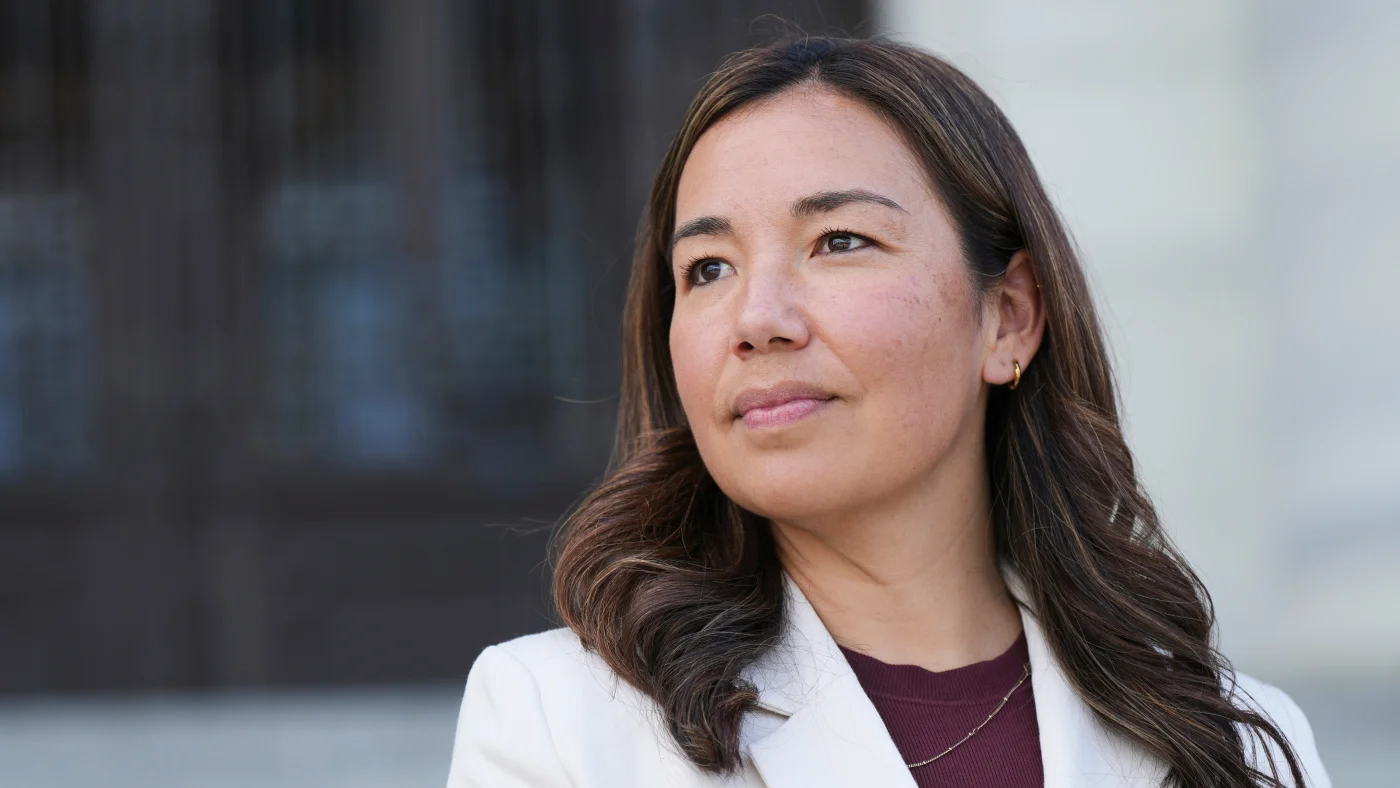
The party’s leader, Qiulae Wong, told her supporters in Auckland she was “stoked”. asserted
she → tell → Auckland
“It’s looking very promising for us,” she said. asserted
she → look → us
“Let’s just see how the rest of the votes fall.” asserted
rest → let → votes
In New Zealand, voters cast two votes: one for an electorate MP and one for a party. asserted
voters → cast → party
The system is meant to produce a parliament that reflects each party’s share of the nationwide vote. asserted
that → mean → vote
However, if New Zealanders vote for more electorate MPs from a particular party than their party vote would entitle them to, they get to keep the extra MPs in what is called an overhang. asserted
what → vote → MPs
National won more seats that its party support allows for, meaning it could gain an extra five seats to make up the balance. uncertain
it → win → balance
That will be good news for its path to power, but comes with some significant trade-offs for the party. asserted
That → come → party
Four of its most senior ministers, including Nicola Willis, Paul Goldsmith, Chris Bishop and Gerry Brownlee, will not return to parliament because they did not win a seat, or the party didn’t win enough votes to bring in list-only MPs. asserted
party → include → MPs
On the other side of the house, Te Pāti Māori picked up five overhang seats. asserted
Māori → pick → seats
With all the extra seats, there could be 130 in the next parliament – a record under MMP – which means 65 seats are needed to form a coalition. uncertain
seats → mean → coalition
The country faces a two-week wait until special votes are announced, followed by the possibility of weeks of negotiations. asserted
votes → face → negotiations
Luxon said caretaker government conventions would apply in the meantime. asserted
conventions → say → meantime
“For now, I want to tell New Zealanders that well-established caretaker conventions apply … asserted
conventions → want → Zealanders
The daily business of government will continue.” asserted
business → continue → government
Give feedback · no sign-in needed

No sign-in needed for now. Your note is sent without a name, so it cannot be answered.

History Support