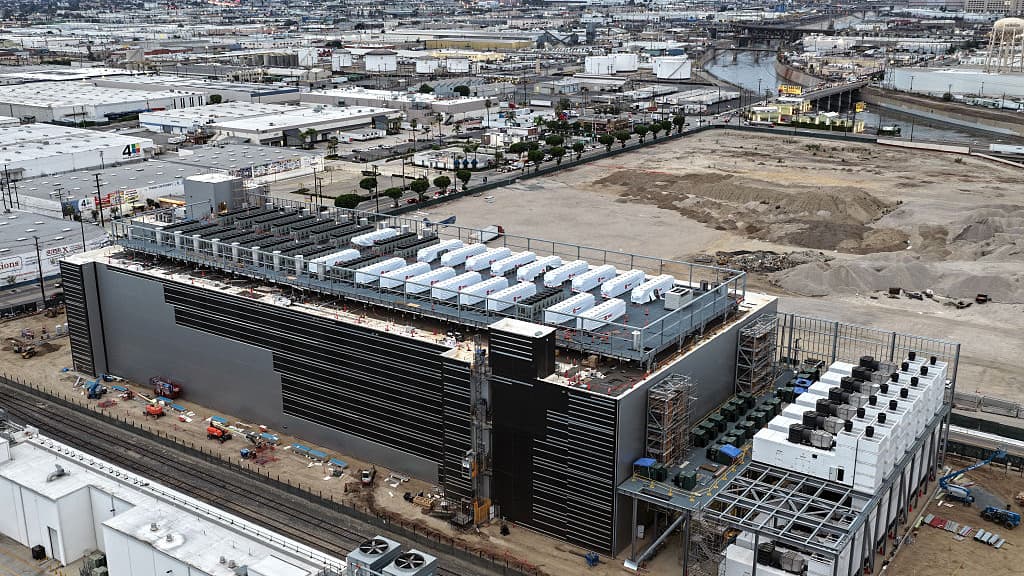
Photo via TIME

Fossil Fuel Emissions Are Expected to Decrease in 2026

Read the original at TIME ↗
Cite

Shah, S. (2026, November 10). Fossil Fuel Emissions Are Expected to Decrease in 2026. TIME. https://time.com/article/2026/11/10/fossil-fuel-emissions-decrease-2026/

Dated from the outlet's own feed. Check the original for its byline.

TIME · collected 2026-11-10 · by Simmone Shah

Quick Summary

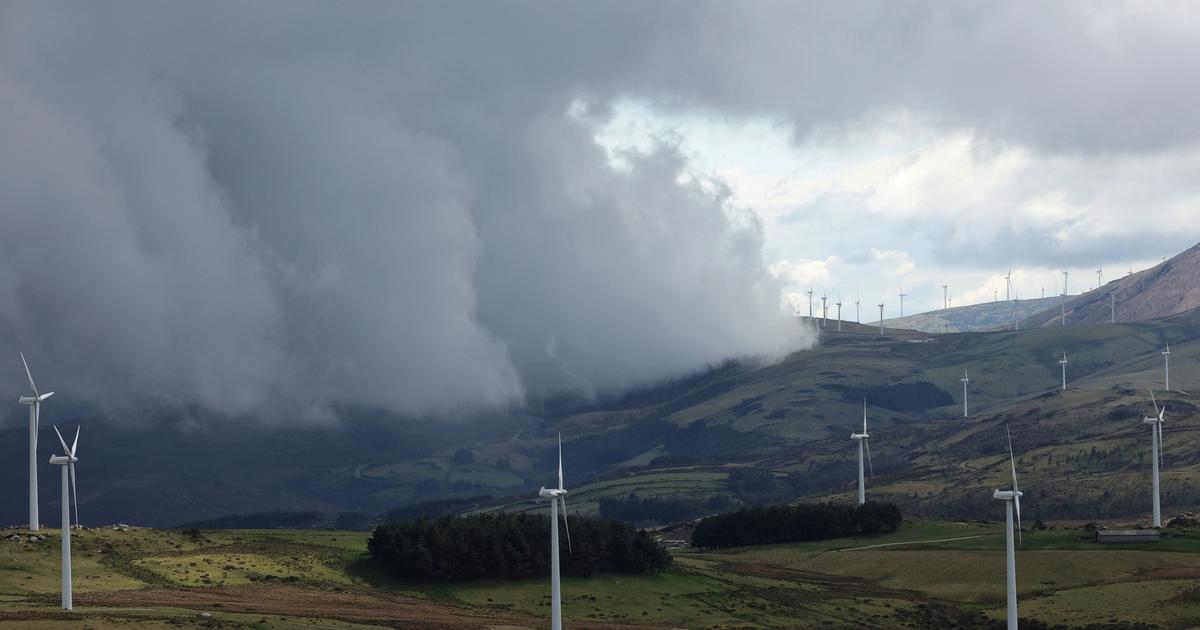
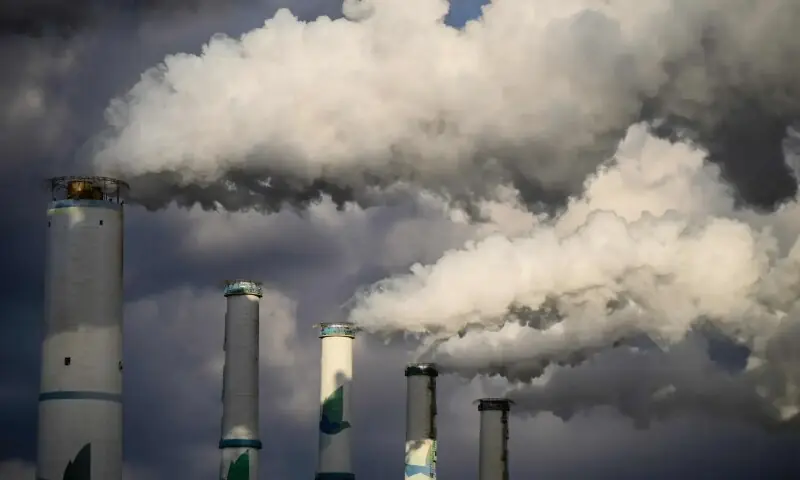
Global fossil fuel emissions are projected to decrease by 0.4% in 2026, according to a report from the Global Carbon Project. This reduction stems from an energy shock caused by the Iran war and increased adoption of renewable energy sources like wind and solar power. Notably, China’s emissions are expected to drop by 0.9%, while those of the U.S. will decrease by 1.3%. India is a notable exception, with its emissions set to rise by 4.4%. The report also notes an increase in global land-use change emissions due to peat fires and El Niño-induced wildfires, pushing atmospheric CO2 concentrations to 427.7 parts per million (ppm).
Written by AI on 2026-11-10, from this article's own text only (the story summary below draws on all the coverage).
See how they differ ↓

AI analysis

Story summary

Global fossil fuel emissions from coal, oil, and gas are projected to decrease by 0.4% in 2026, according to a new report by the Global Carbon Project. This decline is primarily attributed to a combination of the rapid expansion of wind and solar power and an energy shock caused by the Iran war. While the report indicates a slight drop, scientists from the University of Exeter warn that a reduction driven by geopolitical shocks is not a sustainable long-term climate solution. Specifically, China is expected to reduce its emissions by 0.9% this year as it continues its rollout of renewable energy. Despite this minor decrease, the world remains on track to reach 1.5 degrees Celsius of warming within four years. Research published in Nature suggests the drop is more sudden than a steady decline from energy progress, noting that oil emissions spiked before falling significantly due to the conflict. These findings come as world leaders gather in Turkey for climate talks to discuss accelerating the electrification of the global economy.

Written for “Global fossil fuel emissions fall” on 2026-11-21, grounded in this article and the 8 other(s) covering the same event.

How they differ

9 outlets covered “Global fossil fuel emissions fall”.

What each outlet says

One AI summary per outlet of its latest article on this story, written from that article alone and checked against it. Open the article for the outlet's own words.

TimeThis outlet10 Nov

Global fossil fuel emissions are projected to decrease by 0.4% in 2026, according to a report from the Global Carbon Project. This reduction stems from an energy shock caused by the Iran war and increased adoption of renewable energy sources like wind and solar power. Notably, China’s emissions are expected to drop by 0.9%, while those of the U.S. will decrease by 1.3%. India is a notable exception, with its…

Fossil Fuel Emissions Are Expected to Decrease in 2026 (this article)
ABC News (AU)10 Nov

The Global Carbon Project’s latest report indicates that fossil fuel emissions are projected to decrease by 0.4% in 2026 compared to 2025 levels, primarily due to a reduction in oil emissions linked to the Iran war. However, lead researcher Pierre Friedlingstein warns that this drop is not sustainable without significant acceleration in renewable energy capacity and electrification efforts. Total global carbon…

Renewables and Iran war help drive fall in global fossil fuel emissions →
Toronto Star10 Nov

Global carbon dioxide emissions dropped by 0.4% in 2026 to 42.2 billion tons (38.2 billion metric tons), according to scientists at the Global Carbon Project. This slight decline is attributed to disruptions caused by the Iran war, particularly affecting oil shipments through the Strait of Hormuz, rather than significant progress in climate change mitigation efforts. Scientists warn that these reductions are…

Heat-trapping carbon pollution drops, but scientists cite the Iran war rather than energy progress →
The Hindu10 Nov

Global carbon dioxide emissions from fossil fuels dropped by 0.4% to 42.2 billion tonnes in 2026, according to a study by the Global Carbon Project. This slight decrease is attributed more to disruptions caused by the Iran war and the closure of the Strait of Hormuz than to efforts against climate change. The war has led to significant price increases for oil and gas, causing emissions from these sources to drop…

Heat-trapping carbon pollution drops, but scientists cite Iran war rather than energy progress →
The Straits Times10 Nov

Global fossil fuel emissions are projected to decrease by 0.4% in 2026 due to a combination of renewable energy expansion and an oil price shock caused by the Iran war, according to the Global Carbon Budget report released on November 10 during the COP31 climate summit in Antalya, Turkey. This marks the first annual decline since the pandemic-driven drop in 2020. The report attributes the decrease largely to reduced…

Fossil fuel emissions fall due to Iran war, renewables: Research →
Daily Mail10 Nov

A new report by the Global Carbon Project forecasts a 0.4% decrease in global carbon emissions from fossil fuels in 2026, marking a potential turning point in reducing reliance on coal, oil, and gas. The projected decline stems largely from a significant drop of 1.9% in oil emissions due to disruptions in energy markets linked to the Iran conflict, alongside rapid growth in renewable energy sources like solar and…

Global carbon emissions from fossil fuels are projected to decrease by 0.4% in 2026, promising study reveals →
Show 3 more outlets
Sydney Morning Herald10 Nov

Global carbon emissions are expected to drop by 0.4% in 2026 according to a report from the Global Carbon Project, as world leaders convene for climate talks in Turkey. Despite this reduction, August 2026 was recorded as one of the warmest months ever, with global temperatures reaching 1.65°C above pre-industrial levels. The decline is attributed partly to geopolitical issues like the closure of the Strait of…

Greenhouse pollution down but global warming surges as climate talks begin →
Dawn10 Nov

Global fossil fuel emissions are projected to decrease by 0.4% in 2026, marking the first decline since 2020 due to a combination of increased renewable energy deployment and disruptions caused by the Iran war, according to researchers presenting at COP31 in Antalya, Turkiye. The Global Carbon Budget report indicates that emissions from oil are expected to drop by 1.9%, while gas emissions will fall by 0.3% and coal…

Fossil fuel emissions fall due to Iran war, renewables: research →
Semafor10 Nov

Global fossil fuel emissions are forecasted to decrease by 0.4% in 2026, largely due to increased renewable energy production and disruptions caused by the Iran war affecting oil supplies through the Strait of Hormuz. However, the decline is not considered sustainable according to a study published in Nature, which emphasizes that oil emissions might only be temporarily reduced by 1.9%. The increase in…

More renewables and Hormuz disruption drive emissions fall →

Compared with similar articles

This article reads unscored and hedges 17% of its claims. Each row says how that neighbour differs.
The Straits Times
Hedges 1 of 20 claims Outlet record 64/100
ABC News (AU)
Hedges 6 of 42 claims Outlet record 67/100
The Hindu
Leans left Hedges 2 of 29 claims Outlet record 78/100
Semafor
Hedges 1 of 6 claims Outlet record 64/100
Dawn
Leans left Hedges 1 of 21 claims Outlet record 67/100
Toronto Star
Leans left Hedges 2 of 29 claims Outlet record 64/100
The Guardian
Leans left Hedges 0 of 18 claims Outlet record 64/100
“Article A discusses a global trend in fossil fuel emission decrease, while Article B reports on live coverage of the COP31 conference where such trends might be discussed.”

Story

Global fossil fuel emissions fall
Environment · 9 article(s) covering the same event. See how they differ ↑
How this article was measured signals, leaning charts, publisher record, byline, topics and claims

Signals How these are calculated →

Claims extracted
24
sentences that state something as happening or true
Uncertain
17%
4 of 24 hedged ("reportedly", "may", "according to")
Leaning
not political
takes no side on a contested political question
Publisher signals
60/100
TIME's corrections and hedging, across everything collected from it. Not a measure of accuracy.
Outlets on this story
9
Environment
Same framing elsewhere
1
articles that frame the event the way this one does
Analyzed 2026-11-10 · how these are computed

How this is being covered How these are calculated →

Article leaning vs. publisher reliability
Source leaning vs. consistency

Publisher

TIME · 1078 article(s) · 2 correction(s) detected
Running correction rate · 2 correction(s)

Who wrote this

Simmone Shah
19 article(s) here · 1 carrying a prediction
The bill—which has divided environmentalists and clean energy advocates—will now face a final Senate vote before moving to the House of Representatives.
As the world reckons with what is set to be the strongest El Niño in recorded history, combined with a potential cold-snap from the polar vortex expected next week, holiday travels this year could be at risk of more weather-related delays and cancellations.
That number is only expected to grow: the research firm Synergy estimates that the total capacity of U.S. data centers will double in the next three years, largely driven by the growth of hyperscale data centers.
A record-early breakdown of the polar vortex is expected to bring cold weather to the United States by the end of the month.
Yet on the other side of the transition, he noted, are people like Bennie, a supervisor at one of South Africa's oldest coal-fired power stations who might soon see the place he has worked at for much of his career sunset.
Two of the world’s three biggest emitters are expected to see a drop in emissions.
2026-11-10 · assertive framing · Fossil Fuel Emissions Are Expected to Decrease in 2026
Following two years of anti-climate legislation from Washington, Tuesday’s blue tidal wave—giving Democrats control of both the Senate and the House—could provide an opportunity to change course.
When confronted with a rotting, deflating carved pumpkin, your first instinct might be to beeline to the trash as quickly as possible.
With Democrats being significantly more likely to view climate action as a priority, many in the climate movement are hopeful that if the Democrats take back some leadership in Congress, as it could prove essential in helping to prevent further rollbacks.
Combined, all of the world’s private jets emit more in 2 seconds than someone in the world’s poorest 50%, those annually making an average of $1,500, would emit in a year.
Also by Simmone Shah
Nothing else under this byline is closely related to this article, so these are simply their most recent.
All 19 articles by Simmone Shah →

Topics

China U.S. the Global Carbon Project the Iran war the University of Exeter

Subjects

China GPE · 2× India GPE · 2× Japan GPE · 1× Mike O’Sullivan PERSON · 1× The European Union ORG · 1× Trump PERSON · 1× U.N. ORG · 1× U.S. GPE · 1× the Global Carbon Project ORG · 1× the University of Exeter ORG · 1×

Narrative

That’s due to an increase in peat fires, slow burning fires that move beneath the ground, consume wetland soil and often lack visible flames, many of which have been ignited by human activities, and El Niño, which is increasing wildfire risk in places like Southeast Asia and South America.
framing: assertive · carried by 1 article(s) · first seen 2026-11-10
Two of the world’s three biggest emitters are expected to see a drop in emissions.
2026-11-10 · TIME
Fossil Fuel Emissions Are Expected to Decrease in 2026 · assertive framing

Claims (24 extracted, 4 hedged)

Global fossil fuel emissions are likely to decrease by 0.4% in 2026, according to new research by the Global Carbon Project, an annual report that tracks trends in global carbon emissions. uncertain
that → decrease → emissions
The drop was spurred on by the energy shock triggered by the Iran war and the expansion of wind and solar power adoption globally. asserted
drop → spur → adoption
While it’s a promising sign, the researchers say that the findings don’t spell out a permanent decline in fossil fuel use, but rather a temporary shift. asserted
findings → ’ → use
“We see a decrease in emissions, but it's probably driven by a short term shock rather than a systemic peak,” says Mike O’Sullivan, senior lecturer at the University of Exeter and one of the report’s researchers. asserted
O’Sullivan → see → researchers
Two of the world’s three biggest emitters are expected to see a drop in emissions. asserted
Two → expect → emissions
China’s emissions are expected to drop by 0.9% in 2026, following two years of remaining flat or falling. asserted
emissions → expect → years
The U.S. is also expected to see a 1.3% decrease in emissions, mainly attributed to a decrease in coal emissions following a spike in 2025 due to high natural gas prices and a spell of cold weather. asserted
U.S. → expect → weather
This trend, however, could shift. uncertain
trend → shift → ?
Since taking office, President Trump has invested hundreds of millions towards reviving the country’s coal industry, and repealed emissions standards for coal and gas power plants. asserted
Trump → take → plants
India, on the other hand, will likely see emissions rise by 4.4%—a bump from the 3.5% annual growth in fossil fuel emissions it has averaged over the last decade. asserted
it → see → decade
The European Union and Japan are also expected to see slight decreases in fossil fuel emissions, while emissions for the rest of the world are also expected to decrease by 0.7%—largely due to decline in oil use. asserted
emissions → expect → use
Global emissions from land-use change, another sector tracked in the report, have decreased over the past decade, but this year they’re expected to rise to 5.1 billion metric tons. asserted
they → track → tons
That’s due to an increase in peat fires, slow burning fires that move beneath the ground, consume wetland soil and often lack visible flames, many of which have been ignited by human activities, and El Niño, which is increasing wildfire risk in places like Southeast Asia and South America. asserted
which → ’ → Asia
These fires release large amounts of carbon dioxide and greenhouse gasses into the atmosphere. asserted
fires → release → atmosphere
The concentration of CO2 in the atmosphere is set to reach 427.7 ppm in 2026—54% above pre-industrial levels. asserted
concentration → set → levels
According to the report, the global carbon budget, which represents how much carbon dioxide can be emitted before warming reaches 1.5°C above pre-industrial levels, is now at 150 billion metric tons—equivalent to less than four years of emissions, assuming the world continues to emit at its current rate. uncertain
world → accord → rate
The world is expected to blow past 1.5 degrees of warming, the U.N. has recently warned, and global climate goals are falling short of what is needed. asserted
what → expect → warming
But the authors highlight some signs of promise. asserted
authors → highlight → promise
Despite some places seeing total emissions increase between 2019 and 2025, all regions still saw growth slow—including in China, India, and other emerging economies. asserted
growth → see → China
On the other hand, more than two dozen countries have managed to grow their economies without increasing emissions, and the global adoption of wind and solar energy has helped avoid billions of metric tons of emissions. asserted
adoption → manage → emissions
The authors estimate that, between now and the end of 2028, 64-79% of emissions from new energy demand will be offset by new solar and wind power and electric vehicles. asserted
% → estimate → power
What’s more, if the world continues to see an acceleration of clean energy adoption, it could see emissions peak and decline in just a few years. uncertain
emissions → ’ → years
It doesn’t mean the work is done. asserted
work → mean → ?
“There's plenty of good news in terms of the rapid expansion of renewables,” says O’Sullivan, “but on a global scale, it's completely inadequate.” asserted
it → be → scale
Give feedback · no sign-in needed

No sign-in needed for now. Your note is sent without a name, so it cannot be answered.

History Support