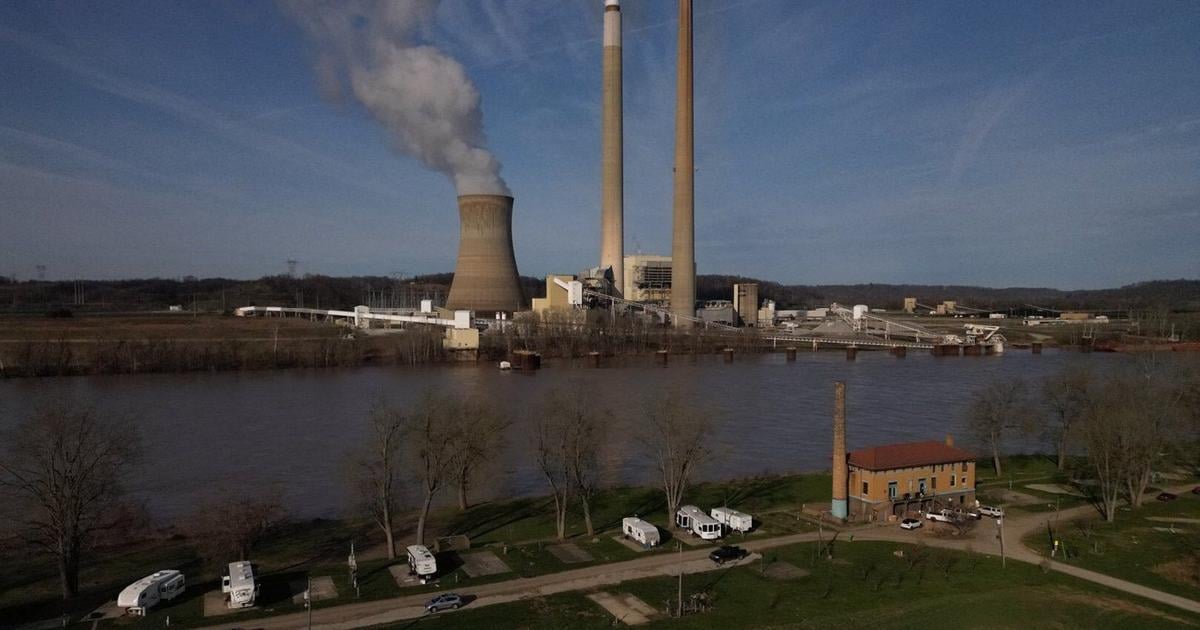
Photo via Toronto Star

Heat-trapping carbon pollution drops, but scientists cite the Iran war rather than energy progress

Read the original at Toronto Star ↗
Cite

Borenstein, S. (2026, November 10). Heat-trapping carbon pollution drops, but scientists cite the Iran war rather than energy progress. Toronto Star. https://www.thestar.com/news/world/heat-trapping-carbon-pollution-drops-but-scientists-cite-the-iran-war-rather-than-energy-progress/article_42426504-afab-5f5f-b38e-a2e9e0b445dd.html

Dated from the outlet's own feed. Check the original for its byline.

Toronto Star · collected 2026-11-10 · by Seth Borenstein

Quick Summary

Global carbon dioxide emissions dropped by 0.4% in 2026 to 42.2 billion tons (38.2 billion metric tons), according to scientists at the Global Carbon Project. This slight decline is attributed to disruptions caused by the Iran war, particularly affecting oil shipments through the Strait of Hormuz, rather than significant progress in climate change mitigation efforts. Scientists warn that these reductions are temporary and may not lead to lasting decreases in emissions if historical trends continue.
Written by AI on 2026-11-10, from this article's own text only (the story summary below draws on all the coverage).
See how they differ ↓

AI analysis

Story summary

Global fossil fuel emissions from coal, oil, and gas are projected to decrease by 0.4% in 2026, according to a new report by the Global Carbon Project. This decline is primarily attributed to a combination of the rapid expansion of wind and solar power and an energy shock caused by the Iran war. While the report indicates a slight drop, scientists from the University of Exeter warn that a reduction driven by geopolitical shocks is not a sustainable long-term climate solution. Specifically, China is expected to reduce its emissions by 0.9% this year as it continues its rollout of renewable energy. Despite this minor decrease, the world remains on track to reach 1.5 degrees Celsius of warming within four years. Research published in Nature suggests the drop is more sudden than a steady decline from energy progress, noting that oil emissions spiked before falling significantly due to the conflict. These findings come as world leaders gather in Turkey for climate talks to discuss accelerating the electrification of the global economy.

Written for “Global fossil fuel emissions fall” on 2026-11-21, grounded in this article and the 8 other(s) covering the same event.

How they differ

9 outlets covered “Global fossil fuel emissions fall”.

What each outlet says

One AI summary per outlet of its latest article on this story, written from that article alone and checked against it. Open the article for the outlet's own words.

Toronto StarThis outlet10 Nov

Global carbon dioxide emissions dropped by 0.4% in 2026 to 42.2 billion tons (38.2 billion metric tons), according to scientists at the Global Carbon Project. This slight decline is attributed to disruptions caused by the Iran war, particularly affecting oil shipments through the Strait of Hormuz, rather than significant progress in climate change mitigation efforts. Scientists warn that these reductions are…

Heat-trapping carbon pollution drops, but scientists cite the Iran war rather than energy progress (this article)
Time10 Nov

Global fossil fuel emissions are projected to decrease by 0.4% in 2026, according to a report from the Global Carbon Project. This reduction stems from an energy shock caused by the Iran war and increased adoption of renewable energy sources like wind and solar power. Notably, China’s emissions are expected to drop by 0.9%, while those of the U.S. will decrease by 1.3%. India is a notable exception, with its…

Fossil Fuel Emissions Are Expected to Decrease in 2026 →
ABC News (AU)10 Nov

The Global Carbon Project’s latest report indicates that fossil fuel emissions are projected to decrease by 0.4% in 2026 compared to 2025 levels, primarily due to a reduction in oil emissions linked to the Iran war. However, lead researcher Pierre Friedlingstein warns that this drop is not sustainable without significant acceleration in renewable energy capacity and electrification efforts. Total global carbon…

Renewables and Iran war help drive fall in global fossil fuel emissions →
The Hindu10 Nov

Global carbon dioxide emissions from fossil fuels dropped by 0.4% to 42.2 billion tonnes in 2026, according to a study by the Global Carbon Project. This slight decrease is attributed more to disruptions caused by the Iran war and the closure of the Strait of Hormuz than to efforts against climate change. The war has led to significant price increases for oil and gas, causing emissions from these sources to drop…

Heat-trapping carbon pollution drops, but scientists cite Iran war rather than energy progress →
The Straits Times10 Nov

Global fossil fuel emissions are projected to decrease by 0.4% in 2026 due to a combination of renewable energy expansion and an oil price shock caused by the Iran war, according to the Global Carbon Budget report released on November 10 during the COP31 climate summit in Antalya, Turkey. This marks the first annual decline since the pandemic-driven drop in 2020. The report attributes the decrease largely to reduced…

Fossil fuel emissions fall due to Iran war, renewables: Research →
Daily Mail10 Nov

A new report by the Global Carbon Project forecasts a 0.4% decrease in global carbon emissions from fossil fuels in 2026, marking a potential turning point in reducing reliance on coal, oil, and gas. The projected decline stems largely from a significant drop of 1.9% in oil emissions due to disruptions in energy markets linked to the Iran conflict, alongside rapid growth in renewable energy sources like solar and…

Global carbon emissions from fossil fuels are projected to decrease by 0.4% in 2026, promising study reveals →
Show 3 more outlets
Sydney Morning Herald10 Nov

Global carbon emissions are expected to drop by 0.4% in 2026 according to a report from the Global Carbon Project, as world leaders convene for climate talks in Turkey. Despite this reduction, August 2026 was recorded as one of the warmest months ever, with global temperatures reaching 1.65°C above pre-industrial levels. The decline is attributed partly to geopolitical issues like the closure of the Strait of…

Greenhouse pollution down but global warming surges as climate talks begin →
Dawn10 Nov

Global fossil fuel emissions are projected to decrease by 0.4% in 2026, marking the first decline since 2020 due to a combination of increased renewable energy deployment and disruptions caused by the Iran war, according to researchers presenting at COP31 in Antalya, Turkiye. The Global Carbon Budget report indicates that emissions from oil are expected to drop by 1.9%, while gas emissions will fall by 0.3% and coal…

Fossil fuel emissions fall due to Iran war, renewables: research →
Semafor10 Nov

Global fossil fuel emissions are forecasted to decrease by 0.4% in 2026, largely due to increased renewable energy production and disruptions caused by the Iran war affecting oil supplies through the Strait of Hormuz. However, the decline is not considered sustainable according to a study published in Nature, which emphasizes that oil emissions might only be temporarily reduced by 1.9%. The increase in…

More renewables and Hormuz disruption drive emissions fall →

Compared with similar articles

This article reads leans left and hedges 7% of its claims. Each row says how that neighbour differs.
The Hindu
Leans left Hedges 2 of 29 claims Outlet record 78/100
Dawn
Leans left Hedges 1 of 21 claims Outlet record 67/100
TIME
Hedges 4 of 24 claims Outlet record 60/100
ABC News (AU)
Hedges 6 of 42 claims Outlet record 67/100
The Straits Times
Hedges 1 of 20 claims Outlet record 64/100
Semafor
Hedges 1 of 6 claims Outlet record 64/100
Al Jazeera
Hedges 2 of 21 claims Outlet record 60/100
“The articles discuss different aspects of climate change and carbon emissions, but do not describe the same specific incident or meeting.”
Toronto Star
Leans right further right than this Hedges 4 of 47 claims Outlet record 64/100
“The articles discuss different aspects and sources regarding global carbon emissions trends in 2026, with distinct focuses on causes (war vs. energy security) and data origins.”
Daily Mail
Hedges 8 of 31 claims Outlet record 69/100
“While both articles discuss a decrease in global carbon emissions for 2026, Article A attributes this decline to oil shocks from the Iran war rather than efforts to fight climate change, whereas Article B credits renewable energy growth and electric vehicle adoption.”
The Sydney Morning Herald
Hedges 0 of 25 claims Outlet record 61/100
“While both articles discuss the decrease in global carbon emissions and mention the Global Carbon Project report released on the same day, they focus on different aspects (one citing reasons for emission reduction due to the Iran war and the other linking it with climate talks in Turkey).”

Story

Global fossil fuel emissions fall
Environment · 9 article(s) covering the same event. See how they differ ↑
How this article was measured signals, leaning charts, publisher record, byline, topics and claims

Signals How these are calculated →

Claims extracted
29
sentences that state something as happening or true
Uncertain
7%
2 of 29 hedged ("reportedly", "may", "according to")
Leaning
Leans left
of the writing, not the subject · beta estimate
Publisher signals
64/100
Toronto Star's corrections and hedging, across everything collected from it. Not a measure of accuracy.
Outlets on this story
9
Environment
Same framing elsewhere
1
articles that frame the event the way this one does
Analyzed 2026-11-10 · how these are computed

How this is being covered How these are calculated →

Article leaning vs. publisher reliability
Source leaning vs. consistency

Publisher

Toronto Star · 16334 article(s) · 31 correction(s) detected
Running correction rate · 31 correction(s)
2026-11-17
Correction
2026-10-26
Correction
2026-10-24
Correction
2026-10-07
Correction
2026-09-24
Correction

Who wrote this

Seth Borenstein
14 article(s) here · 1 carrying a prediction
Study quantifies how much big data centers pollute Harvard researchers looked at 403 of the largest U.S. data centers between May 2024 and April 2025 using available data and modeling to analyze their electricity use and emissions.
A goal introduced this year would increase the share of electricity in total global energy consumption from roughly 21% to 35% by 2035, preferably from renewable energy such as solar and wind.
The world has failed to slow or stop global warming trends in the past five years because plans weren’t realized and efforts that would have helped were canceled out, a report said Thursday.
Countries that want to wean themselves from the fossil fuels that cause climate change will get a road map aimed at guiding them on an economy-transforming journey toward renewable energies at the U.N. climate talks Tuesday.
If the overall carbon dioxide emission drop were due solely to a rise in renewables and a systemic drop in fossil fuel use, oil emissions “would slowly come up to a peak and then slowly decline afterward, whereas what we see this year is oil emissions are going up and then suddenly BANG, down 2%,” Peters said.
So we looked at all of the natural variables we thought could account for it, namely temperature, oxygen supply and food.
Log in El Niño is set to shape the season ahead with the federal government's official winter outlook and other meteorologists' forecasts pointing to a wetter and warmer few months for the United States, though not necessarily snowier.
“El Niño and climate change both made this hurricane stronger than it would have otherwise been, but the effect of climate change is even bigger than the one of El Niño,” said climate scientist and study co-author Friederike Otto, who coordinates the international science team behind World Weather Attribution.
“Since September 20th, when Odalys formed, it’s been berserk,” said Colorado State University researcher Phil Klotzbach, who forecasts and studies storm activity.
Also by Seth Borenstein
Nothing else under this byline is closely related to this article, so these are simply their most recent.
All 14 articles by Seth Borenstein →

Topics

Earth System Science Data Discussions Iran the CICERO Center for International Climate Research the Global Carbon Project the Iran war

Subjects

Peters ORG · 4× Iran GPE · 2× Antalya GPE · 1× Earth System Science Data Discussions ORG · 1× Glen Peters PERSON · 1× Niklas Höhne PERSON · 1× Norway GPE · 1× U.N. ORG · 1× the CICERO Center for International Climate Research ORG · 1× the Global Carbon Project ORG · 1×

Narrative

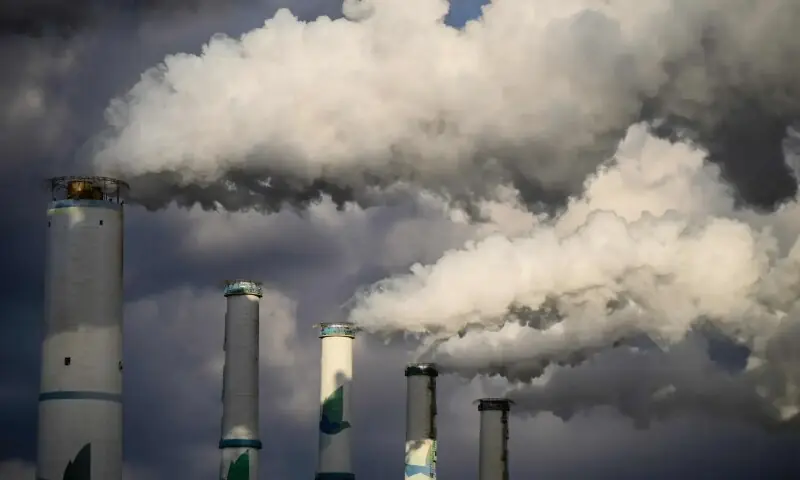
Global carbon pollution dropped this year ever so slightly, but it’s more because of oil shocks reverberating from the Iran war than anything the world has done to fight climate change, scientists said in a new study. In 2026, the world emitted 42.2 billion tons (38.2 billion metric tons) of heat-trapping carbon dioxide from the burning of fossil fuels such as coal, oil and gas.
framing: assertive · carried by 1 article(s) · first seen 2026-11-10
If the overall carbon dioxide emission drop were due solely to a rise in renewables and a systemic drop in fossil fuel use, oil emissions “would slowly come up to a peak and then slowly decline afterward, whereas what we see this year is oil emissions are going up and then suddenly BANG, down 2%,” Peters said.

Claims (29 extracted, 2 hedged)

Global carbon pollution dropped this year ever so slightly, but it’s more because of oil shocks reverberating from the Iran war than anything the world has done to fight climate change, scientists said in a new study. In 2026, the world emitted 42.2 billion tons (38.2 billion metric tons) of heat-trapping carbon dioxide from the burning of fossil fuels such as coal, oil and gas. asserted
world → drop → coal
It’s a 0.4% decrease from last year, according to the scientists of the Global Carbon Project, which publishes its estimates in the journal Earth System Science Data Discussions. uncertain
which → ’ → journal
“It’s downwards which sounds good, but this is largely driven by the war in Iran, what’s happened in the Strait of Hormuz,” said study co-author Glen Peters, a scientist at the CICERO Center for International Climate Research in Norway. asserted
Peters → ’ → Norway
The war in Iran has effectively closed the Strait of Hormuz, a vital shipping artery for petroleum products, pushing up global prices of gasoline and oil. asserted
war → close → gasoline
They found oil emissions dropped nearly 2% and natural gas fell 0.3%, while coal was up 0.6%. asserted
coal → find → ?
The international team of more than 140 scientists use data from around the world to calculate the yearly emissions figure, with estimates for the last few months of the year, and then present them at the U.N. climate negotiations in Antalya, Turkey. asserted
team → use → Antalya
Peters said they are certain that this was related to the war-triggered energy shocks because of both the timing and type of fuel emission drops. asserted
this → say → drops
If the overall carbon dioxide emission drop were due solely to a rise in renewables and a systemic drop in fossil fuel use, oil emissions “would slowly come up to a peak and then slowly decline afterward, whereas what we see this year is oil emissions are going up and then suddenly BANG, down 2%,” Peters said. asserted
Peters → come → what
This is the third time global carbon pollution dropped in the 21st century. asserted
pollution → drop → century
In those past two crises, people hoped the recovery from the shocks would emphasize clean energy, Peters said, “but at the end of the day, we seem to go back to where we were before.” asserted
we → hop → day
Outside experts greeted the figures with a mix of hope and skepticism that it will last. asserted
it → greet → hope
Niklas Höhne, co-founder of Germany’s NewClimate Institute, said “permanent shifts are happening” especially with skyrocketing switches to electric cars and trucks, especially in Asia. asserted
shifts → say → Asia
So he thinks the global peak of carbon emissions is near or here. asserted
peak → think → emissions
But Malte Mienshausen, a climate science and policy expert at the University of Melbourne in Australia, said oil producing nations and companies not affected by the blockage of the Strait of Hormuz reaped “tremendous windfall gains,” and it boosts their efforts to look for oil outside the Middle East. asserted
it → say → East
That, he said, will dampen any short-term effects of reduced carbon emissions from the war. asserted
he → say → war
More than 1,000 tons per second of pollution The 42 billion tons of carbon dioxide emitted this year comes to about 1,335 tons (1,211 metric tons) of the transparent, heat-trapping gas going into the air every second. asserted
tons → emit → air
“We shouldn’t lose sight of the bigger picture. asserted
We → lose → picture
The world is still pumping more than a thousand (metric tons) of carbon dioxide into the atmosphere every second,” Mohamed Adow, director of the environmental group Power Shift Africa, said in an email. asserted
Adow → pump → email
“It’s very abstract to think about the magnitude of stuff we throw in the atmosphere every year, but it’s a ginormous number,” Peters said. asserted
Peters → ’ → atmosphere
And even though the amount of heat-trapping gases from fossil fuels dropped slightly, overall global carbon dioxide emissions went up 1%. asserted
emissions → trap → fuels
That’s because of land use changes, such as deforestation and human-caused peat fires, that increased faster than fossil fuel burning decreased, the study said. asserted
study → ’ → deforestation
China’s emissions drop raises eyebrows and hope Most of the world’s biggest carbon polluting nations — China, the United States, Europe, Japan — showed about a 1% drop in emissions this year, but Peters attributed it to the oil shock. asserted
Peters → raise → shock
India’s fossil fuel pollution went up 4.4% this year, the study found. asserted
study → go → ?
China’s emission drop raised eyebrows and hope for some experts. asserted
drop → raise → experts
Experts have been waiting for China’s ever-growing emissions to start dropping. asserted
emissions → wait → ?
“China is giving us real reasons to be optimistic that its emissions may have peaked,” Adow said. uncertain
Adow → give → reasons
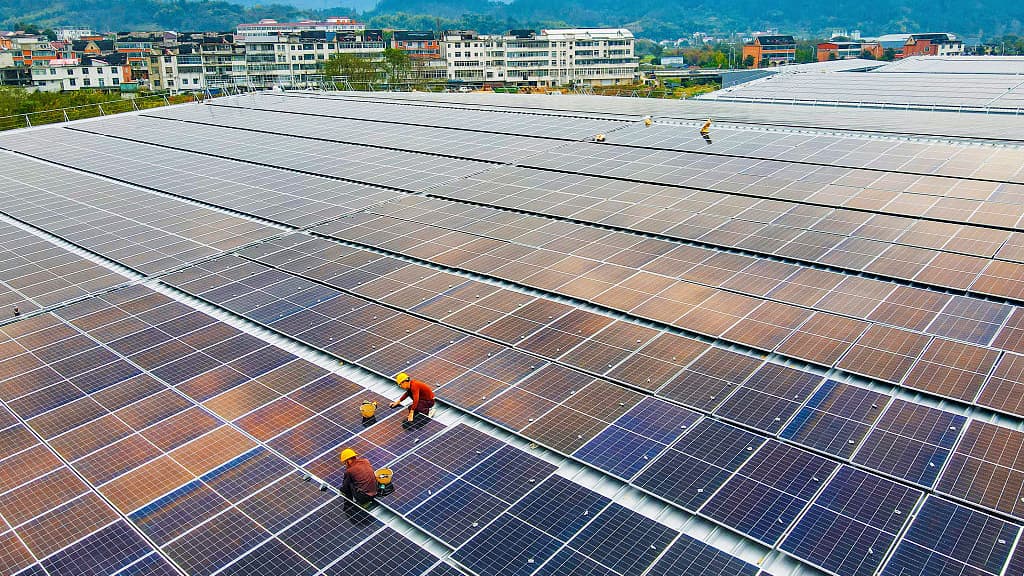
“It’s building the world’s first major electrostate, investing at extraordinary speed and scale in solar power, wind energy, electric vehicles and the infrastructure to support them. asserted
It → build → them
It’s a fundamental transformation of China’s economy that is steadily reducing its dependence on fossil fuels.” asserted
that → ’ → fuels
University of Michigan environment dean Jonathan Overpeck said, “We’re not phasing out fossil fuels fast enough, but some progress is better than no progress.” asserted
progress → say → progress
Give feedback · no sign-in needed

No sign-in needed for now. Your note is sent without a name, so it cannot be answered.

History Support