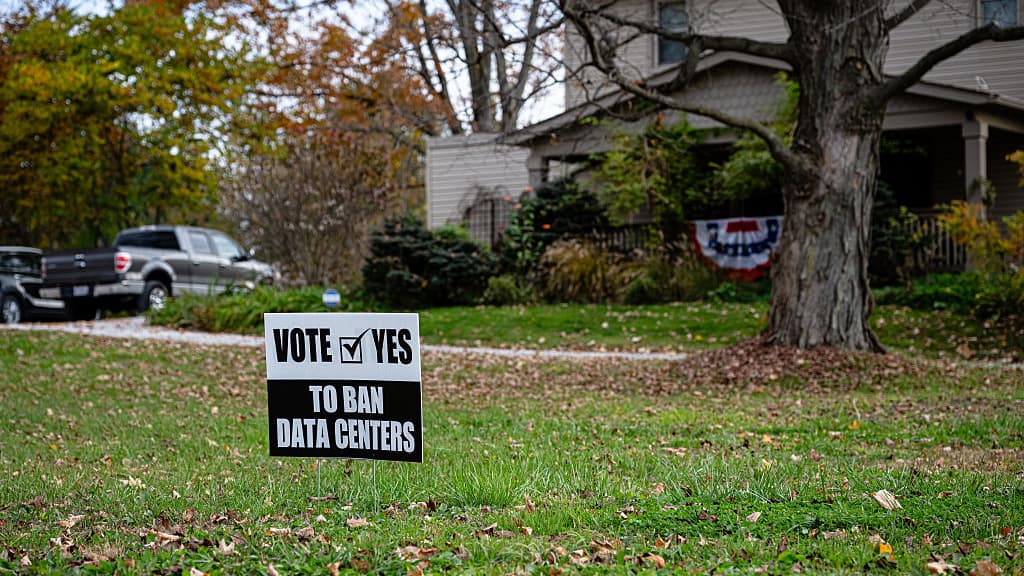
Photo via TIME

Congress’s Permitting Bill Is a ‘Massive Giveaway’ to the AI Data Center Industry, Critics Warn

Read the original at TIME ↗
Cite

Chow, A. R. (2026, November 10). Congress’s Permitting Bill Is a ‘Massive Giveaway’ to the AI Data Center Industry, Critics Warn. TIME. https://time.com/article/2026/11/10/permitting-bill-data-centers/

Dated from the outlet's own feed. Check the original for its byline.

TIME · collected 2026-11-10 · by Andrew R. Chow

Quick Summary

The Senate recently advanced a bipartisan infrastructure bill, BAAJA, which aims to ease construction of new energy projects and includes provisions beneficial to AI data center development. Critics, including environmental groups like the Sierra Club and the Natural Resources Defense Council, argue that the bill weakens environmental protections and could lead to more gas-powered data centers built on public lands, contradicting voter preferences from recent midterms. Meanwhile, industry supporters view it as a way to modernize energy infrastructure despite potential cost increases for developers.
Written by AI on 2026-11-10, from this article's own text only (the story summary below draws on all the coverage).
See how they differ ↓

AI analysis

Story summary

The U.S. Senate advanced a bipartisan permitting reform bill known as the Bipartisan American Affordability and Jobs Act with a procedural vote of 73–25 on November 10, 2026, shortly after midterm elections. The legislation aims to expedite federal approval processes for major energy and infrastructure projects, including data centers and power plants. Democrats argue it will benefit the climate and consumers' wallets, while Republicans support it as a way to lower energy costs and create jobs. President Trump endorsed the bill on November 8, stating it aligns with his "America First Energy Agenda." The bill faces opposition from environmental groups who fear it could lead to harmful projects that violate health and environmental rights.

Written for “Senate Advances Energy Permitting Bill” on 2026-11-22, grounded in this article and the 18 other(s) covering the same event.

How they differ

12 outlets covered “Senate Advances Energy Permitting Bill”.

What each outlet says

One AI summary per outlet of its latest article on this story, written from that article alone and checked against it. Open the article for the outlet's own words.

TimeThis outlet10 Nov

The Senate recently advanced a bipartisan infrastructure bill, BAAJA, which aims to ease construction of new energy projects and includes provisions beneficial to AI data center development. Critics, including environmental groups like the Sierra Club and the Natural Resources Defense Council, argue that the bill weakens environmental protections and could lead to more gas-powered data centers built on public lands…

Congress’s Permitting Bill Is a ‘Massive Giveaway’ to the AI Data Center Industry, Critics Warn (this article)
Daily Caller10 Nov

At a Daily Caller Live event, public policy experts discussed the Bipartisan American Affordability and Jobs Act, which aims to streamline the U.S. construction project permitting process by setting time limits for objections to be filed against these projects. Ben Lieberman of the American Enterprise Institute proposed implementing a "shot clock" similar to basketball's 24-second rule to expedite permits, while Ted…

Landmark Bill Will Create ’24-Second Shot Clock’ To Unleash American Industry, Experts Say →5 articles from Daily Caller on this story
The Straits Times10 Nov

On November 9, the US Senate voted 73-25 to advance debate on a bipartisan energy permitting bill aimed at speeding up approvals for infrastructure projects while adding new requirements for consultation with tribes and expanded state roles in transmission planning. Senators Martin Heinrich and Sheldon Whitehouse, who co-authored the Bill with Republicans Shelley Moore Capito and Mike Lee, argue that the recent…

US Senate advances energy permitting Bill opposed by some Democrats, tribes →2 articles from The Straits Times on this story
The Guardian10 Nov

The Senate voted 73-25 on Monday to advance bipartisan legislation aimed at expediting permit reviews for infrastructure projects, including datacenters and energy facilities. Backers like President Trump see it as crucial for reducing delays in clean energy and fossil fuel projects, while critics from environmental organizations argue that the bill weakens safeguards against pollution and endangers wildlife…

Senate advances bill to speed up permit reviews for infrastructure projects →2 articles from The Guardian on this story
Just the News10 Nov

The Senate has advanced a bipartisan permitting reform bill called the Bipartisan American Affordability and Jobs Act with a vote of 73-25 shortly after returning from its midterm recess. Democrats support the bill, arguing it will benefit climate action and consumer finances; Rhode Island Senator Sheldon Whitehouse claims it will save Americans $60 to $80 monthly while preventing up to 1.8 gigatons of greenhouse…

Senate advances bipartisan permitting reform bill in return from midterms recess →2 articles from Just the News on this story
Mother Jones9 Nov

The Senate is set to vote on the Bipartisan American Affordability and Jobs Act (BAAJA), which aims to streamline regulatory processes for energy infrastructure development. Introduced by Senators Sheldon Whitehouse, Martin Heinrich, Mike Lee, and Shelley Moore Capito in September, this bill would ease federal environmental regulations to expedite projects like transmission lines and power plants. However, it faces…

This Bipartisan Energy Deal Could Clear the Way for Trump’s Arch →
Show 6 more outlets
The Independent9 Nov

A bipartisan energy bill, known as the Bipartisan American Affordability and Jobs Act (BAAJA), is set for debate in the Senate on Monday, aiming to address voter concerns over data centers and electricity costs. The legislation would expedite approvals for new power plants and lines while requiring major data center operators to contribute more to grid upgrades. Despite support from some Democrats like Senator…

Permitting bill emerges as Congress' first test of how to tackle data center fury →
Toronto Star9 Nov

The Senate is scheduled to vote on bipartisan legislation aimed at accelerating permitting reviews for infrastructure projects, including data centers and energy facilities, in response to growing demand for electricity and other forms of energy. President Trump has endorsed the bill, which would expedite the approval process for both clean energy and fossil fuel projects, while industry groups support it and…

Senate weighs sweeping energy legislation in first major action since midterm elections →
Washington Examiner10 Nov

The Senate successfully moved past a key procedural step by voting 73-25 to limit debate on a bipartisan bill that aims to streamline processes for energy and infrastructure projects. This action advances the nearly 500-page Bipartisan American Affordability and Jobs Act towards its final approval in the chamber.

Major bill to cut red tape for energy projects clears Senate hurdle →
Semafor10 Nov

The US Senate has moved forward with a permitting bill designed to accelerate construction of energy infrastructure projects such as power plants, data centers, and distribution grids. While Democrats view this as crucial for speeding up America's transition to cleaner energy, there is internal division among environmental groups over the overhaul of major environmental laws required by the bill. The legislation…

US Senate backs permitting bill aimed at accelerating energy construction →
Al Jazeera10 Nov

The United States Senate voted 73-25 to advance a bipartisan bill aimed at speeding up the construction of new data centers and energy infrastructure, including both clean and fossil fuel projects. The Bipartisan American Affordability and Jobs Act would reduce environmental review deadlines and limit legal challenges for major energy projects, while also requiring data center operators to contribute $55 billion…

US Senate advances major bill boosting energy infrastructure →
Reason10 Nov

The Senate voted 73–25 to advance a bipartisan bill called the Bipartisan American Affordability and Jobs Act (BAAJA), aimed at streamlining federal permitting processes. Sponsored by Sen. Shelley Moore Capito, the bill seeks to limit environmental reviews under NEPA and accelerate project approvals for energy, housing, and transportation industries. Key provisions include expanding categorical exclusions for…

Senate Advances Bipartisan Permitting Bill That Could Unleash Energy Development With Major Caveats →

Where they agree and split

Framing

How the first headlines put it

Attributed to a source1
Stated as fact3
The headlines (4)

Trump says he backs energy permitting Bill on eve of Senate vote The Straits Times · attributed to a source

Voters Most Worried About Power Bills Backed Democrats 2-To-1. Here is What Their Win Means For Energy Daily Caller · stated as fact

This Bipartisan Energy Deal Could Clear the Way for Trump’s Arch Mother Jones · stated as fact

Permitting bill emerges as Congress' first test of how to tackle data center fury The Independent · stated as fact

The full story: what happened, how it changed, and all 19 articles →

Compared with similar articles

This article reads leans left and hedges 11% of its claims. Each row says how that neighbour differs.
The Guardian
Leans right further right than this Hedges 4 of 23 claims Outlet record 63/100
The Straits Times
Leans right further right than this Hedges 2 of 19 claims Outlet record 64/100
“The articles describe different initiatives: one about OpenAI's charm offensive to change voter views on data centers, and another about congressional legislation facing criticism for allegedly benefiting the AI data center industry.”
The Straits Times
Leans left Hedges 2 of 10 claims Outlet record 64/100
“The articles discuss different aspects and actions related to data centers in relation to AI: one about Norway curbing growth, and another about a U.S. bill easing construction.”
Mother Jones
Leans left Hedges 6 of 42 claims Outlet record 60/100
Toronto Star
Leans right further right than this Hedges 3 of 27 claims Outlet record 65/100
The Guardian
Leans left Hedges 7 of 67 claims Outlet record 63/100
Semafor
Leans left Hedges 0 of 6 claims Outlet record 64/100
Al Jazeera
Hedges 3 of 19 claims Outlet record 60/100
Reason
Leans right further right than this Hedges 4 of 32 claims Outlet record 67/100
The Sydney Morning Herald
Hedges 9 of 32 claims Outlet record 61/100
“The articles discuss different aspects of AI and data centers with distinct focuses: one on economic impacts in Australia and the other on a U.S. permitting bill.”

Story

Senate Advances Energy Permitting Bill
Politics · 19 article(s) covering the same event. Compare every outlet's account →
How this article was measured signals, leaning charts, publisher record, byline, topics and claims

Signals How these are calculated →

Claims extracted
45
sentences that state something as happening or true
Uncertain
11%
5 of 45 hedged ("reportedly", "may", "according to")
Leaning
Leans left
of the writing, not the subject · beta estimate
Publisher signals
60/100
TIME's corrections and hedging, across everything collected from it. Not a measure of accuracy.
Outlets on this story
19
Politics
Same framing elsewhere
1
articles that frame the event the way this one does
Analyzed 2026-11-10 · how these are computed

How this is being covered How these are calculated →

Article leaning vs. publisher reliability
Source leaning vs. consistency

Publisher

TIME · 1082 article(s) · 2 correction(s) detected
Running correction rate · 2 correction(s)

Who wrote this

Andrew R. Chow
4 article(s) here · 1 carrying a prediction
The movie was a box-office smash, won an Oscar, and exemplified a slew of Obama-era, techno-optimist movies that celebrated rugged individuals relentlessly building futuristic tech that could lead to a better society.
2026-11-12 · assertive framing · How Movies About Tech Turned Dystopian
The bill, the Bipartisan American Affordability and Jobs Act (BAAJA), has a broad base of support, including from labor leaders who contend it will produce thousands of jobs and clean energy proponents who believe it could unlock wind and solar.
But on Nov. 3, that accelerationist wing could hardly have had a worse night.
2026-11-04 · assertive framing · How AI Backlash Shaped the 2026 Midterms
I posit at the end of the film, it's as if he's betting on whether or not AI will lead us to a moment of extraordinary abundance or basically the end of life on Earth.
Also by Andrew R. Chow
Nothing else under this byline is closely related to this article, so these are simply their most recent.

Topics

Americans Congress Senate U.S. the Bipartisan American Affordability and Jobs Act

Subjects

Congress ORG · 2× Senate ORG · 2× U.S. GPE · 2× the Sierra Club ORG · 2× Allie Rosenbluth PERSON · 1× Americans NORP · 1× China GPE · 1× Democrats NORP · 1× Donald Trump PERSON · 1× the Natural Resources Defense Council ORG · 1×

Narrative

Additionally, some Tribal organizations and leaders have spoken out forcefully against the bill, with a coalition of Tribal leaders writing on Saturday that the bill would “gut the ability of Tribal Nations and the American public to identify and protect historic and cultural places threatened by federally connected projects—including data centers.”
framing: assertive · carried by 1 article(s) · first seen 2026-11-10
The bill, the Bipartisan American Affordability and Jobs Act (BAAJA), has a broad base of support, including from labor leaders who contend it will produce thousands of jobs and clean energy proponents who believe it could unlock wind and solar.

Claims (45 extracted, 5 hedged)

On Monday, the Senate voted to advance a bipartisan bill aimed at easing the construction of new energy infrastructure. asserted
Senate → vote → infrastructure
The bill, the Bipartisan American Affordability and Jobs Act (BAAJA), has a broad base of support, including from labor leaders who contend it will produce thousands of jobs and clean energy proponents who believe it could unlock wind and solar. uncertain
it → have → wind
Its sponsors are hoping to pass the bill before the current Congress ends in January. asserted
Congress → hop → January
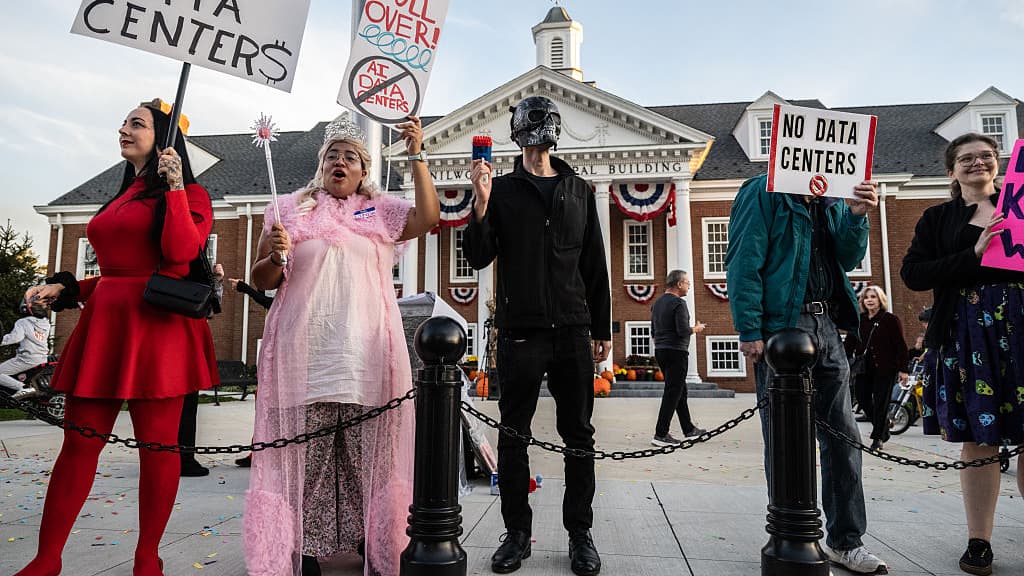
But the bill has also received vehement blowback from a growing coalition of anti-data center critics, who argue that it would accelerate the buildout of an industry that Americans resoundingly voted against in the midterm elections. asserted
Americans → receive → elections
BAAJA does address affordability concerns by forcing data centers to pay the full cost of the upgrades they trigger, and contains transmission reforms designed to modernize the grid. asserted
they → address → grid
But it also strips back environmental protections and could lead to more data centers powered by gas and built on public lands. uncertain
it → strip → lands
Hundreds of local and national organizations have signed letters urging Congress not to pass the bill as written, including the Sierra Club and the Natural Resources Defense Council. asserted
Hundreds → sign → Club
Conversely, many industry trade groups have been supportive of the bill, despite the fact that it would likely make building more expensive. asserted
building → make → fact
On Sunday, Donald Trump urged the Senate to pass the bill on Truth Social, writing that “China will take any Data Center that we don’t want.” asserted
we → urge → that
The bill represents the first major test for Democrats post-election, as they contend with how to deliver on affordability and many other issues in their sprawling coalition at the same time. asserted
they → represent → time
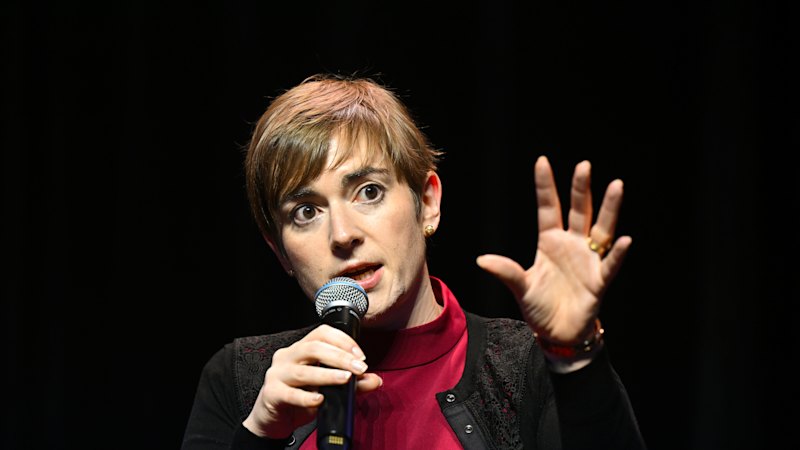
“Everything about BAAJA goes against the spirit of voters this midterms, in which we saw voters turn out for candidates who directly oppose data centers,” says Allie Rosenbluth, U.S. campaigns manager at the environmental nonprofit Oil Change International. asserted
Rosenbluth → go → nonprofit
“This bill is a massive giveaway to the data center industry—and creates a backdoor for fossil fuels to enter the grid through data centers.” asserted
fuels → create → centers
In the scramble to bring AI data centers online as fast as possible, many developers have built their own gas power plants instead of waiting to connect to the grid. asserted
developers → bring → grid
Global Energy Monitor data reported by Wired show that U.S. gas projects powering data centers increased from roughly 4 gigawatts in early 2024 to 189 gigawatts in development by mid-2026. asserted
projects → report → mid-2026
In some cases, these gas plants have worsened local pollution and exacerbated health issues like asthma, scientific researchers contend. asserted
researchers → worsen → asthma
BAAJA incentivizes a wide range of energy sources to come online faster, including solar and wind. asserted
range → come → solar
Many experts are hopeful that the bill will accelerate the buildout of transmission lines that are essential for bringing clean energy online. asserted
that → accelerate → energy
But environmentalists worry that the first and foremost beneficiary of the bill won’t be clean energy sources but rather gas-powered data centers, because there is already a massive pipeline of proposed projects waiting for various approvals. asserted
beneficiary → worry → approvals
Rosenbluth points to several gas-powered data centers that are currently plodding through the permitting process, including the Ports-Pike Technology Campus in Ohio and the STAK Energy Campus in Alaska. asserted
that → point → Alaska
If BAAJA were to pass, she says, key environmental permits they are trying to obtain could be fast-tracked, potentially allowing them to come online much more quickly. uncertain
them → pass → ?
Holly Bender, chief program officer of the Sierra Club, says that "based on their need for speed to power, the data center industry is driving a historic and alarming investment in gas and fossil fuels. asserted
industry → say → gas
There’s a lot in this bill that will make it easier and faster to build gas pipelines, while making it harder for communities to have a say. asserted
communities → ’ → say
Another major concern from critics is that the bill will lead to many more data centers getting built on federally-owned land. asserted
centers → lead → land
The Trump administration has embraced this idea, and signed an executive order in July 2025 directing the Interior and Energy departments to make federal sites available for data centers and to streamline their environmental reviews. asserted
sites → embrace → reviews
“We’re going to ‘mine, baby, mine’ so we can ‘build, baby, build’ because we’ve got to build AI data centers,” Interior Secretary Doug Burgum said in 2025. asserted
Burgum → go → 2025
There are at least 17 active applications connected to data center campuses on public land, covering thousands of acres in Arizona, Idaho, Nevada, and other states, one recent study found. asserted
study → be → Arizona
BAAJA’s permitting provisions could make those projects easier to advance and harder to stop, including limiting judges’ ability to halt construction due to environmental review. uncertain
projects → make → review
Additionally, some Tribal organizations and leaders have spoken out forcefully against the bill, with a coalition of Tribal leaders writing on Saturday that the bill would “gut the ability of Tribal Nations and the American public to identify and protect historic and cultural places threatened by federally connected projects—including data centers.” asserted
bill → speak → centers
However, the bill’s advocates argue that it addresses several of the public’s most pressing data center concerns. asserted
it → argue → concerns
The first is around affordability: The bill contains ratepayer protections which would require developers to pay for the added cost of transmission. asserted
which → contain → transmission
One study estimates that data centers would pay approximately $55 billion in transmission charges over ten years—about $35 billion more than under current policy. asserted
centers → estimate → policy
The bill establishes protections to prevent households and businesses from being left with the bill for failed projects. asserted
bill → establish → projects
“The day of data center freeloading ends when this bill passes,” Senator Sheldon Whitehouse, one of the bill’s Democratic sponsors, said last week. asserted
Whitehouse → end → sponsors
He added on Monday that passing the bill would set the stage for Democrats to work on substantial clean energy policies next year when they control both chambers. asserted
they → add → chambers
A study from the Rhodium Group projected that the bill as introduced will reduce household electricity bills, both by expanding access to lower-cost electricity and by preventing data-center costs from being shifted to other customers. asserted
bill → project → customers
But Meg Slattery, a staff scientist at Earthjustice, contends that the ravenous demand from the data center industry could simply soak up the power that comes online. uncertain
that → contend → power
“It's quite possible that if there are more gas pipelines being built, for example, that is going to increase data center demand,” she says. asserted
she → be → demand
“We are supportive of transmission reform because we want to build a clean energy grid that benefits everybody. asserted
that → want → everybody
But these other provisions, we think, are going to fast-track the worst version of this story.” asserted
we → think → story
Following Monday’s cloture vote, the Senate must vote to take up the legislation. asserted
Senate → follow → legislation
…and 5 more, not listed.
Give feedback · no sign-in needed

No sign-in needed for now. Your note is sent without a name, so it cannot be answered.

History Support