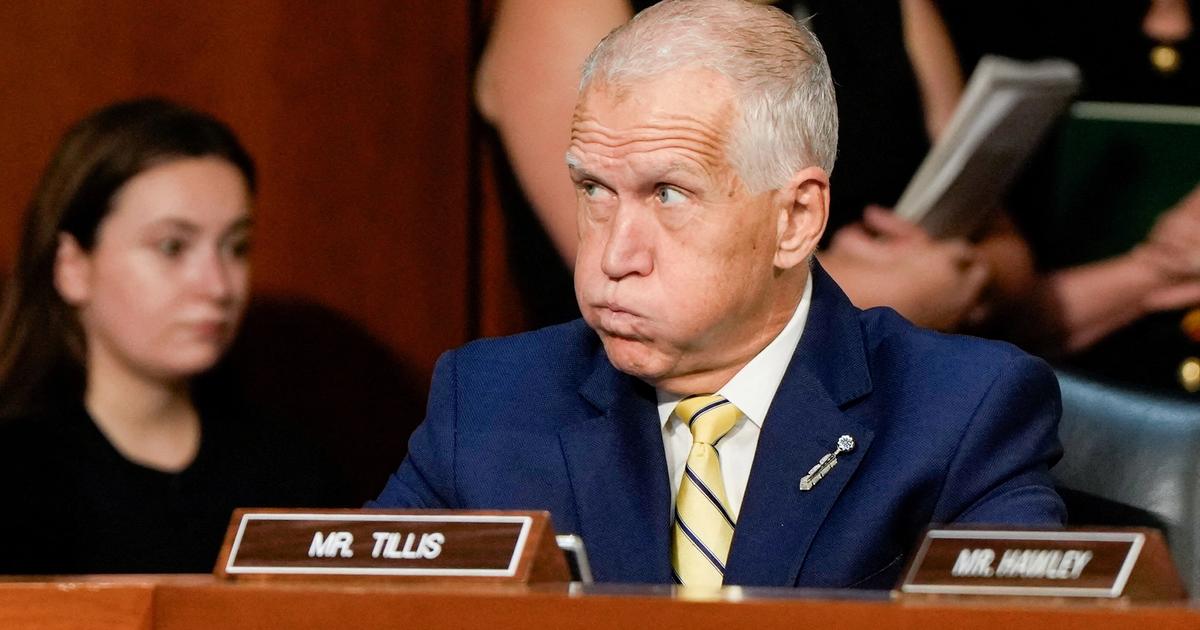
Photo via Washington Examiner

The Senate didn’t kill the crypto bill — it just gave us a chance to save it

Read the original at Washington Examiner ↗
Cite

Wall, A. (2026, September 17). The Senate didn’t kill the crypto bill — it just gave us a chance to save it. Washington Examiner. https://www.washingtonexaminer.com/op-eds/4729876/clarity-act-crypto-safe-harbor/

Dated when The Aporia collected the article, usually within hours of publication. Check the original for its exact date and byline.

Washington Examiner · collected 2026-09-17 · by Adrian Wall

Quick Summary

The Senate failed to reach the necessary 60 votes to advance the latest version of the CLARITY Act, which aims to provide clearer regulations for digital assets but lacks provisions addressing past transactions under existing legal frameworks. The setback provides an opportunity for further negotiation and refinement, potentially using a similar approach from the LIBOR Act to address unresolved issues concerning previous digital asset transactions. Lawmakers now have time to ensure the bill addresses ongoing legal uncertainties before new rules are implemented, aiming to protect market participants from potential private lawsuits over past activities.
Written by AI on 2026-09-17, from this article's own text only (the story summary below draws on all the coverage).
See how they differ ↓

AI analysis

Story summary

On September 15, the U.S. Senate was set to vote on advancing the Clarity Act, a bill that aims to establish federal regulations for digital assets like cryptocurrency. The House had already passed the legislation, but disagreements persisted over ethics and regulatory concerns. Key opponents included Senator Mike Rounds (R-SD) and Senator Thom Tillis (R-NC), who warned it was unlikely to pass due to unresolved issues regarding President Donald Trump's conflicts of interest in crypto investments. Despite support from industry groups that spent $451 million on lobbying, significant hurdles remained, with some Democrats demanding stronger ethics provisions to prevent financial conflicts for the president and his family. The vote was seen as a critical test for both the cryptocurrency market and political forces ahead of the November midterm elections.

Written for “Crypto Regulation Debate” on 2026-11-21, grounded in this article and the 13 other(s) covering the same event.

How they differ

9 outlets covered “Crypto Regulation Debate”.

What each outlet says

One AI summary per outlet of its latest article on this story, written from that article alone and checked against it. Open the article for the outlet's own words.

Washington ExaminerThis outlet17 Sep

The Senate failed to reach the necessary 60 votes to advance the latest version of the CLARITY Act, which aims to provide clearer regulations for digital assets but lacks provisions addressing past transactions under existing legal frameworks. The setback provides an opportunity for further negotiation and refinement, potentially using a similar approach from the LIBOR Act to address unresolved issues concerning…

The Senate didn’t kill the crypto bill — it just gave us a chance to save it (this article)3 articles from Washington Examiner on this story
Semafor15 Sep

Senators failed to advance the cryptocurrency industry's top legislative priority, dealing a significant blow to efforts aimed at regulating digital assets. Despite heavy lobbying from the industry and fears among traditional banks about increased competition, three Republican senators joined all Democrats in rejecting the bill. The failure underscores the difficulty of achieving bipartisan support on crypto…

Crypto industry’s top legislative priority implodes →4 articles from Semafor on this story
Zeteo15 Sep

Senators are preparing to consider a bill that would provide favorable regulatory treatment for the cryptocurrency industry, which has spent over $450 million on political campaigns in the 2024 election cycle. Critics argue this regulation will instead "supercharge" former President Trump's cryptocurrency schemes, including his family’s memecoin and crypto exchange funded by foreign interests. The bill needs seven…

Will Dems Help ‘Supercharge’ Trump’s Crypto Corruption? →
NPR15 Sep

The Senate is set to vote on the Digital Asset Market Clarity Act, a 600-page bill that aims to establish the first regulatory framework for cryptocurrencies in U.S. history. Proponents like Ryan VanGrack of Coinbase argue it clarifies oversight needed for tens of millions of Americans investing in crypto products without clear rules. Opponents view the act as too lenient on the industry, particularly because it…

This bill could reshape crypto in America -- and it's sparking a major battle →
The Straits Times15 Sep

On September 15, the U.S. Senate plans to vote on advancing the Clarity Act, a bill aimed at creating regulatory clarity for digital assets. Crypto companies have spent hundreds of millions campaigning for it, but analysts doubt it will secure the necessary 60 votes. The revised bill includes provisions addressing conflicts of interest for public officeholders and concerns from the banking sector, though these…

US Senate to vote on advancing landmark crypto bill →
Toronto Star15 Sep

The Senate is scheduled to vote on Tuesday regarding a new regulatory framework for cryptocurrency, an issue worth $2.3 trillion. Democrats are pushing back on the bill, arguing that it does not sufficiently address conflicts of interest related to former President Donald Trump's investments in cryptocurrencies during his presidency. The article highlights the tension between creating industry-friendly regulations…

Senate is to vote on cryptocurrency regulation as Democrats push back on Trump investments →
Show 3 more outlets
CBS News15 Sep

The Senate failed to advance the Clarity Act, a cryptocurrency regulation bill, on Tuesday with a vote of 49 to 50, falling short of the required 60 votes. Republicans, including Majority Leader John Thune, pushed for the bill's passage, arguing it would establish clear regulatory guidelines and ensure cooperation between financial regulators. However, Democrats such as Senator Elizabeth Warren opposed the bill…

Senate fails to advance Clarity Act amid Democratic concerns about crypto bill →
The Intercept15 Sep

Senator Kirsten Gillibrand initially lobbied fellow Democrats to support a crypto bill before voting against it at the last minute, joining progressives in blocking its advancement due to concerns over President Trump's significant cryptocurrency profits. The vote on October 13th fell short of the required 60 votes with a tally of 49–50, highlighting the political challenges for moderate Democrats who previously…

Crypto Darling Gillibrand’s 11th-Hour Flip-Flop Helps Block Trump Crypto Bill →
Reason17 Sep

The Senate failed a procedural vote on the Digital Asset Market Clarity Act, which aimed to provide regulatory clarity for the crypto industry but faced opposition due to concerns over potential conflicts of interest involving former President Donald Trump's significant cryptocurrency earnings, totaling $1.4 billion according to recent financial disclosures. Democrats were particularly concerned that the bill’s…

Trump's $1.4 Billion Crypto Haul Sinks the Senate's Crypto Bill →

Where they agree and split

Agreed

AI · cited, from two or more outlets

  • The CLARITY Act would establish a clearer federal framework for digital asset markets by defining regulatory responsibilities and creating more predictable rules for market participants.12

Disputed

Picked by our model, which is sometimes wrong

  • While some outlets argue that the bill's failure is a significant setback for the crypto industry, others suggest it may not be the end of America’s digital asset experiment and could force more practical questions about financial system regulation.45

Framing

How the first headlines put it

  • The Washington Examiner frames the issue as a concern over Trump's conflicts of interest, while NPR presents it as a major battle with significant implications for crypto regulation in America.12
  • The Toronto Star highlights the vote on cryptocurrency regulation and Democratic pushback against Trump investments, whereas CBS News focuses solely on the failure of the Clarity Act amid concerns about ethics provisions.36
The full story: what happened, how it changed, and all 14 articles →

Compared with similar articles

This article reads leans left and hedges 14% of its claims. Each row says how that neighbour differs.
NPR
Hedges 4 of 55 claims Outlet record 60/100
CBS News
Hedges 2 of 24 claims Outlet record 66/100
Semafor
Leans strongly left further left than this Hedges 1 of 6 claims Outlet record 64/100
Washington Examiner
Leans left Hedges 1 of 35 claims Outlet record 67/100
Toronto Star
Leans left Hedges 0 of 3 claims Outlet record 64/100
Reason
Leans left Hedges 4 of 26 claims Outlet record 67/100
Washington Examiner
Leans left Hedges 3 of 34 claims Outlet record 67/100
“Article A describes an upcoming procedural cloture vote on the CLARITY Act, while Article B discusses the Senate falling short of votes to advance the bill, indicating a different and later event.”
The Straits Times
Hedges 4 of 14 claims Outlet record 64/100
“While both articles discuss voting on the Clarity Act in the US Senate, they describe different stages of the process. Article A is about the initial vote to advance the bill, while Article B describes the outcome where the bill fell short of necessary votes.”
Semafor
Hedges 1 of 7 claims Outlet record 64/100
“The articles describe different stages of the legislative process for the crypto bill, with Article A discussing likely failure and Article B reporting on a procedural vote that fell short of passing.”
Semafor
Hedges 8 of 114 claims Outlet record 64/100
“Article A discusses warnings about an upcoming procedural vote on a crypto bill, while Article B reports on the actual outcome of that vote and its implications.”

Story

Crypto Regulation Debate
Politics · 14 article(s) covering the same event. Compare every outlet's account →
How this article was measured signals, leaning charts, publisher record, byline, topics and claims

Signals How these are calculated →

Claims extracted
51
sentences that state something as happening or true
Uncertain
14%
7 of 51 hedged ("reportedly", "may", "according to")
Leaning
Leans left
of the writing, not the subject · beta estimate
Publisher signals
67/100
Washington Examiner's corrections and hedging, across everything collected from it. Not a measure of accuracy.
Outlets on this story
14
Politics
Same framing elsewhere
1
articles that frame the event the way this one does
Analyzed 2026-09-17 · how these are computed

How this is being covered How these are calculated →

Article leaning vs. publisher reliability
Source leaning vs. consistency

Publisher

Washington Examiner · 5265 article(s) · 11 correction(s) detected
Running correction rate · 11 correction(s)

Who wrote this

Adrian Wall
1 article(s) here · 1 carrying a prediction
That next draft may be the Senate’s best opportunity to address the legal uncertainty surrounding past digital asset transactions before the new framework takes effect.
The only article under this byline in the corpus.

Topics

Congress Section 105 Senate the CLARITY Act the LIBOR Act

Subjects

Congress ORG · 4× Senate ORG · 4× SEC ORG · 2× CFTC ORG · 1× Coinbase ORG · 1× Kraken PERSON · 1× The Stanford Securities Class Action Clearinghouse ORG · 1× U.S.-based GPE · 1× the Commodity Futures Trading Commission ORG · 1× the Securities and Exchange Commission ORG · 1×

Narrative

The CLARITY Act provides much of what the digital asset industry has been seeking for a long time, such as a clear definition of digital commodities, a jurisdictional line between the Securities and Exchange Commission and the Commodity Futures Trading Commission, and registration categories that reflect how tokens are currently traded.
framing: assertive · carried by 1 article(s) · first seen 2026-09-17
That next draft may be the Senate’s best opportunity to address the legal uncertainty surrounding past digital asset transactions before the new framework takes effect.
2026-09-17 · Washington Examiner
The Senate didn’t kill the crypto bill — it just gave us a chance to save it · assertive framing

Claims (51 extracted, 7 hedged)

The Senate on Tuesday fell short of the 60 votes needed to advance the latest version of the CLARITY Act. asserted
Senate → fall → Act
The bill now returns to negotiations rather than moving forward on the Senate floor. asserted
bill → return → floor
That is a delay, not a defeat, and it hands the Senate something it did not have last week: time to get the text right. asserted
text → hand → something
One major issue still remains unresolved. asserted
issue → remain → ?
As written, the act does not provide a transition rule for digital asset transactions that have already taken place under the existing legal framework. asserted
that → write → framework
Congress now has the time to fix that using a framework it has already enacted once before: the LIBOR Act. asserted
it → have → framework
Landmark financial legislation often changes substantially before final passage, and the version of CLARITY that ultimately becomes law has not yet been written. asserted
that → change → CLARITY
That next draft may be the Senate’s best opportunity to address the legal uncertainty surrounding past digital asset transactions before the new framework takes effect. uncertain
framework → address → effect
The CLARITY Act provides much of what the digital asset industry has been seeking for a long time, such as a clear definition of digital commodities, a jurisdictional line between the Securities and Exchange Commission and the Commodity Futures Trading Commission, and registration categories that reflect how tokens are currently traded. asserted
tokens → provide → Commission
But the framework is entirely forward-looking. asserted
framework → look → ?
The bill sets the new rules of the road for the future of the digital assets ecosystem, but leaves unresolved what happens to transactions that occurred before those rules existed. asserted
rules → set → transactions
This reality would expose major companies and market participants to private lawsuits using the regulatory framework that Congress is now in the process of replacing. asserted
Congress → expose → process
Congress has faced a similar roadblock before. asserted
Congress → face → roadblock
The Adjustable Interest Rate Act, enacted in 2022 as Division U of that year’s Consolidated Appropriations Act, paired a statutory transition process for legacy contracts with an express liability safe harbor in Section 105. asserted
Act → enact → Section
That safe harbor protected parties who followed the statute’s transition rules from being sued over the switch itself. asserted
who → protect → switch
Fraud claims and other misconduct claims stayed fully intact. uncertain
claims → stay → ?
The bill passed with bipartisan support, ending years of regulator warnings about “tough legacy” contracts. asserted
bill → pass → contracts
The Stanford Securities Class Action Clearinghouse reports 103 federally filed crypto-related securities class action lawsuits, many of which claim that the sale of tokens on U.S.-based exchanges constituted the sale of an unregistered security. uncertain
sale → report → security
Coinbase and Kraken continue to be named defendants in private lawsuits based on the same theory, even though the SEC has abandoned its own registration-based lawsuits against the exchanges as part of its broader retreat from enforcement-based regulation. asserted
SEC → continue → regulation
That gap is ultimately what the CLARITY Act leaves standing unless Congress closes it. asserted
Congress → leave → it
Clean slate language would have a similar effect on legacy digital asset transactions as Section 105 had on legacy LIBOR contracts. asserted
Section → have → contracts
Both are forward-looking laws that provide clarity on the treatment of prior events, and neither affects issuers’ liability for their own offerings nor agencies’ authority to enforce compliance with securities laws. asserted
neither → look → laws
The primary difference is that clean slate language addresses private litigation. asserted
language → address → litigation
This type of litigation is based on registration requirements related to secondary token trading. asserted
type → base → trading
Clean slate language would eliminate these lawsuits for all token trades that occurred before the CLARITY Act’s effective date. asserted
that → eliminate → date
Some may call this a clean slate for bad actors, but that’s not the case. uncertain
that → call → actors
Clean slate language will apply only to registration-based claims related to secondary-market purchases through publicly traded exchanges. uncertain
language → apply → exchanges
The clean slate language will not affect fraud, manipulation, or deceit claims, nor will it affect issuers’ responsibility for their own offerings. uncertain
it → affect → offerings
The clean slate language will not change the SEC’s and CFTC’s authority to enforce either. asserted
language → change → authority
The intent of the clean slate language is to stop private plaintiffs from filing lawsuits years after an amended law has taken effect. asserted
law → stop → effect
More than one-fifth of the U.S. adult population currently owns a digital asset. asserted
fifth → own → asset
However, for years, many have participated in digital asset markets without the same level of regulatory clarity available in financial markets worldwide. asserted
many → participate → markets
The primary roadblocks are that there are no regulations regarding custody, and there is no clear distinction between security and commodity. asserted
roadblocks → be → security
This uncertainty has pushed much of the crypto market out of the country and into foreign markets. asserted
uncertainty → push → markets
As a result, U.S. citizens who use these types of exchanges or platforms have fewer rights and remedies available to them if something goes wrong. asserted
something → use → them
Only 12% of the top 10 centralized exchanges by market share are U.S.-based, while the U.S. captured just 2% to 5% of CEX volume growth between 2024 and 2025. asserted
U.S. → capture → 2024
This geographical shift isn’t limited to exchange volume. asserted
shift → limit → volume
Over 80% of cryptocurrency developers now live outside the U.S., showing how much of the crypto industry’s development happens internationally. asserted
much → live → development
So far, Senators working on the CLARITY Act have concentrated on the bill’s more controversial aspects (ethics restrictions, stablecoin rewards, illicit finance protections). asserted
Senators → work → aspects
Each of these areas has constituencies pushing for their priorities. asserted
Each → have → priorities
…and 11 more, not listed.
Give feedback · no sign-in needed

No sign-in needed for now. Your note is sent without a name, so it cannot be answered.

History Support