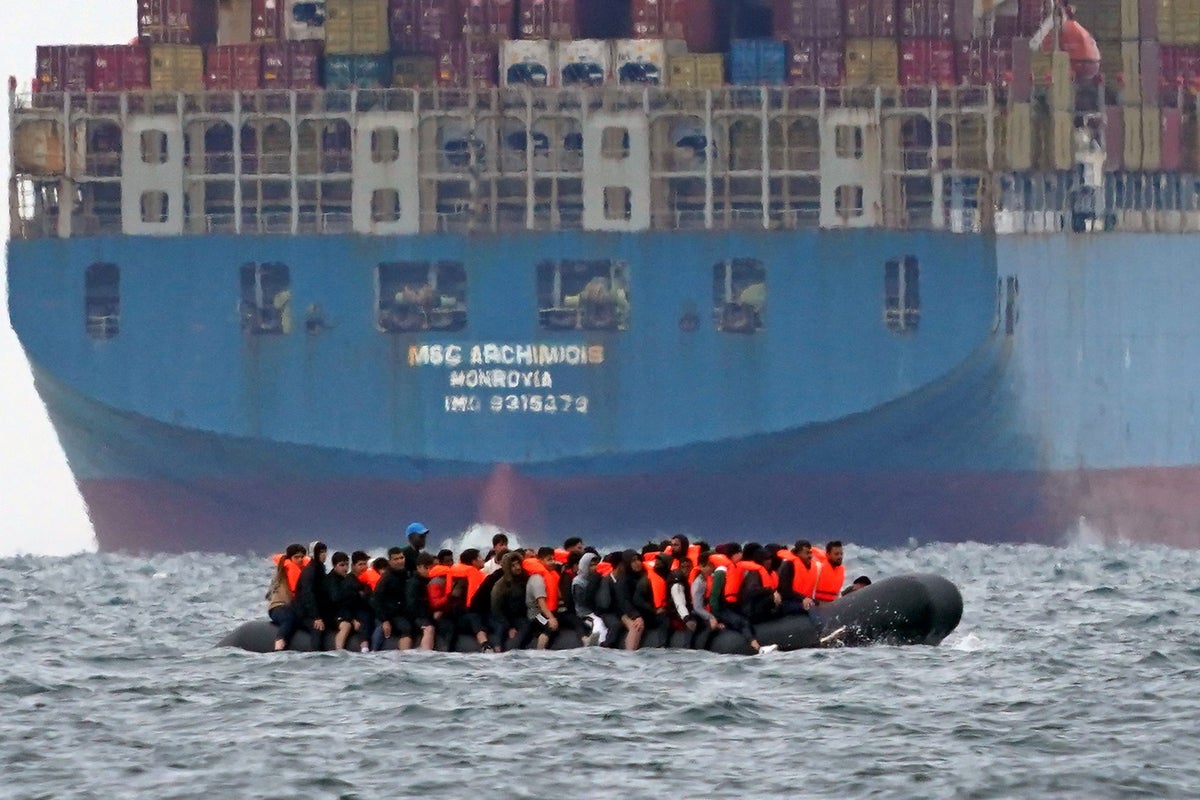
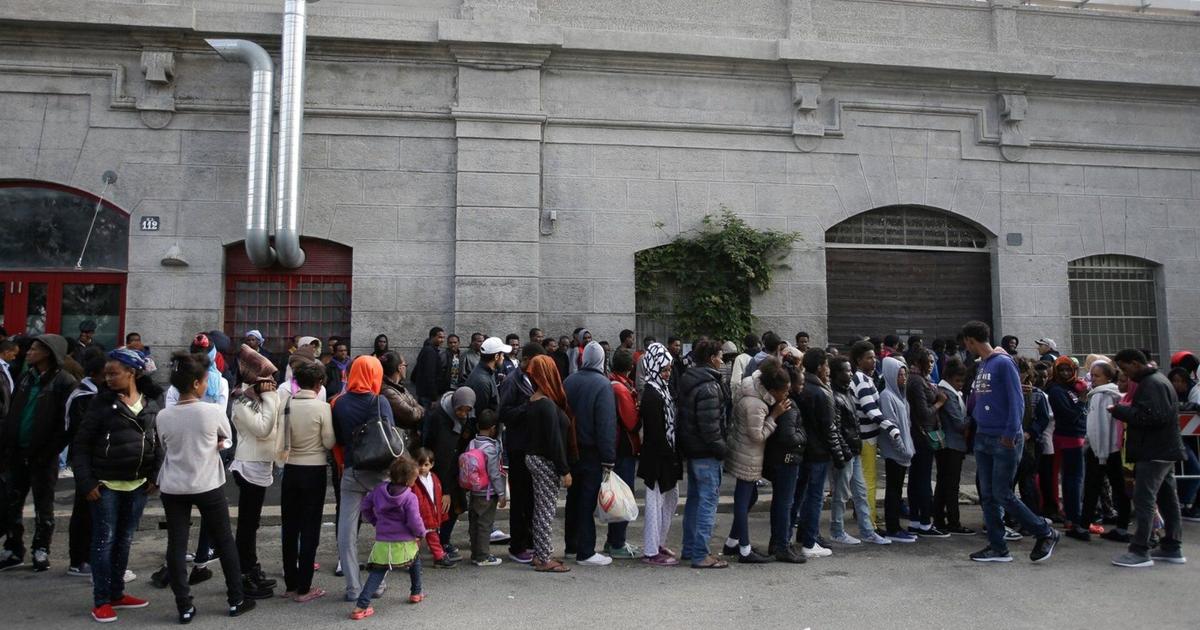
Photo via The Straits Times

Explainer-Five EU countries' plan for a deportation hub in Rwanda

Read the original at The Straits Times ↗
Cite

The Straits Times. (2026, November 17). Explainer-Five EU countries' plan for a deportation hub in Rwanda. The Straits Times. https://www.straitstimes.com/world/europe/explainer-five-eu-countries-plan-for-a-deportation-hub-in-rwanda

Dated from the outlet's own feed. Check the original for its byline.

The Straits Times · collected 2026-11-17 · by The Straits Times

Quick Summary

Five European Union countries—Austria, Denmark, Germany, Greece, and the Netherlands—are planning to send rejected asylum seekers to a deportation hub in Rwanda. The hub would accommodate up to 100 people at a time, handling a few hundred individuals annually. The plan aims to deter potential asylum seekers by demonstrating that rejected claims result in deportation, rather than resettlement within the EU. Critics argue that the scheme faces legal challenges and raises humanitarian concerns, especially regarding Rwanda's human rights record.
Written by AI on 2026-11-17, from this article's own text only (the story summary below draws on all the coverage).
See how they differ ↓

AI analysis

Story summary

On November 16, 2026, five European Union countries (Germany, Denmark, Austria, Greece, and the Netherlands) announced a deal to start sending rejected asylum seekers to a deportation hub in Rwanda, effective next year. This decision aims to reduce irregular migration and boost deportations, following a new EU Returns Regulation that allows member states to establish return hubs outside the bloc. The choice of Rwanda has raised human rights concerns, with critics pointing to the country's history of repression and human rights challenges. The UN rights chief Volker Turk expressed concern on November 17, 2026, about the human rights risks associated with transferring people to Rwanda.

Written for “EU Rwanda Deportation Plan Announced” on 2026-11-20, grounded in this article and the 17 other(s) covering the same event.

How they differ

11 outlets covered “EU Rwanda Deportation Plan Announced”.

What each outlet says

One AI summary per outlet of its latest article on this story, written from that article alone and checked against it. Open the article for the outlet's own words.

The Straits TimesThis outlet17 Nov

Five European Union countries—Austria, Denmark, Germany, Greece, and the Netherlands—are planning to send rejected asylum seekers to a deportation hub in Rwanda. The hub would accommodate up to 100 people at a time, handling a few hundred individuals annually. The plan aims to deter potential asylum seekers by demonstrating that rejected claims result in deportation, rather than resettlement within the EU. Critics…

Explainer-Five EU countries' plan for a deportation hub in Rwanda (this article)3 articles from The Straits Times on this story
Toronto Star17 Nov

Five European countries—Austria, Denmark, Germany, Greece, and the Netherlands—are in discussions with Rwanda and the United Nations refugee agency to establish a “return hub” for rejected asylum seekers. Rwanda, known for its efficient government and stability under President Paul Kagame, previously agreed to a similar deal with the UK in 2022 but faced legal challenges. Rwanda’s interior minister claims the hub…

Rwanda is seen in Europe as an ideal destination for rejected migrants. Here’s why →3 articles from Toronto Star on this story
Al Jazeera17 Nov

Five European Union countries—Austria, Denmark, Germany, Greece, and the Netherlands—have agreed to send rejected asylum seekers to Rwanda, with plans to start transfers by 2027. The proposed scheme aims to establish a “return hub” in Rwanda to process and resettle migrants who have no right to remain in the EU. Rwanda's involvement is justified by its previous experience in handling large numbers of migrants and…

Why are five EU countries reviving plans to deport migrants to Rwanda? →3 articles from Al Jazeera on this story
The Independent17 Nov

Rwanda is once again being considered as a destination for deporting rejected asylum seekers, this time by five EU countries including Austria, Denmark, Germany, Greece, and the Netherlands. In 2022, Rwanda had struck a deal with the UK to take rejected asylum seekers, but the UK scrapped the deal in 2023 after a Supreme Court ruling deemed Rwanda unsafe. The EU plan differs from the UK's in that it would only apply…

Why Rwanda keeps emerging as a destination for rejected asylum seekers →2 articles from The Independent on this story
Daily Mail15 Nov

Several EU countries, including Austria, Denmark, Germany, Greece, and the Netherlands, are set to announce a deal in Vienna to start deporting rejected migrants to Rwanda as early as January. This decision follows the bloc's new law passed in June, allowing European capitals to create overseas 'return hubs' in non-EU countries to address illegal border crossings. Meanwhile, Labour's move to scrap the previous…

EU capitals to unveil deal to start sending rejected migrants to Rwanda, raising fresh questions over Labour's move to ditch the Tories' flagship deportation scheme to stop the boats →
The Hindu16 Nov

Five European Union countries, including Germany and Denmark, plan to announce on November 16, 2026, a deal to establish a migrant deportation center in Rwanda. This follows recent EU rule changes that toughen migration policies, aiming to boost deportations and address declining public support for migrants. Critics, however, express concern over Rwanda’s human rights record and the potential for abuse in such…

European Union nations to unveil Rwanda deal for migrant return hub →
Show 5 more outlets
BBC16 Nov

Five EU countries—Germany, Denmark, Austria, Greece, and the Netherlands—are expected to announce a migrant deportation center in Rwanda's capital, Kigali, as part of efforts to increase deportations and reduce irregular migration. The plan, which would initially host about 100 people with each country sending roughly 20 migrants, is scheduled to start as a pilot program in 2027. Human Rights Watch has raised…

Five EU countries expected to announce migrant deportation centre in Rwanda →
The Guardian16 Nov

Five EU countries—Germany, Austria, the Netherlands, Denmark, and Greece—have initiated a pilot program to establish immigration “return hubs” in Rwanda for individuals who have no legal right to remain in Europe. The plan aims to send 100 people to Rwanda starting early next year to test the model, which is intended to curb illegal migration and relieve pressure on the EU’s asylum system. However, the proposal has…

Five EU states announce plans for immigration ‘return hubs’ in Rwanda →
CBC17 Nov

Five European countries—Denmark, the Netherlands, Germany, Austria, and Greece—are collaborating with Rwanda to establish a “return hub” for migrants who lack the legal right to remain in the EU. This initiative aims to deport migrants to Rwanda, despite concerns from human rights groups. Danish Prime Minister Mette Frederiksen described the plan as a “game changer” in addressing illegal migration, amidst growing…

5 European countries want to start deporting migrants to Rwanda, despite concerns from human rights groups →
Semafor18 Nov

Five European countries, including Denmark, Austria, Germany, Greece, and the Netherlands, plan to begin deporting failed asylum seekers to Rwanda by next year, as a response to growing far-right pressure and to address the challenge of illegal migration. Rwanda’s Interior Minister, Vincent Biruta, defended the agreement, asserting that refugee rights are respected in the country, despite criticisms from Amnesty…

Rwanda in deportation deal with European countries →
CBS News18 Nov

Five European Union countries—Germany, Denmark, Austria, Greece, and the Netherlands—have agreed in principle with Rwanda to establish a deportation center in the African nation starting in 2027. This plan aims to deport asylum seekers whose requests have been rejected and who have no legal right to remain in Europe. Migrants would have the option to stay in Rwanda with access to basic services or return to their…

5 EU nations move forward plan to deport asylum seekers to Rwanda →

Where they agree and split

Framing

How the first headlines put it

Attributed to a source3
Stated as fact3
The headlines (6)

Five EU countries to announce Rwanda deportation hub scheme The Straits Times · attributed to a source

5 EU countries to announce Rwanda deportation scheme for asylum seekers following UK’s ‘unlawful’ attempt The Independent · attributed to a source

Five EU countries expected to announce migrant deportation centre in Rwanda BBC · attributed to a source

EU capitals to unveil deal to start sending rejected migrants to Rwanda, raising fresh questions over Labour's move to ditch the Tories' flagship deportation scheme to stop the boats Daily Mail · stated as fact

European Union nations to unveil Rwanda deal for migrant return hub The Hindu · stated as fact

5 European countries aim to send rejected migrants to center in Rwanda Toronto Star · stated as fact

The full story: what happened, how it changed, and all 18 articles →

Compared with similar articles

This article reads leans right and hedges 16% of its claims. Each row says how that neighbour differs.
CBS News
Leans right Hedges 10 of 38 claims Outlet record 67/100
Al Jazeera
Leans right Hedges 0 of 3 claims Outlet record 60/100
Al Jazeera
Hedges 7 of 44 claims Outlet record 60/100
CBC News
Leans right Hedges 6 of 49 claims Outlet record 60/100
The Straits Times
Leans right Hedges 4 of 25 claims Outlet record 64/100
BBC News
Leans right Hedges 5 of 12 claims Outlet record 65/100
The Independent
Leans right Hedges 5 of 18 claims Outlet record 59/100
Al Jazeera
Hedges 6 of 16 claims Outlet record 60/100
The Hindu
Leans right Hedges 5 of 22 claims Outlet record 78/100
Toronto Star
Leans right Hedges 1 of 4 claims Outlet record 64/100

Story

EU Rwanda Deportation Plan Announced
Politics · 18 article(s) covering the same event. Compare every outlet's account →
How this article was measured signals, leaning charts, publisher record, byline, topics and claims

Signals How these are calculated →

Claims extracted
32
sentences that state something as happening or true
Uncertain
16%
5 of 32 hedged ("reportedly", "may", "according to")
Leaning
Leans right
of the writing, not the subject · beta estimate
Publisher signals
64/100
The Straits Times's corrections and hedging, across everything collected from it. Not a measure of accuracy.
Outlets on this story
18
Politics
Same framing elsewhere
1
articles that frame the event the way this one does
Analyzed 2026-11-17 · how these are computed

How this is being covered How these are calculated →

Article leaning vs. publisher reliability
Source leaning vs. consistency

Publisher

The Straits Times · 5570 article(s) · 7 correction(s) detected
Running correction rate · 7 correction(s)

Who wrote this

The Straits Times
3829 article(s) here · 1 carrying a prediction
The European leaders were meeting as part of the so-called coalition of the willing, which regularly gathers to discuss ways to protect a postwar Ukraine from future Russian aggression.
US peace negotiator Jared Kushner, at the same event, also said that he and fellow negotiator Steve Witkoff had “gotten the Russians comfortable with the concept that any security guarantee for Ukraine would be based on Article 5”.
Takaichi’s China trip this week was her first since suggesting in 2025 that Japan might intervene militarily if China attempted to take Taiwan by force.
But while some believe the success of the meeting could have a stabilising effect on an international order in turmoil, the broad consensus among analysts is that this first-of-its-kind meeting worked more as a confidence-building exercise between the rival nations rather than an immediate, concrete cure to the world’s ills.
Iraqi security forces will deploy in Jurf al-Sakhar, a stronghold of the Kataib Hezbollah armed group, on Friday, security officials told a press conference, under a compromise deal designed to ease tensions with Iran's most powerful Shi'ite militia ally in the country.
Some analysts said the outcome of the Shenzhen summit may actually diminish Trump’s stature on the world stage as he enters the lame-duck phase of his presidency, while bolstering two of Washington’s main adversaries.
Whether or not the allegation is true, “just the news will definitely influence people’s opinions of women who have broken the ceiling or are trying to.” Asian American women working in tech, civil rights advocacy and academia have felt a sense of dread that this ordeal will diminish how their peers are viewed and treated in their workplaces. It is a reminder that no accomplishments will completely dispel centuries-old stereotypes.
Three killed in missile strikes on Kyiv, mayor says, in biggest attack on bridges
The Bill is backed by both the oil and gas industry and clean energy groups, but opposed by many major environmental organisations. The measure now proceeds to the House of Representatives, where Speaker Mike Johnson, a supporter of the initiative, has predicted he has the votes to pass it. But members on both sides of the aisle, including Minority Leader Hakeem Jeffries, have said they want to make changes to the Bill. Some Republicans, including Representative Chip Roy, policy chair of the ultraconservative House Freedom Caucus, have wavered in their support, saying they have concerns about the legislation’s electric transmission provisions. Some progressive Democrats, meanwhile, have said they oppose the Senate version of the Bill, contending it would weaken environmental laws. Representative Bruce Westerman, the chairman of the House Natural Resources Committee, said on Nov 19 he doubted there would be time to make changes to the Bill before Congress’s term expires at the end of December. “If the Senate gets it done then I think that’s what we’ll have to pass in the House,” Westerman said in an interview before the vote.
Their complaint alleged that supervisors had warned that objections would result in “trouble.”
Also by The Straits Times
Nothing else under this byline is closely related to this article, so these are simply their most recent.
All 3829 articles by The Straits Times →

Topics

BRUSSELS European Union Rwanda Rwandan VIENNA

Subjects

Rwanda GPE · 8× Austria GPE · 2× European NORP · 2× Rwandan NORP · 2× BRUSSELS GPE · 1× Denmark GPE · 1× European Union ORG · 1× Germany GPE · 1× Greece GPE · 1× VIENNA GPE · 1×

Narrative

VIENNA/BRUSSELS, Nov 17 - Five European Union countries — Austria, Denmark, Germany, Greece and the Netherlands — have said they want to send rejected asylum seekers to a deportation hub in Rwanda and are in talks with Kigali to make that happen next year.
framing: assertive · carried by 1 article(s) · first seen 2026-11-17
Adult migrants who have exhausted all legal avenues to remain in the EU would be sent to the hub, where they would spend a few weeks receiving language and other, as yet unspecified, skills training before integrating into Rwandan society.
2026-11-17 · The Straits Times
Explainer-Five EU countries' plan for a deportation hub in Rwanda · assertive framing

Claims (32 extracted, 5 hedged)

VIENNA/BRUSSELS, Nov 17 - Five European Union countries — Austria, Denmark, Germany, Greece and the Netherlands — have said they want to send rejected asylum seekers to a deportation hub in Rwanda and are in talks with Kigali to make that happen next year. asserted
that → say → Kigali
Here is what we know so far about the plan. asserted
know → know → plan
Adult migrants who have exhausted all legal avenues to remain in the EU would be sent to the hub, where they would spend a few weeks receiving language and other, as yet unspecified, skills training before integrating into Rwandan society. asserted
they → exhaust → society
Alternatively they could return to their home country. uncertain
they → return → country
The plan differs from a scheme planned but later abandoned by Britain, which would have involved sending asylum seekers to Rwanda while their claims were processed. uncertain
claims → differ → Rwanda
The new proposal especially targets those whose asylum claims have been rejected but who cannot be returned to their home country. uncertain
who → target → country
That can happen if, for example, the EU deems it unsafe or the country will not take them back. asserted
country → happen → them
The hub would be the first of its kind for the EU and would run as a pilot scheme before being introduced elsewhere, officials say. asserted
officials → run → scheme
Initially it would have a limited capacity of about 100 people at a time, likely meaning only a few hundred a year. asserted
it → have → hundred
While that is a tiny number for the EU, which received 669,365 asylum applications last year, the countries involved say it would send an important signal to would-be migrants, deterring them from making the often perilous journey in the first place. asserted
it → receive → place
That would, in turn, help undermine people-smuggling networks, they argue. asserted
they → help → networks
Domestic politics also plays an important role, since the countries involved are led by centrist parties struggling not to lose more ground to far-right parties campaigning against illegal immigration. asserted
countries → play → immigration
The plan has faced criticism on legal, humanitarian and practical grounds. asserted
plan → face → grounds
Since there has been no return hub before, it is unclear whether the concept will survive review by the European courts. uncertain
concept → survive → courts
Particularly contentious is the notion that the EU's legal responsibility would end once a migrant is transferred to Rwanda and that thereafter only Rwandan law would apply. asserted
law → end → Rwanda
The EU Agency for Fundamental Rights says EU nations remain bound by their obligations when cooperating with third countries and remain accountable for rights violations after a person is transferred. asserted
person → say → violations
The five countries say they are utilising a newly created EU framework that makes it possible to send rejected asylum seekers to third countries. asserted
it → say → countries
The Council of Europe, a non-EU body that promotes democracy and the rule of law across the continent, said in July that return hubs pose considerable risks for human rights. asserted
hubs → promote → rights
The UN rights chief, Volker Turk, also expressed concern on Tuesday over the implications of the scheme for human rights. asserted
chief → express → rights
Rights groups point to Rwanda's much poorer rights record and say sending already vulnerable migrants there only increases the risk of harm. asserted
sending → point → harm
They also question whether such hubs would succeed in deterring future migrants. asserted
hubs → question → migrants
Rwanda, which has positioned itself as a destination for migrants, has rejected criticism of its rights record. asserted
which → position → record
The plan, especially its limited capacity, has drawn criticism from some within the five participating EU countries. asserted
plan → draw → countries
"As long as thousands of illegal migrants continue to pour into Europe unhindered every day... any external centre is worthless from day one," the far-right Freedom Party, the biggest party in Austria's parliament, said in a statement. asserted
Party → continue → statement
Much about the Rwanda plan remains unknown, such as where deportees would be housed and under what conditions. asserted
deportees → remain → conditions
European officials say such centres would be "open", meaning people would not be locked inside. asserted
people → say → ?
But what that means exactly is unclear. uncertain
means → mean → what
The cost to the five countries and what Rwanda will receive in exchange have also yet to be negotiated or disclosed. asserted
Rwanda → receive → exchange
"We are not looking at really getting money or being paid for us to participate in this partnership. asserted
us → look → partnership
We are looking for a sustainable solution to a global challenge, which is migration, illegal migration," Rwandan Interior Minister Vincent Biruta told a press conference on Monday. asserted
Biruta → look → Monday
European officials say it will be cheaper than keeping the deportees in Europe. asserted
it → say → Europe
Asked on Monday what Rwanda would receive in exchange, Danish Prime Minister Mette Frederiksen said: "When I'm entering a partnership with another country... I'm always working for (it to be) a good deal for both countries." asserted
it → ask → countries

Give feedback · no sign-in needed

No sign-in needed for now. Your note is sent without a name, so it cannot be answered.

History Support