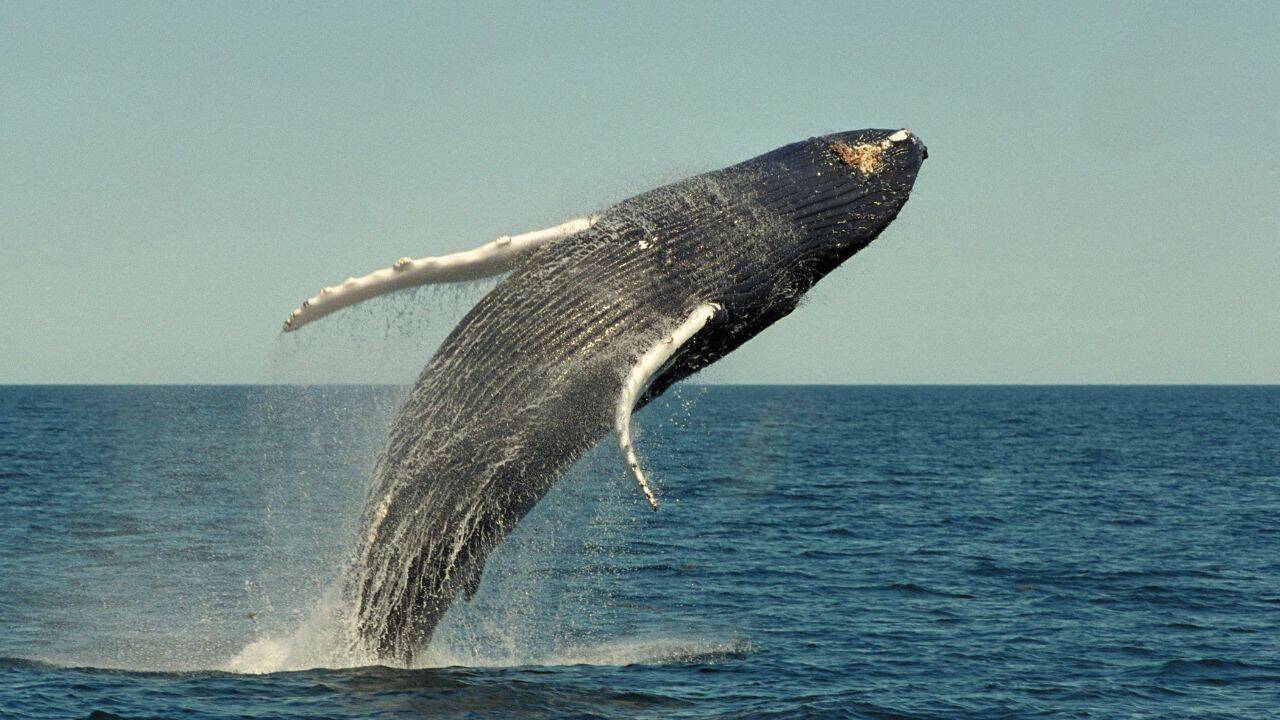
The University of St Andrews has developed a simpler and less invasive way of collecting DNA samples from whales using small drones to gather what is commonly known as whale snot.
asserted
what → develop → snot
In a
news report published on November 17, 2026, scientists successfully sequenced whole whale genomes using samples collected off the coast of British Columbia, Canada.
asserted
scientists → publish → Columbia
The team devised a method to sequence whole nuclear and mitochondrial genomes specifically through the whales' exhaled breath.
asserted
team → devise → breath
This is the first time whole genomes have been sequenced using whale blow samples collected without invasive physical interventions such as darts or biopsies, or the need for close boat approaches.
asserted
genomes → sequence → approaches
The findings, published in the
journal Molecular Ecology Resources, offer a new way of studying whale populations and their genetic makeup through a method that could make genetic research a far less intrusive and more practical scientific process.
uncertain
research → publish → method
Collecting DNA from a whale's breath
When humpback whales surface after spending time underwater, they forcefully exhale through their blowholes, releasing a mixture of air and water droplets.
asserted
they → collect → droplets
This is commonly referred to as a whale blow.
asserted
This → refer → blow
What can look like nothing more than a burst of spray above the ocean's surface can actually contain biological material from the animal itself, including DNA that researchers are interested in studying.
asserted
researchers → look → that
For the examination, scientists attached sterile Petri dishes to small commercially available drones, which were then flown through the whales' exhalations as the animals surfaced.
asserted
animals → attach → exhalations
The droplets landed on the dishes, allowing the researchers to retrieve a total of 58 samples between July and September in 2022 and 2023.
asserted
researchers → land → 2022
These samples were collected without using darts or taking tissue directly from the whales and was tested on 26 individual humpback whales in the Kitimat Fjord System, within the territory of the Gitga'at First Nation in northern British Columbia.
asserted
samples → collect → Columbia
During each sampling attempt, the drone was flown through between one and five breaths from the same whale during a surfacing event.
asserted
drone → fly → event
More than one-third of the samples were collected by launching the drones directly from land.
asserted
third → collect → land
Scientists avoided sampling whales that were resting, and if an animal showed any reaction to the drone, the flight was stopped.
asserted
flight → avoid → drone
When several whales were swimming together, researchers targeted the individual positioned furthest upwind to reduce the possibility of collecting mixed genetic material from more than one animal.
asserted
researchers → swim → animal
Studying the DNA more closely
One of the most interesting findings was just how much of the collected material actually belonged to the whale.
asserted
much → study → whale
The researchers found that, on average, approximately 84 per cent of the DNA in the samples came from the animal itself.
asserted
cent → find → animal
The remaining material largely included DNA from microorganisms living in the whale's respiratory tract, along with some residual seawater.
asserted
material → remain → seawater
The researchers were able to produce low-coverage nuclear genomes, which contain genetic information inherited from both parents, alongside high-coverage mitochondrial genomes, which are passed down through the maternal line.
asserted
which → produce → line
To check whether the results were reliable, the team compared samples collected from the same whales during different encounters, including repeat samples gathered across the two years.
asserted
team → check → years
They also compared the results with conventional biopsy samples from two of the same individuals.
asserted
They → compare → individuals
The genetic information obtained from the breath samples was consistent with these comparisons, demonstrating that the technique could produce reliable genomic data without requiring conventional tissue sampling.
uncertain
technique → obtain → sampling
Collection of DNA is only the first part of the process; the actual identification of the genomes begins with sequencing the samples.
asserted
identification → begin → samples
Three previously undescribed mitochondrial DNA control-region haplotypes in the population were discovered.
asserted
haplotypes → discover → population
These are associated with genetic differences at three nucleotide positions, with each haplotype observed in an individual whale.
asserted
haplotype → associate → whale
This finding also highlights the effectiveness of the sampling method for studying DNA.
asserted
finding → highlight → DNA
The team was also able to determine the sex of every sampled whale using only the genetic data available to them.
asserted
team → determine → them
In concluding the study, researchers were able to ascertain that little evidence was found of recent inbreeding among the specific whales that were studied.
asserted
that → conclude → whales
Although some stretches of identical genetic material were present, these were seen as more likely to reflect distant shared ancestry or historical population changes.
asserted
these → see → ancestry
The study also adds to what scientists know about the North Pacific humpback whale population.
asserted
scientists → add → population
Before this research, only one publicly available whole genome from a North Pacific humpback whale existed.
asserted
genome → exist → whale
A new way to study whale health
Since the samples also contain microorganisms from the whales' respiratory systems, researchers could potentially use them to investigate the microbes living in their airways and learn more about respiratory health.
uncertain
researchers → study → health
The study's authors have further suggested that combining genetic information with microbiome and hormone analysis could even provide insight into the whales' health.
uncertain
combining → suggest → health
The researchers also acknowledge that the technique may not work equally well for every marine species, as factors such as body size, behaviour and the amount of time an animal spends at the surface can influence sample collection.
uncertain
animal → acknowledge → collection
 The Aporia