Photo via New York Post

Impotent Russian spy gave away state secrets in exchange for treatment

Read the original at New York Post ↗
Cite

Spitznagel, E. (2026, September 19). Impotent Russian spy gave away state secrets in exchange for treatment. New York Post. https://nypost.com/2026/09/19/world-news/impotent-russian-spy-gave-away-secrets-for-treatment/

Dated when The Aporia collected the article, usually within hours of publication. Check the original for its exact date and byline.

New York Post · collected 2026-09-19 · by Eric Spitznagel

Quick Summary

In 1981, Vladimir Kuzichkin, a Soviet spy in Tehran, met secretly with British intelligence officer Ian McCredie at the British Embassy compound bathroom to divulge crucial state secrets about weapons caches and communist agents within Iran’s military. During their conversation, Kuzichkin also confessed his personal struggle with erectile dysfunction, asking for medical help from Western medicine as an incentive to continue spying. To address this unusual request, MI6 provided Kuzichkin with vitamins disguised as a potential treatment along with a camera for photographing documents, and he began supplying intelligence immediately thereafter.
Written by AI on 2026-09-19, from this article's own text only (the story summary below draws on all the coverage).

AI analysis

Story summary

In 1981, Vladimir Kuzichkin, a 6-foot-4 KGB major and handler of contacts with Iran’s Tudeh Party, approached Britain's MI6 in Tehran with critical intelligence on Soviet-aligned communist agents within Iran. During a clandestine meeting at the British Embassy compound, Kuzichkin revealed weapons caches and plans for potential coups that could bring Soviet troops into Iran. In exchange, he sought discreet medical assistance for his erectile dysfunction, which was causing marital strife. According to Ben Macintyre’s book "Redwood," MI6 provided Kuzichkin with medication and a letter from their chief medical officer wrapped inside an ink cartridge of a ballpoint pen to avoid detection by Iranian Revolutionary Guards. The secrecy and risk involved in this exchange highlight the complex ethical dilemmas and geopolitical stakes of espionage during the Cold War era.

Written for “Russian Spy Espionage Case” on 2026-11-04, grounded in this article and the 1 other(s) covering the same event.

Story

📰 Russian Spy Espionage Case
Politics · 2 article(s) covering the same event. See how they differ ↓

Compared with similar articles

This article reads unscored and hedges 9% of its claims. Each row says how that neighbour differs.
Semafor
Hedges 1 of 2 claims Outlet record 59/100
The Bulwark
Hedges 5 of 41 claims
“The articles describe different events involving intelligence services; one is about a historical defection in Tehran in 1981, while the other concerns recent conspiracy charges against Russian spies in the U.S.”
How this article was measured signals, leaning charts, publisher record, byline, topics and claims

Signals How these are calculated →

Claims extracted
68
sentences that state something as happening or true
Uncertain
9%
6 of 68 hedged ("reportedly", "may", "according to")
Leaning
not political
takes no side on a contested political question
Publisher signals
66/100
New York Post's corrections and hedging, across everything collected from it. Not a measure of accuracy.
Outlets on this story
2
Politics
Same framing elsewhere
1
articles that frame the event the way this one does
Analyzed 2026-09-19 · how these are computed

How this is being covered How these are calculated →

Article leaning vs. publisher reliability
Source leaning vs. consistency

Publisher

New York Post · 16647 article(s) · 36 correction(s) detected
Running correction rate · 36 correction(s)

Who wrote this

Eric Spitznagel
5 article(s) here · 1 carrying a prediction
🔮 Across Japan, the audit identified 234,354 people still on family registers whose whereabouts couldn’t be confirmed.
🔮 He applied that same thinking to his own life, setting up systems to manage his life using savvy and behavioral science — not sheer will power — to meet deadlines, get in workouts, stick to a budget and the like.
🔮 Over 61 years, Buffett transformed the struggling textile maker into a $1 trillion investment giant by following a set of staid principles that projected simplicity, patience and self-control.
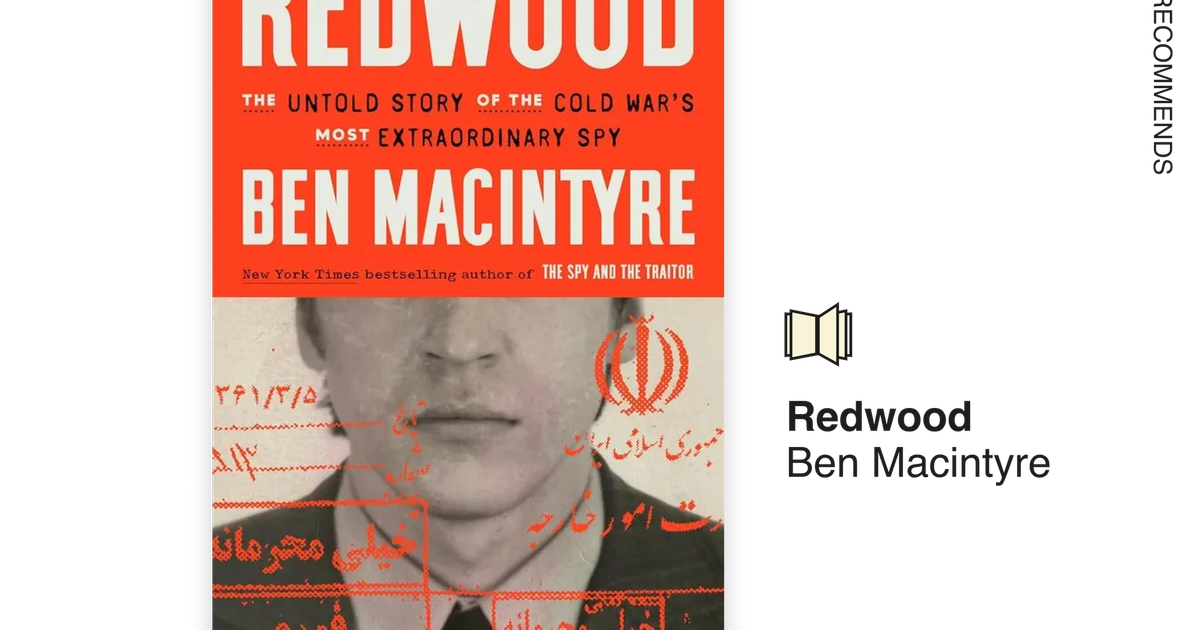
🔮 If the Revolutionary Guards overheard them, “they would both be arrested, interrogated, imprisoned, and possibly executed, once the torture was completed,” writes British journalist Ben Macintyre in his new book, “Redwood: The Untold Story of the Cold War’s Most Extraordinary Spy” (Crown), out now.
🔮 “I began to think that maybe I had no business buying the team in the first place,” he writes.
Also by Eric Spitznagel
Nothing else under this byline is closely related to this article, so these are simply their most recent.

Topics

British Iran KGB MI6 Soviet

Subjects

Kuzichkin PERSON · 15× McCredie PERSON · 9× MI6 ORG · 7× Macintyre PERSON · 7× British NORP · 4× Soviet NORP · 4× KGB ORG · 3× Iran GPE · 2× Iranian NORP · 2× British Embassy ORG · 1×

Narrative

At their next meeting, McCredie gave him a letter from MI6’s chief medical officer, wrapped around the ink cartridge inside a ballpoint pen, and a bottle of red pills.
framing: assertive · carried by 1 article(s) · first seen 2026-09-19
🔮 If the Revolutionary Guards overheard them, “they would both be arrested, interrogated, imprisoned, and possibly executed, once the torture was completed,” writes British journalist Ben Macintyre in his new book, “Redwood: The Untold Story of the Cold War’s Most Extraordinary Spy” (Crown), out now.
2026-09-19 · New York Post
Impotent Russian spy gave away state secrets in exchange for treatment · assertive framing

Claims (68 extracted, 6 hedged)

In 1981, as Iran’s new government hunted down political opponents, a KGB officer slipped into a bathroom in the British Embassy compound in Tehran. asserted
officer → hunt → Tehran
Vladimir Kuzichkin, 6-foot-4 and broad-shouldered, sat on a wicker laundry basket that creaked beneath him. asserted
that → sit → him
Across from him, MI6 officer Ian McCredie sat on the toilet. asserted
McCredie → sit → toilet
McCredie poured the Russian another vodka. asserted
McCredie → pour → vodka
He left the faucets running and turned on a radio to drown out their conversation. asserted
He → leave → conversation
If the Revolutionary Guards overheard them, “they would both be arrested, interrogated, imprisoned, and possibly executed, once the torture was completed,” writes British journalist Ben Macintyre in his new book, “Redwood: The Untold Story of the Cold War’s Most Extraordinary Spy” (Crown), out now. uncertain
Macintyre → overhear → Spy
Kuzichkin had come with Soviet secrets. asserted
Kuzichkin → come → secrets
He also had a very personal and bizarre question for McCredie, though he was in no hurry to ask it. asserted
he → have → it
A KGB major who handled contacts with Iran’s Soviet-aligned Tudeh Party, Kuzichkin described weapons caches, communist agents inside the Iranian military and a possible coup that might bring Soviet troops across the border. uncertain
that → handle → border
“The coup might happen tomorrow, next month, or never,” Macintyre writes. uncertain
Macintyre → happen → ?
Kuzichkin knew about the preparations because “he was the linchpin of the conspiracy.” asserted
he → know → conspiracy
To prove himself, Kuzichkin brought a Soviet Embassy directory and identified the spies hidden among its officials. asserted
Kuzichkin → prove → officials
“An hour and a half had passed with Kuzichkin barely pausing for breath,” Macintyre writes. asserted
Macintyre → pass → breath
“Gallons of water had swirled down the drains.” asserted
Gallons → swirl → drains
Kuzichkin took another drink, leaned forward and placed a hand on McCredie’s knee. asserted
Kuzichkin → take → knee
“I have big problem,” he said. asserted
he → have → problem
“Will you help me?” asserted
you → help → me
“I have no power in bedroom,” Kuzichkin explained. asserted
Kuzichkin → have → bedroom
He believed Western medicine could cure his impotence. uncertain
medicine → believe → impotence
“Nothing in McCredie’s life or MI6 training had prepared him for the challenge of handling a spy with erectile dysfunction,” Macintyre writes. asserted
Macintyre → prepare → dysfunction
McCredie promised to help, and Kuzichkin “almost crushed him in ‘a tremendous bear hug.’” asserted
Kuzichkin → promise → hug
At their next meeting, McCredie gave him a letter from MI6’s chief medical officer, wrapped around the ink cartridge inside a ballpoint pen, and a bottle of red pills. asserted
McCredie → give → pills
Kuzichkin read the letter and swallowed two pills. asserted
Kuzichkin → read → pills
They were vitamins with iron, which MI6 hoped might work as a placebo. uncertain
MI6 → hop → placebo
McCredie also handed over a camera for photographing KGB documents. asserted
McCredie → hand → documents
Instead of a James Bond gadget, the technical branch had supplied “an elderly miniature Minox,” Macintyre writes. asserted
Macintyre → supply → Minox
Kuzichkin snorted. asserted
Kuzichkin → snort → ?
“We have these in the museum!” asserted
We → have → museum
In one week, he photographed 180 documents inside the Soviet Embassy. asserted
he → photograph → Embassy
The British named him REDWOOD because of his height. asserted
British → name → height
Macintyre notes that nobody initially noticed the name’s other possible meanings: “‘RED’ (communist) and ‘WOOD’ (slang for an erection).” asserted
nobody → note → erection
By spring 1982, the strain was showing. asserted
strain → show → spring
McCredie concluded that Kuzichkin had told his wife about MI6 and panicked when she refused to defect with him. asserted
she → conclude → him
He demanded an immediate escape. asserted
He → demand → escape
Kuzichkin had one more request. asserted
Kuzichkin → have → request
He wanted to be circumcised as soon as he reached Britain, certain it would solve his erectile dysfunction. asserted
it → want → dysfunction
MI6 had heard some odd asks from Soviet defectors over the years, but this was a new one. asserted
this → hear → years
“Kuzichkin was the first spy in history to demand, as the price of defection, the removal of his foreskin,” Macintyre writes. asserted
Macintyre → demand → foreskin
MI6 delivered on that promise, arranging for an army doctor to circumcise him at a military hospital in Aldershot in July 1982. asserted
doctor → deliver → July
The UK intelligence agency also forged a British passport for one “Michael Guy Road,” a supposed diplomatic courier. asserted
agency → forge → Road
…and 28 more, not listed.

💬Give feedback
🕘History 🎫Support