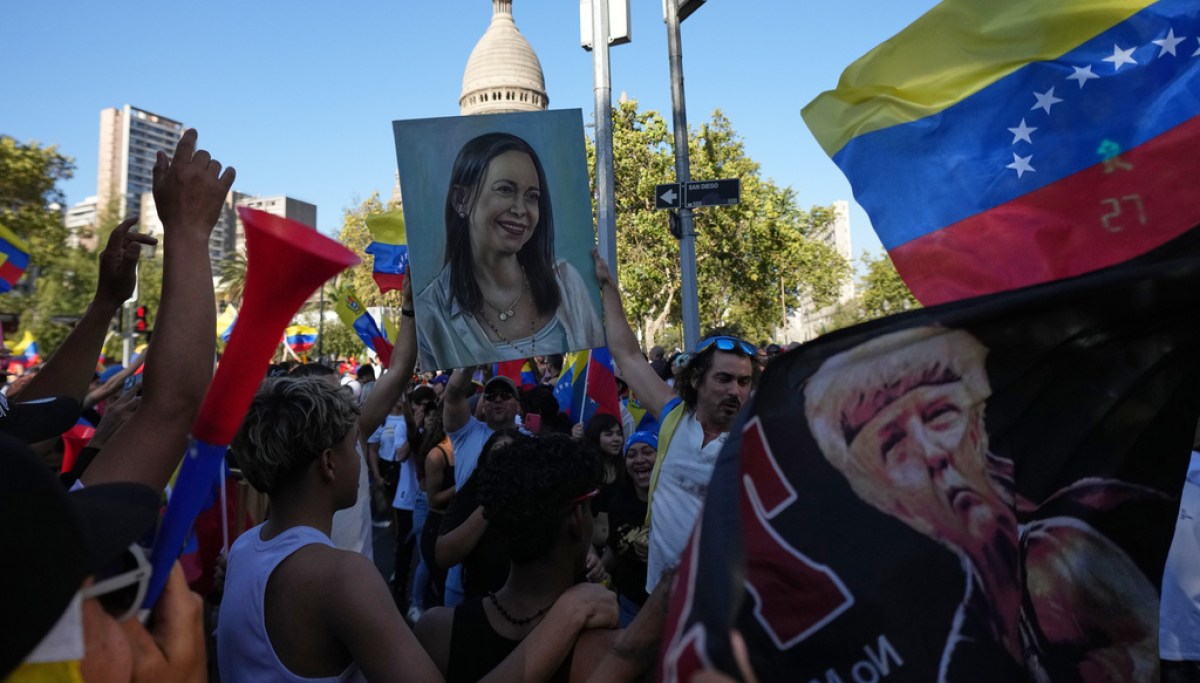
Photo via Washington Examiner

The blockade is fighting the wrong war

Read the original at Washington Examiner ↗
Cite

MacCammon, R. (2026, September 22). The blockade is fighting the wrong war. Washington Examiner. https://www.washingtonexaminer.com/restoring-america/courage-strength-optimism/4737295/blockade-fighting-wrong-war-iran-sanctions-evasion/

Dated when The Aporia collected the article, usually within hours of publication. Check the original for its exact date and byline.

Washington Examiner · collected 2026-09-22 · by Ron MacCammon

Quick Summary

Reuel Marc Gerecht and Ray Takeyh argue in the Wall Street Journal that a naval blockade may not effectively counter Iran's illicit funding networks due to their rapid regeneration capabilities. They note that Iran uses complex financial and corporate structures across various jurisdictions like Hong Kong, Panama, and the UAE to evade sanctions, allowing it to swiftly replace any assets targeted by U.S. sanctions. The authors acknowledge the importance of addressing these financial tactics but focus primarily on physical naval operations rather than the intricate evasion mechanisms employed by Iran's Revolutionary Guard Corps.
Written by AI on 2026-09-22, from this article's own text only (the story summary below draws on all the coverage).

AI analysis

Story summary

Reuel Marc Gerecht and Ray Takeyh argue in the Wall Street Journal that September 15 may see a shift in the conflict with Iran due to maintenance schedules for the US Navy. However, they overlook the complexity of sanctions evasion by Iran's Islamic Revolutionary Guard Corps (IRGC). The IRGC has an extensive network capable of rapidly replacing sanctioned entities like companies and financial intermediaries across dozens of jurisdictions, including countries that trade or cooperate with the United States. This regenerative capacity raises doubts about whether a naval blockade can effectively counteract Iran’s sanctions evasion mechanisms within six months. Gerecht and Takeyh focus on physical threats like Houthi advances but fail to address how quickly the IRGC can circumvent economic pressures, questioning the efficacy of current US strategies against Iranian funding channels.

Written for “Battle For Information War” on 2026-10-31, grounded in this article and the 0 other(s) covering the same event.

Story

📰 Battle For Information War
Politics · 1 article(s) covering the same event.

Compared with similar articles

This article reads leans strongly left and hedges 1% of its claims. Each row says how that neighbour differs.
Al Jazeera
Hedges 15 of 57 claims Outlet record 60/100
“Article A discusses Houthi control of the Bab al-Mandeb Strait and meetings with US officials, while Article B focuses on sanctions evasion by Iran and commentary unrelated to the specific incident described in Article A.”
The Independent
⚖️ Leans left further right than this Hedges 1 of 40 claims Outlet record 59/100
“Article A discusses Iran's petrol crisis and US naval blockade, while Article B critiques an opinion piece about conflict with Iran and sanctions evasion strategies.”
ABC News (US)
Hedges 0 of 6 claims Outlet record 70/100
“Article A reports on statements made by Iranian parliament speaker Mohammad Bagher Ghalibaf regarding Iran's stance and conditions for negotiations, while Article B discusses a broader commentary on the conflict with Iran written by Reuel Marc Gerecht and Ray Takeyh.”
New York Post
⚖️ Leans strongly right further right than this Hedges 3 of 14 claims Outlet record 66/100
“Article A reports on Iran's trade issues and bureaucratic errors due to the US blockade, while Article B discusses a broader analysis of sanctions evasion by Iran as per an opinion piece.”
Al Jazeera
⚖️ Leans right further right than this Hedges 7 of 65 claims Outlet record 60/100
“The articles discuss different aspects of Iran's regional influence and conflicts without clearly referencing the same specific incident.”
BBC News
Hedges 0 of 20 claims Outlet record 68/100
“Article A reports on the G7's statement about Iran arming the Houthis in Yemen, while Article B discusses a broader analysis and warning regarding Iran's sanctions evasion network.”
Semafor
Hedges 1 of 7 claims Outlet record 60/100
“Article A discusses the conflict between Saudi Arabia and the Houthis, focusing on recent Houthi attacks and potential escalation. Article B is about Iran's sanctions evasion and does not describe the same specific incident.”
New York Post
⚖️ Leans strongly right further right than this Hedges 1 of 34 claims Outlet record 66/100
“The articles discuss different aspects of the conflict with Iran; one focuses on sanctions evasion strategies and the other describes economic devastation due to blockades at borders.”
How this article was measured signals, leaning charts, publisher record, byline, topics and claims

Signals How these are calculated →

Claims extracted
74
sentences that state something as happening or true
Uncertain
1%
1 of 74 hedged ("reportedly", "may", "according to")
Leaning
Leans strongly left
of the writing, not the subject · beta estimate
Publisher signals
70/100
Washington Examiner's corrections and hedging, across everything collected from it. Not a measure of accuracy.
Outlets on this story
1
Politics
Same framing elsewhere
1
articles that frame the event the way this one does
Analyzed 2026-09-22 · how these are computed

How this is being covered How these are calculated →

Article leaning vs. publisher reliability
Source leaning vs. consistency

Publisher

Washington Examiner · 3851 article(s) · 7 correction(s) detected
Running correction rate · 7 correction(s)

Who wrote this

Ron MacCammon
8 article(s) here · 1 carrying a prediction
🔮 On Dec. 11, the National Assembly is scheduled to receive the names of 32 new Supreme Court magistrates who could determine the rules governing Venezuela’s next election.
🔮 On Oct. 18, Limoges Mayor Guillaume Guérin stood before the ruins of his city’s 143-year-old town hall and described something more troubling than a riot.
🔮 Washington has waived significant sanctions on Russia, pursued a diesel arrangement with Moscow, and entertained negotiations over Ukraine that could marginalize Kyiv.
🔮 Their apparent agreement should worry anyone who thinks Venezuela’s next election will end Chavismo.
2026-10-14 · assertive framing · Venezuela needs more than an election date
🔮 Thirty years ago, Wayne Smith, the former chief of the U.S. Interests Section in Havana, argued in a 1996 essay that Cuba might follow something resembling Spain’s path under Francisco Franco.
2026-10-02 · assertive framing · Trump’s Cuba siege is a waiting game
🔮 The United Nations, he argued, could help build a more cooperative international order.
2026-10-01 · assertive framing · The US should no longer accept the UN’s dysfunction
🔮 Treating those cases identically may produce a larger enforcement number, but it does not make Venezuela or America better or safer.
2026-09-24 · assertive framing · Venezuela is still broken
🔮 Reuel Marc Gerecht and Ray Takeyh think the conflict with Iran may expire on the Navy’s maintenance schedule.
2026-09-22 · assertive framing · The blockade is fighting the wrong war
Also by Ron MacCammon
Venezuela needs more than an election date
2026-10-14 · Washington Examiner
Nothing else under this byline is closely related to this article, so these are simply their most recent.
All 8 articles by Ron MacCammon →

Topics

Iranian Panama Treasury Washington the Treasury Department

Subjects

Iranian NORP · 7× Treasury ORG · 3× Washington GPE · 3× Beijing GPE · 2× Iran GPE · 2× Moscow GPE · 2× Panama GPE · 2× the Treasury Department ORG · 2× Ray Takeyh PERSON · 1× Reuel Marc Gerecht PERSON · 1×

Narrative

The companies, ship managers, registries, banks, insurers, and professional service providers that allow them to function are spread across dozens of jurisdictions, including countries that trade with, cooperate with, and sometimes depend upon the United States.
framing: assertive · carried by 1 article(s) · first seen 2026-09-22
🔮 Reuel Marc Gerecht and Ray Takeyh think the conflict with Iran may expire on the Navy’s maintenance schedule.
2026-09-22 · Washington Examiner
The blockade is fighting the wrong war · assertive framing

Claims (74 extracted, 1 hedged)

Reuel Marc Gerecht and Ray Takeyh think the conflict with Iran may expire on the Navy’s maintenance schedule. uncertain
conflict → think → schedule
The Islamic Revolutionary Guard Corps has another clock: how quickly it can replace the channels of its illicit funding, the company, flag, insurer, or bank account Washington just identified. asserted
Washington → have → funding
Both clocks matter, but Gerecht and Takeyh’s Sept. 15 warning in the Wall Street Journal concentrates overwhelmingly on the first. asserted
warning → matter → first
Buried in their argument is a sentence that deserves some consideration: “The Islamic Republic has a world-class sanctions-evasion network.” asserted
Republic → bury → network
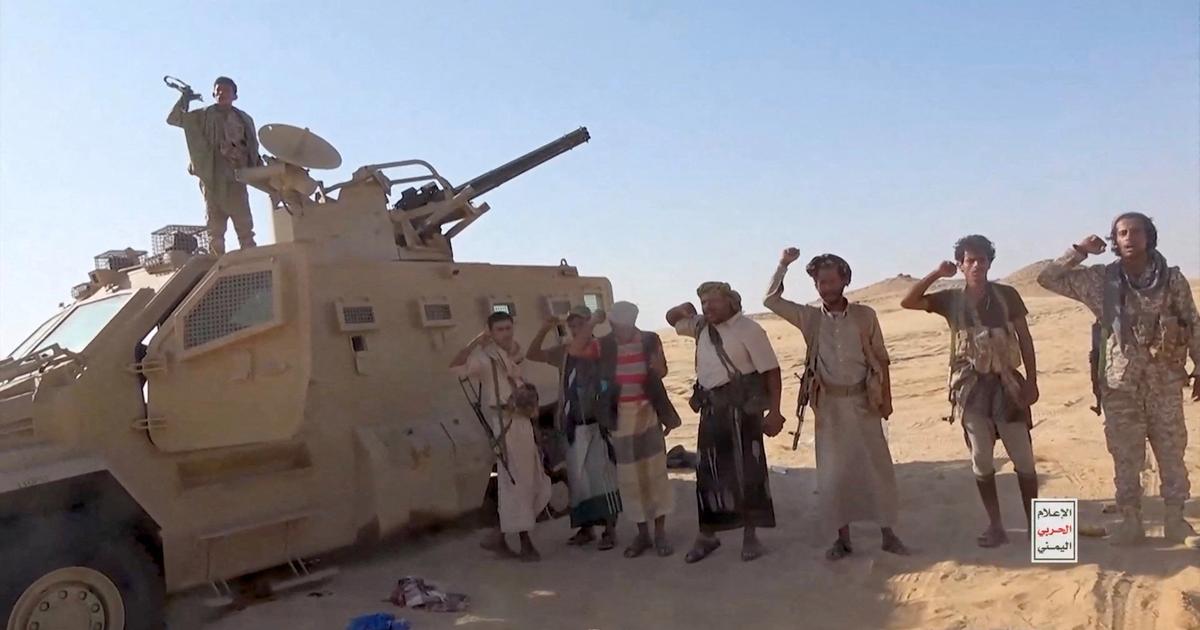
They acknowledge it, then move to Houthi advances along the Red Sea, attacks on Saudi infrastructure, Moscow and Beijing, and the regime’s fear of its own population. asserted
They → acknowledge → population
What they never really ask is whether a six-month naval clock is enough to defeat a system built to regenerate its ownership, flags, insurers, and financial intermediaries faster than Washington can identify and sanction them. asserted
Washington → ask → them
Sanctions are usually discussed as though they were one instrument: the Treasury announces another round, a wire story runs, several companies and tankers appear on a list, and attention moves on. asserted
attention → discuss → list
But designation is only the visible end of a much less glamorous intelligence problem: figuring out who actually owns the company that owns the ship, who finances the cargo, who insures it, and where the money goes after the oil is sold. asserted
oil → figure → it
That is the part of this war that Washington has to get faster at fighting. asserted
Washington → have → war
The Revolutionary Guard does not need every tanker to sail openly under an Iranian flag. asserted
tanker → need → flag
The Treasury has documented a shadow fleet registered and managed through companies scattered across Hong Kong, Panama, the Marshall Islands, Liberia, the British Virgin Islands, the United Arab Emirates, and elsewhere. asserted
Treasury → document → Kong
In June, the Treasury Department identified another network using front companies, foreign bank accounts, and shadow vessels to sell Iranian LPG disguised as Omani product. asserted
Department → identify → product
The methods vary, but the principle is simple. asserted
principle → vary → ?
Iranian petroleum can change vessels, corporate custody, flags, documentation, or declared origin before reaching its customer. asserted
petroleum → change → customer
The Treasury has documented ship-to-ship transfers of Iranian crude ultimately delivered to China, while other vessels have carried Iranian petroleum under flags ranging from Panama and Palau to Barbados and the Cook Islands. asserted
vessels → document → Barbados
The oil still has to move, so the blockade matters. asserted
blockade → have → ?
But stopping a ship and dismantling the financial and corporate network capable of putting another ship in its place are two different problems. asserted
stopping → stop → place
I have spent the past year researching Venezuela’s shadow fleet and the corporate networks behind it, and one of the uncomfortable findings is how reusable this infrastructure can be. asserted
infrastructure → spend → findings
The Treasury Department has identified vessels that carried Venezuelan petroleum before moving Iranian cargo, while another network generated revenue from both Iranian and Russian petroleum. asserted
network → identify → petroleum
A broker, manager, insurer, or corporate intermediary does not necessarily belong to one country’s sanctions-evasion system. asserted
broker → belong → system
Peel back enough layers and another uncomfortable fact appears. asserted
fact → peel → layers
These networks do not operate only from Tehran, Moscow, or Beijing. asserted
networks → operate → Tehran
The companies, ship managers, registries, banks, insurers, and professional service providers that allow them to function are spread across dozens of jurisdictions, including countries that trade with, cooperate with, and sometimes depend upon the United States. asserted
that → allow → States
That does not mean every intermediary knowingly works for Iran, much less that every government approves what happens under its flag. asserted
what → mean → flag
But somebody collects a fee when a company is incorporated, a ship is registered, a cargo is insured, or money changes hands. asserted
money → collect → hands
The shadow trade survives partly because it hides inside the infrastructure of legitimate global commerce. asserted
it → survive → commerce
Operationally, it begins to look a great deal like a transnational criminal organization, only with the resources and protection of a state behind it. asserted
it → begin → it
It compartmentalizes operations, uses disposable companies, changes identities, exploits jurisdictional boundaries, disguises commodities, launders money through legitimate commerce, and replaces exposed nodes instead of defending them. asserted
It → compartmentalize → them
Take down one company, and another appears. asserted
another → take → company
The Treasury’s own sanctions actions illustrate the problem. asserted
actions → illustrate → problem
One March action identified Iranian-linked vessels owned through companies in the Marshall Islands, British Virgin Islands, Liberia, and Panama, sailing under flags including Barbados, Comoros, Palau, Vanuatu, and Panama. asserted
action → identify → Barbados
Another identified a Panama-flagged tanker owned by a Marshall Islands company that had moved millions of barrels of Iranian oil to East Asia. asserted
that → identify → Asia
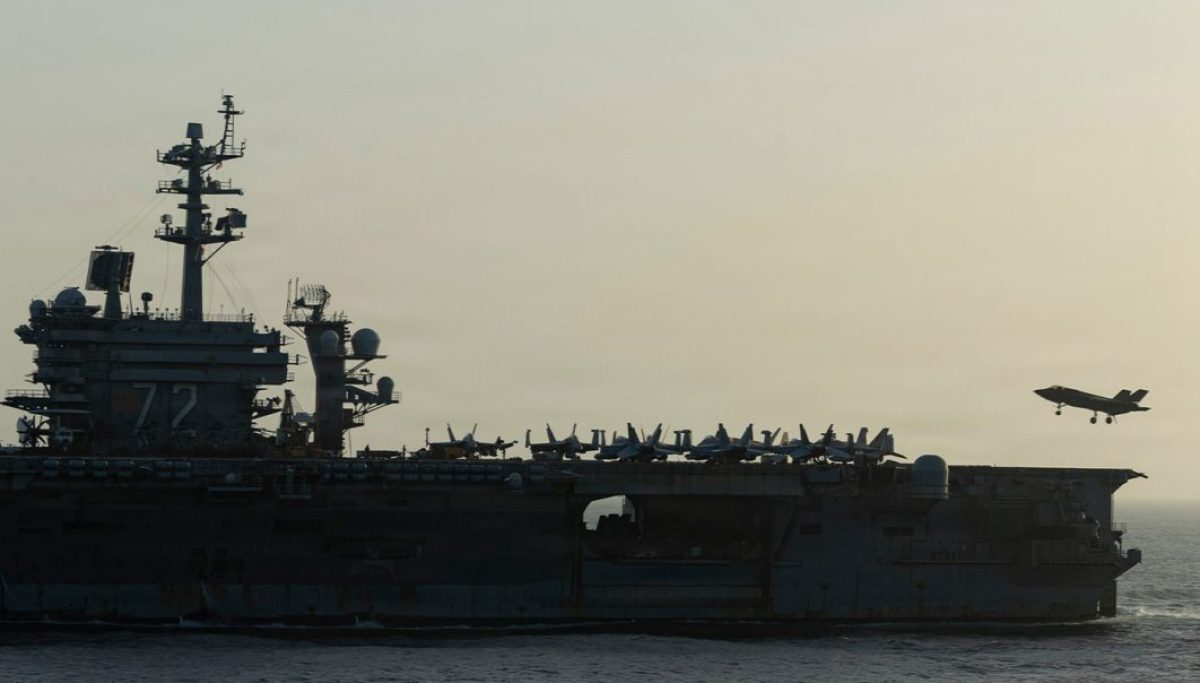
The Navy can seize a tanker. asserted
Navy → seize → tanker
It has no mechanism for seizing a corporate registry. asserted
It → have → registry
None of this argues against hitting launchers or protecting shipping. asserted
None → argue → shipping
Gerecht and Takeyh are not calling for a blockade alone. asserted
Gerecht → call → blockade
Their argument is that control of the Strait of Hormuz has to be paired with enough military pressure that Iran cannot compensate through the Houthis, Iraqi militias, attacks on pipelines, or other regional pressure points. asserted
Iran → have → pipelines
The events of the past week demonstrate why that military problem is real. asserted
problem → demonstrate → week
But even a successful military campaign has a second requirement. asserted
campaign → have → requirement
The revenue that finances replacement weapons, militias, procurement networks, and the state itself does not exist only aboard tankers moving through traffic lanes monitored by the Fifth Fleet. asserted
that → finance → Fleet
…and 34 more, not listed.

💬Give feedback
🕘History 🎫Support