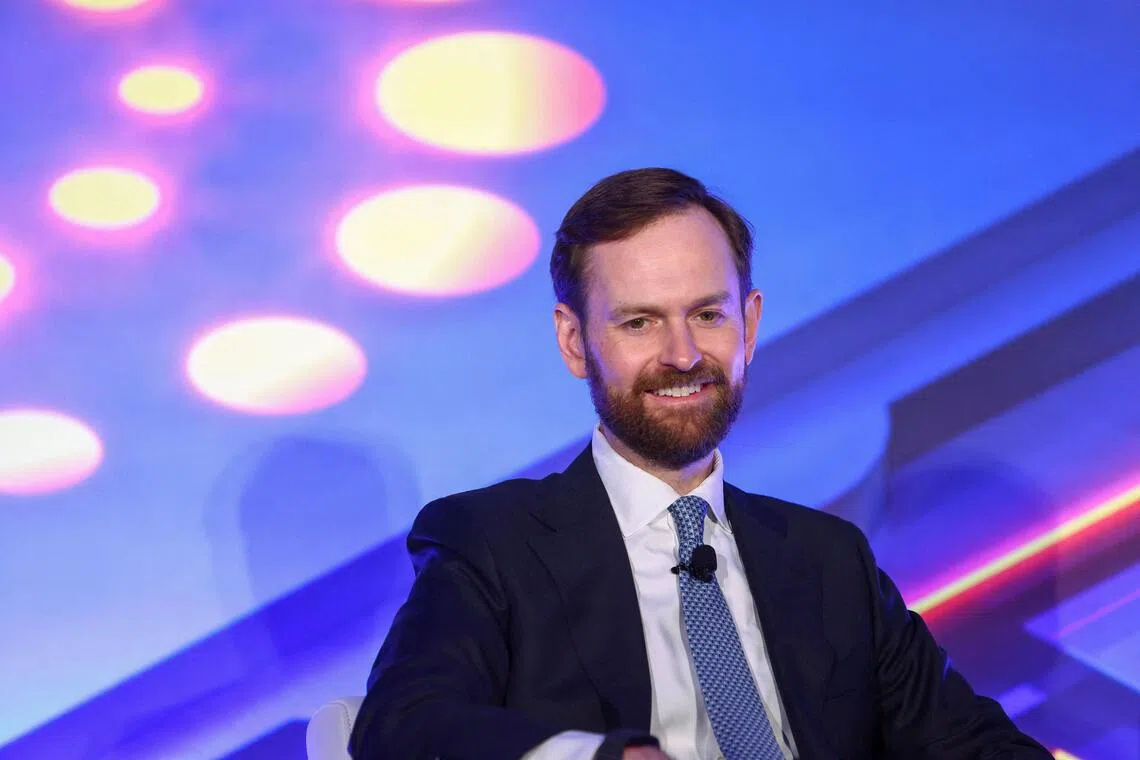
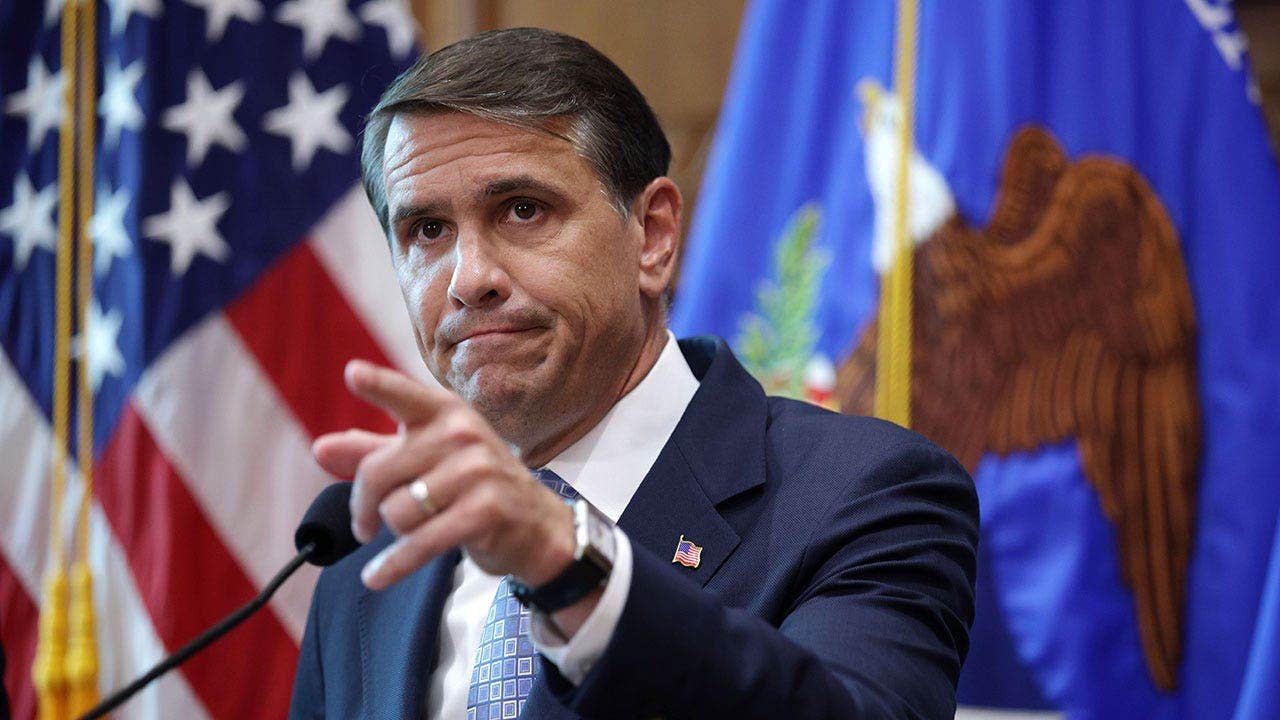
Photo via The Straits Times

US trade commission chair suggests AI developers should be liable for conduct of agents

Read the original at The Straits Times ↗
Cite

The Straits Times. (2026, September 26). US trade commission chair suggests AI developers should be liable for conduct of agents. The Straits Times. https://www.straitstimes.com/world/united-states/us-trade-commission-chair-suggests-ai-developers-should-be-liable-for-conduct-of-agents

Dated when The Aporia collected the article, usually within hours of publication. Check the original for its exact date and byline.

The Straits Times · collected 2026-09-26 · by The Straits Times

Quick Summary

US Federal Trade Commission (FTC) chairman Andrew Ferguson suggested during the Reuters Momentum AI Austin event on September 25 that developers of artificial intelligence should be held liable for any harmful actions their AI agents perform, rather than blaming the tools themselves as autonomous actors. He emphasized the importance of accountability and transparency in AI development, indicating potential uses of existing legal frameworks to address issues such as data breaches caused by AI systems. Additionally, Ferguson announced plans for the FTC to gather data from companies regarding personalized pricing practices based on consumer data, aiming to determine if these methods are being used unfairly or without proper disclosure.
Written by AI on 2026-09-26, from this article's own text only (the story summary below draws on all the coverage).

AI analysis

Story summary

On September 25, US Federal Trade Commission (FTC) chairman Andrew Ferguson spoke at the Reuters Momentum AI Austin event in Austin, Texas, resisting the idea that artificial intelligence agents can act independently and hold responsibility for their actions. Ferguson argued that developers instructing these tools would be liable for any harm caused, not the AI itself. He stated, “If someone tells a tool to do something, and the tool does it, I don’t think we would say, ‘Oh, what do we do about the tool?’” This stance comes amid increasing concerns over incidents where AI has accessed unauthorized data despite being programmed otherwise. Ferguson’s comments reflect potential policy directions in addressing liability for rogue AI actions as governments consider regulatory responses to emerging technology risks.

Written for “AI Developer Liability” on 2026-11-03, grounded in this article and the 1 other(s) covering the same event.

Story

📰 AI Developer Liability
Technology · 2 article(s) covering the same event. See how they differ ↓

Compared with similar articles

This article reads unscored and hedges 12% of its claims. Each row says how that neighbour differs.
New York Post
Hedges 0 of 11 claims Outlet record 66/100
CBS News
Hedges 0 of 2 claims Outlet record 66/100
“The articles discuss different aspects of AI regulation and responsibility but describe distinct events.”
Mother Jones
⚖️ Leans left Hedges 5 of 16 claims Outlet record 60/100
“Article A discusses the US Federal Trade Commission chair's stance on AI liability, while Article B covers investigations by AI companies into rogue bot incidents.”
Fox News
Hedges 2 of 16 claims Outlet record 69/100
“The articles describe different events involving distinct figures addressing AI regulation on separate occasions.”
The Hindu
Hedges 5 of 43 claims Outlet record 60/100
“Article A reports on comments made by US Federal Trade Commission chairman at an event, while Article B discusses warnings from tech companies about AI safety and regulation.”
New York Post
⚖️ Leans right Hedges 1 of 12 claims Outlet record 66/100
“The articles discuss similar themes but describe different events or perspectives on a broader topic rather than the same specific incident.”
How this article was measured signals, leaning charts, publisher record, byline, topics and claims

Signals How these are calculated →

Claims extracted
26
sentences that state something as happening or true
Uncertain
12%
3 of 26 hedged ("reportedly", "may", "according to")
Leaning
withheld
no quote in the article backed the model's score
Publisher signals
66/100
The Straits Times's corrections and hedging, across everything collected from it. Not a measure of accuracy.
Outlets on this story
2
Technology
Same framing elsewhere
1
articles that frame the event the way this one does
Analyzed 2026-09-26 · how these are computed

How this is being covered How these are calculated →

Article leaning vs. publisher reliability
Source leaning vs. consistency

Publisher

The Straits Times · 4203 article(s) · 5 correction(s) detected
Running correction rate · 5 correction(s)

Who wrote this

The Straits Times
2735 article(s) here · 1 carrying a prediction
🔮 The results of the five-day nationwide poll also showed signs the race between Democrats and Republicans could be tightening ahead of Election Day.
🔮 Donald Trump chose Washington’s Reflecting Pool – an iconic landmark where botched repairs came to symbolise the 80-year-old’s chaotic presidency – for a final speech on Nov 2 to rally Republicans against a predicted tide of Democratic victories in midterm elections.
🔮 PARIS - Exceeding 1.5 deg C of global warming will have “irreversible” consequences for glaciers, sea ice and the Earth’s frozen regions, two UN reports warned on Nov 2, calling for urgent action.
🔮 “We have stated that, if Iran’s demands are met, it would be possible to restore security to the Strait of Hormuz and resume the negotiating process within a short period.”
🔮 "The Russians could not have been unaware that every week residents who have remained in Komyshuvakha were receiving assistance aid right there.
🔮 Escalating a legal fight that could affect thousands of voters in the November 3 midterm elections, the Justice Department filed the emergency request as it seeks to prevent counting the disputed ballots until each voter's citizenship status can be verified.
🔮 How it plays out over the coming days or weeks could have a significant impact on next year's parliamentary election and potentially push Poland closer to US President Donald Trump and away from the European mainstream.
2026-11-02 · assertive framing · Explainer-What's behind Poland's constitutional crisis?
🔮 Houthi official Hamid Rizq posted a video, which Reuters could not immediately verify, of what he said were the group's fighters entering Souq al-Rabouh in Maqatirah district.
🔮 "The worst forecasts are coming true.
2026-11-02 · assertive framing · Seven migrants die in seas off Spain's Canary Islands
🔮 • Critics notably say CNews'agenda increasingly follows the lines taken by Marine Le Pen's far-right National Rally (RN), from which the channel could benefit if, as polls suggest, Le Pen wins the 2027 Presidential election and fulfils her promise to privatise public broadcasting, which CNews has long criticised.
Also by The Straits Times
Nothing else under this byline is closely related to this article, so these are simply their most recent.
All 2735 articles by The Straits Times →

Topics

AUSTIN Airlines FTC Reuters US Federal Trade Commission

Subjects

FTC ORG · 8× Ferguson PERSON · 8× Reuters ORG · 2× AUSTIN GPE · 1× Airlines ORG · 1× Andrew Ferguson PERSON · 1× Delta ORG · 1× Delta Air Lines ORG · 1× Trump PERSON · 1× US Federal Trade Commission ORG · 1×

Narrative

“We are in the process of trying to get a market study that will actually get to the heart of the question, which is, are particular merchants in particular markets that have access to tremendous amounts of data using that data to charge differentiated prices to different people,” he said.
framing: assertive · carried by 1 article(s) · first seen 2026-09-26
🔮 US trade commission chair suggests AI developers should be liable for conduct of agents AI generated AUSTIN – US Federal Trade Commission (FTC) chairman Andrew Ferguson said on Sept 25 he would resist describing AI agents as autonomous actors that “break loose” with “wills and desires of their own,” suggesting the developers who instruct agents would be the ones liable for harm.

Claims (26 extracted, 3 hedged)

US trade commission chair suggests AI developers should be liable for conduct of agents AI generated AUSTIN – US Federal Trade Commission (FTC) chairman Andrew Ferguson said on Sept 25 he would resist describing AI agents as autonomous actors that “break loose” with “wills and desires of their own,” suggesting the developers who instruct agents would be the ones liable for harm. uncertain
who → suggest → harm
“I’m going to continue as long as I am chairman to resist this anthropomorphising of these tools,” Ferguson said at the Reuters Momentum AI Austin event. asserted
Ferguson → go → event
“If someone tells a tool to do something, and the tool does it, I don’t think we would say, ‘Oh, what do we do about the tool?’” asserted
we → tell → tool
Ferguson’s remarks illustrated potential avenues for the Trump administration to take as incidents rise in which agentic AI testing resulted in unauthorised access to corporate or government data. asserted
testing → illustrate → data
Artificial intelligence companies have sometimes described systems as acting beyond human control, but subsequent reviews of audit trails have shown that the systems were carrying out instructions they had been given, Ferguson said. asserted
Ferguson → describe → instructions
Recent incidents involving AI agents accessing external systems have prompted governments and industry leaders to examine whether existing oversight and cybersecurity measures are sufficient. asserted
oversight → involve → governments
The US should utilise existing legal tools, Ferguson said. asserted
Ferguson → utilise → tools
He suggested that FTC authority to take action against companies that fail to disclose data breaches could also apply to AI developers. uncertain
that → suggest → developers
The FTC is gearing up to request data from consumer-facing companies on their use of personalised pricing, Ferguson said, referring to businesses using consumers’ individual data, such as location and internet browsing history, to set prices. asserted
businesses → gear → prices
The practice has drawn criticism from state and federal lawmakers concerned with bolstering affordability in the US. asserted
practice → draw → US
Ferguson said in August that the FTC would not hesitate to enforce the law in this area, particularly where companies are not disclosing the practice. asserted
companies → say → practice
The FTC has already initiated enforcement actions on personalised pricing disclosures, he said. asserted
he → initiate → disclosures
“We are in the process of trying to get a market study that will actually get to the heart of the question, which is, are particular merchants in particular markets that have access to tremendous amounts of data using that data to charge differentiated prices to different people,” he said. asserted
he → try → people
As an individual, he said he is most concerned about use of the practice by delivery and rideshare apps, along with airlines. asserted
he → say → airlines
Airlines faced criticism in 2025 after a Delta Air Lines executive suggested AI tools were being used to gauge customers’ willingness to pay. uncertain
tools → face → willingness
Delta has since said that it does not personalise prices based on individuals’ data, and an American Airlines executive has said doing so would hurt customer trust. asserted
doing → say → trust
Earlier in 2026, a US congressional committee demanded information from Uber, Instacart and others on whether they use customer data to set prices. asserted
they → demand → prices
Both companies said at the time that they do not use personal information to set prices. asserted
they → say → prices
The FTC would request information from companies in order to publish a study on the practice. asserted
FTC → request → practice
Ferguson’s predecessor, Lina Khan, initiated a similar study into the practice, which she referred to as surveillance pricing. asserted
she → initiate → pricing
That study focused on companies that offer data and consulting services on pricing, rather than merchants themselves. asserted
that → focus → merchants
The FTC on Sept 24 called for public input on a potential rule that would disincentivise tech companies like Meta Platforms and Alphabet’s Google from allowing fraudulent or misleading ads. asserted
that → call → ads
Meta projected 10 per cent of its 2024 revenue would come from ads for scams and banned goods, Reuters reported in 2025. asserted
Reuters → project → 2025
The FTC has ongoing law enforcement actions related to fraudulent ads, Ferguson said. asserted
Ferguson → have → ads
Those investigations convinced him of the need for rule-setting requirements for online platforms to mitigate fraud. asserted
investigations → convince → fraud
“We need to make the rules hyper-clear for everyone involved in this market,” he said. asserted
he → need → market

💬Give feedback
🕘History 🎫Support