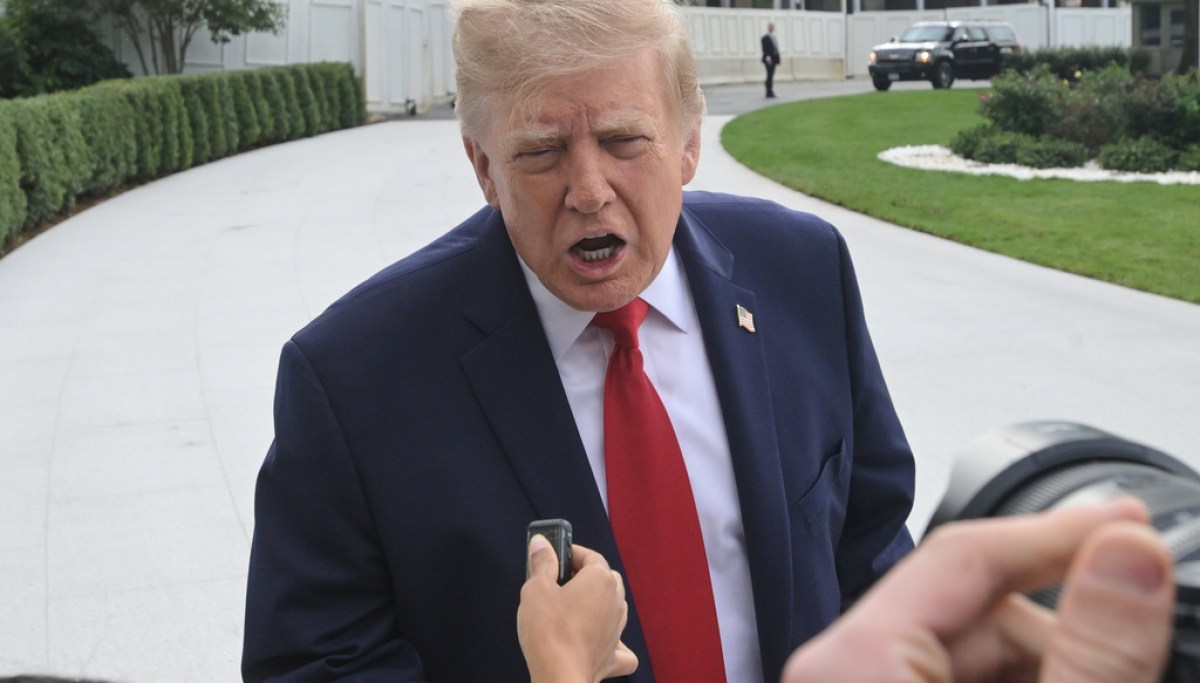
Photo via Washington Examiner

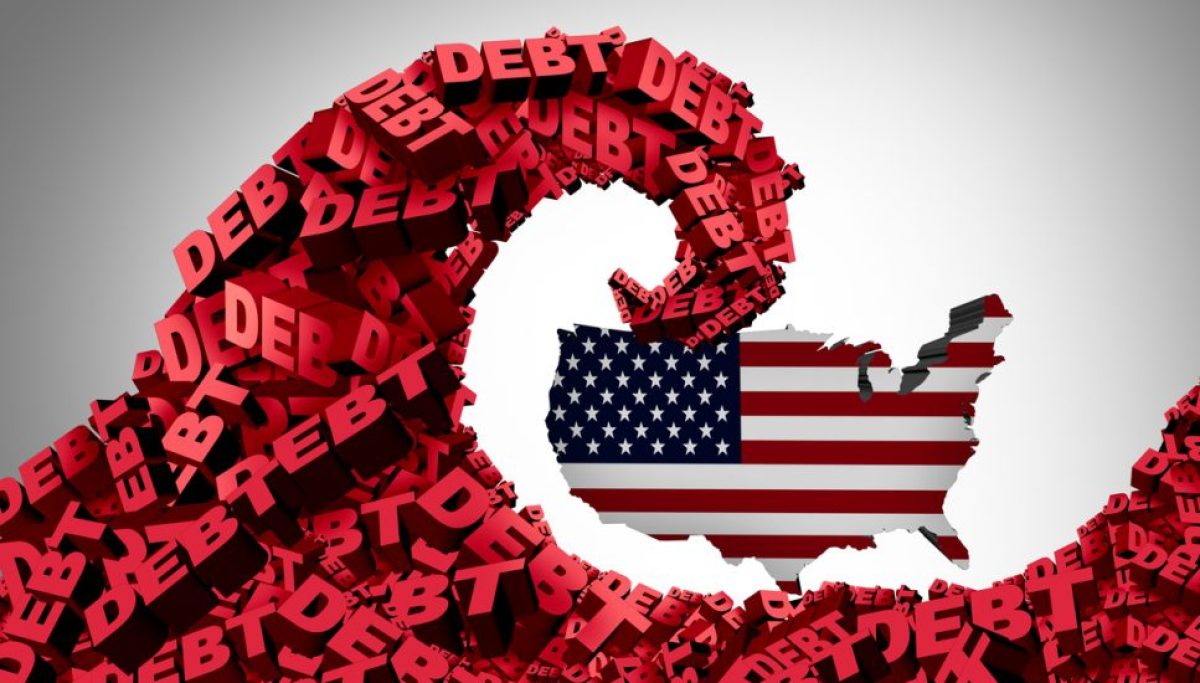
America is spending $3 billion a day just on interest. Why is no one running on it?

Read the original at Washington Examiner ↗
Cite

Navarro, J. (2026, September 28). America is spending $3 billion a day just on interest. Why is no one running on it? Washington Examiner. https://www.washingtonexaminer.com/op-eds/4743951/us-national-debt-interest-crisis-midterms/

Dated when The Aporia collected the article, usually within hours of publication. Check the original for its exact date and byline.

Washington Examiner · collected 2026-09-28 · by Jose Navarro

Quick Summary

The national debt surpassed $40 trillion, equating to roughly $117,000 per U.S. resident. The Congressional Budget Office projects a $2.1 trillion deficit for the fiscal year ending September 30, which is about 6% of GDP. Despite voter concern—Pew found that 66% of Democrats and 62% of Republicans view the federal deficit as a significant issue—the topic receives little attention in political discourse ahead of the midterm elections. The article highlights the growing interest payments on the national debt, with the Congressional Budget Office reporting net interest costs of $963 billion through July, averaging about $3.18 billion daily, up 14% from the previous year.
Written by AI on 2026-10-02, from this article's own text only (the story summary below draws on all the coverage).

AI analysis

Story summary

The U.S. national debt surpassed $40 trillion in August, amounting to roughly $117,000 per American resident. The Congressional Budget Office projects a deficit of $2.1 trillion for the fiscal year ending September 30, representing about 6% of GDP. With mid-term elections approaching, few candidates are addressing this issue despite voter interest. A recent poll found that 94% of voters favor candidates with plans to address debt, yet only 2% of Americans list it as their top concern, according to Gallup. This highlights the disconnect between voter awareness and political discussion on the topic.

Written for “US National Debt Interest” on 2026-11-04, grounded in this article and the 0 other(s) covering the same event.

Story

📰 US National Debt Interest
Economy/Business · 1 article(s) covering the same event.

Compared with similar articles

This article reads unscored and hedges 6% of its claims. Each row says how that neighbour differs.
The $40 trillion uniparty Different event
Washington Examiner
Hedges 2 of 34 claims Outlet record 69/100
“While both articles discuss high national debt, they are not reporting on a single specific incident but rather general commentary on the situation.”
Daily Mail
Hedges 4 of 30 claims Outlet record 69/100
“While both articles discuss government spending and debt issues, they describe different aspects and contexts: Article A focuses on U.S. national debt and interest costs, while Article B centers on a warning by Mark Bouris about Australia's economic situation.”
How this article was measured signals, leaning charts, publisher record, byline, topics and claims

Signals How these are calculated →

Claims extracted
48
sentences that state something as happening or true
Uncertain
6%
3 of 48 hedged ("reportedly", "may", "according to")
Leaning
withheld
no quote in the article backed the model's score
Publisher signals
69/100
Washington Examiner's corrections and hedging, across everything collected from it. Not a measure of accuracy.
Outlets on this story
1
Economy/Business
Same framing elsewhere
1
articles that frame the event the way this one does
Analyzed 2026-09-28 · how these are computed

How this is being covered How these are calculated →

Article leaning vs. publisher reliability
Source leaning vs. consistency

Publisher

Washington Examiner · 4155 article(s) · 8 correction(s) detected
Running correction rate · 8 correction(s)

Who wrote this

Jose Navarro
7 article(s) here · 1 carrying a prediction
🔮 Beneath the military drama sit bookkeeping questions that will outlast the fighting: If ships must pay to pass through the Strait of Hormuz, who sets the price, who collects the money, and who checks the books?
🔮 Federal offices opened on Thursday without a shutdown, and Washington will treat that as an accomplishment.
2026-10-04 · assertive framing · Congress dodged a shutdown. You still paid for it
🔮 On Nov. 3, voters will decide who controls Congress while the war with Iran is still underway.
🔮 An obligation of this size, with no defined end date and no authorizing vote, would not pass an audit in any organization.
🔮 Pew found in May that 66% of Democrats and 62% of Republicans call the federal deficit a “very big problem.”
🔮 He may be applying the solution at the worst possible moment.
🔮 Newsom vetoed the legislation that would have required annual accountability reports on where the money went, calling it “unnecessary workload.”
Also by Jose Navarro
Congress dodged a shutdown. You still paid for it
2026-10-04 · Washington Examiner
Nothing else under this byline is closely related to this article, so these are simply their most recent.
All 7 articles by Jose Navarro →

Topics

CBO Democrats Republicans Treasury U.S.

Subjects

Republicans NORP · 4× Democrats NORP · 3× CBO ORG · 2× Congress ORG · 2× Medicare ORG · 2× Social Security ORG · 2× Treasury ORG · 2× Pew ORG · 1× The Congressional Budget Office ORG · 1× U.S. GPE · 1×

Narrative

A Peterson Foundation poll, run by a Democratic and a Republican firm in April, found 94% of voters favor candidates with a debt plan, though the sponsor advocates on this issue.
framing: assertive · carried by 1 article(s) · first seen 2026-09-28
🔮 Pew found in May that 66% of Democrats and 62% of Republicans call the federal deficit a “very big problem.”
2026-09-28 · Washington Examiner
America is spending $3 billion a day just on interest. Why is no one running on it? · assertive framing

Claims (48 extracted, 3 hedged)

The national debt passed $40 trillion in August, roughly $117,000 for every U.S. resident. asserted
debt → pass → resident
The Congressional Budget Office now projects a $2.1 trillion deficit for the fiscal year ending September 30, about 6% of GDP. asserted
Office → project → GDP
With the midterm elections just over a month away, few candidates in either party are talking about it. asserted
candidates → talk → it
The scale is easy to state. asserted
scale → state → ?
In fiscal 2026, the government is spending about $7.4 trillion against $5.6 trillion in revenue, which means about $1.32 spent for every dollar collected. asserted
which → spend → dollar
The debt stood at $5.7 trillion in January 2001, and it now equals about 125% of GDP, above the World War II peak of 106%. asserted
it → stand → %
Pew found in May that 66% of Democrats and 62% of Republicans call the federal deficit a “very big problem.” uncertain
% → find → deficit
Yet Gallup recently found that only 2% name it the country’s most important problem. asserted
% → find → it
A Peterson Foundation poll, run by a Democratic and a Republican firm in April, found 94% of voters favor candidates with a debt plan, though the sponsor advocates on this issue. asserted
sponsor → run → issue
Both findings can be true: concern is broad, but priority is thin, and politicians follow priority. asserted
politicians → follow → priority
As Brookings scholar Jessica Riedl put it, “Politicians no longer care about budget deficits because voters no longer care.” asserted
voters → put → deficits
I read the debt the way a controller reads a balance sheet, and the essential line is not the total but the interest. asserted
line → read → sheet
The CBO reports net interest of $963 billion through July, about $3.18 billion a day, up 14% from a year earlier. asserted
CBO → report → July
Interest will consume nearly 19% of federal revenue this year, a record, and the CBO projects 25% within a decade. asserted
CBO → consume → decade
Interest is a fixed charge. asserted
Interest → fix → ?
It competes with defense, Medicare, and every other promise candidates make. asserted
candidates → compete → defense
It also reaches households. asserted
It → reach → households
Mortgage rates track the 10-year Treasury yield, and the Peterson Foundation’s Brett Loper warns that higher federal borrowing costs push mortgage rates up. asserted
costs → track → rates
Treasury Secretary Scott Bessent expanded bond buybacks in August to calm long-term rates, and yields dipped, then rose again. asserted
yields → expand → rates
Investor Stanley Druckenmiller argued that a credible fiscal package would do far more than even a vastly larger buyback. asserted
package → argue → buyback
Now consider what each party offers. asserted
party → consider → what
Republicans say the problem is serious. asserted
problem → say → ?
Rep. Lloyd Smucker (R-PA) cited bond-market turmoil and called the path “simply unsustainable.” asserted
Smucker → cite → path
Yet the 2025 reconciliation law raised the debt limit by $5 trillion, and Republicans are weighing another increase through reconciliation in the post-election lame-duck session. asserted
Republicans → raise → session
Democrats say the same, in a different key. asserted
Democrats → say → key
Rep. Brendan Boyle (D-PA) wants the debt limit’s “weapon” permanently off the table, which would remove the one recurring moment when Congress must look at the total. asserted
Congress → want → total
When Sen. Dick Durbin (D-IL) was asked about solutions, his answer was to oppose the administration’s spending proposals. asserted
answer → ask → proposals
The calendar is unforgiving, and the lame duck will be crowded. asserted
duck → crowd → ?
Congress has until December 11 to finish spending bills under the stopgap it passed, and it may also face a debt-limit vote. uncertain
it → have → vote
The statutory limit is $41.1 trillion, leaving about $1.1 trillion of room, roughly six months of deficits at this year’s pace. asserted
limit → leave → pace
Economist Lou Crandall projects the ceiling will be reached around February or March 2027. asserted
ceiling → project → February
The Social Security and Medicare trust funds are projected to be depleted by 2034, with Social Security cuts possible as early as 2032, according to Roll Call’s summary of federal projections. uncertain
cuts → project → projections
The lone bipartisan gesture I found, a Sen. Bernie Moreno (R-OH)-Sen. Elizabeth Warren (D-MA) proposal on Social Security’s payroll tax cap, drew little traction. asserted
I → find → traction
Both parties are behaving rationally, which is the problem. asserted
which → behave → ?
Republicans protect tax cuts and defense, Democrats protect entitlements and domestic programs, and each blames the other’s priorities. asserted
each → protect → priorities
Each side’s base gets what it wants, and the bill grows by about $3 billion a day. asserted
bill → get → billion
What would a diligent voter ask for? asserted
voter → ask → What
Every candidate for Congress should say what deficit they would accept in five years, and which tax or spending lines would move to get there. asserted
lines → say → years
A platform that ignores a $1 trillion line item is incomplete. asserted
that → ignore → item
Promises are cheap until someone totals them. asserted
someone → total → them
…and 8 more, not listed.

💬Give feedback · no sign-in needed

No sign-in needed for now. Your note is sent without a name, so it cannot be answered.

🕘History 🎫Support