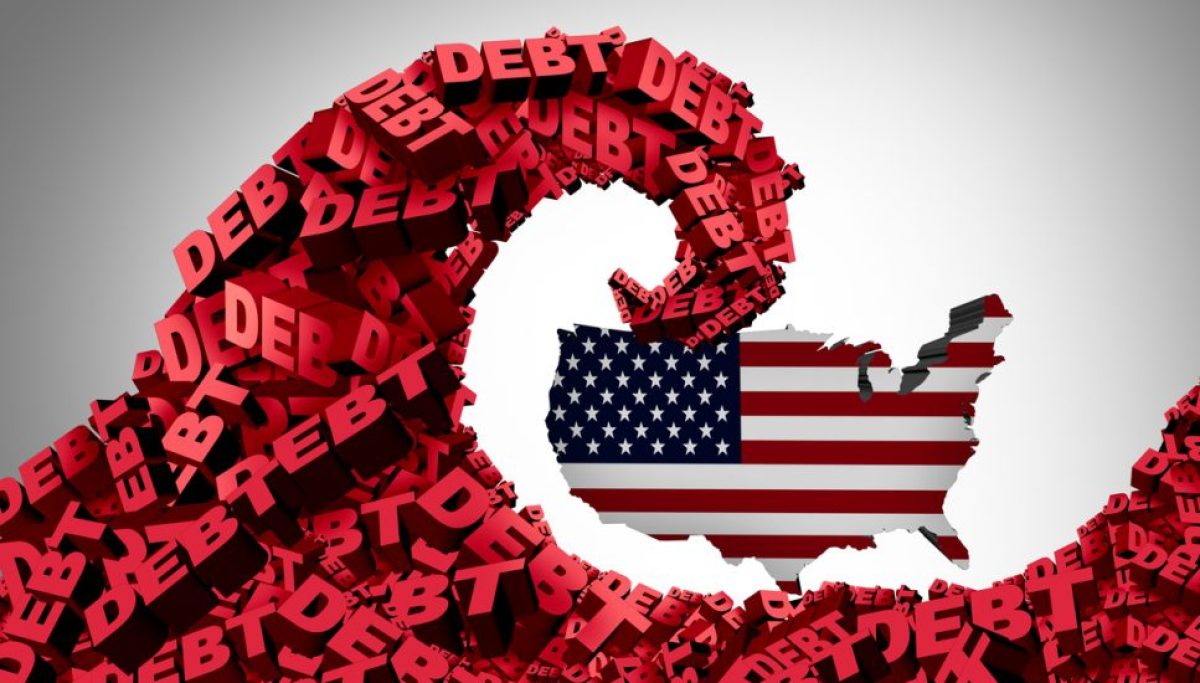
Photo via Washington Examiner

Congress dodged a shutdown. You still paid for it

Read the original at Washington Examiner ↗
Cite

Navarro, J. (2026, October 4). Congress dodged a shutdown. You still paid for it. Washington Examiner. https://www.washingtonexaminer.com/op-eds/4751723/government-shutdown-budget-process-broken/

Dated when The Aporia collected the article, usually within hours of publication. Check the original for its exact date and byline.

Washington Examiner · collected 2026-10-04 · by Jose Navarro

Quick Summary

Congress passed a stopgap spending bill on Thursday, avoiding another government shutdown but at significant economic cost. In the past year alone, the federal government experienced three funding lapses totaling over four months, with one major shutdown lasting 43 days and costing about $11 billion in lost GDP according to the Congressional Budget Office. The article criticizes the frequent use of continuing resolutions as a way to avoid addressing underlying issues in the budget process, highlighting inefficiencies and costs incurred by both government agencies and federal employees due to these repeated funding crises.
Written by AI on 2026-10-04, from this article's own text only (the story summary below draws on all the coverage).

AI analysis

Story summary

In December 2025, federal offices reopened without a shutdown after the House passed a stopgap bill on December 8, 2025 by a vote of 370-48, holding agencies at last year’s spending levels until Dec. 11, 2025. This followed three government funding lapses in the past year: a 43-day shutdown costing the economy about $11 billion in real GDP from October 1 to November 12, 2025, another four-day lapse from January 31 to February 3, 2025, and a 76-day partial shutdown at the Department of Homeland Security from February 14 to April 30, 2025. These frequent funding gaps are damaging, leading to idle contractors, higher project costs, and late payments. Taxpayers bear these hidden expenses, yet budget lines do not account for them. Unlike private companies that prepare reserves during uncertain times, the government lacks such contingency planning.

Written for “Government Shutdown Averted” on 2026-11-02, grounded in this article and the 0 other(s) covering the same event.

Story

📰 Government Shutdown Averted
Politics · 1 article(s) covering the same event.

Compared with similar articles

Nothing to compare against. No article is close enough to this one for the pipeline to have linked or judged the pair.
How this article was measured signals, leaning charts, publisher record, byline, topics and claims

Signals How these are calculated →

Claims extracted
44
sentences that state something as happening or true
Uncertain
9%
4 of 44 hedged ("reportedly", "may", "according to")
Leaning
Leans left
of the writing, not the subject · beta estimate
Publisher signals
70/100
Washington Examiner's corrections and hedging, across everything collected from it. Not a measure of accuracy.
Outlets on this story
1
Politics
Same framing elsewhere
1
articles that frame the event the way this one does
Analyzed 2026-10-04 · how these are computed

How this is being covered How these are calculated →

Article leaning vs. publisher reliability
Source leaning vs. consistency

Publisher

Washington Examiner · 3927 article(s) · 7 correction(s) detected
Running correction rate · 7 correction(s)

Who wrote this

Jose Navarro
7 article(s) here · 1 carrying a prediction
🔮 Beneath the military drama sit bookkeeping questions that will outlast the fighting: If ships must pay to pass through the Strait of Hormuz, who sets the price, who collects the money, and who checks the books?
🔮 Federal offices opened on Thursday without a shutdown, and Washington will treat that as an accomplishment.
2026-10-04 · assertive framing · Congress dodged a shutdown. You still paid for it
🔮 On Nov. 3, voters will decide who controls Congress while the war with Iran is still underway.
🔮 An obligation of this size, with no defined end date and no authorizing vote, would not pass an audit in any organization.
🔮 Pew found in May that 66% of Democrats and 62% of Republicans call the federal deficit a “very big problem.”
🔮 He may be applying the solution at the worst possible moment.
🔮 Newsom vetoed the legislation that would have required annual accountability reports on where the money went, calling it “unnecessary workload.”
Also by Jose Navarro
Nothing else under this byline is closely related to this article, so these are simply their most recent.
All 7 articles by Jose Navarro →

Topics

Congress FedTools House Washington the Congressional Budget Office

Subjects

Congress ORG · 3× House ORG · 2× Senate ORG · 2× Washington GPE · 2× the Congressional Budget Office ORG · 2× Hal Rogers PERSON · 1× Iran GPE · 1× Pentagon ORG · 1× Trump PERSON · 1× the Department of Homeland Security ORG · 1×

Narrative

It leaves out the Iran war supplemental the president requested, along with most Pentagon “anomalies,” including a $1 billion request for nuclear propulsion on the planned Trump-class battleship and language that would let munitions programs such as the Patriot Advanced Capability-3, Tomahawk, and the advanced medium-range air-to-air missile sign multiyear obligations.
framing: assertive · carried by 1 article(s) · first seen 2026-10-04
🔮 Federal offices opened on Thursday without a shutdown, and Washington will treat that as an accomplishment.
2026-10-04 · Washington Examiner
Congress dodged a shutdown. You still paid for it · assertive framing

Claims (44 extracted, 4 hedged)

Federal offices opened on Thursday without a shutdown, and Washington will treat that as an accomplishment. asserted
Washington → open → accomplishment
The House passed a stopgap bill, 370-48, that holds agencies at last year’s spending levels through Dec. 11. asserted
that → pass → Dec.
The fall is what came before it. asserted
what → come → it
In the past 12 months, the government stopped operating three times. asserted
government → stop → months
The first lapse ran 43 days, from Oct. 1 to Nov. 12, 2025, and the Congressional Budget Office estimated it cost the economy about $11 billion in real GDP. asserted
it → run → GDP
A four-day shutdown followed from Jan. 31 to Feb. 3, then a 76-day lapse at the Department of Homeland Security from Feb. 14 to April 30. asserted
shutdown → follow → April
FedTools totals 123 days. asserted
FedTools → total → days
A budget process that fails that often is not under stress. asserted
that → fail → stress
It is broken. asserted
It → break → ?
Every controller knows what happens to a business that closes its doors for a third of a year. asserted
that → know → year
Contractors sit idle, vendors price in the risk of late payment, and projects restart at a higher cost. asserted
projects → sit → cost
Taxpayers fund all of it, and no budget line shows the total. asserted
line → fund → total
A private company that learned in October its funding might vanish in December would build a reserve and a contingency plan. uncertain
funding → learn → reserve
Washington builds neither. asserted
Washington → build → neither
Agencies cannot commit to a hire, a contract, or a grant beyond the next deadline, so every manager spends the fall planning for two budgets at once: the one that might arrive and the one that might not. uncertain
that → commit → budgets
That is a cost in time and attention, and it recurs every year. asserted
it → recur → time
Federal employees worked without pay or waited at home through each lapse, and their pay returned only after Congress acted. asserted
Congress → work → lapse
When the House passed this stopgap bill, Rep. Hal Rogers (R-KY) said the vote removed “any fear of losing federal pay, benefits, or services.” asserted
vote → pass → pay
That a lawmaker must promise relief from a problem Congress created says enough. asserted
Congress → promise → enough
The stopgap itself has become routine. asserted
stopgap → become → ?
Congress has enacted 139 continuing resolutions since 1998 and has not finished all 12 appropriations bills by Oct. 1 since fiscal 1997. asserted
Congress → enact → 1997
A continuing resolution freezes spending at last year’s levels, so agencies run on a plan written for a world that no longer exists. asserted
that → continue → world
New programs cannot start, and priorities that arose this year go unfunded. asserted
that → start → ?
This bill shows the cost of that freeze. asserted
bill → show → freeze
It leaves out the Iran war supplemental the president requested, along with most Pentagon “anomalies,” including a $1 billion request for nuclear propulsion on the planned Trump-class battleship and language that would let munitions programs such as the Patriot Advanced Capability-3, Tomahawk, and the advanced medium-range air-to-air missile sign multiyear obligations. asserted
programs → leave → obligations
Those choices are not resolved. asserted
choices → resolve → ?
They are deferred to a deadline five weeks after Election Day. asserted
They → defer → Day
Stopgaps also attract riders that receive little scrutiny. asserted
that → attract → scrutiny
According to FedTools, this one blocks an Office of Management and Budget rule requiring senior political appointees to approve grants until Dec. 11 and bars the DHS from shifting funds to Border Patrol. uncertain
one → accord → Patrol
Whatever one thinks of those policies, they were settled inside a must-pass bill with a fraction of the debate a budget would have drawn. asserted
budget → think → debate
The Prevent Government Shutdowns Act would extend funding automatically in two-week increments and restrict other congressional business, including member travel, until appropriations pass. asserted
appropriations → extend → travel
A version cleared a Senate committee 10-2 in 2020. asserted
version → clear → 2020
Critics warn that an automatic extension removes the pressure to finish. asserted
extension → warn → pressure
They have a point, which is why the pressure belongs on members, not on federal workers and the public. asserted
pressure → have → workers
In May, the Senate took up a resolution on withholding senators’ own pay during future shutdowns. uncertain
Senate → take → shutdowns
Pair that principle with an automatic extension, and shutdowns end, while the incentive to finish on time stays with the people who control the calendar. asserted
who → pair → calendar
First, require the Congressional Budget Office to publish a quarterly report on what continuing resolutions cost in delayed contracts, hiring, and grants, so the price of a stopgap appears next to the price of a budget. asserted
price → require → budget
Second, pass the automatic extension with member-pay and travel restrictions attached. asserted
restrictions → pass → extension
Third, stop settling policy through stopgap riders: If a change deserves to become law, it deserves a vote. asserted
it → settle → vote
By the record, Congress is as likely to extend again as to finish. asserted
Congress → extend → record
…and 4 more, not listed.

💬Give feedback
🕘History 🎫Support