Photo via Washington Examiner

$42 billion, 19 dead, zero authorization: Trump’s Iran war couldn’t pass a basic audit

Read the original at Washington Examiner ↗
Cite

Navarro, J. (2026, September 28). $42 billion, 19 dead, zero authorization: Trump’s Iran war couldn’t pass a basic audit. Washington Examiner. https://www.washingtonexaminer.com/op-eds/4744340/iran-war-powers-42-billion-audit/

Dated when The Aporia collected the article, usually within hours of publication. Check the original for its exact date and byline.

Washington Examiner · collected 2026-09-28 · by Jose Navarro

Quick Summary

The Senate voted 49-50 against a resolution to end U.S. hostilities with Iran unless Congress authorizes them, marking the fourteenth attempt at a war powers measure since February. The Pentagon estimates that the conflict has cost $42 billion and resulted in at least 19 service members killed and over 750 wounded. Despite these significant figures, the vote did not produce a binding outcome due to procedural issues with the resolution itself. The article highlights how both parties tend to avoid making concrete decisions on war declarations, leaving the constitutional authority ambiguous and unresolved.
Written by AI on 2026-09-28, from this article's own text only (the story summary below draws on all the coverage).

AI analysis

Story summary

The Senate narrowly rejected a war powers resolution aimed at ending the conflict with Iran, voting 49-50 to oppose it on Thursday. The resolution, which had passed the House in July, sought to halt President Donald Trump's military actions without explicit congressional authorization. While Democrats pushed for the vote ahead of November’s midterm elections due to growing public opposition to the war and rising gas prices, most Republicans sided with Trump despite the unpopularity of the conflict among constituents. Only a few Republican senators broke ranks, including Susan Collins (R-ME), Lisa Murkowski (R-AK), Rand Paul (R-KY), and Thom Tillis (R-NC). The vote marks the 14th time since February that the Senate has considered such resolutions.

Written for “Iran War Powers Vote” on 2026-11-04, grounded in this article and the 10 other(s) covering the same event.

Story

📰 Iran War Powers Vote
Politics · 11 article(s) covering the same event. Compare every outlet's account →

Compared with similar articles

This article reads leans strongly left and hedges 9% of its claims. Each row says how that neighbour differs.
Washington Examiner
Hedges 0 of 14 claims Outlet record 69/100
NBC News
⚖️ Leans left further right than this Hedges 0 of 25 claims Outlet record 78/100
The Guardian
⚖️ Leans left further right than this Hedges 0 of 19 claims Outlet record 66/100
NPR
⚖️ Leans left further right than this Hedges 2 of 21 claims Outlet record 60/100
Washington Examiner
⚖️ Leans strongly left Hedges 3 of 55 claims Outlet record 69/100
The Straits Times
⚖️ Leans left further right than this Hedges 2 of 18 claims Outlet record 66/100
Toronto Star
⚖️ Leans left further right than this Hedges 2 of 33 claims Outlet record 64/100
The Independent
⚖️ Leans left further right than this Hedges 1 of 14 claims Outlet record 59/100
ABC News (US)
⚖️ Leans left further right than this Hedges 1 of 23 claims Outlet record 67/100
The Independent
Hedges 4 of 56 claims Outlet record 59/100
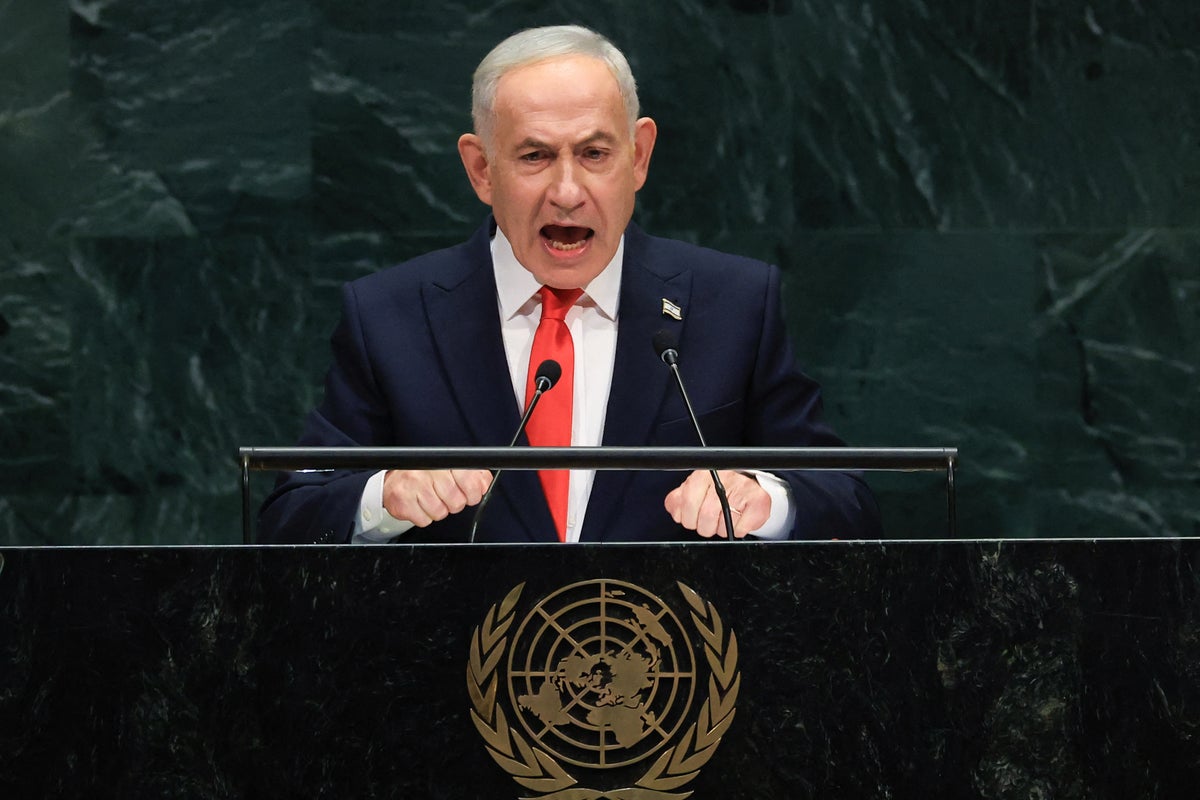
“Article A describes Netanyahu's speech at the UN General Assembly about attacking Iran, while Article B discusses a Senate vote on war powers regarding the conflict with Iran.”
How this article was measured signals, leaning charts, publisher record, byline, topics and claims

Signals How these are calculated →

Claims extracted
45
sentences that state something as happening or true
Uncertain
9%
4 of 45 hedged ("reportedly", "may", "according to")
Leaning
Leans strongly left
of the writing, not the subject · beta estimate
Publisher signals
69/100
Washington Examiner's corrections and hedging, across everything collected from it. Not a measure of accuracy.
Outlets on this story
11
Politics
Same framing elsewhere
1
articles that frame the event the way this one does
Analyzed 2026-09-28 · how these are computed

How this is being covered How these are calculated →

Article leaning vs. publisher reliability
Source leaning vs. consistency

Publisher

Washington Examiner · 4074 article(s) · 8 correction(s) detected
Running correction rate · 8 correction(s)

Who wrote this

Jose Navarro
7 article(s) here · 1 carrying a prediction
🔮 Beneath the military drama sit bookkeeping questions that will outlast the fighting: If ships must pay to pass through the Strait of Hormuz, who sets the price, who collects the money, and who checks the books?
🔮 Federal offices opened on Thursday without a shutdown, and Washington will treat that as an accomplishment.
2026-10-04 · assertive framing · Congress dodged a shutdown. You still paid for it
🔮 On Nov. 3, voters will decide who controls Congress while the war with Iran is still underway.
🔮 An obligation of this size, with no defined end date and no authorizing vote, would not pass an audit in any organization.
🔮 Pew found in May that 66% of Democrats and 62% of Republicans call the federal deficit a “very big problem.”
🔮 He may be applying the solution at the worst possible moment.
🔮 Newsom vetoed the legislation that would have required annual accountability reports on where the money went, calling it “unnecessary workload.”
Also by Jose Navarro
Congress dodged a shutdown. You still paid for it
2026-10-04 · Washington Examiner
Nothing else under this byline is closely related to this article, so these are simply their most recent.
All 7 articles by Jose Navarro →

Topics

Congress Democratic Republicans Senate U.S.

Subjects

Congress ORG · 11× Senate ORG · 4× American NORP · 2× Democratic NORP · 2× Iran GPE · 2× Republicans NORP · 2× Lisa Murkowski PERSON · 1× Rand Paul PERSON · 1× Susan Collins PERSON · 1× U.S. GPE · 1×

Narrative

In 2011, the Obama administration argued that limited operations in Libya did not amount to “hostilities” under the statute, and the 60 days passed without authorization.
framing: assertive · carried by 1 article(s) · first seen 2026-09-28
🔮 An obligation of this size, with no defined end date and no authorizing vote, would not pass an audit in any organization.

Claims (45 extracted, 4 hedged)

On Thursday, the Senate voted 49 to 50 against a resolution directing the president to end U.S. hostilities with Iran unless Congress authorizes them. asserted
Congress → vote → them
Four Republicans, Sens. Susan Collins (R-ME), Lisa Murkowski (R-AK), Rand Paul (R-KY), and Thom Tillis (R-NC), voted yes. asserted
Republicans → vote → ?
Democratic Sen. John Fetterman (D-PA) voted no, and another Democrat did not vote. asserted
Democrat → vote → ?
It was the fourteenth Senate consideration of a war powers measure since American and Israeli bombing began on Feb. 28. asserted
bombing → begin → Feb.
Whatever a reader thinks of the war, the vote exposes a question that belongs to neither party. asserted
that → think → party
When a conflict passes six months and an estimated $42 billion, who decides whether it continues? asserted
it → pass → months
The figures come from Stars and Stripes, which reports a Pentagon cost estimate of $42 billion, at least 19 service members killed, and more than 750 wounded. asserted
which → come → members
Those are the stakes on which Congress has now voted 14 times without producing a binding result. asserted
Congress → vote → result
Article I gives Congress the power to declare war and to fund the military. asserted
Article → give → military
In 1973, Congress passed the War Powers Resolution over President Nixon’s veto to make that authority practical. asserted
authority → pass → veto
It requires notice within 48 hours of introducing forces into hostilities and sets a 60-day limit on unauthorized action, with 30 more days to withdraw safely. asserted
It → require → days
CBS News reports the administration told Congress in July that military action had “restarted,” which triggered a new 60-day clock. asserted
which → report → clock
Tillis cited that clock as his reason for voting yes. asserted
Tillis → cite → reason
That is where the process fails, and it fails regardless of who holds office. asserted
who → fail → office
Presidents of both parties have read the clock generously. asserted
Presidents → read → clock
In 2011, the Obama administration argued that limited operations in Libya did not amount to “hostilities” under the statute, and the 60 days passed without authorization. asserted
days → argue → authorization
In 2019, a Democratic House and a Republican Senate sent President Donald Trump a bipartisan resolution on Yemen, and he vetoed it. asserted
he → send → it
The override attempt fell short of the two-thirds required. asserted
attempt → fall → thirds
Whoever occupies the White House prefers flexibility, and whoever sits in the minority prefers limits. asserted
sits → occupy → limits
The resolution before the Senate was a concurrent resolution, which does not go to the president and, according to the Daily Caller’s account, carries no legal force. uncertain
which → go → force
The Supreme Court held in 1983, in INS v. Chadha, that Congress cannot exercise binding legislative power without presenting the measure to the president. asserted
Congress → hold → president
So senators can cast a vote that feels decisive, register their position for the midterms, and leave the outcome unchanged. asserted
that → cast → outcome
Democrats forced these votes. asserted
Democrats → force → votes
Some Republicans backed earlier versions, then reversed after meeting with the president, according to CBS. uncertain
Republicans → back → CBS
Neither settles anything. asserted
Neither → settle → anything
The costs of leaving the question open are concrete. asserted
costs → leave → question
The conflict continues without the specific authorization the resolution itself demanded. asserted
resolution → continue → authorization
Allies and adversaries cannot tell whether Congress stands behind the mission. asserted
Congress → tell → mission
And taxpayers fund a war through emergency channels, not through the deliberate, line-by-line scrutiny the appropriations process was designed to provide. asserted
process → fund → scrutiny
I have spent more than two decades as a financial controller, and I recognize a control weakness when I see one. asserted
I → spend → one
An obligation of this size, with no defined end date and no authorizing vote, would not pass an audit in any organization. asserted
obligation → define → organization
Reasonable people can disagree about the war and still agree about the process. asserted
people → disagree → process
Congress can correct this without deciding who was right about Iran. asserted
who → correct → Iran
First, make the 60-day limit self-enforcing. asserted
limit → make → ?
Congress could provide that no funds may be obligated for hostilities beyond day 60 unless a joint resolution of authorization has been enacted. uncertain
resolution → provide → authorization
A funding cutoff does not depend on a veto fight, and it uses the power of the purse, which Congress has always held. asserted
Congress → depend → which
There is precedent: in 1973, Congress ended American combat operations in Southeast Asia by cutting off funds. asserted
Congress → be → funds
Privileged joint resolutions, with guaranteed floor votes, force the president to sign or veto and force members to defend their position on the record. asserted
resolutions → guarantee → record
Symbolic concurrent resolutions do neither of those things. asserted
resolutions → do → things
A number that Congress sees only in news reports cannot be governed. asserted
Congress → see → reports
…and 5 more, not listed.

💬Give feedback
🕘History 🎫Support