Photo via The Sydney Morning Herald

To avoid another rate rise, things might have to get worse

Read the original at The Sydney Morning Herald ↗
Cite

Wade, M. (2026, September 29). To avoid another rate rise, things might have to get worse. The Sydney Morning Herald. https://www.smh.com.au/politics/federal/to-avoid-another-rate-rise-things-might-have-to-get-worse-20260929-p6119y.html?ref=rss&utm_medium=rss&utm_source=rss_feed

Dated when The Aporia collected the article, usually within hours of publication. Check the original for its exact date and byline.

The Sydney Morning Herald · collected 2026-09-29 · by Matt Wade

Quick Summary

Reserve Bank of Australia officials recently announced a fourth interest rate hike in eight months due to high inflation, despite weak economic conditions like high unemployment and falling house prices. Reserve Bank Governor Michele Bullock acknowledged that the conflict in the Middle East has significantly raised energy costs and contributed to inflationary pressures. She also warned that if public expectations of inflation cannot be controlled, Australia might face a recession. The RBA indicated more rate hikes could follow if necessary to manage inflation, which currently exceeds their target range.
Written by AI on 2026-09-29, from this article's own text only (the story summary below draws on all the coverage).

AI analysis

Story summary

The Reserve Bank of Australia (RBA) has raised interest rates to their highest level in 15 years, increasing the cash rate target from 4.35% to 4.60%. This is the fourth increase this year and reflects the RBA's ongoing efforts to combat high inflation.

On a $700,000 loan with a 25-year term at an interest rate of 6.50%, monthly mortgage repayments will increase by approximately $93 following the latest rise. Over four increases this year, borrowers would see their monthly payments increase by about $364 on a $600,000 loan and roughly $7,300 annually.

The impact extends beyond mortgages: higher interest rates attract foreign investment to Australia due to better returns, potentially strengthening the Australian dollar. However, increased borrowing costs will likely slow down spending in other sectors such as dining out and retail shopping, which could affect businesses reliant on consumer spending.

Despite the hikes, housing remains unaffordable for many, with further rate increases forecasted by some analysts up to 5.1% by mid-2027, posing significant challenges for household finances already strained by rising costs like petrol prices nearing $2.40 per liter. The Bureau of Statistics is set to release September's inflation data soon, which will provide more insight into the effectiveness of these measures and future policy directions.

Written for “RBA Interest Rate Hikes” on 2026-10-31, grounded in this article and the 17 other(s) covering the same event.

Story

📰 RBA Interest Rate Hikes
Economy/Business · 18 article(s) covering the same event. Compare every outlet's account →

Compared with similar articles

This article reads centre and hedges 23% of its claims. Each row says how that neighbour differs.
Evening Standard
Hedges 1 of 13 claims Outlet record 65/100
“The articles discuss different deputy governors and different dates, indicating they are reporting on separate events regarding interest rate hikes.”
Evening Standard
Hedges 1 of 13 claims Outlet record 65/100
“The articles describe different events involving different officials and timelines.”
The Sydney Morning Herald
Hedges 9 of 52 claims Outlet record 61/100
“The articles discuss different aspects of interest rate increases and their implications, but they do not describe the exact same specific occurrence or moment in time.”
ABC News (AU)
⚖️ Leans left further left than this Hedges 5 of 48 claims Outlet record 68/100
“The articles describe different stages of the interest rate decision process: Article A discusses factors leading up to a hike, while Article B covers the announcement and aftermath of the actual hike.”
ABC News (AU)
Hedges 8 of 57 claims Outlet record 68/100
“The articles discuss different aspects of the RBA's rate hike decision and its aftermath, rather than describing the identical occurrence.”
Daily Mail
⚖️ Leans strongly left further left than this Hedges 6 of 41 claims Outlet record 68/100
Daily Mail
Hedges 1 of 16 claims Outlet record 68/100
“The articles describe different perspectives on inflation and interest rates: one focuses on current RBA officials announcing a rate rise, while the other is an ex-RBA governor critiquing government spending's impact on inflation.”
Washington Examiner
Hedges 4 of 58 claims Outlet record 70/100
“The articles discuss different central banks and their policies regarding interest rate hikes at distinct times.”
Toronto Star
Hedges 3 of 43 claims Outlet record 64/100
“The articles discuss different aspects of economic conditions and do not describe the same specific event or incident.”
The Sydney Morning Herald
Hedges 3 of 10 claims Outlet record 61/100
“While both articles discuss the Reserve Bank's rate hike and related comments by Michele Bullock, Article B includes additional news about government responses and global factors, indicating it covers a broader scope of related events rather than focusing on a single specific incident.”
How this article was measured signals, leaning charts, publisher record, byline, topics and claims

Signals How these are calculated →

Claims extracted
22
sentences that state something as happening or true
Uncertain
23%
5 of 22 hedged ("reportedly", "may", "according to")
Leaning
Centre
of the writing, not the subject · beta estimate
Publisher signals
61/100
The Sydney Morning Herald's corrections and hedging, across everything collected from it. Not a measure of accuracy.
Outlets on this story
18
Economy/Business
Same framing elsewhere
1
articles that frame the event the way this one does
Analyzed 2026-09-29 · how these are computed

How this is being covered How these are calculated →

Article leaning vs. publisher reliability
Source leaning vs. consistency

Publisher

The Sydney Morning Herald · 5626 article(s) · 15 correction(s) detected
Running correction rate · 15 correction(s)

Who wrote this

Matt Wade
18 article(s) here · 1 carrying a prediction
🔮 Many aspiring home buyers will welcome the recent pullback in prices, although four interest rate hikes by the Reserve Bank this year, which has driven the downturn, have made it harder for new home borrowers to service a mortgage.
🔮 If not for a fall in the labour force participation rate – the share of people in work or looking for work – last month’s jobless rate in NSW would have been higher.
🔮 If you looked at the figures for your area across several age brackets, you may have noticed how earnings track.
🔮 “For the first time … ordinary Australians will be able to build a decent nest egg for their retirement,” said the then-Prime Minister.
2026-10-09 · assertive framing · Is Australia saving too much for retirement?
🔮 But the home building sector has this year been hit by a series of interest rate hikes, higher construction prices due to the Middle East war and uncertainty prompted by the May budget’s housing tax changes which are yet to properly flow through to the figures.
🔮 Households will face “recession-like” conditions next year, a leading forecaster has warned, as fresh evidence shows consumers are losing confidence in the economy amid growing cost-of-living pressures.
🔮 That followed hikes in February, March and May.
🔮 Australia’s inflation rate has jumped to a four-month high, increasing the chances the Reserve Bank will lift interest rates again this year.
🔮 She even acknowledged the possibility the RBA’s ongoing inflation fight could push Australia into recession if the public’s expectations of inflation cannot be contained.
🔮 Reserve Bank governor Michele Bullock warned last week the jobless rate may need to rise as high as 5 per cent to ease pressure on inflation.
Also by Matt Wade
Is Australia saving too much for retirement?
2026-10-09 · The Sydney Morning Herald
Nothing else under this byline is closely related to this article, so these are simply their most recent.
All 18 articles by Matt Wade →

Topics

ABC Australia RBA Reserve Bank the Reserve Bank

Subjects

RBA ORG · 7× Australia GPE · 4× Reserve Bank ORG · 4× the Reserve Bank ORG · 2× ABC ORG · 1× Andrew Hauser PERSON · 1× Australians NORP · 1× Donald Trump PERSON · 1× Hauser PERSON · 1× Michele Bullock PERSON · 1×

Narrative

Normally, rates rise when the economy is humming and demand is strong; the RBA intervenes with higher rates to slow things down and keep prices in check. But right now, unemployment is near a five-year high, house prices are falling and economic growth per person is anaemic – hardly the conditions under which you would expect a fourth hike in eight months that lifts the RBA’s benchmark cash rate to a 15-year high. US President Donald Trump’s ill-advised and ill-fated attack on Iran is a big factor.
framing: mixed · carried by 1 article(s) · first seen 2026-09-29
🔮 She even acknowledged the possibility the RBA’s ongoing inflation fight could push Australia into recession if the public’s expectations of inflation cannot be contained.
2026-09-29 · The Sydney Morning Herald
To avoid another rate rise, things might have to get worse · mixed framing

Claims (22 extracted, 5 hedged)

From the time Reserve Bank deputy governor Andrew Hauser appeared on the ABC’s 7.30 program three weeks ago, it was clear an interest rate hike was coming. asserted
hike → appear → program
“We have one big problem and that’s inflation,” was one of the first things Hauser told the national television audience. asserted
Hauser → have → audience
Since then, Reserve Bank officials have used multiple public appearances and even podcast interviews to repeat the message. asserted
officials → use → message
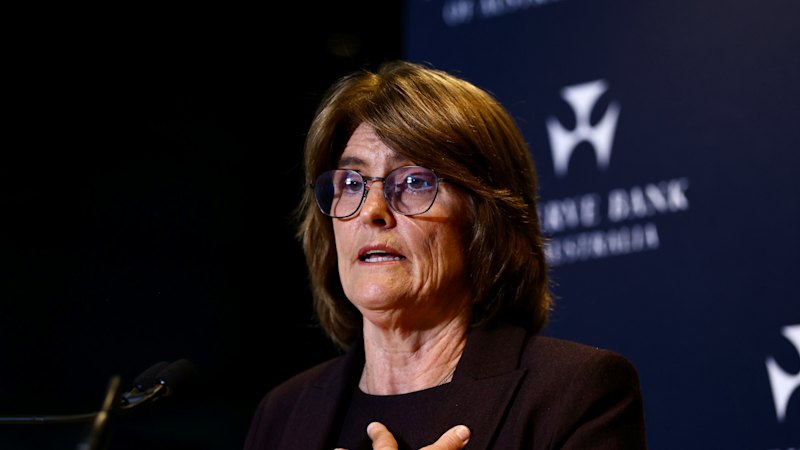
After the rate increase was announced, a poised Reserve Bank governor Michele Bullock spent nearly an hour ramming home a similar message at the traditional press conference that follows each interest rate decision. asserted
that → announce → decision
“I know this decision is difficult for households with a mortgage and businesses with loans, but high inflation hurts all Australians, especially the most vulnerable,” she said. asserted
she → know → Australians
She even acknowledged the possibility the RBA’s ongoing inflation fight could push Australia into recession if the public’s expectations of inflation cannot be contained. uncertain
expectations → acknowledge → inflation
It is understandable they felt the need to do a lot of explaining: the circumstances for this interest rate hike are highly unusual. asserted
circumstances → feel → hike
Normally, rates rise when the economy is humming and demand is strong; the RBA intervenes with higher rates to slow things down and keep prices in check. But right now, unemployment is near a five-year high, house prices are falling and economic growth per person is anaemic – hardly the conditions under which you would expect a fourth hike in eight months that lifts the RBA’s benchmark cash rate to a 15-year high. US President Donald Trump’s ill-advised and ill-fated attack on Iran is a big factor. asserted
attack → rise → Iran
Inflationary pressures were stirring before the Middle East conflict began in February, but his intervention has made the inflation fight far more difficult. asserted
fight → stir → February
The RBA’s short statement announcing the rates decision said, “global energy prices are now much higher than had been assumed” only a month ago. asserted
prices → announce → decision
Bullock labelled the Middle East conflict “a big shock” that has “made us all poorer in this country. asserted
us → label → country
” But it’s not all about the Middle East conflict – complex constraints on what the Reserve Bank calls “domestic capacity” are also contributing to Australia’s inflation problem. asserted
Bank → ’ → problem
That means spending by the private sector (consumers and businesses) and the public sector (governments) is also pushing up inflation. asserted
spending → mean → inflation
The release of the Final Budget Outcome for last financial year on Monday was a reminder that, despite Australia’s inflationary pressures, the federal government has been running a budget deficit; it could be doing more to assist the Reserve Bank control inflation by spending less. The RBA’s monetary policy board, which sets interest rates, has made it clear more increases are possible. In a short statement announcing Tuesday’s decision, the board said it would “will continue to do what it considers necessary to bring inflation sustainably back to target, including increasing the cash rate target further if needed. uncertain
it → run → target
The bond futures traded on money markets are signalling another interest rate increase by February and a 70 per cent probability of yet another hike by June next year. asserted
futures → trade → June
But the RBA faces a tricky balance as it tries to tame inflation while not causing lasting damage to the economy. asserted
it → face → economy
Australia has benefited enormously from five years of low unemployment, but that could quickly evaporate if rates are lifted too high. uncertain
rates → benefit → unemployment
A lot will depend on how consumers and businesses react to the latest interest rate hike. asserted
consumers → depend → hike
A continued deterioration in the jobs market and further property price falls may prevent another rise. uncertain
deterioration → prevent → rise
But if the Middle East conflict drags on, putting upward pressure on inflation, the RBA may conclude it has no choice but to lift interest rates again. uncertain
it → drag → rates
Borrowers beware should senior Reserve Bank officials start appearing on national TV in the weeks before the next board meeting. asserted
officials → beware → meeting
Subscribers can sign up to our weekly Inside Politics newsletter. asserted
Subscribers → sign → newsletter

💬Give feedback
🕘History 🎫Support