Claims extracted
20
sentences that state something as happening or true
Uncertain
5%
1 of 20 hedged
("reportedly", "may", "according to")
Leaning
not political
takes no side on a contested political question
Publisher signals
66/100
The Guardian's corrections and
hedging, across everything collected from it. Not a measure of accuracy.
Outlets on this story
8
Environment
Same framing elsewhere
1
articles that frame the event the way this one does
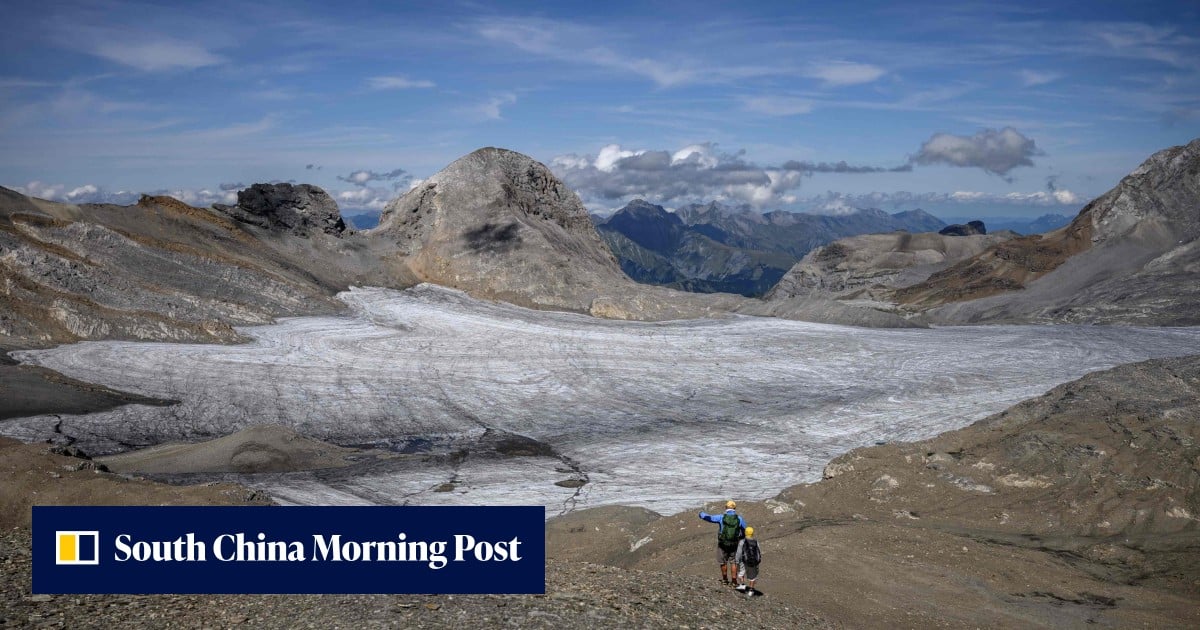
Switzerland has lost almost one-fifth of its ice in just five years, research has found, in a dramatic reshaping of the Alpine country whose big white glaciers have been reduced to moonlike rock deserts, scientists say.
asserted
scientists → lose → deserts
Swiss glaciers shrank by 5.5% in the first eight months of 2026, according to an annual monitoring report, after a summer of scorching heatwaves that followed a winter with little snow.
uncertain
that → shrink → snow
The reduction in ice volume falls just shy of the record set in 2022 and brings the total loss of glacier ice since 2021 to 19.4%.
asserted
reduction → fall → %
Matthias Huss, a glaciologist at ETH Zürich and lead author of the report, said many people do not realise how fast glaciers are retreating, or that just one generation ago some now-barren sites used to sit beneath hundreds of metres of ice.
asserted
sites → say → ice
The scientists have not yet compiled a formal tally of lost glaciers this year but said they had witnessed the death of a number of small ones.
asserted
they → compile → ones
“I visited one last week and it’s so impressive to stand in this moonlike landscape where there was a big layer of ice – an extensive glacier – just a few years ago,” said Huss.
asserted
Huss → visit → ice
“And now it’s a rock desert where there’s some scattered blocks of old ice still lying around and melting on the hot rocks.
asserted
it → ’ → rocks
The report, a collaboration between the Swiss Glacier Monitoring Network and the Swiss Commission for Cryosphere Observation, found the mean thickness of individual glaciers fell by between 2.5 metres and 4 metres in 2026.
asserted
thickness → find → 2026
Huss said scientists were increasingly seeing glaciers collapse from the inside – the result of internal streams beneath the ice that excavate caverns – rather than simply retreating from surface heat.
asserted
that → say → heat
“You have huge holes like cheese in the middle of the ice that have collapsing roofs,” said Huss.
asserted
Huss → have → roofs
“These are processes that tear the glaciers apart and make them retreat even faster.”
asserted
them → tear → glaciers
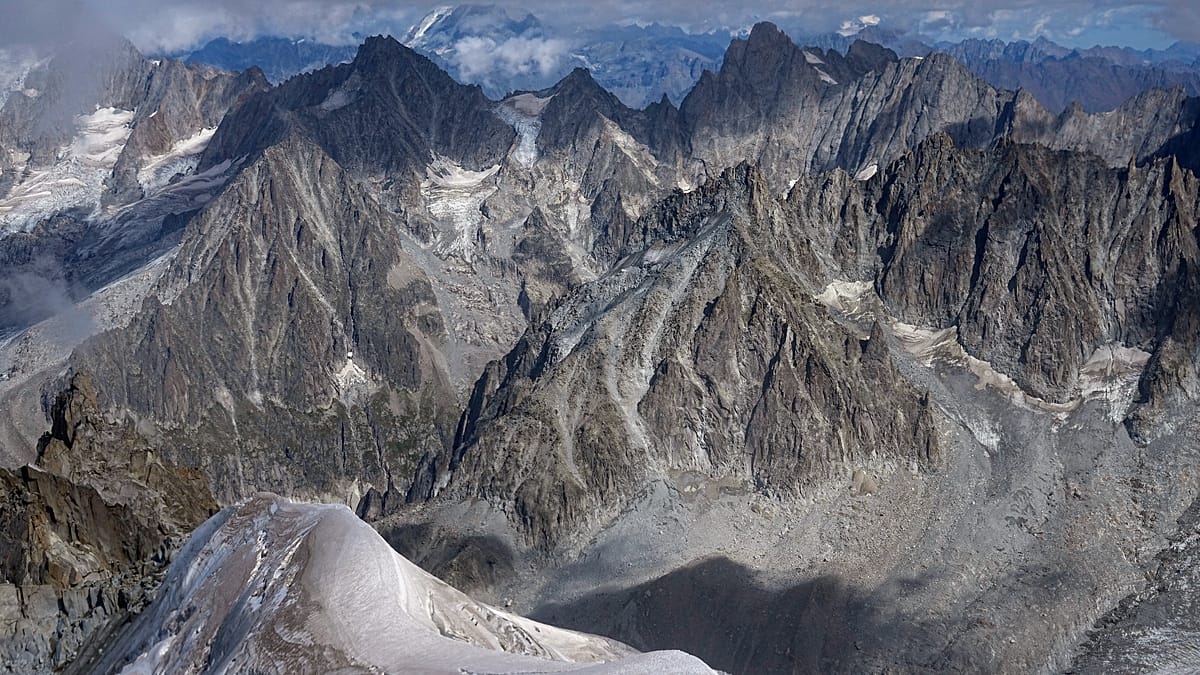
Europe is warming twice as fast as the global average from the heat-trapping effects of fossil fuel pollution and the destruction of nature, with Alpine regions experiencing some of the most dramatic changes.
asserted
regions → warm → changes
Analysis published by MeteoSwiss on Tuesday found the summer half-year from April to September was the hottest and driest it had been since records began in 1864.
asserted
records → publish → 1864
In that time, humanity has filled the atmosphere with 1.8tn tons of carbon dioxide and heated the planet by about 1.4C.
The heat this summer was worse than in 2022 but Swiss ice loss just missed the record-breaking levels set that year.
asserted
loss → fill → levels
The scientists attributed this to limited deposits of Saharan dust, which foul the snow and prevent it from reflecting sunlight, as well as slightly greater snow cover at the end of winter and more sunlight in the summer.
asserted
which → attribute → summer
Huss visited the former Plattalvafirn, or Griess glacier, in September, which used to cover a mountain flank but lost 99% of its area in just 20 years.
asserted
which → visit → years
The glacier was the subject of some of the most detailed monitoring in the world in the 1950s and Huss worked with its data when he was a PhD student.
asserted
he → work → data
“What was different at that time, is that the rates of retreat were still kind of at a normal level,” said Huss.
asserted
Huss → say → level
“What we are seeing now is a complete explosion of these melt rates, leading to the disintegration of glaciers.
asserted
seeing → see → glaciers
They’re really just falling apart.”
asserted
They → fall → ?
 The Aporia