In short:
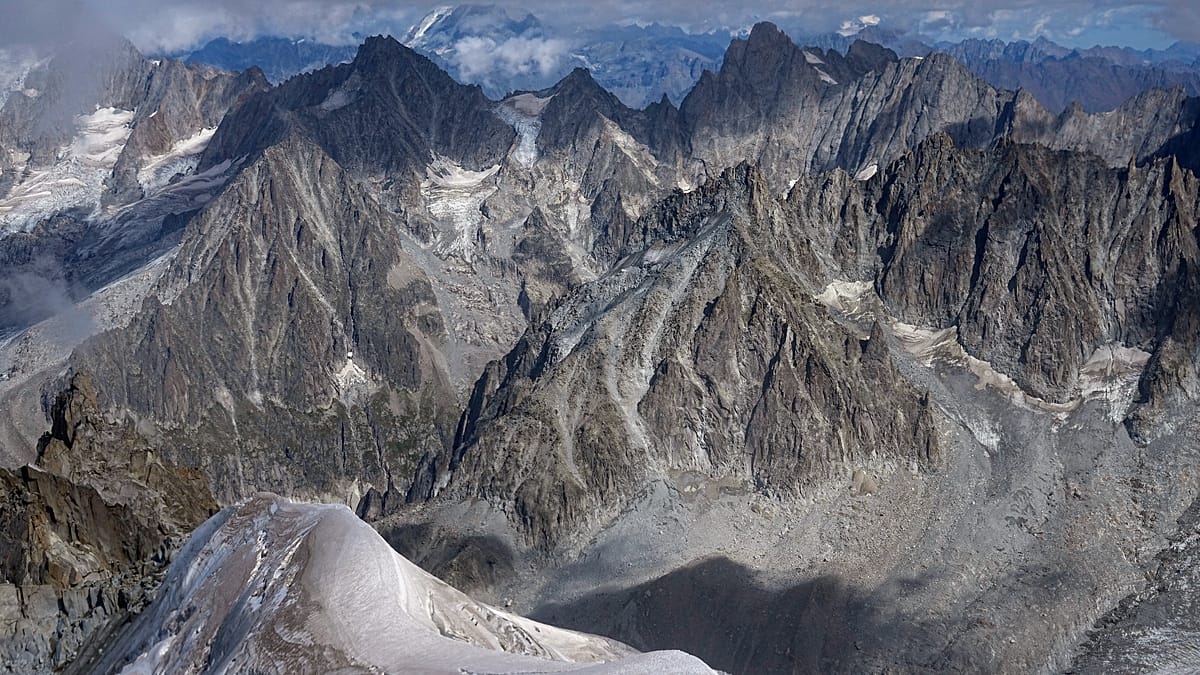
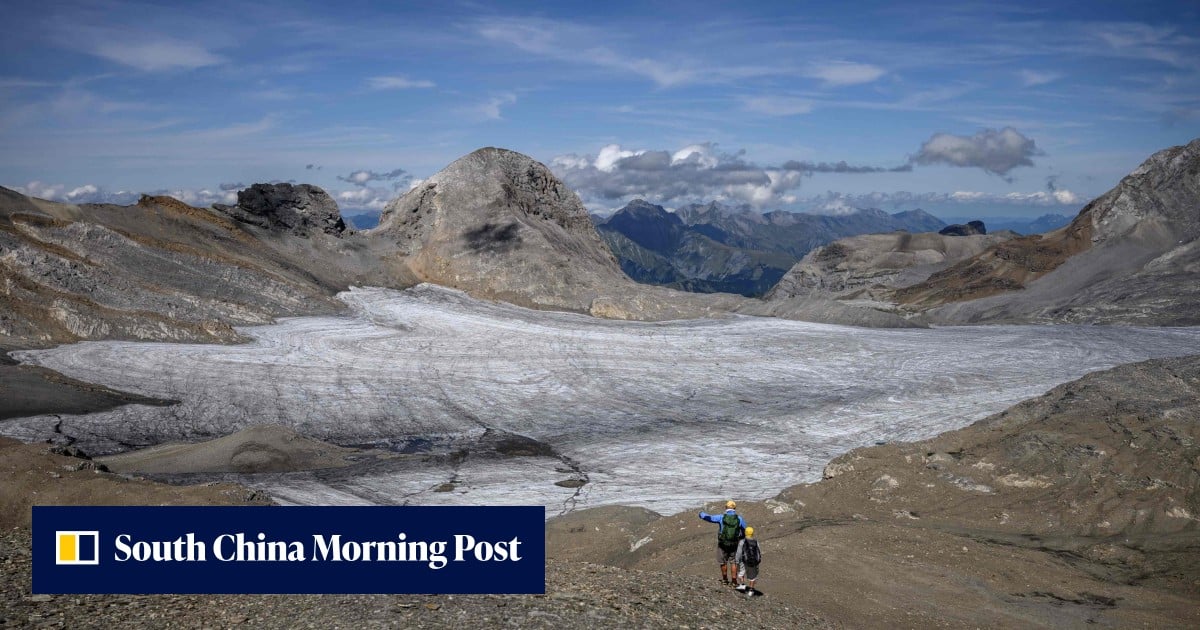
Scientists in Switzerland have warned global warming is having a dire effect on the country's glaciers.
asserted
warming → warn → glaciers
New research claims more than 5 per cent of Swiss ice volume has melted this year alone.
uncertain
cent → claim → volume
Glaciologist Mattias Huss told the ABC "we need to stabilise global warming" in order for the ice to recover.
asserted
ice → tell → order
Europe's record-breaking summer, after a winter of little snow, has led to "staggering" melting on Switzerland's famous glaciers, with more than 5 per cent of the country's ice melting in 2026.
asserted
summer → break → 2026
That is according to a new report released by the Swiss Glacier Monitoring Network (GLAMOS) and the Swiss Commission for Cryosphere Observation of the Swiss Academy of Sciences.
uncertain
That → accord → Sciences
"Glaciers have already retreated continuously, more or less, over the past 100 years, but what we are seeing now is really unprecedented," Matthias Huss, the director of GLAMOS, told the ABC.
"
asserted
Huss → retreat → ABC
We've seen glaciers disappearing, we've seen them retreating, shrinking enormously.
asserted
them → see → ?
"And it's really a different vision of the Swiss Alps we have today than 20 years ago."
asserted
we → have → Alps
Dr Huss and his team study about 20 Swiss glaciers in detail.
asserted
Huss → study → detail
They use a combination of traditional and modern techniques — first drilling holes into the ice to measure its thickness, then using virtual elevation models and satellites.
asserted
They → use → models
At one of the most researched glaciers, the Rhone glacier in southern Switzerland, Dr Huss said there was record melting.
asserted
Huss → research → Switzerland
"We've lost 10 metres in thickness during just the four summer months," he said.
asserted
he → lose → months
"It was really incredible for us to come back every time [we took measurements] and then see how fast it went back."
asserted
it → come → measurements
The Head of the Institute for Atmospheric and Climate Science at ETH Zurich University, Professor Sonia Seneviratne, said many heat records were broken in Switzerland over the summer.
"It was an extremely hot summer, we had several heatwaves, starting in May," she told the ABC.
uncertain
she → say → ABC
"What was special this year was that summer started very early, [then] there was a particularly strong heatwave in June, and it was also very long."
Professor Seneviratne said the effects of global warming were being felt particularly severely on Switzerland's glaciers.
asserted
effects → start → glaciers
"This summer was a bit of a wake-up call.
asserted
summer → wake → call
It became a really strong topic in the media and also in politics," she said.
asserted
she → become → politics
Dr Huss said glaciers are extremely sensitive to shifts in global temperature and provide "one of the most beautiful illustrations of climate change".
asserted
glaciers → say → change
"People realise what is happening if they see the ice disappearing," he said.
asserted
he → realise → ?
"It's much easier to grasp glacier retreat than climate change as a whole, because that's difficult to feel.
asserted
that → grasp → whole
"But glaciers are important in the Alps and also worldwide because they provide a lot of water in drought periods and heatwaves exactly when we need it.
asserted
we → provide → it
The GLAMOS report showed that over the past five years, Swiss glaciers have shed almost one-fifth of their ice, threatening future water supplies and raising questions about the long-term survival of Europe's ice fields.
asserted
glaciers → show → fields
While glacier melt has helped ease summer water shortages, this benefit reduces over time as ice-covered areas shrink and glaciers become smaller.
"
asserted
glaciers → help → time
We need to stabilise global warming," Dr Huss said.
asserted
Huss → need → warming
"Reducing CO2 emissions will stabilise the climate and will, with some delay, also stabilise glaciers, but we have to be aware that for many of the small glaciers in the Alps it's already too late, we can't save them.
asserted
we → reduce → them
For more than two decades, Swiss authorities have used large, reflective polyester fleece blankets to cover parts of glaciers to slow seasonal melting.
asserted
authorities → use → melting
While it is effective, it's impractical and too expensive to cover entire glaciers, and it has been described as a bandaid solution to the effects of global warming.
asserted
it → cover → warming
The strategy also sheds synthetic fibres into the environment.
asserted
strategy → shed → environment
But there is a study under way to see if wool from Switzerland's sheep — much of which is discarded every year — could be used instead.
uncertain
much → be → which
 The Aporia