Photo via Euronews

Swiss glaciers lose 5.5% of ice in second-largest melt on record

Read the original at Euronews ↗
Cite

Mauduit, F. (2026, October 1). Swiss glaciers lose 5.5% of ice in second-largest melt on record. Euronews. https://www.euronews.com/video/2026/10/01/swiss-glaciers-lose-55-of-ice-in-second-largest-melt-on-record

Dated when The Aporia collected the article, usually within hours of publication. Check the original for its exact date and byline.

Euronews · collected 2026-10-01 · by Frederique Mauduit

Quick Summary

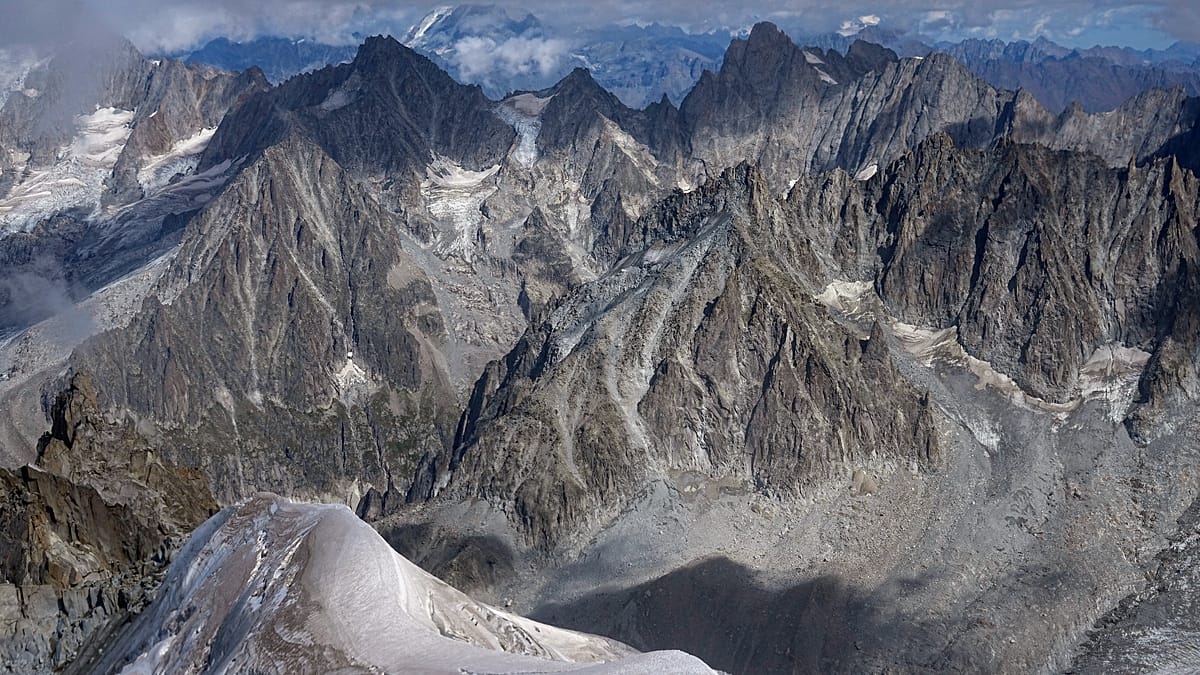
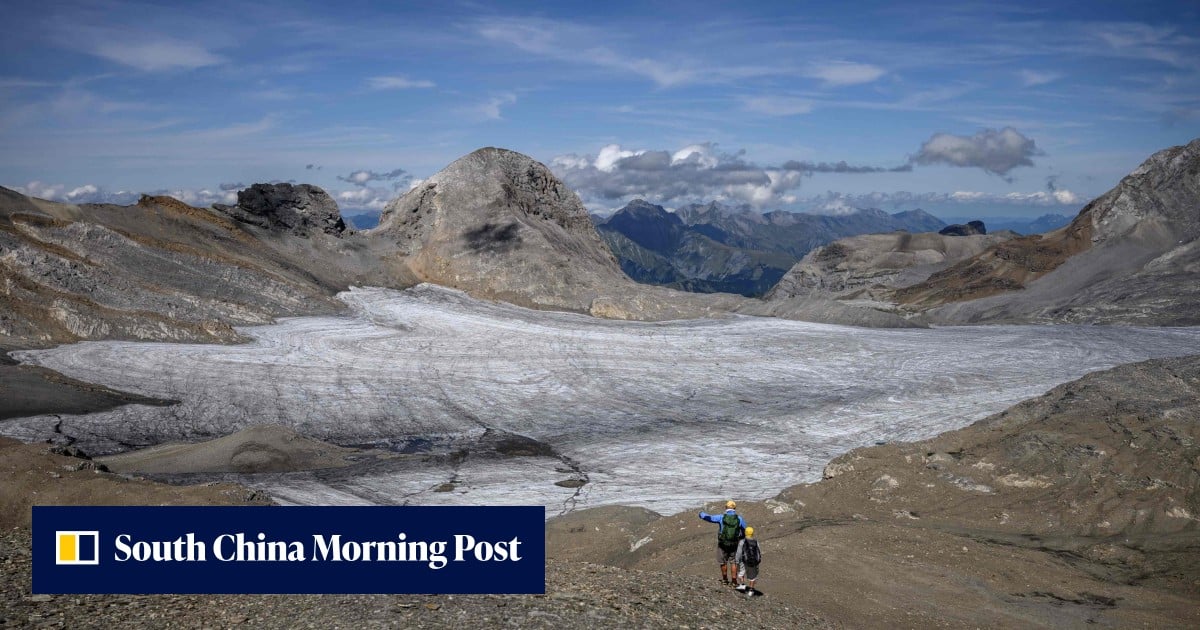
Scientists studying Switzerland's Rhône Glacier report a significant loss of 5.5% of the country’s remaining glacial ice volume in 2026, marking it as the second-highest annual decline ever recorded. The accelerated melting was driven by prolonged summer heat waves and sparse winter snow cover, leading to an earlier onset of seasonal melt and thinner glaciers by up to 10 metres on some sections.
Written by AI on 2026-10-01, from this article's own text only (the story summary below draws on all the coverage).

AI analysis

Story summary

In 2026, Swiss glaciers experienced significant ice loss, with more than 5% of the remaining glacier volume disappearing over the year. This near-record melt is attributed to intense summer heatwaves following a winter with little snowfall, accelerating long-term climate-driven glacial retreat. Since 2021, Switzerland has lost nearly 20% of its glaciers, making it one of the most dramatic losses observed globally. Scientists from organizations like GLAMOS warn that such rapid melting could threaten water supplies for farming, hydropower, and transport in coming decades, destabilizing mountain slopes and increasing landslide risks. Researchers stress that without human-induced climate change and fossil fuel emissions, this warming would not be occurring, underscoring the urgent need to address global warming.

Written for “Swiss Glaciers Melting” on 2026-11-01, grounded in this article and the 7 other(s) covering the same event.

Story

📰 Swiss Glaciers Melting
Environment · 8 article(s) covering the same event. Compare every outlet's account →

Compared with similar articles

This article reads unscored and hedges 0% of its claims. Each row says how that neighbour differs.
CBC News
Hedges 0 of 25 claims Outlet record 60/100
Al Jazeera
Hedges 0 of 1 claims Outlet record 60/100
ABC News (AU)
Hedges 4 of 29 claims Outlet record 68/100
The Guardian
Hedges 1 of 20 claims Outlet record 66/100
South China Morning Post
Hedges 1 of 5 claims Outlet record 64/100
BBC News
⚖️ Leans left Hedges 4 of 35 claims Outlet record 68/100
Al Jazeera
Hedges 4 of 41 claims Outlet record 60/100
“While both articles discuss significant glacier melt in Switzerland during 2026, Article A focuses on a single year's data, while Article B covers a five-year period and provides more context about cumulative ice loss.”
How this article was measured signals, leaning charts, publisher record, byline, topics and claims

Signals How these are calculated →

Claims extracted
5
sentences that state something as happening or true
Uncertain
0%
0 of 5 hedged ("reportedly", "may", "according to")
Leaning
not political
takes no side on a contested political question
Publisher signals
60/100
Euronews's corrections and hedging, across everything collected from it. Not a measure of accuracy.
Outlets on this story
8
Environment
Same framing elsewhere
1
articles that frame the event the way this one does
Analyzed 2026-10-01 · how these are computed

How this is being covered How these are calculated →

Article leaning vs. publisher reliability
Source leaning vs. consistency

Publisher

Euronews · 1131 article(s) · 1 correction(s) detected
Running correction rate · 1 correction(s)

Who wrote this

Frederique Mauduit
68 article(s) here · 0 carrying a prediction
🔮 The proposed changes would cap prison sentences at 15 years, allow appeals to Kosovo's Supreme Court and let convicted people serve their sentences in Kosovo.
🔮 The project has been in development for a decade and is expected to begin operating in November.
🔮 One graduate, 22-year-old May Aklajneh, says becoming a policewoman was a childhood dream and that she joined as soon as recruitment opened.
2026-09-23 · assertive framing · Syria's first women graduate from new police academy
🔮 Oktoberfest opened in Munich, Germany, on Saturday as the mayor tapped the first keg.
🔮 The chalk portraits are temporary and will gradually fade while on display at the memorial.
🔮 The cows will continue towards their winter homes, with the journey reversed in spring when they return to the Alps.
🔮 The one-kilometre bridge spans the Tumen River and has two lanes, with the newly built crossing expected to handle up to 300 vehicles a day.
🔮 Amazon said it was supporting those affected and would cooperate with investigators.
🔮 Researchers say humanoid machines could eventually take on factory tasks without major changes to existing infrastructure, although the technology remains largely experimental.
🔮 A rare 1920 painting by Dutch master Piet Mondrian, Composition III, is set to go under the hammer at Christie’s in London this October.
2026-08-26 · assertive framing · Rare Mondrian unseen for 25 years heads to auction
Also by Frederique Mauduit
Nothing else under this byline is closely related to this article, so these are simply their most recent.
All 68 articles by Frederique Mauduit →

Topics

Swiss Switzerland

Subjects

Swiss NORP · 1× Switzerland GPE · 1×

Narrative

Persistent summer heat waves and a dry winter with little snowfall left the ice with less protection and caused melting to start earlier.
framing: assertive · carried by 1 article(s) · first seen 2026-10-01
2026-10-01 · Euronews
Swiss glaciers lose 5.5% of ice in second-largest melt on record · assertive framing

Claims (5 extracted, 0 hedged)

Scientists monitoring the Rhône Glacier in Switzerland are measuring rapid ice loss after a summer of high temperatures. asserted
Scientists → monitor → temperatures
They track meltwater, use dye to follow its flow and measure how much the surface has dropped. asserted
surface → track → flow
Swiss glaciers lost 5.5% of their remaining ice volume in 2026, the second-largest annual decline on record. asserted
glaciers → lose → record
Persistent summer heat waves and a dry winter with little snowfall left the ice with less protection and caused melting to start earlier. asserted
melting → leave → protection
Some glaciers have lost between 2.5 and 4 metres in thickness this year, with losses of up to 10 metres recorded on some glacier tongues. asserted
losses → lose → tongues
💬Give feedback
🕘History 🎫Support