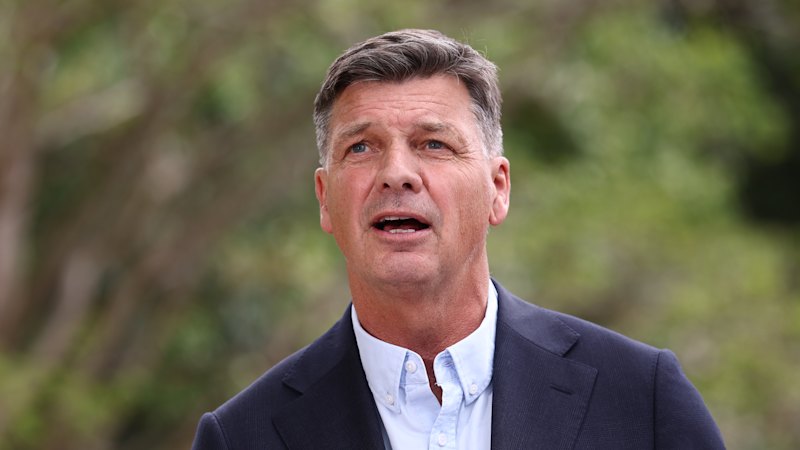
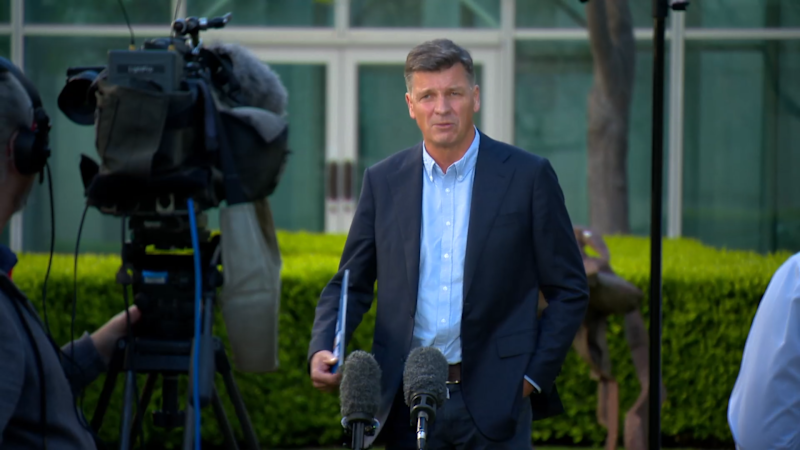
Photo via ABC News (AU)

Coalition promises deep cuts in migration fight with One Nation, Labor

Read the original at ABC News (AU) ↗
Cite

Armstrong, C. (2026, October 6). Coalition promises deep cuts in migration fight with One Nation, Labor. ABC News (AU). https://www.abc.net.au/news/2026-10-06/federal-politics-coalition-migration-policy/107232776

Dated when The Aporia collected the article, usually within hours of publication. Check the original for its exact date and byline.

ABC News (AU) · collected 2026-10-06 · by Clare Armstrong

Quick Summary

The Coalition has proposed cutting Australia's net overseas migration (NOM) to 100,000 for two years through significant reductions in temporary visas such as graduate and humanitarian categories. This plan would reduce the temporary migration intake by about 650,000 over four years, going further than Labor’s current targets of 245,000 NOM this year and 225,000 next year. While the Coalition claims its policy will be budget neutral, it has not released economic impact modelling for the proposed changes.
Written by AI on 2026-10-06, from this article's own text only (the story summary below draws on all the coverage).

AI analysis

Story summary

Angus Taylor, the leader of Australia's Coalition party, announced plans on Tuesday to significantly reduce migration, aiming to slash net overseas migration from its current level of nearly 300,000 people per year to about 100,000 in the first year if his party wins the next election. This reduction would halve over four years and settle at 160,000 per year after that period, below Labor's target but higher than One Nation's goal of 130,000 annually.

Taylor’s policy includes cutting temporary visa holders by around 650,000 over four years and reducing the number of working holiday-maker visas by 23,700 by 2031/32 while raising fees for those coming to non-regional areas. The policy also proposes halving refugee intakes from 20,000 to 10,000 people a year.

This move aims to counter the growing popularity of Pauline Hanson’s One Nation party, which has capitalized on voter concerns over immigration and its impact on housing affordability and public services. Taylor claims his plan would not hurt Australia's economy or budget, contrasting with Labor’s reforms that faced cabinet friction over lower migration targets' economic implications.

The announcement reflects a broader trend in Australian politics, where major parties are increasingly adopting more restrictive immigration policies to address issues such as high house prices and infrastructure strain, traditionally favored by opposition groups like One Nation.

Written for “Coalition Migration Policy Announcement” on 2026-11-01, grounded in this article and the 20 other(s) covering the same event.

Story

📰 Coalition Migration Policy Announcement
Politics · 21 article(s) covering the same event. Compare every outlet's account →

Compared with similar articles

This article reads leans right and hedges 10% of its claims. Each row says how that neighbour differs.
The Sydney Morning Herald
Hedges 0 of 22 claims Outlet record 61/100
The Guardian
⚖️ Leans left further left than this Hedges 3 of 27 claims Outlet record 66/100
Daily Mail
⚖️ Leans right Hedges 0 of 12 claims Outlet record 68/100
ABC News (AU)
⚖️ Leans strongly right further right than this Hedges 8 of 29 claims Outlet record 68/100
“The articles describe different approaches to migration policy by Labor and the Coalition; they do not report on a single specific incident.”
The Guardian
⚖️ Leans right Hedges 6 of 57 claims Outlet record 66/100
“The articles discuss different political parties' plans for migration policies with distinct timelines and numbers, indicating they are reporting on separate events.”
The Sydney Morning Herald
⚖️ Leans strongly right further right than this Hedges 5 of 34 claims Outlet record 61/100
The Sydney Morning Herald
⚖️ Leans right Hedges 0 of 2 claims Outlet record 61/100
ABC News (AU)
Hedges 1 of 25 claims Outlet record 68/100
How this article was measured signals, leaning charts, publisher record, byline, topics and claims

Signals How these are calculated →

Claims extracted
41
sentences that state something as happening or true
Uncertain
10%
4 of 41 hedged ("reportedly", "may", "according to")
Leaning
Leans right
of the writing, not the subject · beta estimate
Publisher signals
68/100
ABC News (AU)'s corrections and hedging, across everything collected from it. Not a measure of accuracy.
Outlets on this story
21
Politics
Same framing elsewhere
1
articles that frame the event the way this one does
Analyzed 2026-10-06 · how these are computed

How this is being covered How these are calculated →

Article leaning vs. publisher reliability
Source leaning vs. consistency

Publisher

ABC News (AU) · 4533 article(s) · 10 correction(s) detected
Running correction rate · 10 correction(s)

Who wrote this

Clare Armstrong
28 article(s) here · 1 carrying a prediction
🔮 All eyes on MYEFO Markets are pricing a more than 80 per cent chance the Reserve Bank will lift the cash rate to 4.85 per cent on Tuesday, a level not seen since the global financial crisis in 2008.
🔮 During a Senate estimates hearing on Monday night, Senator Payman suggested Mr Albanese was waiting for her to suffer an attack similar to Ms Haines before he would grant extra staff.
🔮 Ms Plibersek also said she could not "count" the number of death and rape threats she has received over the years.
🔮 That will now be seriously tested.
🔮 His MPs have largely kept their complaints private, accepted decisions made by a small group of senior figures and trusted the prime minister’s judgement. But political loyalty is easier to maintain when a government is winning, and the patience of some Labor MPs is beginning to wear thin. Albanese told his caucus colleagues this week that despite Labor's current struggles, its political fortunes would improve as the next election drew closer. He revisited a favourite refrain, telling MPs the party would be "kicking with the wind in the fourth quarter". It was the same self-assured confidence he projected when Labor was in the grips of a political slump at a similar point in the last parliamentary term.
🔮 A Senate inquiry will scrutinise the legislation as the Greens push for tougher penalties and greater powers for individuals to sue tech companies.
🔮 In short: The Greens want Australians to be able to sue tech companies for online harms and will push for tougher fines to strengthen Labor's Digital Duty of Care proposal.
🔮 Such was the contrast in reception, that anyone might reasonably question why Mr Taylor had bothered to attend this year's Australian Conservative Political Action Conference (CPAC) at all.
🔮 Federal government to fund surcharge costs to delay ATO credit card payment ban after business backlash In short: The Australian Taxation Office will delay the implementation of its controversial credit card ban for up to a year.
🔮 Australia would require AI companies to prove they are properly testing models and preventing harm under proposed new laws modelled on banking and aviation safety rules.
2026-10-08 · assertive framing · Australia wants to regulate AI like banks and airlines
Also by Clare Armstrong
Nothing else under this byline is closely related to this article, so these are simply their most recent.
All 28 articles by Clare Armstrong →

Topics

Australia Coalition Labor NOM Opposition

Subjects

Coalition ORG · 11× Australia GPE · 9× Labor ORG · 4× Taylor PERSON · 3× NOM ORG · 2× AUKUS ORG · 1× Angus Taylor PERSON · 1× One Nation ORG · 1× Opposition ORG · 1× the Australian Bureau of Statistics ORG · 1×

Narrative

Mr Taylor said the economics were "simple" because a student or temporary graduate visa holder contributed on average $7,000 to $14,000 in taxes compared to a temporary skilled visa holder contributing more than $30,000. "If you bring people in who can make a … significant contribution and they're going to work hard, then it's better for the budget and the economy,"he said.
framing: assertive · carried by 1 article(s) · first seen 2026-10-06
🔮 It would go further than Labor's migration targets while increasing skilled migration, but the Coalition has not released modelling of the broader economic impact.
2026-10-06 · ABC News (AU)
Coalition promises deep cuts in migration fight with One Nation, Labor · assertive framing

Claims (41 extracted, 4 hedged)

In short: The Coalition has unveiled a plan to drive net overseas migration down to 100,000 for two years through major changes to graduate, humanitarian and other visa programs. asserted
Coalition → unveil → programs
It would go further than Labor's migration targets while increasing skilled migration, but the Coalition has not released modelling of the broader economic impact. asserted
Coalition → go → impact
The Coalition has promised to release costings for its migration policy closer to the 2028 federal election. asserted
Coalition → promise → election
The Coalition would slash Australia's temporary migration intake by about 650,000 over four years through deep cuts to graduate, refugee and bridging visas that go further than Labor's plan. asserted
that → slash → plan
Opposition Leader Angus Taylor has unveiled what he described as the "biggest cut to immigration in this country's history", declaring he was "confident" the changes would be budget "neutral" but without offering modelling on the broader economic impact of the policy. asserted
changes → unveil → policy
Under a future Coalition government, net overseas migration (NOM) would be slashed to 100,000 for the first two years, followed by 130,000 in the third and 160,000 in the fourth year. asserted
migration → slash → year
Australia's NOM fell to 292,100 people in the year to March, with Labor pursuing a target of 245,000 for this financial year and 225,000 the year after. asserted
Labor → fall → year
Mr Taylor said Australia needed "breathing space" after several record years of migration post-pandemic, arguing this was best achieved by slashing temporary migrants and prioritising high-skilled workers, including in construction. "Australia should be a home, not a hotel," he said. asserted
he → say → construction
One Nation has announced it would cut 750,000 temporary visas, resulting in a negative NOM for three years and then an intake of 130,000 people in the fourth year. asserted
it → announce → year
Mr Taylor announced the Coalition's alternative proposal on Tuesday, which includes a cap on student visas and halving Australia's humanitarian intake to 10,000 annually. asserted
which → announce → 10,000
The biggest cut is to bridging visas, which would go from about 414,00 to 20,000 by forcing temporary visa holders to leave Australia if they want to apply for a new visa. asserted
they → bridge → visa
The Coalition would also impose a 30-day limit for anyone wanting to make an onshore claim for asylum in Australia. uncertain
Coalition → impose → Australia
The government is aiming for 245,000 net overseas migration (NOM) by June next year, and 225,000 by the middle of 2028. asserted
government → aim → 2028
Those figures were forecast in the budget and are now a target. asserted
figures → forecast → budget
In March, the NOM was 292,100, according to figures released last month by the Australian Bureau of Statistics. uncertain
NOM → accord → Statistics
The Coalition has announced an annual NOM target of 100,000 for the first two years if it wins the election. asserted
it → announce → election
It will aim for 130,000 in the third year and 160,000 in the fourth year. asserted
It → aim → year
The minor party unveiled a policy to slash immigration by 750,000 over three years, pushing the NOM into negative territory. asserted
party → unveil → territory
After that, they would aim for a "ceiling" of 130,000, to be reviewed every year. asserted
they → aim → 130,000
Which visas would be affected? asserted
visas → affect → ?
Temporary graduate visas would be scrapped except for some limited post-study pathways for PhD, health and education graduates, as well as those studying at regional universities. asserted
visas → scrap → universities
The Coalition would cap international student commencements at 240,000, restrict most dependents from accompanying them and link each student visa to the institution they enrolled with. asserted
they → cap → institution
Mr Taylor said he would increase the share of skilled migrants, including about 60,000 more temporary skilled visa holders and 15,000 new skilled project visas a year for major projects. asserted
he → say → projects
The talent and innovation allocation would double to 7,000 through a new AUKUS and Five Eyes visa, while permanent applicants would be prioritised based on factors like age, income, English language proficiency and skilled partners. asserted
applicants → double → age
The temporary skilled priority list would be changed to fast track construction and prioritise employer-sponsored migration in regional Australia. asserted
list → change → Australia
Broadly, anyone making a second or subsequent temporary visa application would have to leave Australia and lodge the paperwork offshore. asserted
anyone → make → paperwork
The Coalition would scrap Labor's caps for second and third-year working holiday maker visa extensions and instead increase fees with exemptions for those who completed required regional work. Economic knock-on effects The cuts would initially bring Australia's migration levels down to the lowest outside the pandemic since 2004. asserted
cuts → scrap → 2004
Mr Taylor said the Coalition had been working with the Parliamentary Budget Office (PBO) and the policy would be "neutral" on the federal budget. asserted
policy → say → budget
He did not release any costings but implied this would be achieved by an increase in skilled migrants at the expense of other visa classes. asserted
this → release → classes
Mr Taylor said the economics were "simple" because a student or temporary graduate visa holder contributed on average $7,000 to $14,000 in taxes compared to a temporary skilled visa holder contributing more than $30,000. "If you bring people in who can make a … significant contribution and they're going to work hard, then it's better for the budget and the economy,"he said. asserted
it → say → budget
Mr Taylor accused Labor of using population growth to prop up Australia's broader economic prosperity but did not release modelling showing what such a large reduction in migration would mean for the economy. asserted
reduction → accuse → economy
The Coalition has promised to release costing closer to the federal election in 2028. asserted
Coalition → promise → 2028
One Nation reacts to Coalition policy Nationals leader Matt Canavan described the measures as a plan to "take back our country" from temporary migrants, who he accused of undercutting Australians' wages. "We are a country, not a campground," he said. asserted
he → react → wages
One Nation leader Pauline Hanson, who unveiled her own policy to dramatically reduce temporary migration last month, said the Coalition had turned up "late to the grand final" with a policy after "both teams have headed back to the changerooms". asserted
teams → unveil → changerooms
She said Labor and the Coalition had both been "dragged kicking and screaming" into the debate by One Nation. " asserted
Labor → say → Nation
It might sound like Liberal and Labor are saying the right thing, but actions speak louder than words," Ms Hanson said. uncertain
Hanson → sound → words
Labor's limits on visas Last month, the federal government unveiled several changes aimed at reducing Australia's migration intake, with measures largely targeting students and their families as well as working holiday-makers. asserted
government → unveil → students
Under changes that came into effect on Friday, international students would largely be barred from bringing family, would need a new visa to change courses and could only move to a higher-level qualification after graduating. uncertain
students → come → qualification
Limits imposed on the working holiday-maker program included the introduction of a ballot system for visa holders hoping to stay in Australia beyond one year. asserted
Limits → impose → year
The ballot would be capped at 45,000 second-year places and 5,000 third-year places, down from about 57,000 and 31,000 respectively last year. asserted
ballot → cap → 57,000
…and 1 more, not listed.

💬Give feedback
🕘History 🎫Support