The Aporia

Manenkov, K., & Dazio, S. (2026, October 6). Nobel Prize in physics to be awarded in Stockholm. Toronto Star. https://www.thestar.com/news/world/europe/nobel-prize-in-physics-to-be-awarded-in-stockholm/article_e80fc674-b776-5b1e-8f9c-f47c26bfd043.html
Manenkov, Kostya, and Stefanie Dazio. “Nobel Prize in physics to be awarded in Stockholm.” Toronto Star, 6 Oct. 2026, https://www.thestar.com/news/world/europe/nobel-prize-in-physics-to-be-awarded-in-stockholm/article_e80fc674-b776-5b1e-8f9c-f47c26bfd043.html.
Manenkov, Kostya, and Stefanie Dazio. “Nobel Prize in physics to be awarded in Stockholm.” Toronto Star, October 6, 2026. https://www.thestar.com/news/world/europe/nobel-prize-in-physics-to-be-awarded-in-stockholm/article_e80fc674-b776-5b1e-8f9c-f47c26bfd043.html.
Dated when The Aporia collected the article, usually within hours of publication. Check the original for its exact date and byline.
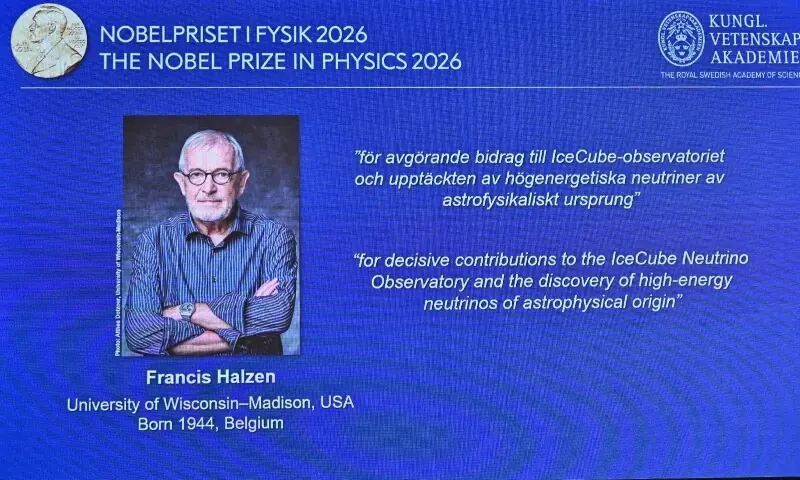
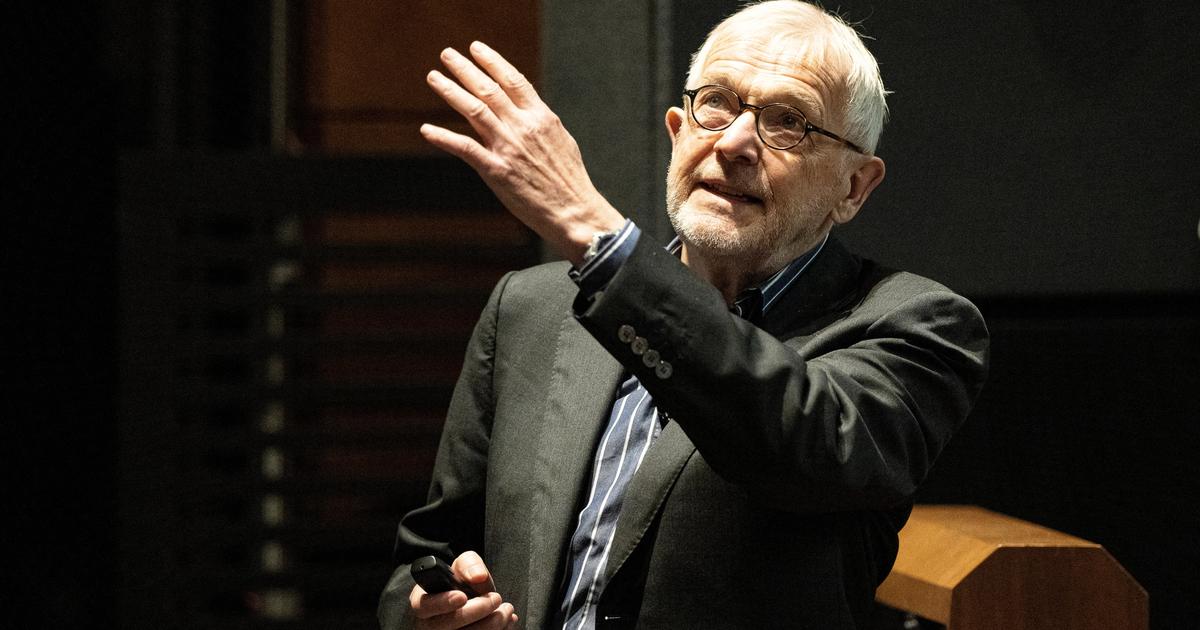
On Tuesday, Francis Halzen, a Belgian physicist and professor at the University of Wisconsin-Madison, was awarded the Nobel Prize in Physics for his groundbreaking work on the IceCube Neutrino Observatory located at the South Pole. The observatory uses a cubic kilometer of Antarctic ice to detect high-energy neutrinos from space, shedding light on distant cosmic phenomena. Halzen's contributions were recognized as "decisive" by the Royal Swedish Academy of Sciences, which noted his visionary approach and scientific leadership since first proposing the concept in 1988. The prize includes a sum of 12 million Swedish kronor (approximately $1.2 million).