Photo via Dawn

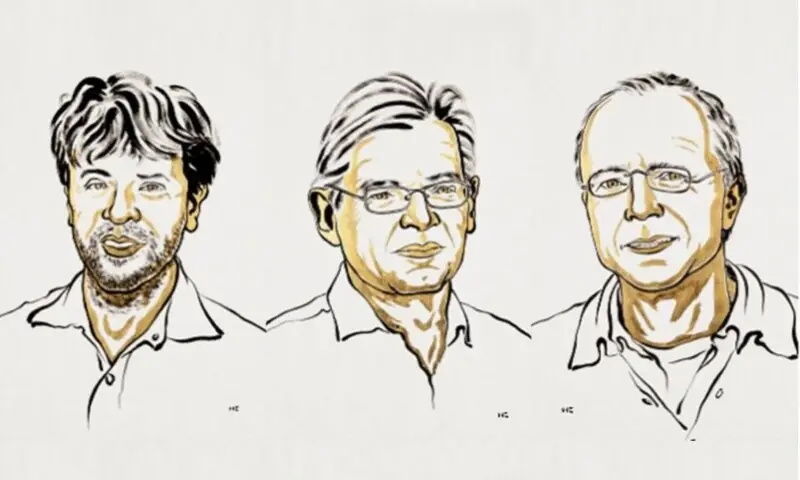
Nobel physics prize honours work on 'ghost messengers from space'

Read the original at Dawn ↗
Cite

AFP. (2026, October 6). Nobel physics prize honours work on 'ghost messengers from space'. Dawn. https://www.dawn.com/news/2035164/nobel-physics-prize-honours-work-on-ghost-messengers-from-space

Dated when The Aporia collected the article, usually within hours of publication. Check the original for its exact date and byline.

Dawn · collected 2026-10-06 · by AFP

Quick Summary

Belgian physicist Francis Halzen won the Nobel Prize in Physics for his work on subatomic particles at the South Pole. The prize recognized his contributions to the IceCube Neutrino Observatory and the discovery of high-energy neutrinos from space. Halzen, a professor at the University of Wisconsin-Madison, was praised for his vision and leadership in developing an observatory that uses a cubic kilometre of ice equipped with light sensors to detect rare subatomic particles called neutrinos.
Written by AI on 2026-10-06, from this article's own text only (the story summary below draws on all the coverage).

AI analysis

Story summary

On Tuesday, Francis Halzen, a Belgian physicist and professor at the University of Wisconsin-Madison, was awarded the Nobel Prize in Physics for his groundbreaking work on the IceCube Neutrino Observatory located at the South Pole. The observatory uses a cubic kilometer of Antarctic ice to detect high-energy neutrinos from space, shedding light on distant cosmic phenomena. Halzen's contributions were recognized as "decisive" by the Royal Swedish Academy of Sciences, which noted his visionary approach and scientific leadership since first proposing the concept in 1988. The prize includes a sum of 12 million Swedish kronor (approximately $1.2 million).

Written for “Neutrino Research Nobel Prize” on 2026-11-03, grounded in this article and the 9 other(s) covering the same event.

Story

📰 Neutrino Research Nobel Prize
Science · 10 article(s) covering the same event. Compare every outlet's account →

Compared with similar articles

This article reads unscored and hedges 5% of its claims. Each row says how that neighbour differs.
BBC News
Hedges 0 of 5 claims Outlet record 68/100
Semafor
Hedges 1 of 4 claims Outlet record 59/100
Toronto Star
Hedges 0 of 2 claims Outlet record 64/100
NBC News
Hedges 0 of 5 claims Outlet record 60/100
NPR
Hedges 1 of 18 claims Outlet record 60/100
The Globe and Mail
Hedges 0 of 12 claims Outlet record 52/100
New York Post
Hedges 1 of 19 claims Outlet record 66/100
Dawn
Hedges 6 of 23 claims Outlet record 72/100
“Article A discusses potential recipients before the award announcement, while Article B reports on the actual winner announced later.”
How this article was measured signals, leaning charts, publisher record, byline, topics and claims

Signals How these are calculated →

Claims extracted
19
sentences that state something as happening or true
Uncertain
5%
1 of 19 hedged ("reportedly", "may", "according to")
Leaning
not political
takes no side on a contested political question
Publisher signals
72/100
Dawn's corrections and hedging, across everything collected from it. Not a measure of accuracy.
Outlets on this story
10
Science
Same framing elsewhere
1
articles that frame the event the way this one does
Analyzed 2026-10-06 · how these are computed

How this is being covered How these are calculated →

Article leaning vs. publisher reliability
Source leaning vs. consistency

Publisher

Dawn · 2641 article(s) · 3 correction(s) detected
Running correction rate · 3 correction(s)

Who wrote this

AFP
913 article(s) here · 1 carrying a prediction
🔮 She said she feared that the protest would not subside unless the wage board announced a salary increase.
🔮 The Kremlin confirmed on Tuesday (November 3, 2026) that U.S.-mediated Russia-Ukraine talks to end more than four years of war will take place in Abu Dhabi next week.
🔮 I hope this investigation will help break the impunity enjoyed by Israeli officials responsible for attacks against civilians in Lebanon and Palestine,” he added.
🔮 Polls opened on the US east coast on Tuesday in midterm elections that could upend Donald Trump’s presidency, with Democrats looking to seize control of Congress and significantly curb his executive powers.
🔮 “We will kill Trump”, read the billboard towering over the busy Enghelab Square in Tehran, which depicted the U.S. president behind bars with his head bowed.
🔮 “There was a small hope or discussion that I might have been able to potentially get a send-off game at the Melbourne Cricket Ground (against England).
🔮 Democratic Senate candidate Mary Peltola, in a tight race against Republican incumbent Dan Sullivan that could determine who controls Congress in Washington, stands accused of recruiting another Dan Sullivan to run in order to create ballot confusion and siphon off votes from the senator.
🔮 President Donald Trump’s second term has been a wild ride, but his last two years in power could be wilder still if Republicans lose control of Congress in Tuesday’s US midterm elections.
🔮 Mr. Zelensky said that after the Oleshky truce, "there was a moment when the next steps could have shown that progress toward peace was possible".
🔮 , Moscow's mayor Sergei Sobyanin said Tuesday (November 3, 2026) Russian air defence systems downed nearly 500 drones headed towards the capital, as a flare-up in fighting with Ukraine dashed hopes of progress towards peace.
Wire or desk byline, not an individual reporter.
Also by AFP
Nothing else under this byline is closely related to this article, so these are simply their most recent.
All 913 articles by AFP →

Topics

Belgian Belgium Tienen the Nobel Committee for Physics the Royal Swedish Academy of Sciences

Subjects

Halzen ORG · 4× the Royal Swedish Academy of Sciences ORG · 2× Belgian NORP · 1× Belgium GPE · 1× Ellen Moons PERSON · 1× Eva Olsson PERSON · 1× Francis Halzen PERSON · 1× Tienen GPE · 1× the Nobel Committee for Physics ORG · 1× the University of Wisconsin-Madison ORG · 1×

Narrative

Last year, the Nobel Prize in Physics went to Briton John Clarke, Frenchman Michel Devoret and American John Martinis for putting quantum mechanics into action and enabling the development of all kinds of digital technology from cellphones to a new generation of computers.
framing: assertive · carried by 1 article(s) · first seen 2026-10-06
🔮 The physics prize will be followed by the chemistry one on Wednesday.

Claims (19 extracted, 1 hedged)

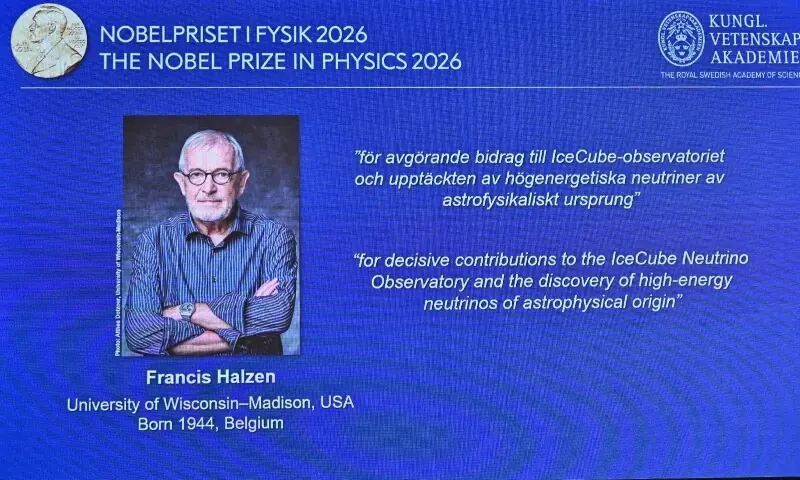
Belgian physicist Francis Halzen on Tuesday won the Nobel Prize in Physics for work on subatomic particles at the South Pole, the award jury said. asserted
jury → win → Pole
“This year’s prize is about ghostly messengers from space,” Ellen Moons, secretary general of the Royal Swedish Academy of Sciences, told a news conference. asserted
Moons → tell → conference
Halzen was honoured “for decisive contributions to the IceCube Neutrino Observatory and the discovery of high-energy neutrinos of astrophysical origin”, the jury said. asserted
jury → honour → origin
The Royal Swedish Academy of Sciences noted that Halzen’s “vision and scientific leadership” had been fundamental for the observatory, which it described as “a cubic kilometre of ice that is equipped with light sensors”. asserted
that → note → sensors
Using the observatory, researchers can capture neutrinos — rare subatomic particles — “from extremely energy-rich processes in the distant universe”. “This Nobel Prize is about a giant ice cube positioned at the South Pole of our globe. asserted
Prize → use → globe
The ice cube enables the detection of neutrinos,” professor Eva Olsson, a member of the Nobel Committee for Physics, told reporters. asserted
Olsson → enable → reporters
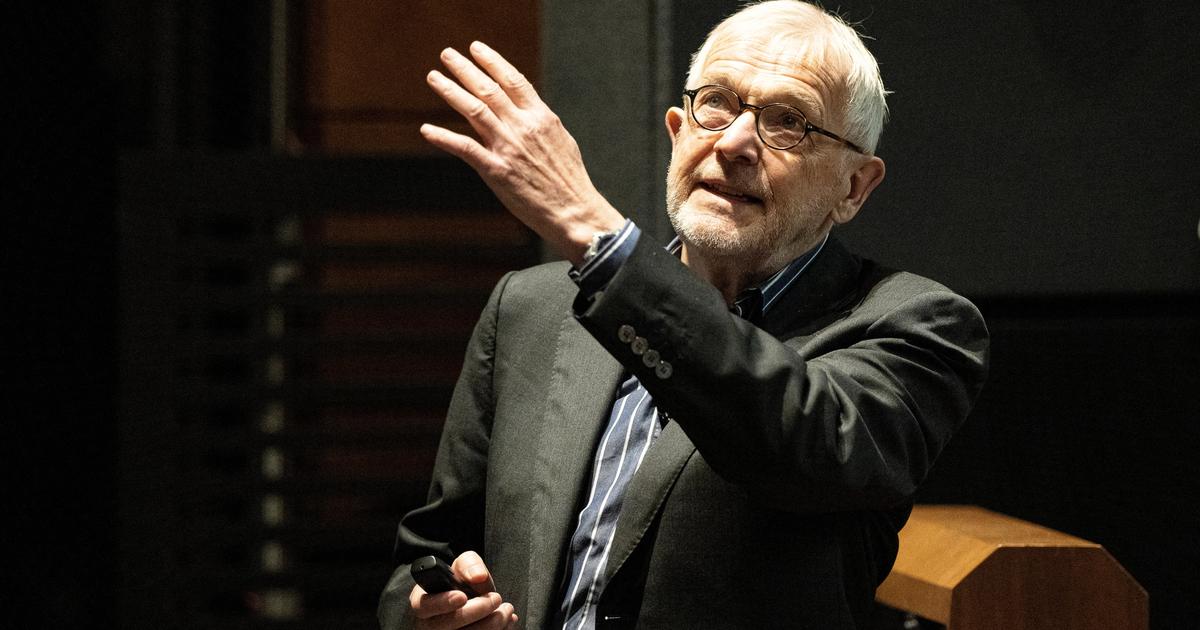
Halzen, 82, was born in Tienen, Belgium and is a professor at the University of Wisconsin-Madison in the United States. asserted
Halzen → bear → States
“It was a great surprise, and I obviously didn’t expect it,” he told the news conference by telephone shortly after the prize was announced. asserted
prize → expect → telephone
“But it’s a great pleasure to hear about this prize,” Halzen said. asserted
Halzen → ’ → prize
The award is the second Nobel of the season, after the Medicine Prize was awarded on Monday to US psychiatrist and neurologist Karl Deisseroth and German scientists Peter Hegemann and Georg Nagel. asserted
Prize → award → Deisseroth
The researchers were honoured for their pioneering work in the field of optogenetics, which involves controlling nerve signals with light. asserted
which → honour → light
Last year, the Nobel Prize in Physics went to Briton John Clarke, Frenchman Michel Devoret and American John Martinis for putting quantum mechanics into action and enabling the development of all kinds of digital technology from cellphones to a new generation of computers. asserted
Prize → go → computers
The physics prize will be followed by the chemistry one on Wednesday. asserted
prize → follow → Wednesday
The literature laureate will be revealed on Thursday, with some pundits suggesting that the Swedish Academy could follow up last year’s award to Hungary’s Laszlo Krasznahorkai with a woman writer, possibly from Latin America. uncertain
Academy → reveal → America
The perhaps most keenly anticipated award — the peace prize — is due on Friday. asserted
award → anticipate → Friday
US President Donald Trump lobbied intensively last year to get the prize — and Venezuelan opposition leader Maria Corina Machado ended up giving him her Nobel medal — and the committee is aware he will be watching closely again. asserted
he → lobby → medal
The economics prize wraps up the Nobel season on October 12. asserted
prize → wrap → October
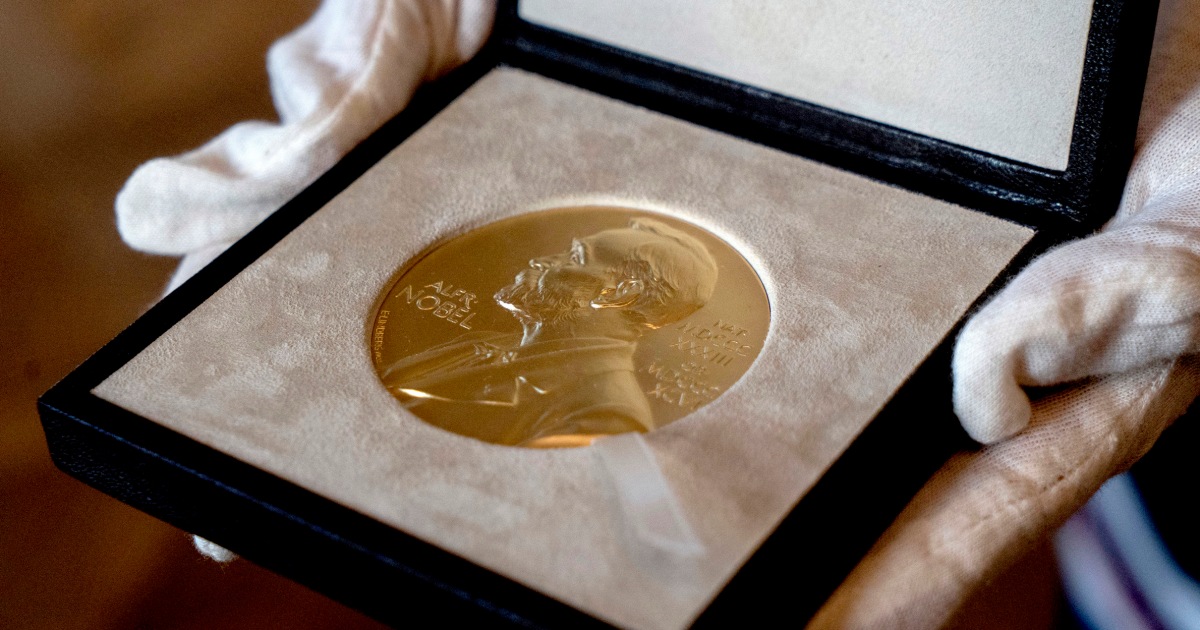
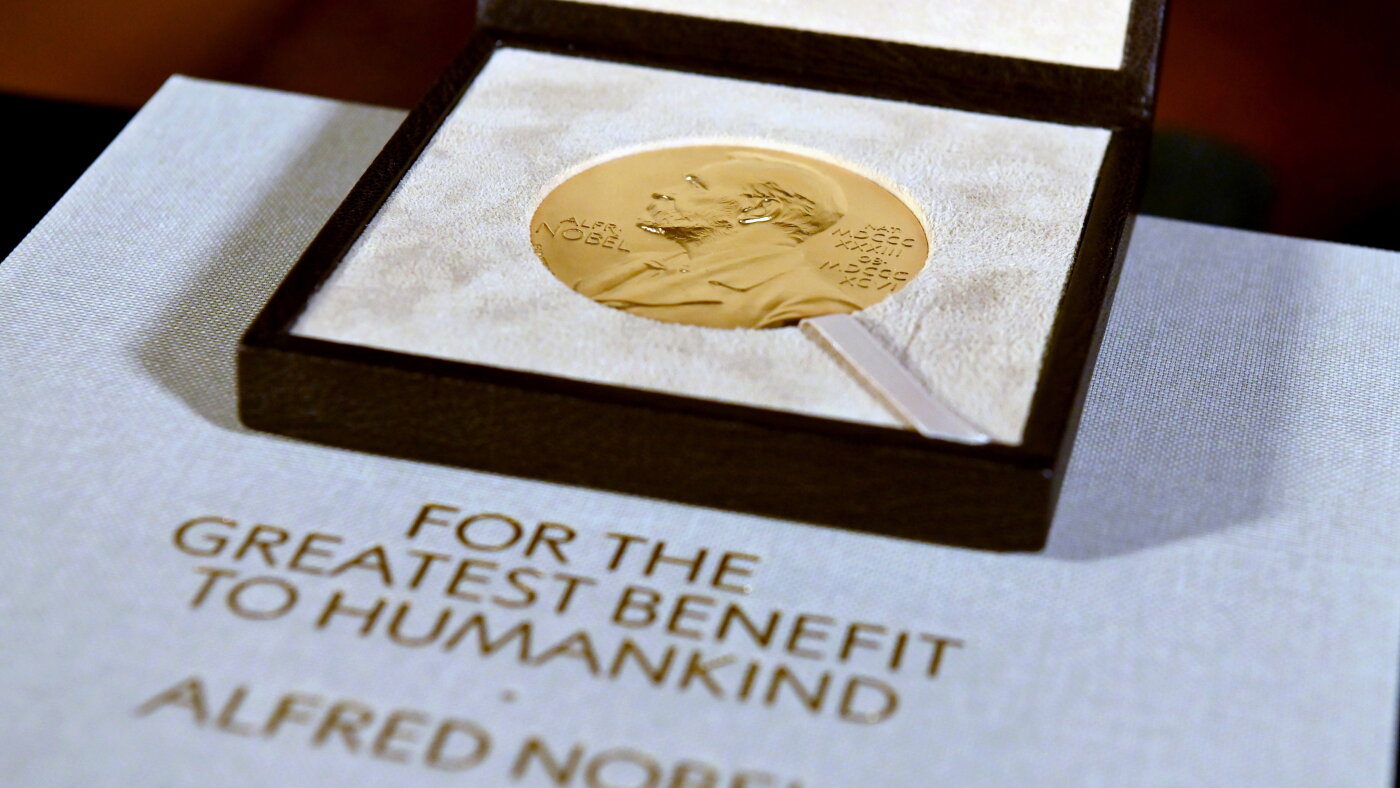
The Nobel consists of a diploma, a gold medal and a 12-million-kronor ($1.2 million) prize sum, which is shared if there is more than one winner in a discipline. asserted
which → consist → discipline
The laureates will receive their prizes at a formal ceremony on December 10, the anniversary of the death in 1896 of scientist Alfred Nobel, who created the prizes in his will. asserted
who → receive → will

💬Give feedback
🕘History 🎫Support