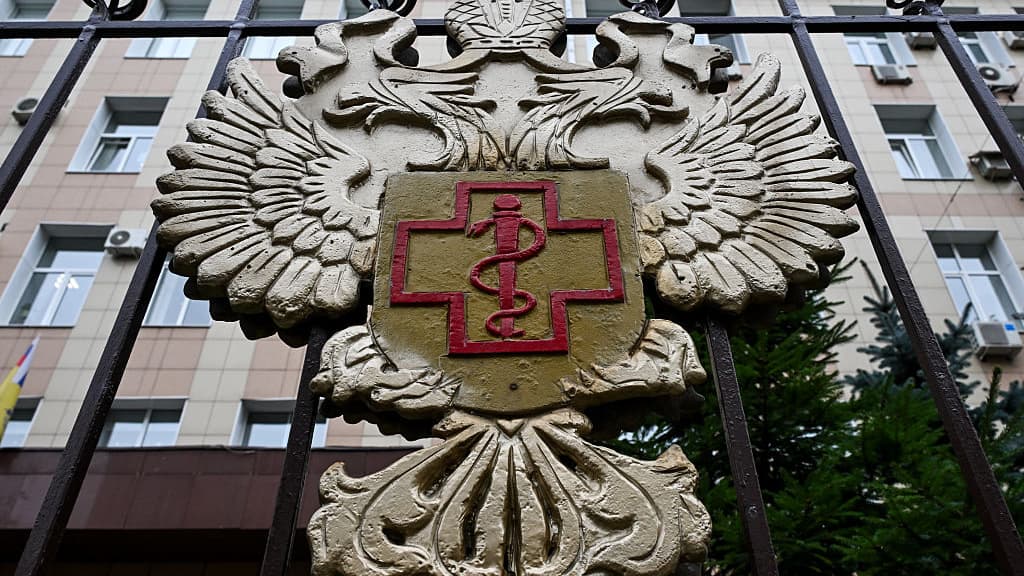
Photo via The Independent

The big unknowns limiting how US will respond to possible Russian plague outbreak

Read the original at The Independent ↗
Cite

Golding, B. (2026, October 6). The big unknowns limiting how US will respond to possible Russian plague outbreak. The Independent. https://www.independent.co.uk/news/world/americas/russia-plague-outbreak-us-response-b3062169.html

Dated when The Aporia collected the article, usually within hours of publication. Check the original for its exact date and byline.

The Independent · collected 2026-10-06 · by Bruce Golding

Quick Summary

A lab technician at a Russian plague research facility in Siberia died from pneumonia, raising concerns among U.S. officials who are calling for more transparency from Moscow. Secretary of State Marco Rubio urged Russia to disclose more information about the incident, while details remain unclear regarding the pathogen and how the worker was infected. The World Health Organization (WHO) has assessed the risk as moderate to low in Irkutsk but very low for Europe overall, though uncertainty persists given conflicting reports from Russian media and officials.
Written by AI on 2026-10-06, from this article's own text only (the story summary below draws on all the coverage).

AI analysis

Story summary

A 28-year-old laboratory assistant named Darya Shipilova died in early October after reportedly breaking a test tube containing potentially dangerous pathogens at the Irkutsk Anti-Plague Research Institute in Shelekhov, Russia. Despite extensive speculation that she may have contracted pneumonic plague, Russian authorities continue to maintain that her death was due to pneumonia of unknown origin and have not identified the specific pathogen involved. At least 197 people who had close contact with Shipilova were placed under quarantine or surveillance, while international health organizations like the CDC remain vigilant but assert that the risk to other countries is minimal. The incident has sparked concerns about Russia's transparency regarding biological research and safety protocols at such facilities.

Written for “Plague Outbreak In Siberia” on 2026-11-03, grounded in this article and the 113 other(s) covering the same event.

Story

📰 Plague Outbreak In Siberia
Health · 114 article(s) covering the same event. Compare every outlet's account →

Compared with similar articles

This article reads unscored and hedges 9% of its claims. Each row says how that neighbour differs.
The Straits Times
Hedges 1 of 8 claims Outlet record 66/100
CBS News
Hedges 2 of 19 claims Outlet record 66/100
TIME
Hedges 6 of 62 claims Outlet record 59/100
Semafor
Hedges 0 of 4 claims Outlet record 59/100
Mother Jones
Hedges 5 of 16 claims Outlet record 60/100
Al Jazeera
Hedges 2 of 13 claims Outlet record 60/100
New York Post
Hedges 4 of 8 claims Outlet record 66/100
BBC News
Hedges 4 of 19 claims Outlet record 68/100
How this article was measured signals, leaning charts, publisher record, byline, topics and claims

Signals How these are calculated →

Claims extracted
22
sentences that state something as happening or true
Uncertain
9%
2 of 22 hedged ("reportedly", "may", "according to")
Leaning
not political
takes no side on a contested political question
Publisher signals
59/100
The Independent's corrections and hedging, across everything collected from it. Not a measure of accuracy.
Outlets on this story
114
Health
Same framing elsewhere
1
articles that frame the event the way this one does
Analyzed 2026-10-06 · how these are computed

How this is being covered How these are calculated →

Article leaning vs. publisher reliability
Source leaning vs. consistency

Publisher

The Independent · 3569 article(s) · 9 correction(s) detected
Running correction rate · 9 correction(s)

Who wrote this

Bruce Golding
24 article(s) here · 1 carrying a prediction
🔮 Trump also told reporters that the U.S. would “help anybody that has that kind of a problem.”
🔮 Noem's post also said that calling Daedalus Aviation Corp. Chair William Walters a “donor” was “materially misleading” and "conveys a false implication of a direct financial relationship obviously intended to influence official action." “Numerous times clarifications were made to the journalists responsible for this libelous story,” Noem, now a State Department special envoy to the “Shield of the Americas” security initiative, said Sunday.
🔮 “We may have to not purchase a piece of equipment for the classroom.”
🔮 But he acknowledged that Donalds's race against David Jolly, a former Republican House member-turned-Democrat, would “be more competitive than people could have anticipated just a few months ago.”
🔮 “When you walk onto a commercial flight, it's possible that the pilot flying your plane could have a deranged fetish of dressing up like an animal.
🔮 But he told Politico, “I dispute these allegations in the complaint and will address them through the legal process.
🔮 More than 760,000 people are being kicked off Obamacare in what Trump administration officials described Tuesday as a crackdown on fraudulent enrollments that's projected to save about $2.2 billion in federal subsidies.
🔮 But the House's highest-profile progressive said she hasn’t made a decision, which she previously said would come after the crucial November midterm elections for control of Congress.
🔮 We will demand truth, transparency and accountability.
🔮 Democratic Rep. Robert Garcia of California, ranking member of the House Oversight Committee, told Bloomberg Government in April that Stephen Miller was among several people the committee would subpoena if Democrats take control after the midterms.
Also by Bruce Golding
Nothing else under this byline is closely related to this article, so these are simply their most recent.
All 24 articles by Bruce Golding →

Topics

Independent Irkutsk Russia Russian WHO

Subjects

Russia GPE · 6× Russian NORP · 4× WHO ORG · 4× Irkutsk GPE · 3× U.S. GPE · 3× Rubio PERSON · 2× American NORP · 1× Independent ORG · 1× Marco Rubio PERSON · 1× State ORG · 1×

Narrative

Dr. Glenn Wortmann, the section director of infectious diseases at MedStar Washington Hospital Center, said Tuesday that the bacteria that cause plague don’t “travel very far” and that a person would “really need to be face-to-face” with an infected person to get pneumonic plague.
framing: assertive · carried by 1 article(s) · first seen 2026-10-06
🔮 Trump also told reporters that the U.S. would “help anybody that has that kind of a problem.”

Claims (22 extracted, 2 hedged)

The pneumonia death of a lab technician at a plague research facility in Russia is raising crucial questions for American officials — with Secretary of State Marco Rubio calling Tuesday for greater transparency from Moscow. asserted
Rubio → raise → Moscow
“I think it's incumbent upon Russia to share more information with the world,” Rubio told reporters after arriving in Reykjavik, Iceland, for an official visit. asserted
Rubio → think → visit
Rubio also said U.S. officials were monitoring the situation “very closely, hour by hour.” asserted
officials → say → hour
The scarcity of details surrounding the death of the worker, identified by Russian media as 28-year-old Darya Shipilova, leaves unanswered why she fell ill and whether others have been infected by whatever sickened her. asserted
whatever → surround → her
“It's really critical to get the diagnosis right. asserted
diagnosis → get → ?
There are conflicting stories around it,” Tom Inglesby, director of the Johns Hopkins Center for Health Security, told Axios. asserted
Inglesby → be → Axios
“Getting the real story, the true facts of the situation out in the open is critical to everything else that follows in the response. asserted
that → get → response
Russian officials haven’t publicly identified the pathogen that sickened Shipilova, who worked at the Anti-Plague Research Institute of Siberia and the Far East in Irkutsk. asserted
who → identify → Irkutsk
It's also unclear where and how she was infected, with Russia's national health agency, Rospotrebnadzor, disputing social media rumors that she dropped a laboratory test tube containing live bacteria. uncertain
she → infect → bacteria
The available information has raised fears that she contracted pneumonic plague, the most virulent form of the disease that killed an estimated 50 million people during Europe's infamous Black Death during the 14th century. asserted
that → raise → century
Russian health officials said in a memo Tuesday that they had tested the dead woman's contacts and found “no presence of dangerous infectious disease pathogens,” according to The Associated Press, which said it got the note from the World Health Organization. “Based on available data, laboratory test results, and health status, medical monitoring for 100% of the contacts has now been concluded,” the memo said. uncertain
memo → say → contacts
“The epidemiological situation is stable and remains under monitoring.” asserted
situation → remain → monitoring
A WHO spokesperson said Tuesday that the research facility in Irkutsk “studies dangerous pathogens, including plague, in a part of Siberia where plague occurs naturally in wild animals.” asserted
plague → say → animals
Russia hasn't asked the WHO to send experts to help determine whether the lab worker died of pneumonic plague, spokesperson Christian Lindmeier said during a video briefing to the United Nations. asserted
Lindmeier → ask → Nations
“The WHO initial risk assessment, from the information available, estimates the risk to be moderate to low for Irkutsk, a low risk for the Russian Federation as a whole, and very low for the WHO European region,” Lindmeier said. asserted
Lindmeier → estimate → region
On Monday, President Donald Trump called the situation a “big problem for Russia” but said he hadn't spoken to Russian President Vladimir Putin about it. asserted
he → call → it
Trump also told reporters that the U.S. would “help anybody that has that kind of a problem.” asserted
that → tell → problem
“It's a rough disease, you know,” he said. asserted
he → know → ?
“That's a disease we used to be able to control, but somehow those microbes have gotten stronger and smarter. asserted
microbes → use → ?
They're like an army ... and things that used to work on pneumonia don't work as well anymore.” asserted
that → use → pneumonia
Dr. Glenn Wortmann, the section director of infectious diseases at MedStar Washington Hospital Center, said Tuesday that the bacteria that cause plague don’t “travel very far” and that a person would “really need to be face-to-face” with an infected person to get pneumonic plague. asserted
person → say → plague
“The chance of this spreading widely in Russia and then extending here to the U.S. will not happen, not with this type of bacteria, because it’s not spread easily and we have antibiotics to stop it from spreading,” Wortmann told the AP. asserted
Wortmann → spread → AP

💬Give feedback
🕘History 🎫Support