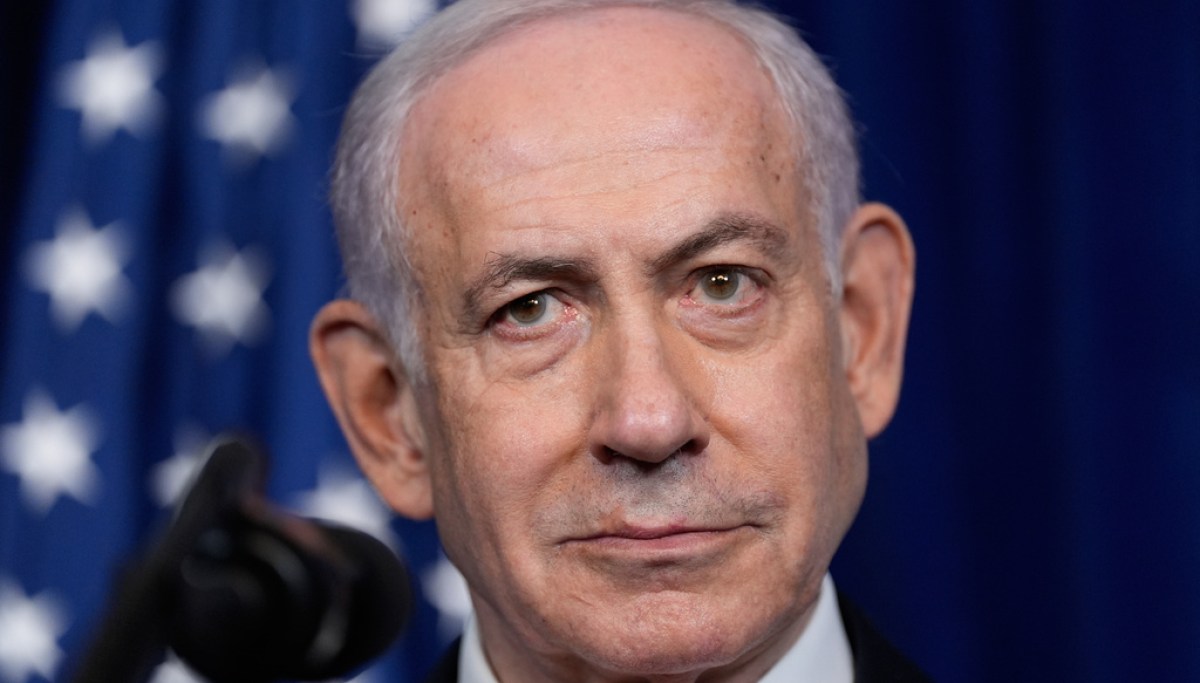
Photo via Washington Examiner

Stop rewriting 1948: How the myth of Palestinian independence led to Oct. 7

Read the original at Washington Examiner ↗
Cite

Cherry, R. (2026, October 9). Stop rewriting 1948: How the myth of Palestinian independence led to Oct. 7. Washington Examiner. https://www.washingtonexaminer.com/op-eds/4759730/palestinian-nationalism-1948-rejectionism/

Dated when The Aporia collected the article, usually within hours of publication. Check the original for its exact date and byline.

Washington Examiner · collected 2026-10-09 · by Robert Cherry

Quick Summary

The article critiques a 2025 documentary titled "1936" for misrepresenting the Palestinian revolt during that period as a broad-based national movement against Zionism. Instead, it highlights the role of the grand mufti, who was later aligned with Nazi Germany and suppressed opposition to his extremist views within Palestine. The article argues that due to internal divisions and lack of support from local Arabs for the grand mufti’s leadership, there was no unified effort during the 1948 war against Zionism, resulting in weak military resistance.
Written by AI on 2026-10-09, from this article's own text only (the story summary below draws on all the coverage).

AI analysis

Story summary

The criticism of Zionism often hinges on the perception that during the 1948 war, they defeated a broad-based Palestinian national movement. However, a 2025 documentary titled "1936" inaccurately portrays this period by omitting significant details about the uprising's leader, the grand mufti. After being exiled in 1937, the grand mufti traveled to Iraq to incite anti-Jewish violence and then fled to Germany where he collaborated with Nazis, broadcasting propaganda and enlisting Bosnian Muslims for the Third Reich.

The documentary also fails to address the British Peel Commission's recommendation of a two-state partition, which allocated only 12% of Palestine to a future Jewish state. The mufti vehemently opposed any form of Jewish sovereignty and ordered his supporters to kill those who dared oppose him; as many as 1000 Arabs were murdered in such acts of intimidation. The grand mufti's actions and the limited support for Palestinian independence from local Arab leaders contradict narratives that portray a unified Palestinian national movement against Zionism during this period.

Written for “Palestinian Myth Challenged” on 2026-10-31, grounded in this article and the 0 other(s) covering the same event.

Story

📰 Palestinian Myth Challenged
Politics · 1 article(s) covering the same event.

Compared with similar articles

This article reads leans strongly right and hedges 6% of its claims. Each row says how that neighbour differs.
Al Jazeera
⚖️ Leans strongly left further left than this Hedges 1 of 75 claims Outlet record 60/100
“The articles discuss different topics: one focuses on the killing of journalists during Israel's war in Gaza in 2023, while the other discusses historical inaccuracies about Palestinian independence and the role of the grand mufti.”
New York Post
⚖️ Leans strongly right Hedges 0 of 24 claims Outlet record 66/100
“The articles discuss different historical contexts related to Israel-Palestine conflicts but do not describe the same specific incident.”
Zeteo
⚖️ Leans strongly left further left than this Hedges 0 of 13 claims
“The articles discuss different historical periods and themes related to Israeli-Palestinian conflict without focusing on the same specific incident.”
Al Jazeera
⚖️ Leans strongly left further left than this Hedges 9 of 67 claims Outlet record 60/100
“The articles discuss different historical periods and contexts related to Palestinian and Israeli conflicts.”
Times of India
Hedges 5 of 69 claims Outlet record 59/100
“The articles discuss different historical contexts of the Israel-Palestine conflict without focusing on the same specific incident.”
New York Post
⚖️ Leans strongly left further left than this Hedges 1 of 21 claims Outlet record 66/100
“The articles discuss different topics related to Palestinian and Israeli conflicts but do not describe the same specific incident.”
New York Post
Hedges 4 of 22 claims Outlet record 66/100
“The articles discuss different historical periods and themes related to Zionism and Palestinian independence but do not describe the same specific incident.”
Zeteo
⚖️ Leans strongly left further left than this Hedges 0 of 8 claims
“The articles discuss different historical periods and contexts related to Palestine and Israel.”
How this article was measured signals, leaning charts, publisher record, byline, topics and claims

Signals How these are calculated →

Claims extracted
50
sentences that state something as happening or true
Uncertain
6%
3 of 50 hedged ("reportedly", "may", "according to")
Leaning
Leans strongly right
of the writing, not the subject · beta estimate
Publisher signals
70/100
Washington Examiner's corrections and hedging, across everything collected from it. Not a measure of accuracy.
Outlets on this story
1
Politics
Same framing elsewhere
1
articles that frame the event the way this one does
Analyzed 2026-10-09 · how these are computed

How this is being covered How these are calculated →

Article leaning vs. publisher reliability
Source leaning vs. consistency

Publisher

Washington Examiner · 3820 article(s) · 7 correction(s) detected
Running correction rate · 7 correction(s)

Who wrote this

Robert Cherry
2 article(s) here · 1 carrying a prediction
🔮 As a result, few local Arabs were willing to fight.
🔮 He was released in a prison exchange in 1983 and returned from exile a decade later to a hero’s welcome; and for the last decade, he has been Hebron’s mayor.
Also by Robert Cherry
Nothing else under this byline is closely related to this article, so these are simply their most recent.

Topics

ALA Arab Arabs Jewish Nazi

Subjects

Arab NORP · 7× ALA ORG · 5× Jewish NORP · 5× Arabs NORP · 4× Nazi NORP · 3× the West Bank GPE · 3× Palestinian NORP · 2× Zionist NORP · 2× Zionists NORP · 2× the Arab League ORG · 2×

Narrative

Despite this local resistance, the grand mufti was appointed leader of the Palestinian delegation to the Arab League, reflecting the prestige he had obtained throughout the Arab world for his refurbishing of the Al Aqsa Mosque and implicit support for his Nazi war efforts.
framing: assertive · carried by 1 article(s) · first seen 2026-10-09
🔮 As a result, few local Arabs were willing to fight.
2026-10-09 · Washington Examiner
Stop rewriting 1948: How the myth of Palestinian independence led to Oct. 7 · assertive framing

Claims (50 extracted, 3 hedged)

Much of the criticism of Zionism rests with a perception that during the 1948 war, they defeated a broad-based Palestinian national movement. asserted
they → rest → movement
The 2025 documentary, 1936, claimed that the three-year revolt that began then crystallized these aspirations. asserted
that → claim → aspirations
The documentary totally misrepresents the uprising. asserted
documentary → misrepresent → uprising
It leaves out its leader, the grand mufti, who, after his exile in 1937, goes to Iraq to foment pogroms as he had in Palestine in 1921 and 1929. asserted
he → leave → 1921
The grand mufti then fled to Germany and became a trusted collaborator, broadcasting Nazi propaganda to the Arab world, enlisting Bosnian Muslims to fight with the Third Reich. asserted
mufti → flee → Reich
The documentary also spends little time on the British Peel Commission recommendation for a two-state partition. asserted
documentary → spend → partition
It allocated only 12% to the Zionist state. asserted
It → allocate → state
For the mufti, however, any Jewish state was too much and brutalized his opposition. asserted
state → brutalize → opposition
When he learned that one of the notables planned to testify, he wrote: “Those who go to meet the partition commission should take their shrouds with them.” asserted
go → learn → them
Indeed, mufti supporters killed as many as a thousand Arabs to quell opposition to his political positions. asserted
supporters → kill → positions
Most importantly, the revolt had little to do with national aspirations as the rejection of the Peel Commission’s recommendation attests to. asserted
rejection → have → recommendation
Instead, it sought to eliminate further Jewish migration and any Jewish state. asserted
it → seek → migration
His brutal treatment of those who disagreed with him led many leading Arabs in Mandate Palestine to reject his leadership. asserted
who → disagree → leadership
Despite this local resistance, the grand mufti was appointed leader of the Palestinian delegation to the Arab League, reflecting the prestige he had obtained throughout the Arab world for his refurbishing of the Al Aqsa Mosque and implicit support for his Nazi war efforts. asserted
he → appoint → efforts
Understandably, many of the mufti’s opponents sought to find accommodations with the Zionists so there was no unified Arab support for the 1948 war effort. asserted
many → seek → effort
The opposition was further alienated when the Arab League selected Fawzi al-Qawuqji to lead the newly-constituted Arab Liberation Army (ALA) to fight against the Zionists before the foreign armies invaded. asserted
armies → alienate → Zionists
Qawyqji was a Lebanese pan-Arabist who led foreign volunteers during the 1936–1939 revolt and later served in Nazi fighting units. asserted
who → lead → units
As a result, few local Arabs were willing to fight. asserted
Arabs → fight → result
According to the anti-Zionist historian Ilan Pappé, 90% of the 3,000-manned ALA was comprised of foreign volunteers. uncertain
% → accord → volunteers
Due to the unwillingness of many Arab villages to support its efforts, the ALA had inadequate supply lines, making extended military campaigns impossible. asserted
campaigns → support → lines
The grand mufti formed his own Holy War Army, but it attracted less than 1,000 volunteers. asserted
it → form → volunteers
While other locals would join village self-defense forces, it meant few were willing to fight in armed units against Zionist forces. asserted
few → join → forces
Well-to-do Arabs and Arab professionals fled to Lebanon and Jordan even before significant warfare unfolded. asserted
warfare → flee → Lebanon
It is one of the reasons that, after the war, there were no Arab newspapers, political parties, or social institutions to guide Arab citizens. asserted
It → be → citizens
In addition, many Muslims living in the coastal areas were recent migrants from the West Bank. asserted
Muslims → live → Bank
They married women from their home villages and often helped at harvest time. asserted
They → marry → time
Many fled to the West Bank to avoid the ravages of war. asserted
Many → flee → war
The arrival of foreign armies could not overcome the lack of local support. uncertain
arrival → overcome → support
Because its Christians had friendly relations with their Jewish neighbors, Lebanon refused to send troops. asserted
Lebanon → have → troops
The Iraqi contingent was small and, after an initial defeat, sat out the war in the West Bank. asserted
contingent → sit → Bank
Syria sent only a few thousand troops. asserted
Syria → send → troops
A Syrian Druze contingent also fought with the ALA. asserted
contingent → fight → ALA
After ALA defeats, most defected, with some joining Israeli Druze in the Jewish army. asserted
some → defect → army
The 5,000-strong British-trained Jordanian Arab Legion was an efficient fighting force. asserted
Legion → train → ?
However, King Abdullah was a fierce critic of the grand mufti and uninterested in aiding his war efforts. asserted
Abdullah → aid → efforts
Instead, the king only used his troops in areas assigned to the Palestinians by the UN partition, areas he hoped to annex. asserted
he → use → partition
As a result, it was the Egyptian army, remnants of the ALA, and the Syrian army that were the only real opposition the Zionists faced. asserted
Zionists → face → ALA
Due to the almost total lack of local Arab involvement, disconnected foreign troops were outnumbered by Zionist forces who were better organized and better armed. asserted
who → outnumber → forces
Thus, it is not surprising that the Zionists had a decisive victory. asserted
Zionists → have → victory
This essay has documented that the grand mufti had no interest in an independent Palestinian state if it allowed there to be a Jewish state, however small. asserted
it → document → state
…and 10 more, not listed.

💬Give feedback
🕘History 🎫Support