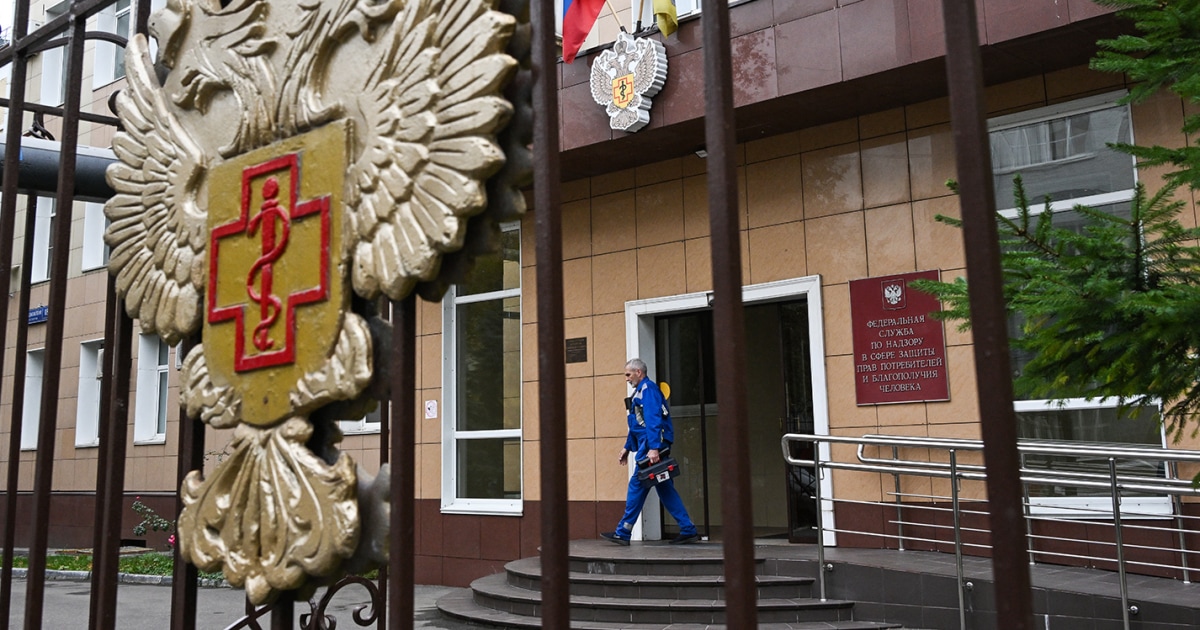
Photo via The Straits Times

What to know about plague after suspected Siberian lab worker case

Read the original at The Straits Times ↗
Cite

The Straits Times. (2026, October 6). What to know about plague after suspected Siberian lab worker case. The Straits Times. https://www.straitstimes.com/world/what-to-know-about-plague-after-suspected-siberian-lab-worker-case

Dated when The Aporia collected the article, usually within hours of publication. Check the original for its exact date and byline.

The Straits Times · collected 2026-10-06 · by The Straits Times

Quick Summary

A young worker at a Russian institute studying dangerous infections died of severe pneumonia, leading to speculation that she may have been exposed to plague after breaking a test tube. Despite no confirmed microorganisms from her work found in tests, extensive precautions were taken, raising questions about safety protocols for handling pathogens. Authorities say the risk to the general public is low, but international health organizations are monitoring the situation closely.
Written by AI on 2026-10-06, from this article's own text only (the story summary below draws on all the coverage).
See how they differ ↓

AI analysis

Story summary

A 28-year-old laboratory assistant named Darya Shipilova died in early October after reportedly breaking a test tube containing potentially dangerous pathogens at the Irkutsk Anti-Plague Research Institute in Shelekhov, Russia. Despite extensive speculation that she may have contracted pneumonic plague, Russian authorities continue to maintain that her death was due to pneumonia of unknown origin and have not identified the specific pathogen involved. At least 197 people who had close contact with Shipilova were placed under quarantine or surveillance, while international health organizations like the CDC remain vigilant but assert that the risk to other countries is minimal. The incident has sparked concerns about Russia's transparency regarding biological research and safety protocols at such facilities.

Written for “Plague Outbreak In Siberia” on 2026-11-20, grounded in this article and the 113 other(s) covering the same event.

How they differ

27 outlets covered “Plague Outbreak In Siberia”.

What each outlet says

One AI summary per outlet of its latest article on this story, written from that article alone and checked against it. Open the article for the outlet's own words.

The Straits TimesThis outlet6 Oct

A young worker at a Russian institute studying dangerous infections died of severe pneumonia, leading to speculation that she may have been exposed to plague after breaking a test tube. Despite no confirmed microorganisms from her work found in tests, extensive precautions were taken, raising questions about safety protocols for handling pathogens. Authorities say the risk to the general public is low, but…

What to know about plague after suspected Siberian lab worker case (this article)14 articles from The Straits Times on this story
Daily Mail12 Oct

A young Russian scientist, Darya Shipilova, died under mysterious circumstances at an anti-plague institute in Siberia on October 2 after being hospitalized since September 29. The Kremlin has only stated that she died from pneumonia of unknown origin and has not disclosed the specific pathogen involved despite over a week passing. Her family refuses to comment publicly, raising concerns about potential censorship…

What is Putin hiding? Plague 'cover-up' mystery deepens ten days after lab scientist's death with Kremlin yet to identify pathogen and family 'refusing to discuss case' →14 articles from Daily Mail on this story
New York Post7 Oct

Russia’s Kremlin spokesman Dmitry Peskov stated on October 7, 2026, that Russia informed the World Health Organization (WHO) of a laboratory worker's death at a Siberian plague research institute according to established protocols. Peskov criticized media reports as false, particularly an ABC News report suggesting the United States had formally complained about Russia’s lack of transparency regarding the incident…

Russia claims it properly informed WHO of plague institute worker’s death, slams media coverage →10 articles from New York Post on this story
The Independent11 Oct

The World Health Organisation (WHO) has released an update stating that they do not know what caused pneumonia in a Russian lab worker at an anti-plague research center in Siberia who died on October 2nd. The WHO report indicates no plague cases have been registered, and tests of the deceased and those she was in contact with were negative for high-threat pathogens. However, the organization calls for continued…

WHO issues update on investigation into Russian plague lab worker’s death →8 articles from The Independent on this story
Fox News11 Oct

CDC Director Dr. Erica Schwartz discussed on Wednesday how the US government is coordinating with multiple agencies to monitor travelers arriving from Siberia due to concerns over a potential pneumonic plague outbreak linked to the mysterious death of a Russian lab worker. During a Wall Street Journal health forum, she emphasized that while surveillance measures are in place at JFK International Airport for flights…

WATCH: CDC director discusses US government response to Russian plague concerns: 'We are protected' →8 articles from Fox News on this story
Al Jazeera10 Oct

The World Health Organization reported that no plague case has been confirmed after the death of a laboratory worker at a Russian research institute studying plague. Tests on the deceased and her contacts were negative for dangerous pathogens, according to Russia’s state health regulator. No further linked cases have emerged despite initial fears expressed by Russian media and public speculation about pneumonic…

WHO says no plague case registered after Russian lab worker’s death →8 articles from Al Jazeera on this story
Show 21 more outlets
CBS News7 Oct

Russia has responded minimally to concerns raised by the World Health Organization regarding the death of a 28-year-old plague laboratory researcher, attributing her death to pneumonia of undetermined cause while denying additional instances of infectious diseases. CBS News reporter Leigh Kiniry covers this development.

Russia downplays plague fears after lab researcher's death →7 articles from CBS News on this story
NBC News9 Oct

Russia is facing international scrutiny over its lack of transparency regarding the death of a worker at the Irkutsk Anti-Plague Institute in Siberia. Seven days after the incident, officials have not revealed the specific cause of death beyond stating it was “pneumonia of unknown origin.” This secrecy has raised concerns from both the White House and the World Health Organization about potential health risks and…

Russia’s secrecy after a mysterious plague lab death raises global alarm →6 articles from NBC News on this story
The Hindu8 Oct

On October 2, 2026, a 28-year-old laboratory worker named Darya Shipilova at an anti-plague research institute in Irkutsk, Siberia, died under mysterious circumstances after falling ill. Russian health officials quarantined dozens of people and conducted nearly 5,000 lab tests without finding any plague cases among contacts of the deceased; however, Russia's health watchdog maintains there is no risk of an epidemic…

Pneumonic plague outbreak in Russia? What we know so far →5 articles from The Hindu on this story
Washington Examiner10 Oct

The World Health Organization reported on Saturday that they cannot confirm the cause of death for Darya Shipilova, a 28-year-old Russian lab worker who died in early October after being hospitalized while working at an anti-plague research institute in Siberia. Initial reports suggested she may have broken a vial containing plague bacteria, leading to concerns about a potential outbreak; however, tests on her…

Cause of death in Russian pneumonia case still unknown, World Health Organization says →4 articles from Washington Examiner on this story
CBC8 Oct

Russian health officials have denied reports of a second death due to potential exposure to the plague in Siberia, stating that no dangerous pathogens were found among individuals who had contact with the first victim. The World Health Organization has classified the public risk as low based on available information, although it requests more details from Russian authorities regarding media reports suggesting…

Russia health officials deny reports of 2nd plague death in Siberia →4 articles from CBC on this story
Euronews6 Oct

Russian health officials reported that Darya Shipilova, a 28-year-old researcher at the Irkutsk Anti-Plague Institute, died of "pneumonia of unknown aetiology" and denied any connection to plague. Despite this, they quarantined nearly 200 of her contacts and confined over 60 colleagues inside their institute for several days. Hospitals in Irkutsk, including a maternity ward, faced restricted access during the…

Russia denies plague death but quarantines hundreds without explanation →3 articles from Euronews on this story
South China Morning Post9 Oct

Russia has lifted quarantine measures related to an incident at the Irkutsk Anti-Plague Research Institute in Siberia involving a laboratory technician. Initially, there were unconfirmed reports suggesting that the death was linked to pneumonic plague following a lab exposure, but on Thursday, the governor of Irkutsk announced that monitoring and quarantines had ended after determining the case was actually…

Russia lifts plague lab-related measures. Should China – and the world – be relieved? →3 articles from South China Morning Post on this story
Toronto Star10 Oct

The World Health Organization reports uncertainty about the cause of death for a young worker at a Russian laboratory that studies diseases like plague. Initial unconfirmed reports suggest pneumonic plague might be involved, which is highly contagious and causes severe pneumonia but has a high recovery rate with timely treatment.

Mystery surrounds young worker's death at Russia lab studying severe diseases →3 articles from Toronto Star on this story
ABC News (US)8 Oct

The CDC has put measures in place to identify and assess travelers from a region in Russia where a possible plague case was reported. Only around 200 people from that area visit the U.S. annually, arriving at airports with existing CDC staff stationed there. Dr. Erica Schwartz stated that the threat to the United States is extremely low, and the CDC is working closely with other government agencies to monitor the…

Measures in place 'to assess' some from Russian region where plague was reported: CDC →3 articles from ABC News (US) on this story
Sydney Morning Herald8 Oct

Svetlana Shipilova, mother of deceased researcher Darya Shipilova who worked at a Siberian anti-plague research institute in Irkutsk, disputes claims that her daughter died after breaking a test tube containing plague bacteria. The WHO is demanding more information from Russia regarding the incident and another unconfirmed case of plague. Svetlana Shipilova asserts that such an accident is impossible due to the high…

Russia plague did not escape from test tube, says dead scientist’s mother →2 articles from Sydney Morning Herald on this story
BBC6 Oct

The World Health Organization has requested additional information from Russia regarding the death of a worker at a Siberian plague research laboratory. Russian officials are investigating but maintain that those who came into contact with the deceased tested negative for pneumonic plague. Pneumonic plague is a severe lung infection, often occurring after initial bubonic or septicaemic infections; it spreads through…

What is pneumonic plague and how does it spread? →2 articles from BBC on this story
Mother Jones4 Oct

Reports from the Irkutsk region of Russia indicate a potential public health crisis after a lab technician named Darya Shipilovia died two days after being hospitalized following exposure to an unknown pneumonia strain at the Irkutsk Anti-Plague Institute. Some sources suggest that the virus may be pneumonic plague, but the Russian government has not officially confirmed this or acknowledged her death. Governor Igor…

Reports of a Lethal Virus Outbreak in Russia Follow the Death of a Researcher →
Global News5 Oct

A laboratory worker at the Irkutsk Anti-Plague Research Institute in Siberia died after falling ill from an illness of unknown origin, causing local authorities to quarantine several individuals and deploy health officials to investigate. The deceased, identified as 28-year-old Darya Shipilova, reportedly had pneumonia with an unconfirmed cause, leading to conflicting reports on social media about potential…

Russian anti-plague lab researcher dies of illness with ‘unknown’ origin →
Semafor5 Oct

US and EU officials are monitoring reports of a suspected case of pneumonic plague in Russia following the death of a lab worker at a Siberian research institute. As a result, dozens of people were quarantined in Russia, while Central Asian countries increased border controls. Despite these concerns, Russian authorities denied the plague outbreak and called for ignoring rumors due to censorship. The Biden…

US, EU monitoring reports of suspected pneumonic plague in Russia →
Dawn6 Oct

Russian authorities denied imposing special anti-plague measures after reports of a laboratory technician's death from pneumonic plague at an institute in Siberia’s Irkutsk region. Rospotrebnadzor, the country’s health watchdog, stated that no such measures were implemented and emphasized that the situation remains stable. The World Health Organization assessed the risk to be moderate to low for Irkutsk and low for…

Russia denies imposing anti-plague measures after death of worker →
ABC News (AU)6 Oct

Residents of Irkutsk, Russia, are expressing distrust in official statements regarding a mysterious illness that led to one death. Russian health authorities deny claims circulating online about pneumonic plague and assert the patient had pneumonia of unknown origin. Local officials warn against panic, stating there is no evidence of plague spreading and dismissing recent reports as false information. Meanwhile…

Russia rails against online 'plague' claims, but few in Irkutsk trust authorities →
Times of India7 Oct

A case suspected of being pneumonic plague at a research institute in Siberia has caused international concern, prompting US President Donald Trump to say he will speak with Russian President Vladimir Putin about it. The World Health Organization (WHO) states the risk remains low beyond Russia’s borders. A woman working at the Irkutsk Anti-Plague Research Institute died last week, though her cause of death is…

'Will call Putin over pneumonic plague,' says Trump - what is happening in Russia? →
Time7 Oct

A laboratory worker died after developing pneumonia at a plague research institute in Siberia, raising concerns among experts despite Russian authorities claiming no plague bacteria were detected and dismissing reports of a broken test tube containing the pathogen. The WHO requested additional information following media reports of a second case of pneumonia of unknown cause. Public health specialists are wary due…

What Worries Experts About the Russia 'Plague' Incident →
The Guardian7 Oct

The World Health Organization reports it lacks comprehensive information from Russia regarding a suspected case of pneumonic plague that led to the death of a 28-year-old laboratory worker in Siberia last week. Russian authorities deny any link between the incident and the anti-plague research institute where Darya Shipilova worked, asserting she died from pneumonia of unknown origin while maintaining that there is…

WHO says it does not have ‘full picture’ from Russia following suspected plague death →
The Free Press8 Oct

Marshall Billingslea, a former Special Presidential Envoy for Arms Control, discusses concerns over a plague-related death at a research institute in Siberia on the podcast "School of War." He notes that Russia has been secretive about the incident, withholding information from the World Health Organization and altering news reports. The article explores potential implications of Russia’s actions and draws…

What Happened Inside Russia’s Plague Lab? →
NPR9 Oct

The article presents a quiz question asking readers to fill in the blank for "A plague research employee in Russia died from ____." The text does not provide an answer to this question and instead directs attention to other events like the Nobel Prizes. The piece is formatted as part of a larger quiz or news aggregation, offering snippets of information without detailed reporting on any single event.

Fill in the blank in the quiz: A plague research employee in Russia died from ____ →

Where they agree and split

Agreed

AI · cited, from two or more outlets

  • The death of a researcher at a Siberian plague research institute has raised concerns and prompted investigations by various health organizations.14
  • Russian authorities have not confirmed that the deceased researcher had pneumonic plague, stating tests found no micro-organisms associated with her work.25
Quoted from the coverage (4)

A laboratory worker in a plague research institute in Siberia died last week after developing pneumonia.

9 outlets

Amid concerns over the first possible plague case, Trump pledged on Monday to help Russia, declaring to reporters: “Anybody that has that kind of a problem, we’re always willing to help.”

9 outlets

Asked whether he had spoken with Putin about the matter, Trump told reporters on the White House South Lawn that he had a “call scheduled” and that it would take place “very soon.”

9 outlets

About 1,000 to 2,000 cases of plague are recorded globally each year, which can also be spread by fleas and by handling the carcasses of wild animals that have been infected with the bacterium that causes the disease.

8 outlets

Disputed

Picked by our model, which is sometimes wrong

  • Dr. Birx described the death as concerning due to potential transmission from travel following initial exposure, while Russian authorities stated there was no evidence linking it to pathogens handled at work.12
  • Local reports suggested she broke a test tube containing plague bacteria, but Russian officials disputed this account and told the WHO that plague had not been detected in her tests or those of close contacts.65

Trump's stance?

plague outbreak: President Donald Trump has said he will speak with Russian President Vladimir Putin about a possible plague outbreak in the country Daily Mail

monitoring pneumonia: Trump said the U.S. was willing to help Russia after the U.S. State Department announced it was monitoring the reportedly fatal case of "pneumonia of an unknown etiology." ABC News

Show 1 more

Quarantine reasons?

contact with woman: Almost 200 people who may have had contact with the woman have reportedly been placed under medical observation, while the hospital where she was treated was quarantined.

institute and hospitals: If this was the case, it is unclear why strict quarantine has been imposed at her institute and several local hospitals.

Framing

How the first headlines put it

  • The Independent focused on Dr. Birx's concern about the incident, while The Straits Times provided background information on pneumonic plague and its historical significance.13
  • Al Jazeera asked if we should be worried about a potential outbreak, whereas Time highlighted what worries experts specifically about the Russia 'plague' incident.65
Stated as fact2
The headlines (2)

Pneumonic plague outbreak hits Siberia as lab worker, 28, dies after breaking test tube and 200 people she was in contact with are put in quarantine Daily Mail · stated as fact

Putin regime accused of Russian black plague cover-up after scientist dies amid possible spread New York Post · stated as fact

Words to watch (2)

Trans-Atlantic plague war: Furious Russia hits back at Trump's offer of support to deal with 'outbreak' and say US needs THEIR help after fatal case in New Mexico Daily Mail

Russia claims it properly informed WHO of plague institute worker’s death, slams media coverage New York Post

The full story: what happened, how it changed, and all 114 articles →

Compared with similar articles

This article reads unscored and hedges 7% of its claims. Each row says how that neighbour differs.
Euronews
Hedges 3 of 37 claims Outlet record 60/100
TIME
Hedges 6 of 62 claims Outlet record 60/100
The Straits Times
Hedges 2 of 21 claims Outlet record 64/100
South China Morning Post
Hedges 1 of 4 claims Outlet record 62/100
Al Jazeera
Hedges 3 of 20 claims Outlet record 60/100
The Straits Times
Hedges 1 of 10 claims Outlet record 64/100
NBC News
Hedges 4 of 24 claims Outlet record 78/100
Al Jazeera
Hedges 2 of 13 claims Outlet record 60/100
CBC News
Hedges 4 of 46 claims Outlet record 60/100

Story

Plague Outbreak In Siberia
Health · 114 article(s) covering the same event. Compare every outlet's account →
How this article was measured signals, leaning charts, publisher record, byline, topics and claims

Signals How these are calculated →

Claims extracted
56
sentences that state something as happening or true
Uncertain
7%
4 of 56 hedged ("reportedly", "may", "according to")
Leaning
not political
takes no side on a contested political question
Publisher signals
64/100
The Straits Times's corrections and hedging, across everything collected from it. Not a measure of accuracy.
Outlets on this story
114
Health
Same framing elsewhere
1
articles that frame the event the way this one does
Analyzed 2026-10-06 · how these are computed

How this is being covered How these are calculated →

Article leaning vs. publisher reliability
Source leaning vs. consistency

Publisher

The Straits Times · 5570 article(s) · 7 correction(s) detected
Running correction rate · 7 correction(s)

Who wrote this

The Straits Times
3829 article(s) here · 1 carrying a prediction
The European leaders were meeting as part of the so-called coalition of the willing, which regularly gathers to discuss ways to protect a postwar Ukraine from future Russian aggression.
US peace negotiator Jared Kushner, at the same event, also said that he and fellow negotiator Steve Witkoff had “gotten the Russians comfortable with the concept that any security guarantee for Ukraine would be based on Article 5”.
Takaichi’s China trip this week was her first since suggesting in 2025 that Japan might intervene militarily if China attempted to take Taiwan by force.
But while some believe the success of the meeting could have a stabilising effect on an international order in turmoil, the broad consensus among analysts is that this first-of-its-kind meeting worked more as a confidence-building exercise between the rival nations rather than an immediate, concrete cure to the world’s ills.
Iraqi security forces will deploy in Jurf al-Sakhar, a stronghold of the Kataib Hezbollah armed group, on Friday, security officials told a press conference, under a compromise deal designed to ease tensions with Iran's most powerful Shi'ite militia ally in the country.
Some analysts said the outcome of the Shenzhen summit may actually diminish Trump’s stature on the world stage as he enters the lame-duck phase of his presidency, while bolstering two of Washington’s main adversaries.
Whether or not the allegation is true, “just the news will definitely influence people’s opinions of women who have broken the ceiling or are trying to.” Asian American women working in tech, civil rights advocacy and academia have felt a sense of dread that this ordeal will diminish how their peers are viewed and treated in their workplaces. It is a reminder that no accomplishments will completely dispel centuries-old stereotypes.
Three killed in missile strikes on Kyiv, mayor says, in biggest attack on bridges
The Bill is backed by both the oil and gas industry and clean energy groups, but opposed by many major environmental organisations. The measure now proceeds to the House of Representatives, where Speaker Mike Johnson, a supporter of the initiative, has predicted he has the votes to pass it. But members on both sides of the aisle, including Minority Leader Hakeem Jeffries, have said they want to make changes to the Bill. Some Republicans, including Representative Chip Roy, policy chair of the ultraconservative House Freedom Caucus, have wavered in their support, saying they have concerns about the legislation’s electric transmission provisions. Some progressive Democrats, meanwhile, have said they oppose the Senate version of the Bill, contending it would weaken environmental laws. Representative Bruce Westerman, the chairman of the House Natural Resources Committee, said on Nov 19 he doubted there would be time to make changes to the Bill before Congress’s term expires at the end of December. “If the Senate gets it done then I think that’s what we’ll have to pass in the House,” Westerman said in an interview before the vote.
Their complaint alleged that supervisors had warned that objections would result in “trouble.”
Also by The Straits Times
Nothing else under this byline is closely related to this article, so these are simply their most recent.
All 3829 articles by The Straits Times →

Topics

AI generated Russian SIBERIA Siberian the World Health Organization

Subjects

Russian NORP · 5× WHO ORG · 2× AI generated PERSON · 1× Rospotrebnadzor ORG · 1× Russia GPE · 1× SIBERIA GPE · 1× Siberian NORP · 1× the Irkutsk Anti-Plague Research Institute of Siberia and the Far East ORG · 1× the World Health Organization ORG · 1×

Narrative

An infected person can release bacteria in respiratory particles when coughing. Transmission generally requires close exposure to somebody who is sick, particularly when the patient is coughing. Unlike Covid-19 or influenza, plague is not known for sustained transmission through communities by people with mild or no symptoms.
framing: assertive · carried by 1 article(s) · first seen 2026-10-06
Independent Russian media reported that she may have been exposed to the bacterium that causes plague after breaking a test tube at the institute.
2026-10-06 · The Straits Times
What to know about plague after suspected Siberian lab worker case · assertive framing

Claims (56 extracted, 4 hedged)

What to know about plague after suspected Siberian lab worker case AI generated SIBERIA – Plague is one of history’s most feared diseases, responsible for pandemics that killed tens of millions of people. asserted
that → know → people
Today, human cases are rare and can usually be treated with antibiotics. asserted
cases → treat → antibiotics
A suspected case of pneumonic plague in Siberia has renewed attention on the disease after a young worker at a Russian institute that studies plague and other dangerous infections died of severe pneumonia. asserted
that → suspect → pneumonia
Russian authorities have not confirmed that she had plague and say tests found no micro-organisms associated with her work. asserted
tests → confirm → work
Still, the circumstances of her death and the extensive precautions taken afterward have prompted scrutiny from health authorities in the US, Europe and the World Health Organization. asserted
circumstances → take → US
What happened in Siberia? asserted
What → happen → Siberia
A 28-year-old laboratory worker at the Irkutsk Anti-Plague Research Institute of Siberia and the Far East died overnight between Oct 1 and Oct 2 after developing severe pneumonia. asserted
worker → die → pneumonia
Independent Russian media reported that she may have been exposed to the bacterium that causes plague after breaking a test tube at the institute. uncertain
that → report → institute
That account has not been verified, and Russia’s public health agency, Rospotrebnadzor, says an investigation found no laboratory accident involving dangerous microorganisms. asserted
investigation → verify → microorganisms
It also said that extensive testing of samples from the woman found no microorganisms associated with her work. asserted
testing → say → work
The official cause of her illness remains pneumonia of “unknown” origin. asserted
cause → remain → origin
Almost 200 people who may have had contact with the woman have reportedly been placed under medical observation, while the hospital where she was treated was quarantined. Other restrictions have also reportedly been imposed at medical facilities in the region. No plague infections have been confirmed among her contacts, and Russian authorities say the epidemiological situation is stable. uncertain
situation → have → contacts
The media reports have, however, raised questions about how any possible exposure to plague could have occurred. uncertain
exposure → raise → plague
Work with dangerous pathogens normally involves multiple layers of protection designed to prevent a spill or broken container from exposing laboratory staff. asserted
Work → involve → staff
The WHO is monitoring the situation and says the risk to the general population appears to be low, based on the unofficial information available. asserted
risk → monitor → information
It is seeking information from Russian authorities about what happened, the laboratory tests being conducted and their results, why contacts are being traced, whether any have become ill and whether there could be any international public-health implications. uncertain
any → seek → authorities
Plague is a bacterial infection caused by Yersinia pestis, which normally circulates among rodents and other small mammals and the fleas that live on them. asserted
that → cause → them
People usually become infected after being bitten by an infected flea or through contact with an infected animal. asserted
People → bite → animal
The bacteria can also be inhaled, and people with pneumonic plague can spread the infection to others through respiratory particles. asserted
people → inhale → particles
There are three main forms of plague, all caused by the same bacterium but primarily affecting different parts of the body. asserted
all → be → body
Bubonic plague, the most common, typically causes fever, chills and painful, swollen lymph nodes known as buboes. asserted
plague → cause → buboes
It is the form most closely associated with the Black Death of the Middle Ages. asserted
It → associate → Ages
Septicemic plague occurs when the bacteria multiply in the bloodstream. asserted
bacteria → occur → bloodstream
It can cause bleeding, tissue damage, organ failure and shock. asserted
It → cause → bleeding
Pneumonic plague occurs when the bacteria infect the lungs. asserted
bacteria → occur → lungs
It can develop when another form of plague spreads to the lungs or when a person inhales the bacteria directly. asserted
person → develop → bacteria
Symptoms can develop rapidly and include fever, weakness, chest pain, shortness of breath and coughing, sometimes with bloody sputum. Does plague still exist today? asserted
plague → develop → sputum
The bacteria persist in wild animal populations in parts of Africa, Asia and the Americas, meaning plague cannot realistically be eradicated. asserted
plague → persist → Africa
The WHO recorded 3,847 human cases and 423 deaths in 10 countries from 2019 through 2025. asserted
WHO → record → 2025
Most occurred in the Democratic Republic of Congo and Madagascar. asserted
Most → occur → Congo
Cases also occur occasionally in wealthier countries. asserted
Cases → occur → countries
The US typically records several infections a year, mostly in western states where the bacteria circulate naturally among wild rodents and their fleas. asserted
bacteria → record → rodents
Antibiotics, modern sanitation and disease surveillance mean plague no longer poses anything like the threat it did centuries ago. asserted
it → mean → threat
Still, it is very dangerous if it is not recognised and treated quickly. asserted
it → recognise → ?
Pneumonic plague is the most rapidly progressing form of the disease. asserted
plague → progress → disease
Symptoms can appear within one to three days of exposure. asserted
Symptoms → appear → exposure
Without effective antibiotics, the infection can kill within about a day of severe symptoms developing. asserted
symptoms → kill → day
That makes early treatment critical. asserted
treatment → make → ?
The WHO says common antibiotics are effective against Yersinia pestis and the chances of recovery are high when pneumonic plague is detected and treated promptly. asserted
plague → say → recovery
People known to have been exposed can also be given antibiotics before they become sick. asserted
they → know → antibiotics
…and 16 more, not listed.

Give feedback · no sign-in needed

No sign-in needed for now. Your note is sent without a name, so it cannot be answered.

History Support