That is 0 articles you have read today.
The Aporia is free and carries no advertising, so readers are the only
thing paying for it. If you are getting this much out of it, a small
donation is what keeps it independent.
You have read 0 articles today.
That is more than the 15 a day The Aporia gives away,
and well past what it can carry on nothing. Your allowance resets at
midnight.
There is no advertising here and nothing about you is sold, so readers
are the only thing paying for it. If the site is worth this much of
your day, it is worth a few dollars.
Everything else stays open: the front page, the
directory and search do
not count against this, and neither does re-opening something you have
already read today.
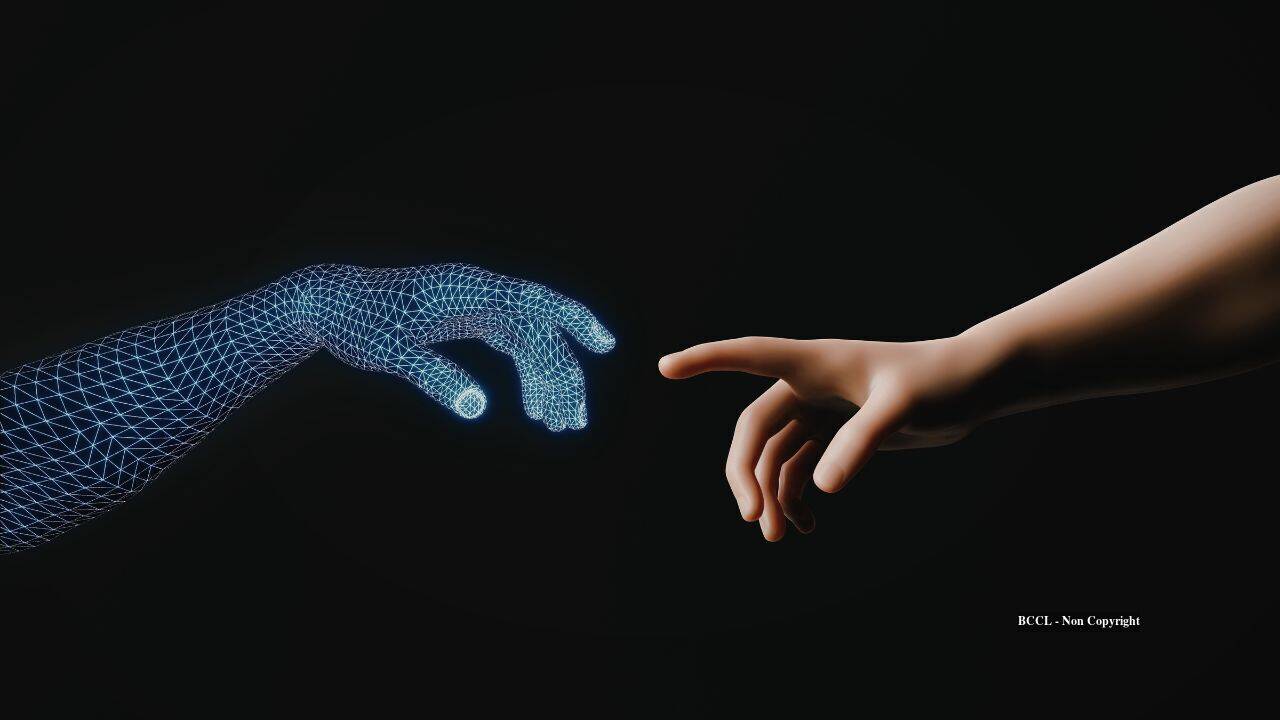
Photo via Toronto Star
Cambridge Dictionary chooses 'human' as word of the year in response to AI fears
Melley, B. (2026, November 18). Cambridge Dictionary chooses 'human' as word of the year in response to AI fears. Toronto Star. https://www.thestar.com/news/world/europe/cambridge-dictionary-chooses-human-as-word-of-the-year-in-response-to-ai-fears/article_0a42c54f-0de4-53ca-89cc-2f0390cfbf5d.html
Melley, Brian. “Cambridge Dictionary chooses 'human' as word of the year in response to AI fears.” Toronto Star, 18 Nov. 2026, https://www.thestar.com/news/world/europe/cambridge-dictionary-chooses-human-as-word-of-the-year-in-response-to-ai-fears/article_0a42c54f-0de4-53ca-89cc-2f0390cfbf5d.html.
Melley, Brian. “Cambridge Dictionary chooses 'human' as word of the year in response to AI fears.” Toronto Star, November 18, 2026. https://www.thestar.com/news/world/europe/cambridge-dictionary-chooses-human-as-word-of-the-year-in-response-to-ai-fears/article_0a42c54f-0de4-53ca-89cc-2f0390cfbf5d.html.
Dated from the outlet's own feed. Check the original for its byline.
Toronto Star
· collected 2026-11-18 · by Brian Melley
Quick Summary
Cambridge Dictionary selected "human" as its word of the year for 2026, reflecting growing concerns about artificial intelligence. The choice highlights societal debates on the distinction between humans and machines in an era dominated by AI advancements.
Written by AI on 2026-11-18,
from this article's own text only (the story summary below draws on all the coverage).
The Cambridge Dictionary has named 'human' its Word of the Year for 2026, in response to growing concerns about the increasing presence and impact of artificial intelligence (AI) in daily life. The choice reflects a broader societal debate over what distinguishes people from machines as AI systems become more capable of performing tasks traditionally seen as uniquely human. Cambridge University Press board member Francesca Woodward noted that in an era of rapidly expanding AI and dire warnings that it could even wipe out humanity, the word 'human' captures "the 2026 zeitgeist." The definition highlights "having the qualities, faults, and feelings that people have, as opposed to gods, animals, or machines," emphasizing the human premium that people may attach to products or experiences due to their involvement of human effort, judgment, and craftsmanship.
Written for “Human Named Word Of The Year” on 2026-11-18,
grounded in this article and the 8 other(s) covering the same event.
How they differ
9 outlets covered “Human Named Word Of The Year”.
What each outlet says
One AI summary per outlet of its latest article on this story, written from that article alone and checked against it. Open the article for the outlet's own words.
Toronto StarThis outlet18 Nov
Cambridge Dictionary selected "human" as its word of the year for 2026, reflecting growing concerns about artificial intelligence. The choice highlights societal debates on the distinction between humans and machines in an era dominated by AI advancements.
Cambridge Dictionary chooses 'human' as word of the year in response to AI fears (this article)The Straits Times18 Nov
Cambridge Dictionary named “human” as its Word of the Year for 2026, reflecting concerns about the impact of artificial intelligence on society. According to Francesca Woodward from Cambridge University Press, the choice highlights global discussions about human qualities and the changing understanding of what it means to be human in the age of AI. The selection was influenced by increased dictionary searches and…
Cambridge Dictionary has named "human" as its Word of the Year, highlighting concerns about the influence of artificial intelligence and its impact on employment. Cambridge University Press board member Francesca Woodward notes that the word reflects people’s contemplation of what it means to be human in an era of rapid technological advancement. The dictionary also observed an increase in the use of "human" in…
The Cambridge Dictionary selected "human" as its word of the year for 2026, responding to increasing concerns about artificial intelligence. This choice reflects how AI has prompted a renewed focus on human attributes and creations. The dictionary highlighted the word's use in phrases like "human-written" and "human-generated," emphasizing the value placed on uniquely human contributions in an AI-dominated world.
Cambridge Dictionary has named 'human' as its Word of the Year for 2026, highlighting the renewed significance of the term as AI increasingly blurs the lines between people and machines. This choice reflects growing concerns and debates about uniquely human qualities in the age of advanced AI, with notable figures like Bill Gates and Geoffrey Hinton advocating for preserving human-centric roles and values.
Cambridge Dictionary named "human" its word of the year for 2026, reflecting the growing importance of distinguishing natural human intelligence from artificial intelligence. The dictionary emphasized the word’s use to highlight human qualities, faults, and feelings in contrast to machines, amid debates about AI consciousness and its impact on human reliance and identity. Colin McIntosh, a dictionary editor, noted…
Cambridge Dictionary named 'human' its Word of the Year for 2026, reflecting the growing importance of human qualities in a world dominated by artificial intelligence. The selection highlights how the rise of AI has led to a renewed appreciation of human creativity, emotion, and connection. Cambridge Dictionary’s chief editor, Colin McIntosh, noted that this year saw a significant re-evaluation of what it means to…
Cambridge Dictionary selected “human” as its word of the year for 2026, reflecting growing concerns about artificial intelligence. According to lexicographer Colin McIntosh, the choice highlights how discussions about AI are prompting people to reconsider what it means to be human. The dictionary defines “human” as having qualities, faults, and feelings distinct from machines, emphasizing a cultural shift in…
Cambridge Dictionary named "Human" as its Word of the Year, defining it as having qualities, faults, and feelings that distinguish people from gods, animals, or machines. Chief editor Colin McIntosh explained that the rise of AI necessitates emphasizing human qualities. Examples include actors challenging AI's impact on creativity and tech leaders discussing the importance of AI improving human lives. The word's…
British women convicted of illegally terminating their pregnancies under a Victorian-era law will be automatically pardoned Monday, the government said.
Brand, 51, denied the charges and testified that he was obsessed with sex as a young man and once led a promiscuous life but had never forced anyone to do something against their will.
The inquiry into baby deaths found the Countess of Chester Hospital, in northwestern England, could have saved some infants from death and injury if staff had acted sooner when children began collapsing, Justice Kathryn Thirlwall said.
The U.K.‘s tougher stance was followed by France and Canada’s leaders saying they would take similar action to prevent expanding settlements and growing violence from making it impossible to establish a future Palestinian state.
LONDON (AP) — Fears of artificial intelligence inspired the Cambridge Dictionary to flip back to the 15th century for the word that best captures the 2026 cultural zeitgeist.
asserted
that → inspire → zeitgeist
“Human,” the dictionary’s word of the year, is not just a throwback but also a backlash of sorts that reflects the debate over how AI has blurred the lines between machines and people.
asserted
AI → reflect → machines
Give feedback · no sign-in needed
No sign-in needed for now. Your note is sent without a name, so it cannot be answered.

 The Aporia