Photo via Daily Mail

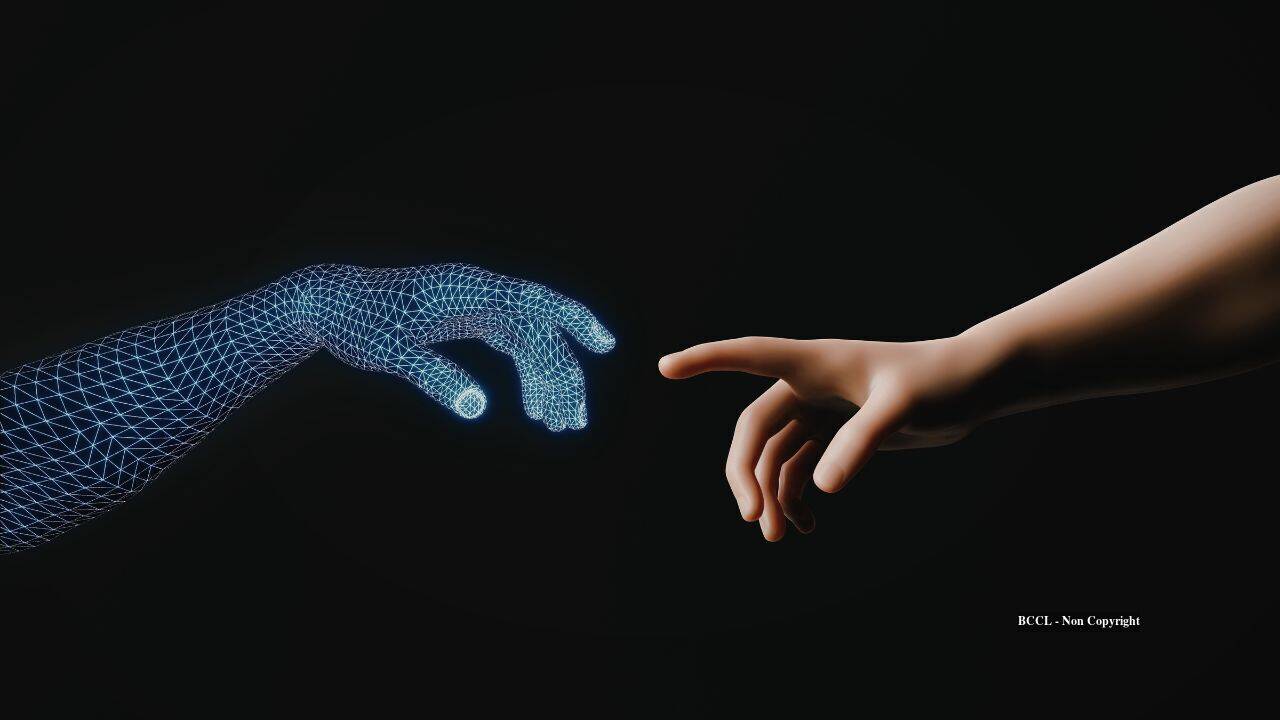
Cambridge Dictionary names 'human' the Word of the Year 2026 - as AI 'blurs the boundaries between people and machines'

Read the original at Daily Mail ↗
Cite

Leatham, X. (2026, November 18). Cambridge Dictionary names 'human' the Word of the Year 2026 - as AI 'blurs the boundaries between people and machines'. Daily Mail. https://www.dailymail.com/sciencetech/article-16299351/Cambridge-Dictionary-human-Word-Year-2026.html?ns_mchannel=rss&ns_campaign=1490&ito=1490

Dated from the outlet's own feed. Check the original for its byline.

Daily Mail · collected 2026-11-18 · by Xantha Leatham

Quick Summary

Cambridge Dictionary has named 'human' as its Word of the Year for 2026, highlighting the renewed significance of the term as AI increasingly blurs the lines between people and machines. This choice reflects growing concerns and debates about uniquely human qualities in the age of advanced AI, with notable figures like Bill Gates and Geoffrey Hinton advocating for preserving human-centric roles and values.
Written by AI on 2026-11-18, from this article's own text only (the story summary below draws on all the coverage).
See how they differ ↓

AI analysis

Story summary

The Cambridge Dictionary has named 'human' its Word of the Year for 2026, in response to growing concerns about the increasing presence and impact of artificial intelligence (AI) in daily life. The choice reflects a broader societal debate over what distinguishes people from machines as AI systems become more capable of performing tasks traditionally seen as uniquely human. Cambridge University Press board member Francesca Woodward noted that in an era of rapidly expanding AI and dire warnings that it could even wipe out humanity, the word 'human' captures "the 2026 zeitgeist." The definition highlights "having the qualities, faults, and feelings that people have, as opposed to gods, animals, or machines," emphasizing the human premium that people may attach to products or experiences due to their involvement of human effort, judgment, and craftsmanship.

Written for “Human Named Word Of The Year” on 2026-11-18, grounded in this article and the 8 other(s) covering the same event.

How they differ

9 outlets covered “Human Named Word Of The Year”.

What each outlet says

One AI summary per outlet of its latest article on this story, written from that article alone and checked against it. Open the article for the outlet's own words.

Daily MailThis outlet18 Nov

Cambridge Dictionary has named 'human' as its Word of the Year for 2026, highlighting the renewed significance of the term as AI increasingly blurs the lines between people and machines. This choice reflects growing concerns and debates about uniquely human qualities in the age of advanced AI, with notable figures like Bill Gates and Geoffrey Hinton advocating for preserving human-centric roles and values.

Cambridge Dictionary names 'human' the Word of the Year 2026 - as AI 'blurs the boundaries between people and machines' (this article)
The Straits Times18 Nov

Cambridge Dictionary named “human” as its Word of the Year for 2026, reflecting concerns about the impact of artificial intelligence on society. According to Francesca Woodward from Cambridge University Press, the choice highlights global discussions about human qualities and the changing understanding of what it means to be human in the age of AI. The selection was influenced by increased dictionary searches and…

‘Human’ is Cambridge Dictionary’s word of the year →
ABC News (AU)18 Nov

Cambridge Dictionary has named "human" as its Word of the Year, highlighting concerns about the influence of artificial intelligence and its impact on employment. Cambridge University Press board member Francesca Woodward notes that the word reflects people’s contemplation of what it means to be human in an era of rapid technological advancement. The dictionary also observed an increase in the use of "human" in…

Cambridge Dictionary names 'human' word of the year in rebuttal to AI →
CBC18 Nov

The Cambridge Dictionary selected "human" as its word of the year for 2026, responding to increasing concerns about artificial intelligence. This choice reflects how AI has prompted a renewed focus on human attributes and creations. The dictionary highlighted the word's use in phrases like "human-written" and "human-generated," emphasizing the value placed on uniquely human contributions in an AI-dominated world.

Would AI have come up with a better word of the year than the Cambridge Dictionary? →
The Guardian18 Nov

Cambridge Dictionary named "human" its word of the year for 2026, reflecting the growing importance of distinguishing natural human intelligence from artificial intelligence. The dictionary emphasized the word’s use to highlight human qualities, faults, and feelings in contrast to machines, amid debates about AI consciousness and its impact on human reliance and identity. Colin McIntosh, a dictionary editor, noted…

‘Human’ wins Cambridge dictionary’s word of the year →
Show 3 more outlets
Times of India18 Nov

Cambridge Dictionary named 'human' its Word of the Year for 2026, reflecting the growing importance of human qualities in a world dominated by artificial intelligence. The selection highlights how the rise of AI has led to a renewed appreciation of human creativity, emotion, and connection. Cambridge Dictionary’s chief editor, Colin McIntosh, noted that this year saw a significant re-evaluation of what it means to…

'Human': Cambridge’s 'word of the year' is a counterbalance to AI →
New York Post18 Nov

Cambridge Dictionary selected “human” as its word of the year for 2026, reflecting growing concerns about artificial intelligence. According to lexicographer Colin McIntosh, the choice highlights how discussions about AI are prompting people to reconsider what it means to be human. The dictionary defines “human” as having qualities, faults, and feelings distinct from machines, emphasizing a cultural shift in…

Cambridge Dictionary chooses ‘human’ as word of the year in response to AI fears →
BBC18 Nov

Cambridge Dictionary named "Human" as its Word of the Year, defining it as having qualities, faults, and feelings that distinguish people from gods, animals, or machines. Chief editor Colin McIntosh explained that the rise of AI necessitates emphasizing human qualities. Examples include actors challenging AI's impact on creativity and tech leaders discussing the importance of AI improving human lives. The word's…

'Human' is Cambridge Dictionary Word of the Year →

Compared with similar articles

This article reads leans strongly left and hedges 11% of its claims. Each row says how that neighbour differs.
The Straits Times
Hedges 2 of 18 claims Outlet record 64/100
Toronto Star
Hedges 0 of 2 claims Outlet record 64/100
Times of India
Leans left further right than this Hedges 1 of 14 claims Outlet record 59/100
The Guardian
Leans right further right than this Hedges 1 of 15 claims Outlet record 64/100

Story

Human Named Word Of The Year
Technology · 9 article(s) covering the same event. See how they differ ↑
How this article was measured signals, leaning charts, publisher record, byline, topics and claims

Signals How these are calculated →

Claims extracted
35
sentences that state something as happening or true
Uncertain
11%
4 of 35 hedged ("reportedly", "may", "according to")
Leaning
Leans strongly left
of the writing, not the subject · beta estimate
Publisher signals
70/100
Daily Mail's corrections and hedging, across everything collected from it. Not a measure of accuracy.
Outlets on this story
9
Technology
Same framing elsewhere
1
articles that frame the event the way this one does
Analyzed 2026-11-18 · how these are computed

How this is being covered How these are calculated →

Article leaning vs. publisher reliability
Source leaning vs. consistency

Publisher

Daily Mail · 11752 article(s) · 24 correction(s) detected
Running correction rate · 24 correction(s)

Who wrote this

Xantha Leatham
17 article(s) here · 1 carrying a prediction
As AI becomes increasingly embedded in everyday life and we rely on cutting-edge technology more and more, you could be forgiven for thinking the tide is turning against the humble human.
The relentless rise in the world's carbon emissions may finally be slowing, according to a major new report.
The author is believed to have installed mirrors upstairs so he could practise performances and perfect the voices and mannerisms of his characters.
They are noticeably bigger than native ladybirds and may bite if handled, leaving a red mark.
If you've ever wondered why your pooch turns into a trembling wreck the moment a firework goes off, a new audio simulation may finally provide the answer.
Doing so could help families weather everything from extreme storms and widespread power outages to terrorist attacks and even a nuclear emergency.
A merchant who oversaw the murders of 100 men, women and children after a shipwreck 400 years ago may have been the world's first corporate psychopath, scientists say.
The findings may help explain why accomplished women, ranging from Margaret Thatcher and Angela Merkel to Hillary Clinton and Kamala Harris, have often been called unlikeable despite being widely regarded as highly capable leaders.
Britain is facing its biggest adoption shortfall in decades, with experts warning the growing popularity of IVF is contributing to a widening gap between children needing permanent homes and families willing to adopt them.
Whether you're happily coupled up or endlessly swiping through dating apps, your postcode could have more influence on your love life than you think.
Also by Xantha Leatham
Nothing else under this byline is closely related to this article, so these are simply their most recent.
All 17 articles by Xantha Leatham →

Topics

British Cambridge Dictionary the Cambridge Dictionary

Subjects

the Cambridge Dictionary ORG · 3× Geoffrey Hinton PERSON · 2× Bill Gates PERSON · 1× British NORP · 1× Cambridge Dictionary ORG · 1× Colin McIntosh PERSON · 1× Gates PERSON · 1× Leo XIV PERSON · 1× Tom McClelland PERSON · 1× the University of Cambridge ORG · 1×

Narrative

Nobel laureate in Physics Geoffrey Hinton, often called the 'godfather of AI', also warned we are 'creating alien beings…and the reality is we only have a couple of years to adapt to that', adding: 'I'm willing to be selfish and choose humans.' And in his Magnifica Humanitas letter, Pope Leo XIV spoke of new forms of 'dehumanization' and the 'pressing duty to remain profoundly human'.
framing: assertive · carried by 1 article(s) · first seen 2026-11-18
As AI becomes increasingly embedded in everyday life and we rely on cutting-edge technology more and more, you could be forgiven for thinking the tide is turning against the humble human.

Claims (35 extracted, 4 hedged)

As AI becomes increasingly embedded in everyday life and we rely on cutting-edge technology more and more, you could be forgiven for thinking the tide is turning against the humble human. uncertain
tide → become → human
Editors have named 'human' as its Word of the Year for 2026, saying the word has taken on renewed significance as artificial intelligence 'blurs the boundaries between people and machines'. asserted
intelligence → name → people
The choice reflects growing debate over what separates people from bots as AI systems become more capable of mimicking human conversation, creativity and decision-making. asserted
systems → reflect → conversation
It comes as high-profile figures have recently argued for the importance of preserving uniquely human qualities in the age of artificial intelligence. asserted
figures → come → intelligence
In a widely read essay published in August, Bill Gates made the case for 'human reserved jobs', such as caregivers, that should never be taken by machines. asserted
that → read → machines
'AI is changing how we talk about being human,' Colin McIntosh, lexicographer at the Cambridge Dictionary, said. asserted
McIntosh → change → Dictionary
‘Fears about what humans may lose when we outsource our thinking has made us reconsider the extent to which we rely on AI: from top mathematicians to teachers of young children. uncertain
we → lose → children
Human is defined in the Cambridge Dictionary as 'having the qualities, faults, and feelings that people have, as opposed to gods, animals, or machines' asserted
people → define → gods
'The definition of "human" has traditionally distinguished us from gods, animals, and, latterly, from machines. asserted
definition → distinguish → machines
A recent increase in compounds such as "human-made" highlight how the word has come to distinguish works or qualities of people, as distinct from AI. asserted
word → make → AI
'It's this renewed interest in the idea of being human that captured the zeitgeist and made "human" the Cambridge Dictionary Word of the Year.' asserted
human → renew → Year
Commenting on 2026's Word of the Year selection, Mr Gates said: 'AI is making us think harder about what it means to be human. ' asserted
it → comment → what
It could help us cure diseases, improve education, and give people more time to spend on the things that matter most. uncertain
that → help → things
'But we need to make deliberate choices about how it fits into our lives, including where we want people to remain at the centre. asserted
people → need → centre
The measure of AI's success should be how much it improves human lives.' asserted
it → improve → lives
Nobel laureate in Physics Geoffrey Hinton, often called the 'godfather of AI', also warned we are 'creating alien beings…and the reality is we only have a couple of years to adapt to that', adding: 'I'm willing to be selfish and choose humans.' And in his Magnifica Humanitas letter, Pope Leo XIV spoke of new forms of 'dehumanization' and the 'pressing duty to remain profoundly human'. asserted
XIV → call → dehumanization
Professor Geoffrey Hinton, a British-Canadian computer scientist known for his work on artificial neural artworks, warned we are 'creating alien beings' asserted
we → know → beings
Experts have warned AI could 'lead to human extinction' if it became 'superintelligent', which has been the subject of many science fiction films, including 2009's Terminator Salvation Human is defined in the Cambridge Dictionary as 'having the qualities, faults, and feelings that people have, as opposed to gods, animals, or machines'. uncertain
people → warn → gods
Dr Tom McClelland, a philosopher of science at the University of Cambridge, said choosing 'human' as Word of the Year is significant as our understanding of humanity is currently changing. asserted
understanding → say → humanity
'What it means to be human isn't a fixed thing,' he said. asserted
he → mean → What
'It's something that is always changing in response to political context, scientific understanding and current technology. asserted
that → change → context
'That means we need to decide what it means to be human. asserted
it → mean → what
Discussions around AI reveal that this is something people think about in very different ways. asserted
people → reveal → ways
I think "human" is a great word of the year precisely because it prompts those important questions. asserted
it → think → questions
' Other additions to the dictionary in 2026 reflected some of the year's biggest online and cultural trends. asserted
additions → reflect → trends
New entries include 'air jail', a dog-training term that went viral after videos showed pets being lifted off the ground. asserted
pets → include → ground
Meanwhile 'aura farming' refers to the practice of carefully cultivating a cool or admirable image, for example on social media. asserted
farming → refer → media
Editors also added 'looksmaxxing', a trend – particularly among young men – focused on maximising physical attractiveness. asserted
Editors → add → attractiveness
Other Word of the Year contenders include 'agent', referring to autonomous AI systems capable of acting independently, 'wholesome', which saw renewed popularity thanks to feel-good moments at the 2026 World Cup, and 'analogue', reflecting growing interest in screen-free hobbies such as reading physical books, knitting and listening to vinyl records. asserted
which → include → records
The dictionary is also considering future additions including 'weather whiplash' for rapid swings between weather extremes, 'FOBO' or the fear of becoming obsolete due to AI, and 'dusking', the practice of watching the transition from daylight to darkness as a form of relaxation. asserted
dictionary → consider → relaxation
Professor Rachel Adams, an expert on AI governance and human rights at the University of Cambridge, said: 'AI is going to be a profound test for humanity. asserted
AI → say → humanity
There's a real risk that it deepens existing inequalities, but it also has the potential to solve them. asserted
it → be → them
Collectively, we need to decide what we value and what we will allow to happen to each other. asserted
we → need → other
There is no doubt that AI has vast potential to change the world. asserted
AI → be → world
The question is whether the profits of AI – in terms of wealth, productivity and scientific advances – can be harnessed to tackle the great political challenges of our time.' asserted
profits → harness → time
Give feedback · no sign-in needed

No sign-in needed for now. Your note is sent without a name, so it cannot be answered.

History Support