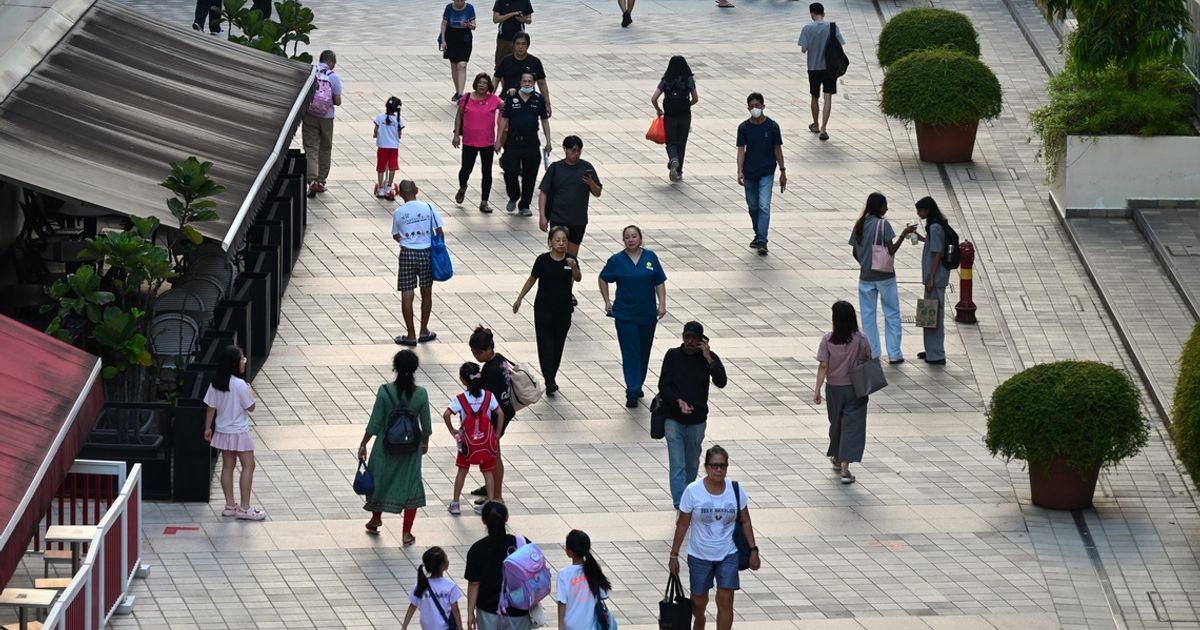
Photo via BBC News

'Human' is Cambridge Dictionary Word of the Year

Read the original at BBC News ↗
Cite

Prickett, K. (2026, November 18). 'Human' is Cambridge Dictionary Word of the Year. BBC News. https://www.bbc.co.uk/news/articles/c6x2ev38k4yno?at_medium=RSS&at_campaign=rss

Dated from the outlet's own feed. Check the original for its byline.

BBC News · collected 2026-11-18 · by Katy Prickett

Quick Summary

Cambridge Dictionary named "Human" as its Word of the Year, defining it as having qualities, faults, and feelings that distinguish people from gods, animals, or machines. Chief editor Colin McIntosh explained that the rise of AI necessitates emphasizing human qualities. Examples include actors challenging AI's impact on creativity and tech leaders discussing the importance of AI improving human lives. The word's usage has increased fourfold since 1900, reflecting changes in language and societal concerns about AI's influence on human roles and creativity.
Written by AI on 2026-11-18, from this article's own text only (the story summary below draws on all the coverage).
See how they differ ↓

AI analysis

Story summary

The Cambridge Dictionary has named 'human' its Word of the Year for 2026, in response to growing concerns about the increasing presence and impact of artificial intelligence (AI) in daily life. The choice reflects a broader societal debate over what distinguishes people from machines as AI systems become more capable of performing tasks traditionally seen as uniquely human. Cambridge University Press board member Francesca Woodward noted that in an era of rapidly expanding AI and dire warnings that it could even wipe out humanity, the word 'human' captures "the 2026 zeitgeist." The definition highlights "having the qualities, faults, and feelings that people have, as opposed to gods, animals, or machines," emphasizing the human premium that people may attach to products or experiences due to their involvement of human effort, judgment, and craftsmanship.

Written for “Human Named Word Of The Year” on 2026-11-18, grounded in this article and the 8 other(s) covering the same event.
Why this leaning score
This article does not take a side on a contested political question, so it has no leaning score. That is an answer rather than a gap: a match report or a rescue can be warmly or critically written without being left or right, and scoring it anyway is how approval of a subject gets recorded as a political position.
No political leaning scored for article 162946 · logged 2026-11-18

How they differ

9 outlets covered “Human Named Word Of The Year”.

What each outlet says

One AI summary per outlet of its latest article on this story, written from that article alone and checked against it. Open the article for the outlet's own words.

BBCThis outlet18 Nov

Cambridge Dictionary named "Human" as its Word of the Year, defining it as having qualities, faults, and feelings that distinguish people from gods, animals, or machines. Chief editor Colin McIntosh explained that the rise of AI necessitates emphasizing human qualities. Examples include actors challenging AI's impact on creativity and tech leaders discussing the importance of AI improving human lives. The word's…

'Human' is Cambridge Dictionary Word of the Year (this article)
The Straits Times18 Nov

Cambridge Dictionary named “human” as its Word of the Year for 2026, reflecting concerns about the impact of artificial intelligence on society. According to Francesca Woodward from Cambridge University Press, the choice highlights global discussions about human qualities and the changing understanding of what it means to be human in the age of AI. The selection was influenced by increased dictionary searches and…

‘Human’ is Cambridge Dictionary’s word of the year →
ABC News (AU)18 Nov

Cambridge Dictionary has named "human" as its Word of the Year, highlighting concerns about the influence of artificial intelligence and its impact on employment. Cambridge University Press board member Francesca Woodward notes that the word reflects people’s contemplation of what it means to be human in an era of rapid technological advancement. The dictionary also observed an increase in the use of "human" in…

Cambridge Dictionary names 'human' word of the year in rebuttal to AI →
CBC18 Nov

The Cambridge Dictionary selected "human" as its word of the year for 2026, responding to increasing concerns about artificial intelligence. This choice reflects how AI has prompted a renewed focus on human attributes and creations. The dictionary highlighted the word's use in phrases like "human-written" and "human-generated," emphasizing the value placed on uniquely human contributions in an AI-dominated world.

Would AI have come up with a better word of the year than the Cambridge Dictionary? →
Daily Mail18 Nov

Cambridge Dictionary has named 'human' as its Word of the Year for 2026, highlighting the renewed significance of the term as AI increasingly blurs the lines between people and machines. This choice reflects growing concerns and debates about uniquely human qualities in the age of advanced AI, with notable figures like Bill Gates and Geoffrey Hinton advocating for preserving human-centric roles and values.

Cambridge Dictionary names 'human' the Word of the Year 2026 - as AI 'blurs the boundaries between people and machines' →
Show 3 more outlets
The Guardian18 Nov

Cambridge Dictionary named "human" its word of the year for 2026, reflecting the growing importance of distinguishing natural human intelligence from artificial intelligence. The dictionary emphasized the word’s use to highlight human qualities, faults, and feelings in contrast to machines, amid debates about AI consciousness and its impact on human reliance and identity. Colin McIntosh, a dictionary editor, noted…

‘Human’ wins Cambridge dictionary’s word of the year →
Times of India18 Nov

Cambridge Dictionary named 'human' its Word of the Year for 2026, reflecting the growing importance of human qualities in a world dominated by artificial intelligence. The selection highlights how the rise of AI has led to a renewed appreciation of human creativity, emotion, and connection. Cambridge Dictionary’s chief editor, Colin McIntosh, noted that this year saw a significant re-evaluation of what it means to…

'Human': Cambridge’s 'word of the year' is a counterbalance to AI →
New York Post18 Nov

Cambridge Dictionary selected “human” as its word of the year for 2026, reflecting growing concerns about artificial intelligence. According to lexicographer Colin McIntosh, the choice highlights how discussions about AI are prompting people to reconsider what it means to be human. The dictionary defines “human” as having qualities, faults, and feelings distinct from machines, emphasizing a cultural shift in…

Cambridge Dictionary chooses ‘human’ as word of the year in response to AI fears →

Compared with similar articles

This article reads unscored and hedges 14% of its claims. Each row says how that neighbour differs.
The Straits Times
Hedges 2 of 18 claims Outlet record 64/100

Story

Human Named Word Of The Year
Technology · 9 article(s) covering the same event. See how they differ ↑
How this article was measured signals, leaning charts, publisher record, byline, topics and claims

Signals How these are calculated →

Claims extracted
22
sentences that state something as happening or true
Uncertain
14%
3 of 22 hedged ("reportedly", "may", "according to")
Leaning
not political
takes no side on a contested political question
Publisher signals
65/100
BBC News's corrections and hedging, across everything collected from it. Not a measure of accuracy.
Outlets on this story
9
Technology
Same framing elsewhere
1
articles that frame the event the way this one does
Analyzed 2026-11-18 · how these are computed

How this is being covered How these are calculated →

Article leaning vs. publisher reliability
Source leaning vs. consistency

Publisher

BBC News · 6152 article(s) · 9 correction(s) detected
Running correction rate · 9 correction(s)

Who wrote this

Katy Prickett
1 article(s) here · 1 carrying a prediction
"The growth of AI means it is now necessary to explicitly say 'human' for things that once could only be done by humans," said chief editor Colin McIntosh.
2026-11-18 · assertive framing · 'Human' is Cambridge Dictionary Word of the Year
The only article under this byline in the corpus.

Topics

French Microsoft Middle English the Cambridge Dictionary's the University of Cambridge

Subjects

McIntosh PERSON · 2× the University of Cambridge ORG · 2× Bill Gates PERSON · 1× Colin McIntosh PERSON · 1× French NORP · 1× Matthew McConaughey PERSON · 1× Microsoft ORG · 1× Middle English NORP · 1× Scarlett Johansson PERSON · 1× the Cambridge Dictionary's ORG · 1×

Narrative

Examples of current usage included actors Scarlett Johansson challenging "an assault on human creativity" and Matthew McConaughey protecting himself against unauthorised digital reproduction of his voice or image.
framing: assertive · carried by 1 article(s) · first seen 2026-11-18
"The growth of AI means it is now necessary to explicitly say 'human' for things that once could only be done by humans," said chief editor Colin McIntosh.
2026-11-18 · BBC News
'Human' is Cambridge Dictionary Word of the Year · assertive framing

Claims (22 extracted, 3 hedged)

- Published "Human" is the Cambridge Dictionary's Word of the Year — defined as "having the qualities, faults, and feelings that people have, as opposed to gods, animals, or machines". asserted
people → publish → gods
"The growth of AI means it is now necessary to explicitly say 'human' for things that once could only be done by humans," said chief editor Colin McIntosh. uncertain
McIntosh → mean → humans
Examples of current usage included actors Scarlett Johansson challenging "an assault on human creativity" and Matthew McConaughey protecting himself against unauthorised digital reproduction of his voice or image. asserted
McConaughey → include → voice
"The measure of AI's success should be how much it improves human lives," said Microsoft co-founder Bill Gates on learning about the dictionary's choice. asserted
Gates → improve → choice
McIntosh said dictionary editors had to be on top of how words could change over time "to reflect what people say and what they write". uncertain
they → say → what
His research revealed a four-fold use of the word human since 1900. asserted
research → reveal → 1900
"'Man' used to be used in this sense a lot more, but now it is not acceptable to use 'man' to mean men and women," he added. asserted
he → use → men
"Human didn't come into use in Middle English until the 14th Century, from a French word. asserted
Human → come → word
Shakespeare used it, but after that it was very restricted in use. asserted
it → use → use
"Fears about what humans may lose when we outsource our thinking has made us reconsider the extent to which we rely on AI, from top mathematicians to teachers of young children," said McIntosh. uncertain
McIntosh → lose → children
Gates recently made the case for "human reserved jobs", external, such as caregiving, and reiterated his call for a robot tax to help fund training for people who lose their jobs to AI. asserted
who → make → AI
Other examples included the Nobel Prize in Physics laureate Geoffrey Hinton, who has been described as the godfather of AI, who warned "we're creating alien beings. asserted
we → include → beings
I'm willing to be selfish and choose humans". asserted
I → choose → humans
Pope Leo XIV has spoken of new forms of "dehumanisation", external and the "pressing duty to remain profoundly human". asserted
XIV → speak → dehumanisation
"Right now our understanding of humanity is changing," said Dr Tom McClelland, a philosopher of science at the University of Cambridge. asserted
McClelland → change → Cambridge
"We're trying to understand the difference between a human mind and an artificial mind, between living beings like us and artificial beings that we're creating. asserted
we → try → that
What sets us apart? asserted
What → set → us
In response to the surge in AI-created content, academics are hoping to develop a universally recognised symbol to denote something that is "human made", similar to the "Fairtrade" label that emerged in the 1980s. asserted
that → create → 1980s
Prof Rachel Adams, an expert on AI governance and human rights at the University of Cambridge, said: "AI brings us back to questions that we've asked for millennia — who are we? asserted
we → say → millennia
What does it mean to be human? asserted
it → mean → What
AI is going to be a profound test for humanity. asserted
AI → go → humanity
There's a real risk that it deepens existing inequalities, but it also has the potential to solve them." asserted
it → be → them
Give feedback · no sign-in needed

No sign-in needed for now. Your note is sent without a name, so it cannot be answered.

History Support