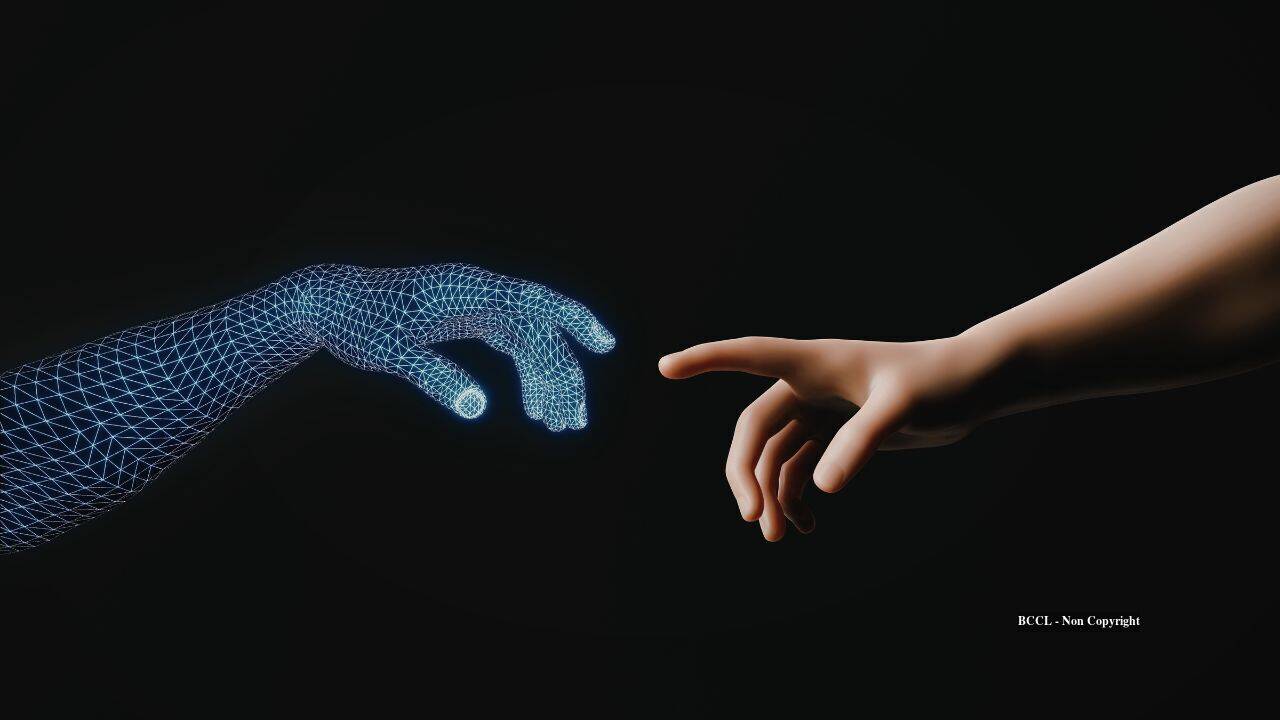
Photo via Times of India

'Human': Cambridge’s 'word of the year' is a counterbalance to AI

Read the original at Times of India ↗
Cite

Pandey, P. (2026, November 18). 'Human': Cambridge’s 'word of the year' is a counterbalance to AI. Times of India. https://timesofindia.indiatimes.com/world/uk/human-cambridges-word-of-the-year-is-a-counterbalance-to-ai/articleshow/135947730.cms

Dated from the outlet's own feed. Check the original for its byline.

Times of India · collected 2026-11-18 · by Pranjal Pandey

Quick Summary

Cambridge Dictionary named 'human' its Word of the Year for 2026, reflecting the growing importance of human qualities in a world dominated by artificial intelligence. The selection highlights how the rise of AI has led to a renewed appreciation of human creativity, emotion, and connection. Cambridge Dictionary’s chief editor, Colin McIntosh, noted that this year saw a significant re-evaluation of what it means to be human, as people increasingly distinguish between human and AI-generated work to emphasize the value of human involvement.
Written by AI on 2026-11-18, from this article's own text only (the story summary below draws on all the coverage).
See how they differ ↓

AI analysis

Story summary

The Cambridge Dictionary has named 'human' its Word of the Year for 2026, in response to growing concerns about the increasing presence and impact of artificial intelligence (AI) in daily life. The choice reflects a broader societal debate over what distinguishes people from machines as AI systems become more capable of performing tasks traditionally seen as uniquely human. Cambridge University Press board member Francesca Woodward noted that in an era of rapidly expanding AI and dire warnings that it could even wipe out humanity, the word 'human' captures "the 2026 zeitgeist." The definition highlights "having the qualities, faults, and feelings that people have, as opposed to gods, animals, or machines," emphasizing the human premium that people may attach to products or experiences due to their involvement of human effort, judgment, and craftsmanship.

Written for “Human Named Word Of The Year” on 2026-11-18, grounded in this article and the 8 other(s) covering the same event.

How they differ

9 outlets covered “Human Named Word Of The Year”.

What each outlet says

One AI summary per outlet of its latest article on this story, written from that article alone and checked against it. Open the article for the outlet's own words.

Times of IndiaThis outlet18 Nov

Cambridge Dictionary named 'human' its Word of the Year for 2026, reflecting the growing importance of human qualities in a world dominated by artificial intelligence. The selection highlights how the rise of AI has led to a renewed appreciation of human creativity, emotion, and connection. Cambridge Dictionary’s chief editor, Colin McIntosh, noted that this year saw a significant re-evaluation of what it means to…

'Human': Cambridge’s 'word of the year' is a counterbalance to AI (this article)
The Straits Times18 Nov

Cambridge Dictionary named “human” as its Word of the Year for 2026, reflecting concerns about the impact of artificial intelligence on society. According to Francesca Woodward from Cambridge University Press, the choice highlights global discussions about human qualities and the changing understanding of what it means to be human in the age of AI. The selection was influenced by increased dictionary searches and…

‘Human’ is Cambridge Dictionary’s word of the year →
ABC News (AU)18 Nov

Cambridge Dictionary has named "human" as its Word of the Year, highlighting concerns about the influence of artificial intelligence and its impact on employment. Cambridge University Press board member Francesca Woodward notes that the word reflects people’s contemplation of what it means to be human in an era of rapid technological advancement. The dictionary also observed an increase in the use of "human" in…

Cambridge Dictionary names 'human' word of the year in rebuttal to AI →
CBC18 Nov

The Cambridge Dictionary selected "human" as its word of the year for 2026, responding to increasing concerns about artificial intelligence. This choice reflects how AI has prompted a renewed focus on human attributes and creations. The dictionary highlighted the word's use in phrases like "human-written" and "human-generated," emphasizing the value placed on uniquely human contributions in an AI-dominated world.

Would AI have come up with a better word of the year than the Cambridge Dictionary? →
Daily Mail18 Nov

Cambridge Dictionary has named 'human' as its Word of the Year for 2026, highlighting the renewed significance of the term as AI increasingly blurs the lines between people and machines. This choice reflects growing concerns and debates about uniquely human qualities in the age of advanced AI, with notable figures like Bill Gates and Geoffrey Hinton advocating for preserving human-centric roles and values.

Cambridge Dictionary names 'human' the Word of the Year 2026 - as AI 'blurs the boundaries between people and machines' →
Show 3 more outlets
The Guardian18 Nov

Cambridge Dictionary named "human" its word of the year for 2026, reflecting the growing importance of distinguishing natural human intelligence from artificial intelligence. The dictionary emphasized the word’s use to highlight human qualities, faults, and feelings in contrast to machines, amid debates about AI consciousness and its impact on human reliance and identity. Colin McIntosh, a dictionary editor, noted…

‘Human’ wins Cambridge dictionary’s word of the year →
New York Post18 Nov

Cambridge Dictionary selected “human” as its word of the year for 2026, reflecting growing concerns about artificial intelligence. According to lexicographer Colin McIntosh, the choice highlights how discussions about AI are prompting people to reconsider what it means to be human. The dictionary defines “human” as having qualities, faults, and feelings distinct from machines, emphasizing a cultural shift in…

Cambridge Dictionary chooses ‘human’ as word of the year in response to AI fears →
BBC18 Nov

Cambridge Dictionary named "Human" as its Word of the Year, defining it as having qualities, faults, and feelings that distinguish people from gods, animals, or machines. Chief editor Colin McIntosh explained that the rise of AI necessitates emphasizing human qualities. Examples include actors challenging AI's impact on creativity and tech leaders discussing the importance of AI improving human lives. The word's…

'Human' is Cambridge Dictionary Word of the Year →

Compared with similar articles

This article reads leans left and hedges 7% of its claims. Each row says how that neighbour differs.
The Straits Times
Hedges 2 of 18 claims Outlet record 64/100
Daily Mail
Leans strongly left further left than this Hedges 4 of 35 claims Outlet record 70/100
Toronto Star
Hedges 0 of 2 claims Outlet record 64/100
The Guardian
Leans right further right than this Hedges 1 of 15 claims Outlet record 64/100

Story

Human Named Word Of The Year
Technology · 9 article(s) covering the same event. See how they differ ↑
How this article was measured signals, leaning charts, publisher record, byline, topics and claims

Signals How these are calculated →

Claims extracted
14
sentences that state something as happening or true
Uncertain
7%
1 of 14 hedged ("reportedly", "may", "according to")
Leaning
Leans left
of the writing, not the subject · beta estimate
Publisher signals
59/100
Times of India's corrections and hedging, across everything collected from it. Not a measure of accuracy.
Outlets on this story
9
Technology
Same framing elsewhere
1
articles that frame the event the way this one does
Analyzed 2026-11-18 · how these are computed

How this is being covered How these are calculated →

Article leaning vs. publisher reliability
Source leaning vs. consistency

Publisher

Times of India · 5272 article(s) · 6 correction(s) detected
Running correction rate · 6 correction(s)

Who wrote this

Pranjal Pandey
69 article(s) here · 1 carrying a prediction
Cambridge described this as a ‘human premium’, the added value people may attach to a product or experience because they know it involved human effort, judgement and craftsmanship.
However, differences over the agenda could complicate the meeting.
He claimed that certain marks could only be accounted for by “homicidal strangulation.”
The withdrawal could give the Houthis greater leverage over one of the world's most important maritime chokepoints, potentially increasing pressure on global shipping at a time when Iran continues to disrupt traffic through the Strait of Hormuz on the other side of the Arabian Peninsula. Simultaneous pressure on the two waterways could further restrict Gulf oil producers' access to their main shipping routes, Reuters reported.
Iran may have between 1,500 and 2,500 missiles left in its arsenal, according to a US intelligence assessment.
Such an administration, he said, could "eliminate the Iranian threat once and for all", AFP reported.
Former Labour cabinet minister Alan Milburn is expected to outline plans involving billions of pounds in upfront investment to help young people find jobs, alongside reductions in benefits for those aged 16 to 24 who are not in education, employment or training.
“The directives issued by the security cabinet to the Israeli military could lead it to carry out activities that could trigger a war,” Israeli public broadcaster KAN reported.
The document, seen by Axios, which drew on surveillance of Alice Huang and an investigation into alleged chip smuggling involving her company, Singapore-based Megaspeed, was circulated before President Donald Trump's May 13-15 visit to China.
The company said that New York-based Wachtell, Lipton, Rosen & Katz (WLRK) would lead the inquiry, with attorney Joon Kim overseeing what it described as a “thorough and independent investigation”, BBC reported.
Also by Pranjal Pandey
Nothing else under this byline is closely related to this article, so these are simply their most recent.
All 69 articles by Pranjal Pandey →

Topics

Cambridge Cambridge Dictionary The Cambridge Dictionary

Subjects

Cambridge Dictionary ORG · 3× Cambridge ORG · 1× Colin McIntosh PERSON · 1× The Cambridge Dictionary ORG · 1×

Narrative

The Cambridge Dictionary has named ‘human’ its Word of the Year for 2026, reflecting a growing debate over what distinguishes people from artificial intelligence (AI) as machines become increasingly capable of performing tasks once considered uniquely human.
framing: assertive · carried by 1 article(s) · first seen 2026-11-18
Cambridge described this as a ‘human premium’, the added value people may attach to a product or experience because they know it involved human effort, judgement and craftsmanship.
2026-11-18 · Times of India
'Human': Cambridge’s 'word of the year' is a counterbalance to AI · assertive framing

Claims (14 extracted, 1 hedged)

The Cambridge Dictionary has named ‘human’ its Word of the Year for 2026, reflecting a growing debate over what distinguishes people from artificial intelligence (AI) as machines become increasingly capable of performing tasks once considered uniquely human. asserted
machines → name → tasks
The choice highlights how the rapid spread of AI has prompted people to reconsider the value of human creativity, judgement, emotion and connection. asserted
spread → highlight → creativity
It also points to a change in the way the word is being used, with expressions such as ‘human-written’, ‘human-generated’ and ‘human-made’ increasingly distinguishing work produced by people from content created by AI. asserted
expressions → point → AI
Cambridge Dictionary defines ‘human’ as having the qualities, faults and feelings that people have, as opposed to gods, animals or machines. asserted
people → define → gods
Why ‘human’ Cambridge Dictionary said the growing presence of AI in everyday life had led to a renewed appreciation of the human element in what people consume and experience. asserted
people → say → what
Colin McIntosh, chief editor of Cambridge Dictionary, said: “Artificial intelligence has been a growing presence in society for years now, but this year it seemed to be everywhere. asserted
it → say → years
In many areas of life this has led to a re-evaluation of what it means to be human, as a counterbalance to AI. asserted
it → lead → AI
He added that 2026 had been marked by a renewed appreciation of the human factor and a greater value being placed on human involvement in everyday life. asserted
2026 → add → life
The dictionary said its analysis of language data, internet trends and search habits supported the selection. asserted
analysis → say → selection
One of the clearest signs of this shift is the growing use of the word ‘human’ to identify the origin of creative work. asserted
One → grow → work
As AI-generated writing, images, music and videos become more common, businesses and creators are increasingly highlighting when something has been made by a person. asserted
something → generate → person
Cambridge described this as a ‘human premium’, the added value people may attach to a product or experience because they know it involved human effort, judgement and craftsmanship. uncertain
it → describe → effort
In a marketplace increasingly filled with AI-generated material, the imperfections and personal involvement associated with human work can become part of its appeal. asserted
imperfections → fill → appeal
‘Human’ was selected from a shortlist that included ‘agent’, ‘analogue’, ‘wholesome’ and ‘chic’. asserted
that → select → agent
Give feedback · no sign-in needed

No sign-in needed for now. Your note is sent without a name, so it cannot be answered.

History Support