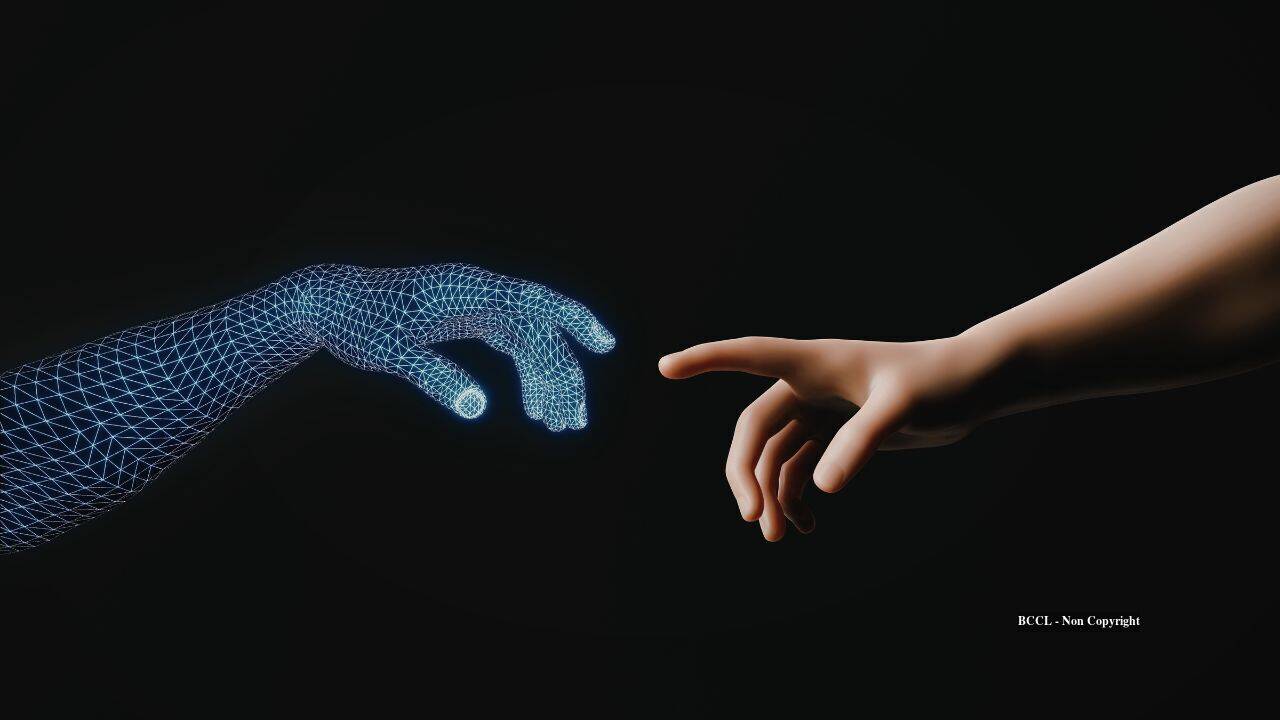
Photo via The Guardian

‘Human’ wins Cambridge dictionary’s word of the year

Read the original at The Guardian ↗
Cite

editor, D. M. G. t. (2026, November 18). ‘Human’ wins Cambridge dictionary’s word of the year. The Guardian. https://www.theguardian.com/science/2026/nov/18/cambridge-word-of-the-year-human

Dated from the outlet's own feed. Check the original for its byline.

The Guardian · collected 2026-11-18 · by Dan Milmo Global technology editor

Quick Summary

Cambridge Dictionary named "human" its word of the year for 2026, reflecting the growing importance of distinguishing natural human intelligence from artificial intelligence. The dictionary emphasized the word’s use to highlight human qualities, faults, and feelings in contrast to machines, amid debates about AI consciousness and its impact on human reliance and identity. Colin McIntosh, a dictionary editor, noted that AI developments have altered how we discuss being human, with increased use of terms like "human-made" to differentiate between human and AI creations.
Written by AI on 2026-11-18, from this article's own text only (the story summary below draws on all the coverage).
See how they differ ↓

AI analysis

Story summary

The Cambridge Dictionary has named 'human' its Word of the Year for 2026, in response to growing concerns about the increasing presence and impact of artificial intelligence (AI) in daily life. The choice reflects a broader societal debate over what distinguishes people from machines as AI systems become more capable of performing tasks traditionally seen as uniquely human. Cambridge University Press board member Francesca Woodward noted that in an era of rapidly expanding AI and dire warnings that it could even wipe out humanity, the word 'human' captures "the 2026 zeitgeist." The definition highlights "having the qualities, faults, and feelings that people have, as opposed to gods, animals, or machines," emphasizing the human premium that people may attach to products or experiences due to their involvement of human effort, judgment, and craftsmanship.

Written for “Human Named Word Of The Year” on 2026-11-18, grounded in this article and the 8 other(s) covering the same event.

How they differ

9 outlets covered “Human Named Word Of The Year”.

What each outlet says

One AI summary per outlet of its latest article on this story, written from that article alone and checked against it. Open the article for the outlet's own words.

The GuardianThis outlet18 Nov

Cambridge Dictionary named "human" its word of the year for 2026, reflecting the growing importance of distinguishing natural human intelligence from artificial intelligence. The dictionary emphasized the word’s use to highlight human qualities, faults, and feelings in contrast to machines, amid debates about AI consciousness and its impact on human reliance and identity. Colin McIntosh, a dictionary editor, noted…

‘Human’ wins Cambridge dictionary’s word of the year (this article)
The Straits Times18 Nov

Cambridge Dictionary named “human” as its Word of the Year for 2026, reflecting concerns about the impact of artificial intelligence on society. According to Francesca Woodward from Cambridge University Press, the choice highlights global discussions about human qualities and the changing understanding of what it means to be human in the age of AI. The selection was influenced by increased dictionary searches and…

‘Human’ is Cambridge Dictionary’s word of the year →
ABC News (AU)18 Nov

Cambridge Dictionary has named "human" as its Word of the Year, highlighting concerns about the influence of artificial intelligence and its impact on employment. Cambridge University Press board member Francesca Woodward notes that the word reflects people’s contemplation of what it means to be human in an era of rapid technological advancement. The dictionary also observed an increase in the use of "human" in…

Cambridge Dictionary names 'human' word of the year in rebuttal to AI →
CBC18 Nov

The Cambridge Dictionary selected "human" as its word of the year for 2026, responding to increasing concerns about artificial intelligence. This choice reflects how AI has prompted a renewed focus on human attributes and creations. The dictionary highlighted the word's use in phrases like "human-written" and "human-generated," emphasizing the value placed on uniquely human contributions in an AI-dominated world.

Would AI have come up with a better word of the year than the Cambridge Dictionary? →
Daily Mail18 Nov

Cambridge Dictionary has named 'human' as its Word of the Year for 2026, highlighting the renewed significance of the term as AI increasingly blurs the lines between people and machines. This choice reflects growing concerns and debates about uniquely human qualities in the age of advanced AI, with notable figures like Bill Gates and Geoffrey Hinton advocating for preserving human-centric roles and values.

Cambridge Dictionary names 'human' the Word of the Year 2026 - as AI 'blurs the boundaries between people and machines' →
Show 3 more outlets
Times of India18 Nov

Cambridge Dictionary named 'human' its Word of the Year for 2026, reflecting the growing importance of human qualities in a world dominated by artificial intelligence. The selection highlights how the rise of AI has led to a renewed appreciation of human creativity, emotion, and connection. Cambridge Dictionary’s chief editor, Colin McIntosh, noted that this year saw a significant re-evaluation of what it means to…

'Human': Cambridge’s 'word of the year' is a counterbalance to AI →
New York Post18 Nov

Cambridge Dictionary selected “human” as its word of the year for 2026, reflecting growing concerns about artificial intelligence. According to lexicographer Colin McIntosh, the choice highlights how discussions about AI are prompting people to reconsider what it means to be human. The dictionary defines “human” as having qualities, faults, and feelings distinct from machines, emphasizing a cultural shift in…

Cambridge Dictionary chooses ‘human’ as word of the year in response to AI fears →
BBC18 Nov

Cambridge Dictionary named "Human" as its Word of the Year, defining it as having qualities, faults, and feelings that distinguish people from gods, animals, or machines. Chief editor Colin McIntosh explained that the rise of AI necessitates emphasizing human qualities. Examples include actors challenging AI's impact on creativity and tech leaders discussing the importance of AI improving human lives. The word's…

'Human' is Cambridge Dictionary Word of the Year →

Compared with similar articles

This article reads leans right and hedges 7% of its claims. Each row says how that neighbour differs.
Daily Mail
Leans strongly left further left than this Hedges 4 of 35 claims Outlet record 70/100
The Straits Times
Hedges 2 of 18 claims Outlet record 64/100
Times of India
Leans left further left than this Hedges 1 of 14 claims Outlet record 59/100

Story

Human Named Word Of The Year
Technology · 9 article(s) covering the same event. See how they differ ↑
How this article was measured signals, leaning charts, publisher record, byline, topics and claims

Signals How these are calculated →

Claims extracted
15
sentences that state something as happening or true
Uncertain
7%
1 of 15 hedged ("reportedly", "may", "according to")
Leaning
Leans right
of the writing, not the subject · beta estimate
Publisher signals
64/100
The Guardian's corrections and hedging, across everything collected from it. Not a measure of accuracy.
Outlets on this story
9
Technology
Same framing elsewhere
1
articles that frame the event the way this one does
Analyzed 2026-11-18 · how these are computed

How this is being covered How these are calculated →

Article leaning vs. publisher reliability
Source leaning vs. consistency

Publisher

The Guardian · 3642 article(s) · 8 correction(s) detected
Running correction rate · 8 correction(s)

Who wrote this

Dan Milmo Global technology editor
13 article(s) here · 1 carrying a prediction
“Fears about what humans may lose when we outsource our thinking has made us reconsider the extent to which we rely on AI: from top mathematicians to teachers of young children,” he said.
The California-based company will also raise a further $26bn via a separate private placement deal with cornerstone investors including the Google parent, Alphabet, and the chipmaker Nvidia.
France’s foreign minister described it as an act of “unprecedented scale and unprecedented aggression” and promised “Europe-wide sanctions” would be imposed against those responsible.
The National Cyber Security Centre (NCSC) said AI will probably enable a ransomware attack against critical national infrastructure [CNI] between now and 2028.
They appear in a document titled “Well-being Meeting Sound-check Notes”, which refers to discussions of how Meta could “turn other academics against Haidt” and to a “whisper strategy” aimed at achieving that goal.
The head of Ofcom, Dame Melanie Dawes, warned that “motivated children” will seek to bypass the restrictions, as has been the case in Australia.
The donation from the world’s most valuable company comes as the UK government confirmed its AI Security Institute, which tests advance AI models, will be able to examine cutting-edge technology developed by companies such as OpenAI, Anthropic and Google before they are released.
The UK’s communications watchdog, Ofcom, is investigating whether the $1.9tn (£1.4tn) company infringed the Online Safety Act (OSA) by failing to carry out adequate checks on whether its Instagram Instants product could show illegal content or be accessed by children.
Pornhub’s age checking regime may not be “highly effective”, according to Ofcom, and could be in breach of online safety laws requiring strict measures to prevent under-18s from accessing sexually explicit content.
Nick Clegg could make approximately $40m (£30m) from the planned float of Nscale as the UK-based datacentre company prepares for a US stock market listing.
Also by Dan Milmo Global technology editor
Nothing else under this byline is closely related to this article, so these are simply their most recent.
All 13 articles by Dan Milmo Global technology editor →

Topics

Cambridge ChatGPT TikToks the University of Cambridge

Subjects

Cambridge ORG · 3× Andy Burnham PERSON · 1× Colin McIntosh PERSON · 1× Collins PERSON · 1× Keir Starmer PERSON · 1× Rachel Adams PERSON · 1× Richard Dawkins PERSON · 1× the University of Cambridge ORG · 1×

Narrative

Breakthroughs in artificial intelligence – led by the arrival of ChatGPT three years ago – have made the question of what it means to be human as vexed as ever, but the dictionary has drawn a firm line with its choice of the word of 2026, defining “human” as “having the qualities, faults, and feelings that people have, as opposed to gods, animals, or machines”. AI advances have spurred questions about whether computers can achieve consciousness, with the evolutionary biologist Richard Dawkins among those who answered in the affirmative, saying he was “left with the overwhelming feeling that they are human”.
framing: assertive · carried by 1 article(s) · first seen 2026-11-18
“Fears about what humans may lose when we outsource our thinking has made us reconsider the extent to which we rely on AI: from top mathematicians to teachers of young children,” he said.
2026-11-18 · The Guardian
‘Human’ wins Cambridge dictionary’s word of the year · assertive framing

Claims (15 extracted, 1 hedged)

In a world where the line between people and machines is more blurred than ever, Cambridge dictionary has sided with natural intelligence for its word of the year: human. asserted
dictionary → side → year
Breakthroughs in artificial intelligence – led by the arrival of ChatGPT three years ago – have made the question of what it means to be human as vexed as ever, but the dictionary has drawn a firm line with its choice of the word of 2026, defining “human” as “having the qualities, faults, and feelings that people have, as opposed to gods, animals, or machines”. AI advances have spurred questions about whether computers can achieve consciousness, with the evolutionary biologist Richard Dawkins among those who answered in the affirmative, saying he was “left with the overwhelming feeling that they are human”. asserted
they → lead → feeling
Sceptics, on the other hand, argue that there is a vast difference between how a human brain evolves and how an AI system is built. asserted
system → argue → hand
Cambridge dictionary said the meaning and use of “human” had become more important in the age of the chatbot. asserted
meaning → say → chatbot
Colin McIntosh, an editor of the dictionary, said AI was “changing the way we talk about being human” and had led to the word of the year being deployed to distinguish our work from that of advanced computer systems. asserted
word → say → systems
“Fears about what humans may lose when we outsource our thinking has made us reconsider the extent to which we rely on AI: from top mathematicians to teachers of young children,” he said. uncertain
he → lose → children
“A recent increase in compounds such as ‘human-made’ highlight how the word has come to distinguish works or qualities of people, as distinct from AI.” asserted
word → make → AI
Prof Rachel Adams, an expert on AI governance and human rights at the University of Cambridge, said: “AI brings us back to questions that we’ve asked for millennia: who are we, what does it mean to be human? asserted
it → say → what
The answer to these questions has never been fixed or stable, but the act of asking it is something we have in common.” asserted
we → fix → it
Other tech-related words were on the shortlist: “agent”, the term for an AI system that can operate – sometimes alarmingly – without human control, and “analogues”, relating to non-digital activities. asserted
that → relate → activities
A non-tech contender was “wholesome”, a word to describe something which is likely to improve your life either physically, morally, or emotionally. asserted
which → describe → life
Earlier this month, “mogging” – meaning to outperform or outshine someone or something – was named the Collins word of the year. asserted
mogging → mean → year
Tech-adjacent words also stood out among the new additions to the Cambridge dictionary. asserted
words → stand → dictionary
“Looksmaxxing”, describing the act of making oneself as physically attractive as possible, which has been associated with the online manosphere, and “aura farming”, another term often encountered on social media, which refers to “the activity of doing things with the intention of showing a personality that people admire and think is attractive and interesting”. asserted
people → describe → that
The former UK prime minister Keir Starmer made the news late last year when some social media users wondered “why he was aura farming” with his TikToks; Andy Burnham also appears to be attempting to master the art after becoming prime minister. asserted
Burnham → make → art
Give feedback · no sign-in needed

No sign-in needed for now. Your note is sent without a name, so it cannot be answered.

History Support