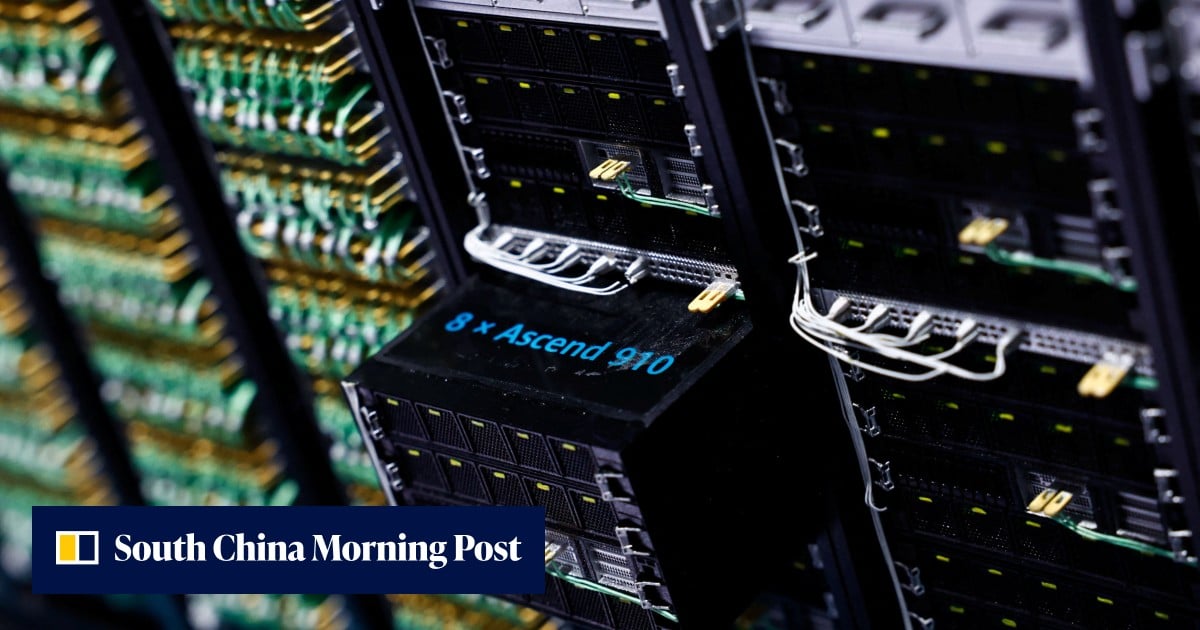
Photo via South China Morning Post

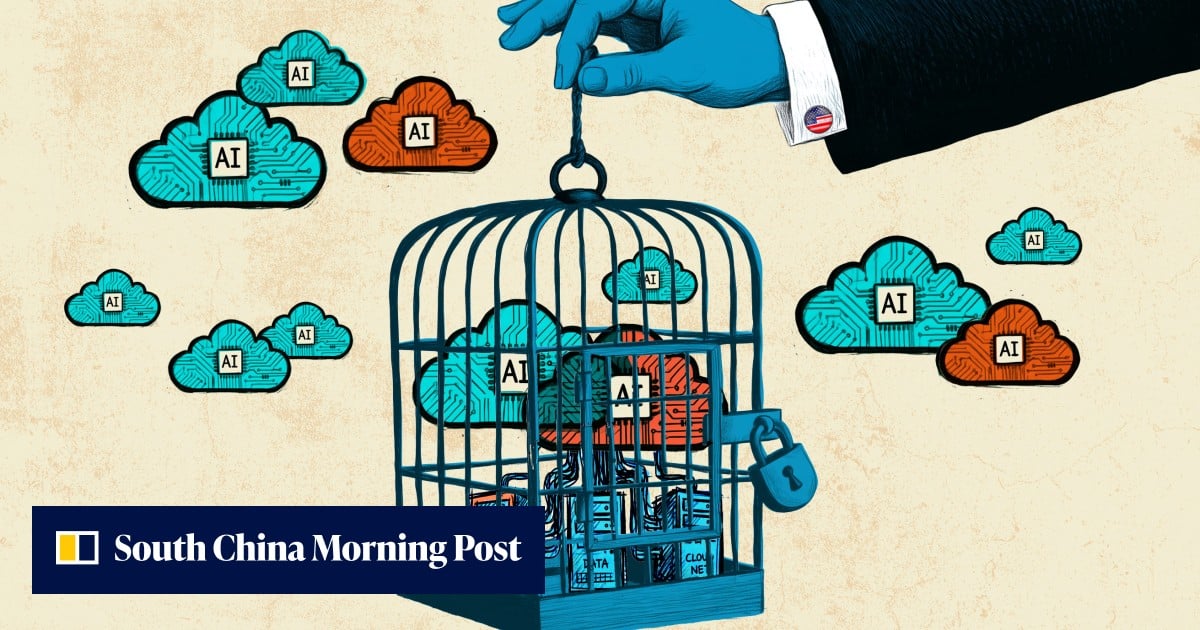
As the US weighs restrictions on cloud computing, how will China’s AI sector adapt?

Read the original at South China Morning Post ↗
Cite

Feng, C. (2026, September 21). As the US weighs restrictions on cloud computing, how will China’s AI sector adapt? South China Morning Post. https://www.scmp.com/tech/big-tech/article/3368011/us-weighs-restrictions-cloud-computing-how-will-chinas-ai-sector-adapt?utm_source=rss_feed

Dated when The Aporia collected the article, usually within hours of publication. Check the original for its exact date and byline.

South China Morning Post · collected 2026-09-21 · by Coco Feng

Quick Summary

The article discusses how China's AI sector might adapt if the U.S. imposes restrictions on cloud computing services. Currently, Chinese developers circumvent chip bans by training their AI models using servers located in other countries through cloud networks. This workaround involves setting up proxy entities abroad to lease server space equipped with advanced Nvidia processors outside of U.S. regulatory reach.
Written by AI on 2026-09-21, from this article's own text only (the story summary below draws on all the coverage).

AI analysis

Story summary

The US is considering restricting cloud computing access, which could severely impact China’s AI sector if implemented. Currently, Chinese AI developers cannot legally purchase top-tier AI chips due to existing tech blockades. To circumvent these restrictions, Chinese tech firms have been leasing server space in data centers located in countries like Southeast Asia, Japan, and the Middle East through proxy entities set up abroad. This allows them to use cutting-edge Nvidia processors for training their AI models outside of US jurisdictional reach. If the proposed cloud computing restrictions are enacted, China’s AI industry could face significant challenges adapting and maintaining its competitive edge globally.

Written for “China AI Sector Under US Pressure” on 2026-10-31, grounded in this article and the 0 other(s) covering the same event.

Story

📰 China AI Sector Under US Pressure
Technology · 1 article(s) covering the same event.

Compared with similar articles

This article reads leans left and hedges 17% of its claims. Each row says how that neighbour differs.
Semafor
⚖️ Leans left Hedges 0 of 4 claims Outlet record 60/100
“The articles discuss different aspects of US-China relations in technology and AI, but do not describe the same specific incident or meeting.”
Washington Examiner
⚖️ Leans right further right than this Hedges 6 of 22 claims Outlet record 70/100
“The articles discuss related topics but describe different aspects of the broader debate around data centers and AI regulation, not a single specific incident.”
Los Angeles Times
Hedges 11 of 73 claims Outlet record 95/100
“The articles discuss different aspects of AI and technology relations between China and the US, not a single specific incident.”
New York Post
⚖️ Leans right further right than this Hedges 2 of 23 claims Outlet record 66/100
“The articles discuss different aspects of China's AI sector and do not describe the same specific incident.”
South China Morning Post
Hedges 0 of 4 claims Outlet record 64/100
“The articles discuss different aspects of China's AI sector and its interactions with cloud computing platforms.”
Toronto Star
⚖️ Centre further right than this Hedges 0 of 2 claims Outlet record 64/100
“Article A discusses potential U.S. restrictions on cloud computing affecting China's AI sector, while Article B reports on Alibaba unveiling new AI chip technologies and plans.”
South China Morning Post
Hedges 0 of 3 claims Outlet record 64/100
“The articles discuss different aspects of China's AI and chip industry developments; Article A focuses on potential US restrictions affecting cloud computing, while Article B reports on Hygon expanding into robotics and edge AI markets with new processors.”
Al Jazeera
⚖️ Leans left Hedges 6 of 43 claims Outlet record 60/100
“The articles discuss different aspects of AI development and policy responses, not a single specific incident.”
South China Morning Post
Hedges 0 of 5 claims Outlet record 64/100
“The articles discuss different aspects of AI development and regulation between China and the US, with no indication they refer to the exact same occurrence.”
Semafor
Hedges 0 of 4 claims Outlet record 60/100
“The articles discuss different aspects of US-China relations regarding AI and technology, without clearly reporting on the same specific incident.”
How this article was measured signals, leaning charts, publisher record, byline, topics and claims

Signals How these are calculated →

Claims extracted
6
sentences that state something as happening or true
Uncertain
17%
1 of 6 hedged ("reportedly", "may", "according to")
Leaning
Leans left
of the writing, not the subject · beta estimate
Publisher signals
64/100
South China Morning Post's corrections and hedging, across everything collected from it. Not a measure of accuracy.
Outlets on this story
1
Technology
Same framing elsewhere
1
articles that frame the event the way this one does
Analyzed 2026-09-21 · how these are computed

How this is being covered How these are calculated →

Article leaning vs. publisher reliability
Source leaning vs. consistency

Publisher

South China Morning Post · 3429 article(s) · 6 correction(s) detected
Running correction rate · 6 correction(s)

Who wrote this

Coco Feng
4 article(s) here · 1 carrying a prediction
🔮 Shenzhen offers discount fares, other perks to keep residents off roads during Apec summit The southern Chinese city is set to face enormous traffic pressure when representatives from 21 Apec economies meet next month The measures included “flexible work arrangements” and “green travel policies”, as the city seeks to balance “high-standard support for foreign affairs activities” and “smooth operation of the economy and society”, Chan Yaodong, deputy secretary general of the municipal government, said at a press conference on Thursday.
🔮 China’s CXMT unveils ‘key progress’ on chip structure pursued by Samsung, SK Hynix Memory chip giant says its proprietary transistor design could increase storage density and improve efficiency CXMT planned to roll out a new server-memory product based on the structure by the end of 2026, president Cao Kanyu said at an industrial event in Shanghai over the weekend, according to a company statement.
🔮 the US weighs restrictions on cloud computing, how will China’s AI sector adapt?
Also by Coco Feng
Nothing else under this byline is closely related to this article, so these are simply their most recent.

Topics

China Chinese Japan Shenzhen Washington

Subjects

China GPE · 2× Chinese NORP · 1× Japan GPE · 1× Nvidia ORG · 1× Shenzhen GPE · 1× Washington GPE · 1× non-Chinese NORP · 1×

Narrative

If Washington expands its tech blockade to include cloud networks, China’s AI sector will face its most severe choke point since the chip bans When Chinese artificial intelligence developers want to train their next-generation frontier models, they all face the same daunting wall: they cannot legally buy the world’s most powerful AI chips.
framing: assertive · carried by 1 article(s) · first seen 2026-09-21
🔮 the US weighs restrictions on cloud computing, how will China’s AI sector adapt?
2026-09-21 · South China Morning Post
As the US weighs restrictions on cloud computing, how will China’s AI sector adapt? · assertive framing

Claims (6 extracted, 1 hedged)

the US weighs restrictions on cloud computing, how will China’s AI sector adapt? asserted
sector → weigh → computing
If Washington expands its tech blockade to include cloud networks, China’s AI sector will face its most severe choke point since the chip bans When Chinese artificial intelligence developers want to train their next-generation frontier models, they all face the same daunting wall: they cannot legally buy the world’s most powerful AI chips. asserted
they → expand → chips
However, the country’s tech giants and start-ups have still managed to quietly keep pace with global rivals. asserted
giants → manage → rivals
Their secret is an elusive workaround: moving heavy training workloads across borders through the cloud. asserted
secret → move → cloud
By setting up proxy entities in foreign jurisdictions, domestic firms have for years leased server space in data centres across Southeast Asia, Japan and the Middle East, according to a broker in Shenzhen who asked not to be named due to the sensitivity of the matter. uncertain
who → set → matter
Under contracts signed by non-Chinese entities, models have been trained on cutting-edge Nvidia processors housed thousands of miles, away outside the reach of US authorities, he said. asserted
he → sign → authorities
💬Give feedback
🕘History 🎫Support