Photo via BBC News

Why Canada is preparing for a (long shot) US invasion

Read the original at BBC News ↗
Cite

Yousif, N., & Levinson-King, R. (2026, October 4). Why Canada is preparing for a (long shot) US invasion. BBC News. https://www.bbc.co.uk/news/articles/c9m2mjj3yvg4o?at_medium=RSS&at_campaign=rss

Dated when The Aporia collected the article, usually within hours of publication. Check the original for its exact date and byline.

BBC News · collected 2026-10-04 · by Nadine Yousif, Robin Levinson-King

Quick Summary

Prime Minister Mark Carney admitted to preparing for the unlikely scenario of a U.S. invasion due to tensions under President Trump's administration. Military experts and former officials confirm that while collaboration between Canadian and U.S. defense forces is extensive, some Canadians are increasingly worried about such an improbable event, as indicated by polls showing over 30% belief in the likelihood of a U.S. invasion following actions like the capture of Nicolás Maduro in Venezuela. The article discusses historical context and current diplomatic relations to explore why fears persist despite low probabilities.
Written by AI on 2026-10-04, from this article's own text only (the story summary below draws on all the coverage).

AI analysis

Story summary

Prime Minister Mark Carney admitted to preparing for a highly improbable scenario: a US invasion of Canada. This preparation stems from the redefined relationship between the two countries under President Donald Trump's leadership, marked by global tariffs and Trump's repeated rhetoric about making Canada the 51st state. In 2025, the US president stated it was "highly unlikely" that the US would ever use military force against Canada but instead emphasized continuing economic pressures to achieve political goals. Despite this, Canadians remain concerned, with a January Leger poll showing over 30% of Canadians believing a US invasion could occur. Military experts still consider an invasion unlikely due to ongoing defense collaborations between the nations, yet the issue remains a significant concern for many Canadians as it reflects broader shifts in the global order.

Written for “Canada US Invasion Concerns” on 2026-11-04, grounded in this article and the 0 other(s) covering the same event.

Story

📰 Canada US Invasion Concerns
Politics · 1 article(s) covering the same event.

Compared with similar articles

This article reads leans right and hedges 9% of its claims. Each row says how that neighbour differs.
The Guardian
⚖️ Leans left further left than this Hedges 1 of 28 claims Outlet record 66/100
“The articles discuss different aspects of strained US-Canada relations but describe distinct events - one a ban on imports and the other preparation for an unlikely invasion scenario.”
Al Jazeera
⚖️ Leans left further left than this Hedges 3 of 56 claims Outlet record 60/100
“The articles cover different aspects of Canada's relationship with the United States under Prime Minister Carney, but describe distinct scenarios and events.”
National Post
Hedges 5 of 64 claims Outlet record 60/100
“Article A discusses Prime Minister Carney's acknowledgment of preparing for a low-probability US invasion scenario in 2026, while Article B references historical War Plan Red from the 1930s as context to support the current claim.”
National Post
⚖️ Leans right Hedges 7 of 47 claims Outlet record 60/100
“The articles describe different aspects of U.S.-Canada relations under Trump's presidency, but they do not report on the same specific incident or event.”
National Post
Hedges 0 of 19 claims Outlet record 60/100
“Article A discusses a poll about perceived threats to Canada, while Article B reports on preparations for the possibility of a US invasion. These are different events.”
Toronto Star
⚖️ Leans left further left than this Hedges 1 of 32 claims Outlet record 64/100
“The articles discuss different aspects of Prime Minister Carney's responses to potential risks under the Trump presidency, but they do not describe the same specific incident or occurrence.”
National Post
⚖️ Leans strongly right further right than this Hedges 4 of 35 claims Outlet record 60/100
“Article A discusses broader political and economic relationships between Canada and the U.S., while Article B specifically mentions a scenario where Canada is preparing for the possibility of a U.S. invasion, which are different specific events.”
National Post
⚖️ Leans right Hedges 3 of 29 claims Outlet record 60/100
“The articles discuss related topics but do not describe the same specific incident. ARTICLE A focuses on Prime Minister Carney's conciliatory remarks and stance on Canadian sovereignty in an interview, while ARTICLE B specifically discusses Carney preparing for a US invasion, which is described as a distinct scenario.”
How this article was measured signals, leaning charts, publisher record, byline, topics and claims

Signals How these are calculated →

Claims extracted
46
sentences that state something as happening or true
Uncertain
9%
4 of 46 hedged ("reportedly", "may", "according to")
Leaning
Leans right
of the writing, not the subject · beta estimate
Publisher signals
66/100
BBC News's corrections and hedging, across everything collected from it. Not a measure of accuracy.
Outlets on this story
1
Politics
Same framing elsewhere
1
articles that frame the event the way this one does
Analyzed 2026-10-04 · how these are computed

How this is being covered How these are calculated →

Article leaning vs. publisher reliability
Source leaning vs. consistency

Publisher

BBC News · 5059 article(s) · 7 correction(s) detected
Running correction rate · 7 correction(s)

Who wrote this

Nadine Yousif
14 article(s) here · 1 carrying a prediction
🔮 For some, like Nadine Suley, the shuttering of the mill could mark not just a lost livelihood, but a lost way of life.
🔮 Over the years, the rescue programme was cut back to just one person in the role, and Ward was shocked when he heard recently that Parks Canada will end the programme entirely as of this month.
🔮 Thursday and Friday's summit will be closely watched for details on how Canada and the European bloc deepen their ties.
🔮 Smith herself opposed the separatist push but said the public will for a vote was undeniable.
2026-10-20 · assertive framing · Alberta votes overwhelmingly to remain part of Canada
🔮 - Published It was a decisive result in a referendum that could have strained the bonds of national unity.
🔮 Of the 39 injured people being cared for in hospital, at least 19 are in a critical condition, Alberta Premier Danielle Smith said at a press briefing on Sunday evening. Fire and rescue teams are remaining at the scene to contain any potential flare-ups, Wainwright Mayor Bruce Pugh told the BBC.
🔮 The province will hold a referendum on 19 October, giving residents two options: vote to stay in Canada, or vote to move ahead with a formal binding referendum on independence at a later date.
🔮 - Published Canada says it will indefinitely suspend plans to expand its medically assisted dying law to people whose sole condition is mental illness, citing a lack of consensus on who would be eligible.
🔮 In 2025, the US president said it was "highly unlikely" that the US would ever use force against Canada.
2026-10-04 · assertive framing · Why Canada is preparing for a (long shot) US invasion
🔮 Police said the driver "may have been experiencing a medical emergency" before the collision.
Also by Nadine Yousif
Nothing else under this byline is closely related to this article, so these are simply their most recent.
All 14 articles by Nadine Yousif →
Robin Levinson-King
3 article(s) here · 1 carrying a prediction
🔮 In 2025, the US president said it was "highly unlikely" that the US would ever use force against Canada.
2026-10-04 · assertive framing · Why Canada is preparing for a (long shot) US invasion
🔮 He couldn't make it to Buffalo for the Bills home opener, but he enjoyed it from his elaborately decorated backyard in Keswick, Ontario.
🔮 But before Canadians start packing their bags, "associate member" status does not currently exist within the EU and could take years to implement, given that all 27 EU member states would have to approve such an arrangement.
2026-09-17 · assertive framing · Why Canadians are ready for closer ties with Europe
Also by Robin Levinson-King
Nothing else under this byline is closely related to this article, so these are simply their most recent.

Topics

BBC British Canada Canadians North American

Subjects

Canada GPE · 15× BBC ORG · 3× British NORP · 3× Americans NORP · 2× Canadians NORP · 2× Coates PERSON · 2× North American NORP · 2× Trump PERSON · 2× the Canadian War Museum ORG · 2× Mark Carney PERSON · 1×

Narrative

Even if a US invasion is extremely unlikely, Matthew Schmidt, an associate professor of national security at the University of New Haven in Connecticut, said the fact that Canadians were preparing was a sign of just how drastically the global order has shifted.
framing: assertive · carried by 1 article(s) · first seen 2026-10-04
🔮 In 2025, the US president said it was "highly unlikely" that the US would ever use force against Canada.
2026-10-04 · BBC News
Why Canada is preparing for a (long shot) US invasion · assertive framing

Claims (46 extracted, 4 hedged)

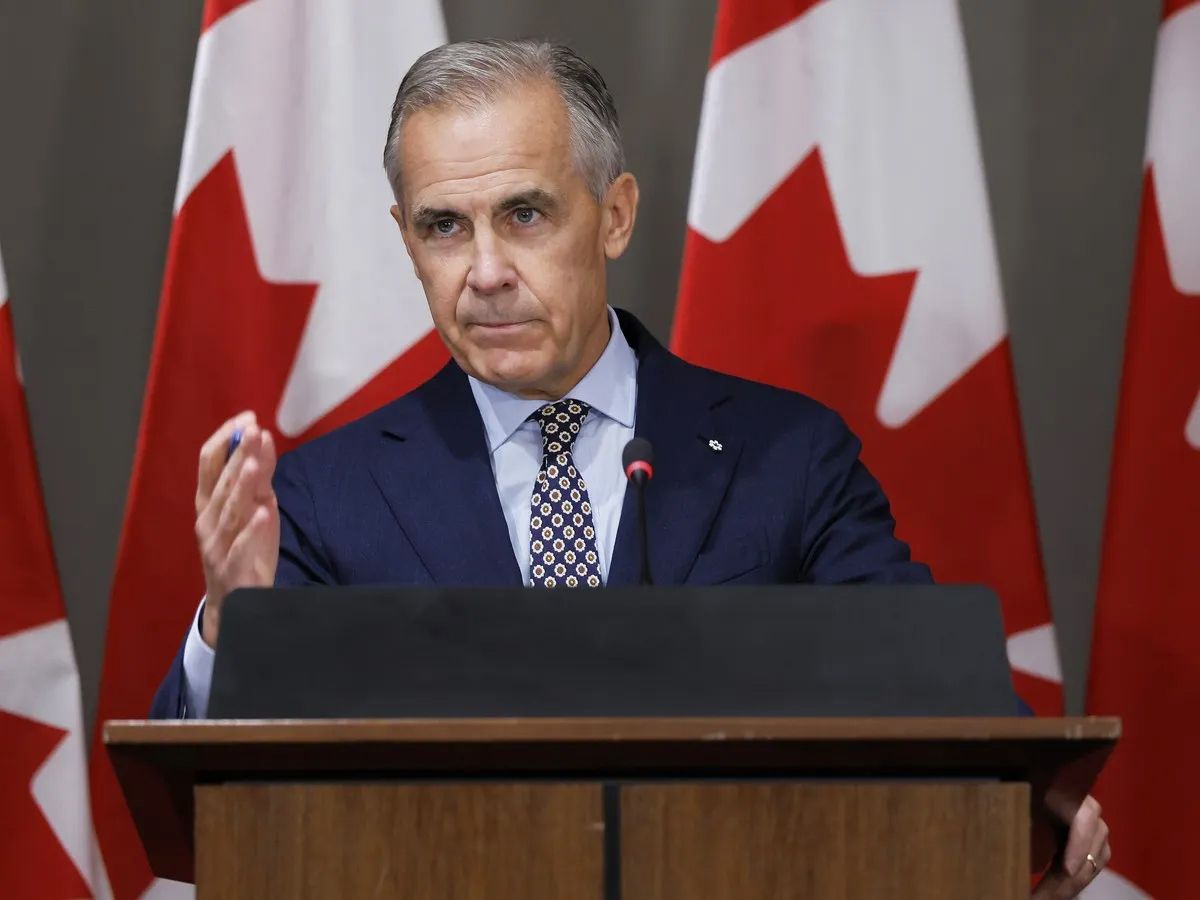
- Published Prime Minister Mark Carney admitted last week that he has prepared for a once-unthinkable scenario - a US invasion. asserted
he → publish → scenario
Noting the risk was low and the likelihood highly improbable, he told the New York Times he had a responsibility to consider all possibilities as the US-Canada relationship is redefined under the Donald Trump presidency. asserted
relationship → note → presidency
"That's just risk management," Carney said. asserted
Carney → say → ?
Trump's global tariffs and his often-repeated desire to make Canada the 51st state has led Canada to war game an attack by the Americans. asserted
Canada → repeat → Americans
In 2025, the US president said it was "highly unlikely" that the US would ever use force against Canada. asserted
US → say → Canada
Instead he said, he would continue to exert economic pressures to obtain political aims. asserted
he → say → aims
"President Trump has done more than anyone to protect the great people of Canada," the White House told the BBC in a statement this week. asserted
House → do → statement
Military experts who spoke to the BBC also think an invasion is a long shot, pointing to the multiple ways the two countries work together on defence. But the issue is clearly weighing on Canadians' minds. In January, after the US captured Nicolás Maduro in Venezuela, a Leger poll suggested that over 30% of Canadians believed that a US invasion was likely. uncertain
invasion → speak → Canadians
Why it is unlikely to happen A war between Canada and the US would be complicated and almost difficult to imagine, said Lt-Gen Christopher Coates, a former military officer of 34 years with the Royal Canadian Air Force who held various senior positions. asserted
who → happen → positions
"I was involved in military operations for my whole career, and we never considered the possibility that there would be a military attack coming from US territory," he told the BBC. asserted
he → involve → BBC
Coates, who had served on Nato missions, noted that Canada and the US collaborate on many aspects of military defence. asserted
Canada → serve → defence
They are both members of the north Atlantic defence alliance, which mandates members to defend a fellow member-nation should they be attacked. asserted
they → mandate → nation
The two countries also conduct joint Arctic defence missions under the North American Aerospace Defence Command (NORAD), and frequently share intelligence. asserted
countries → conduct → intelligence
Because of this, Coates said he believes an attack by the US on Canada would not begin with an armed assault, but rather with more discreet means like cyberwarfare. asserted
attack → say → cyberwarfare
After World War II, Canada and the US became natural allies for the latter part of the 20th Century, and have become heavily integrated economically, militarily and culturally. But it wasn't always this way. asserted
it → become → Century
In fact, a core tenet of Canada's identity is its resistance of US expansionism in the 18th and 19th Centuries, said Tim Foran, a researcher with the Canadian War Museum. asserted
Foran → say → Museum
"Fear of the United States is foundational to the political project that is Canada," he said. asserted
he → say → project
Canada was formed as a collection of British North American colonies who remained loyal to the British Crown when the colonies in the modern-day US rebelled. asserted
colonies → form → US
Before the formation of Canada, the US had attempted to invade British North American colonies, taking control of Montreal in 1775 and nearly conquering Quebec City. asserted
US → attempt → City
In the war of 1812, the Americans invaded what was known then as Upper Canada, Lower Canada and the maritime colonies repeatedly, resulting in a stalemate. asserted
what → invade → stalemate
During that war, British troops famously burned down the White House in retaliation. asserted
troops → burn → retaliation
Foran said that at the time, the colonies that later became Canada relied on Great Britain and its Royal Navy for its defence, as well as indigenous peoples who served as generals in major battles. asserted
who → say → battles
Canada again contemplated war with the US post-World War I in response to its growing power and influence. asserted
Canada → contemplate → power
It drafted a plan that was informed by secret trips to border cities made by Canadian army generals, who would pose as tourists and snap photos of bridges and highways for intelligence. asserted
who → draft → intelligence
They also spoke to local residents to better understand their enemy. asserted
They → speak → enemy
A war was an unlikely scenario then, said Andrew Burtch, a researcher with the Canadian War Museum with expertise on Canada in the 20th Century, but the Canadians still wanted to be prepared. asserted
Canadians → say → Century
"That's part of what militaries do," he said. asserted
he → say → what
"They envisage all sorts of different scenarios. asserted
They → envisage → scenarios
" What a US invasion could look like uncertain
invasion → look → What
Even if a US invasion is extremely unlikely, Matthew Schmidt, an associate professor of national security at the University of New Haven in Connecticut, said the fact that Canadians were preparing was a sign of just how drastically the global order has shifted. asserted
order → say → Connecticut
He added Canadian leaders do have hard questions to ask about how closely they want to continue working with the American military - a partnership that gives them valuable information should they want to harm Canada in any way. asserted
they → add → way
"It's really doing harm to relationships with the United States, and there's a certain amount of legitimate fear," he said. asserted
he → do → fear
Americans might not take Trump's comments about making Canada the 51st state seriously, he said, but Canadians clearly do - and are prepared to defend themselves if needed. uncertain
Canadians → take → themselves
So what would it be like if it happened? asserted
it → happen → what
According to the model used by the Canadian military, as reported on by the Globe and Mail newspaper earlier this year, a US attack would see Canada's strategic positions overwhelmed within a week Its military would quickly be outnumbered, forcing Canadian forces to resort to guerilla-type warfare to try to suppress their enemy. Allied nations like France and Britain would be called on to provide support and defence for Canada, the newspaper reported in January, citing senior government officials. uncertain
newspaper → accord → officials
The theoretical model is believed to be the first time in a century that Canada planned for an American assault. asserted
Canada → believe → assault
The modelling is on the lighter end of military combat planning, Coates said. asserted
Coates → say → planning
He said that Canada, unlike its Nato allies, was lagging behind when it came to having a response plan in place in the event of any ground invasion, and that it was now playing catch-up in this era of unpredictable geopolitics. asserted
it → say → geopolitics
Part of that, he said, was made evident by a recent call by Canada's defence chief to drastically increase the size of its military, including the addition of as many as 300,000 lightly trained citizen soldiers. asserted
he → say → soldiers
Even with its outsized military, the US would have a difficult time getting buy-in for a fight with Canada, said Schmidt. asserted
Schmidt → have → Canada
…and 6 more, not listed.

💬Give feedback · no sign-in needed

No sign-in needed for now. Your note is sent without a name, so it cannot be answered.

🕘History 🎫Support