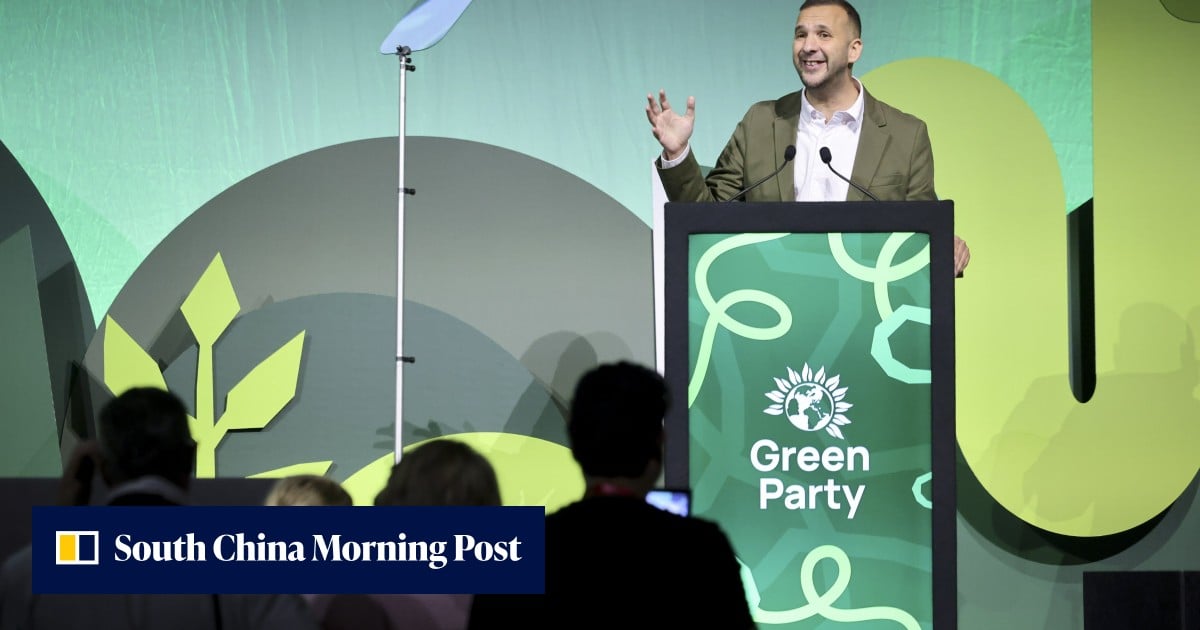
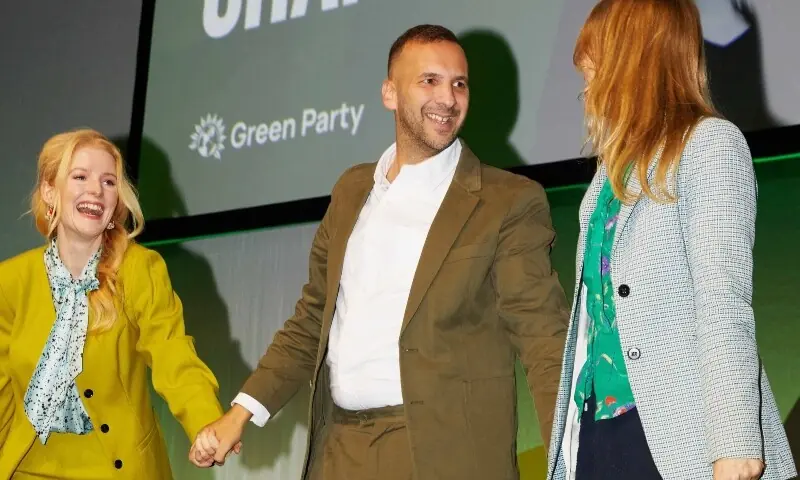
The English and Welsh Greens are facing international ostracism after adopting a policy declaring Zionism as a form of racism, which has drawn dismay from the group representing European Greens.
asserted
which → face → Greens
The co-leader of the German Greens separately said the policy was “intolerable and unacceptable”, running contrary to its belief in the right of Israel to exist.
asserted
policy → say → Israel
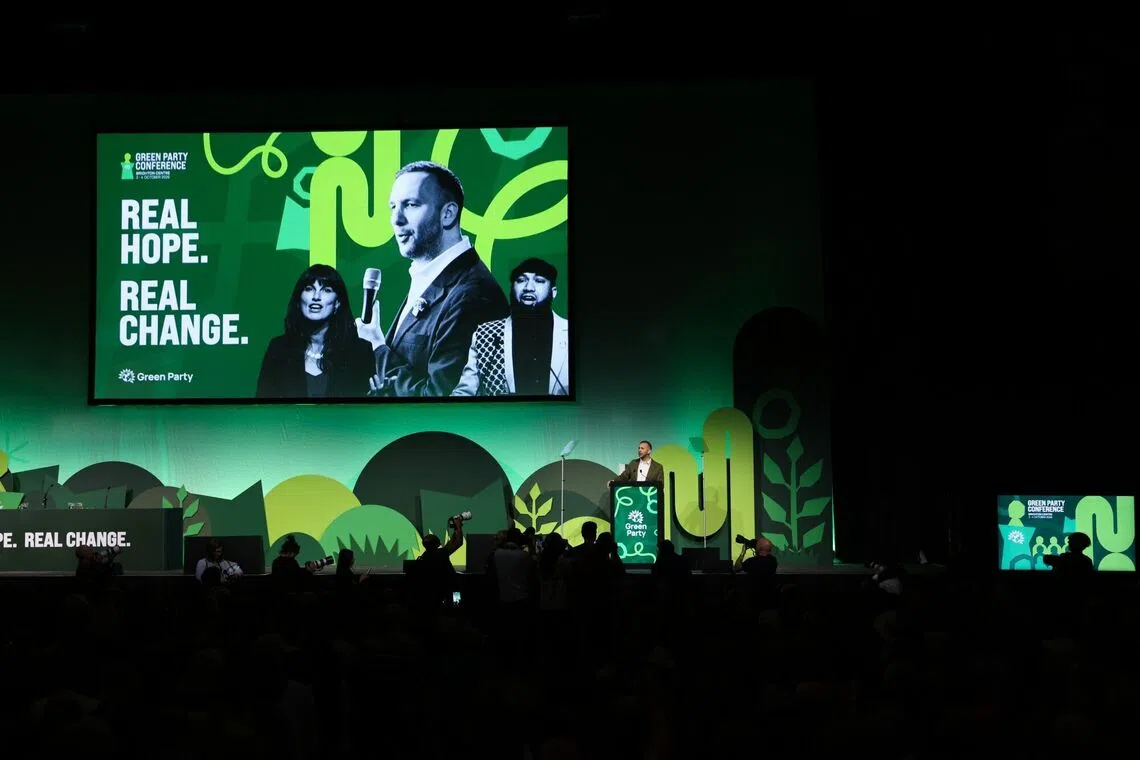
The binding policy motion passed in a vote at the Greens’ conference in Brighton on Sunday.
asserted
motion → bind → Sunday
Four of the party’s five MPs opposed it.
asserted
Four → oppose → it
The policy says Zionism, the movement for a Jewish state, should be “treated as any other form of racism”, and backs a single democratic Palestinian state across historic Palestine “with equal rights for all”.
asserted
Zionism → say → all
The European Green party, which represents 47 parties, including the Green party of England and Wales (GPEW), said it supported a two-state solution for Israel and Palestine, and the new motion went against this.
asserted
motion → represent → this
The alliance “will immediately demand clarity from the leadership and parliamentary group of GPEW, to understand the official party policy of GPEW, how they position themselves towards the self-determination of Israelis and Jews as well as the protection of Jewish people and members in the party”, it said in a statement.
asserted
it → demand → statement
Felix Banaszak, the leader of the German Greens, known formally as Alliance 90/the Greens, told a press conference the motion was “intolerable and unacceptable”.
asserted
motion → know → conference
“It runs counter to everything that Alliance 90/the Greens stands for in Germany, and it also runs counter to what the European Green party stands for,” he added.
asserted
he → run → what
Banaszak said: “There is a widely held view within the European Green party that Israel has a right to exist and that this right must not be undermined.”
asserted
right → say → right
His party would “approach our partner parties in Europe to clarify how to deal with this”.
asserted
party → approach → this
Sandy Ruthven, the chair of Amnesty International UK’s charitable trust and a longstanding Green member, resigned over the motion and accused the party of failing to confront antisemitism.
asserted
Ruthven → resign → antisemitism
The fallout from Sunday’s vote has also intensified a debate over whether the Greens’ highly decentralised policymaking structures remain suitable for a party whose membership has expanded rapidly.
asserted
membership → intensify → party
Policy is made at the party’s two annual conferences, which generally involve a small proportion of members.
asserted
which → make → members
The Zionism motion won just over 1,000 votes, approximately 0.4% of the total membership.
asserted
motion → win → membership
Ellie Chowns, a former co-leader, said the party’s governance and policymaking “urgently need to be modernised”.
asserted
governance → say → ?
“As a party we pride ourselves on our democratic member-led policymaking process, but I do think we need to ask ourselves some searching questions when less than 1% of our members actually participate,” Chowns, the Green MP for North Herefordshire, told the Guardian.
asserted
Chowns → pride → Guardian
“This is long overdue and has become even more urgent with the huge expansion of our membership.”
asserted
This → become → membership
Chowns said she understood the concerns of European Greens, which she shared, but stressed: “There is still much more that unites us than divides us.”
asserted
that → say → us
One source in the party said the criticism from European Greens, especially those in Germany, was understandable given their differing stances on Gaza and Israel.
asserted
criticism → say → Gaza
They said: “The German Greens support arming Israel, opposed a ceasefire to Israel’s onslaught on Gaza, backed the suspension of funding to Unrwa and co-sponsored a Bundestag resolution describing the arguments and methods of the peaceful, Palestinian-led BDS campaign as antisemitic.”
asserted
Greens → say → campaign
Any change to internal party structures would be hard to implement.
asserted
change → implement → structures
One Green insider said that to give MPs greater authority over members would undermine the party’s commitment to grassroots democracy.
asserted
give → say → democracy
However, they said the existing model could produce a lack of coherence and strategic direction, while giving a disproportionate influence to members with the most time to participate in policymaking.
uncertain
model → say → policymaking
They suggested members could determine broad strategic priorities, with smaller bodies developing detailed policy while remaining accountable to the membership.
uncertain
members → suggest → membership
Another senior Green defended the party’s model of direct democracy, arguing that allowing members to determine policy was fundamental to the party’s character.
asserted
members → defend → character
Daniel Schuster, the regional director of the Simon Wiesenthal Center’s European office, said: “The British Green party’s decision to formally classify Zionism as a form of racism is absurd, not based on any logical basis and is itself racist.
asserted
decision → say → basis
And timing, just days before the third anniversary of the 7 October terrorist Hamas attacks, is designed to inflict pain on a deeply solemn occasion.
asserted
timing → design → occasion
“Branding Zionism itself as racism crosses a profoundly consequential line.
asserted
Branding → brand → line
It takes a movement for Jewish national self-determination and transforms it into something for which Jews are expected to apologise.
asserted
Jews → take → which
The Green party of England and Wales was approached for comment.
asserted
party → approach → comment
 The Aporia