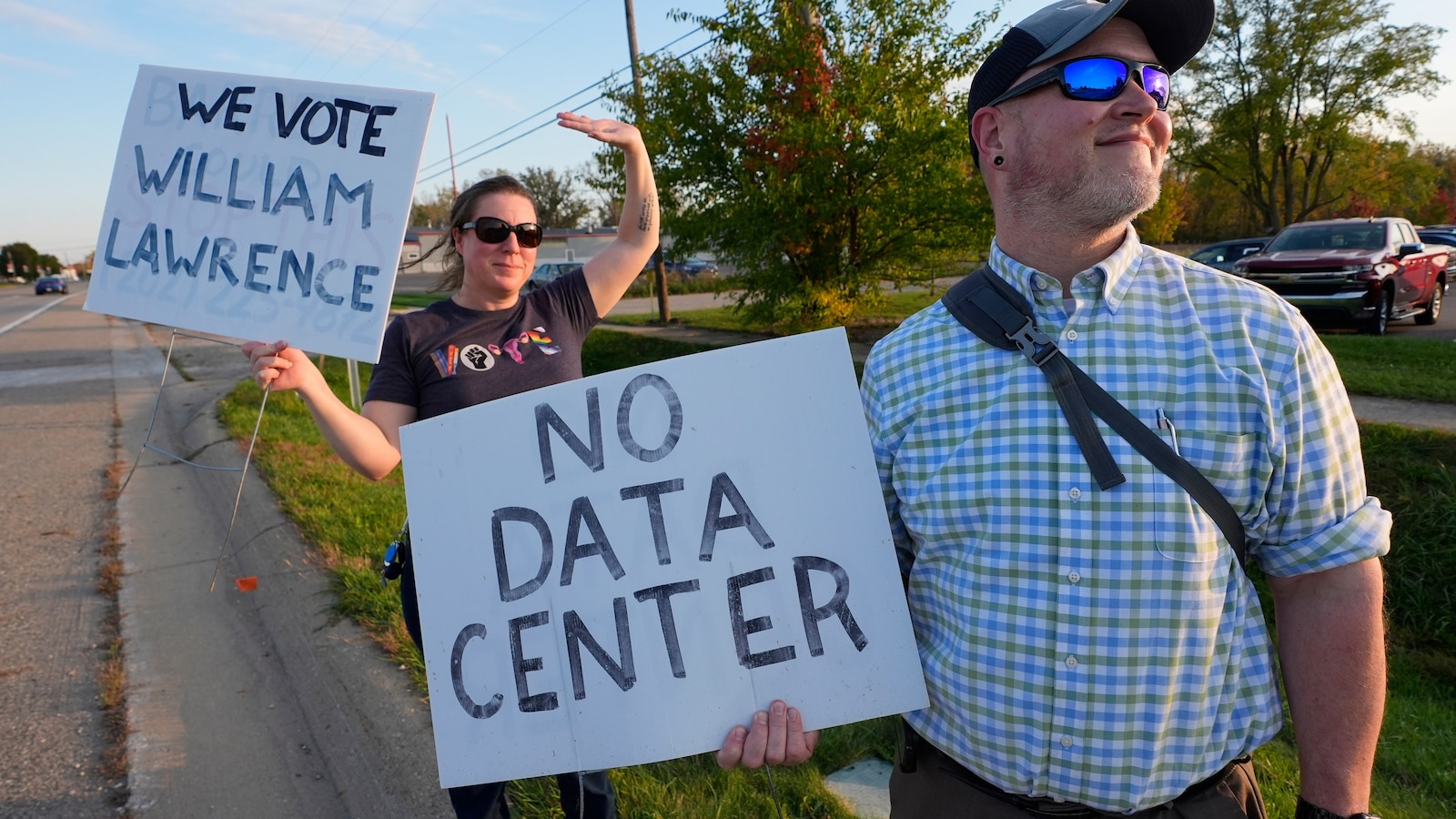
Photo via ABC News (US)

Data centers took a beating in the midterm elections

Read the original at ABC News (US) ↗
Cite

MARC LEVY Associated Press. (2026, November 6). Data centers took a beating in the midterm elections. ABC News (US). https://abcnews.com/Technology/wireStory/data-centers-beating-midterm-elections-reckoning-ahead-tech-137902293

Dated from the outlet's own feed. Check the original for its byline.

ABC News (US) · collected 2026-11-06 · by MARC LEVY Associated Press

Quick Summary

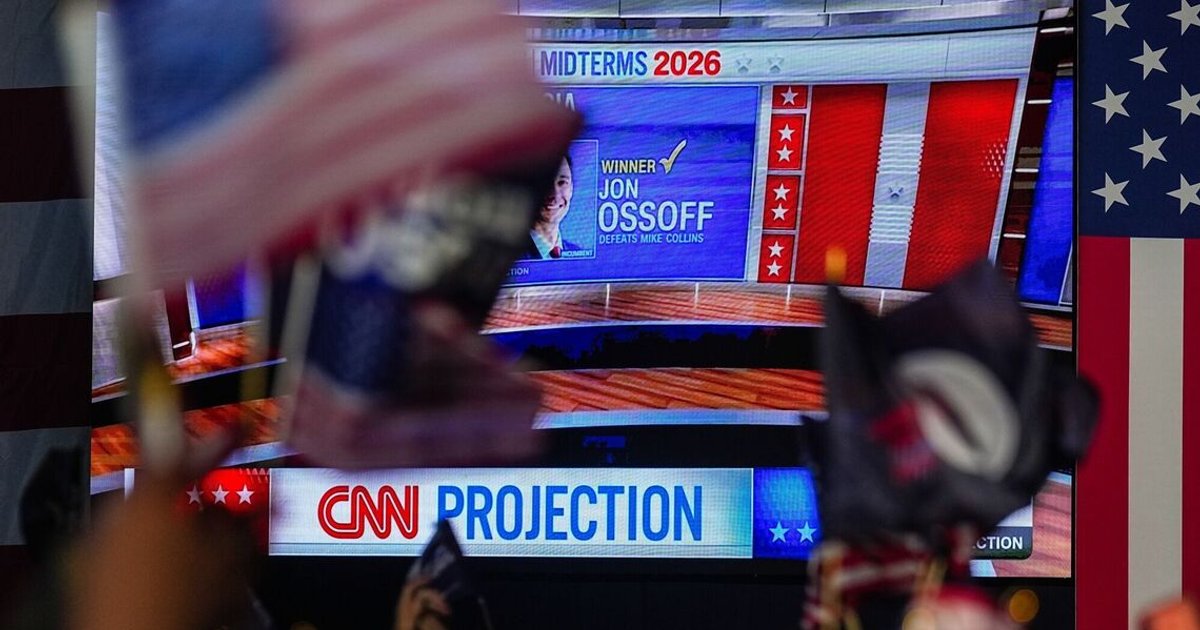
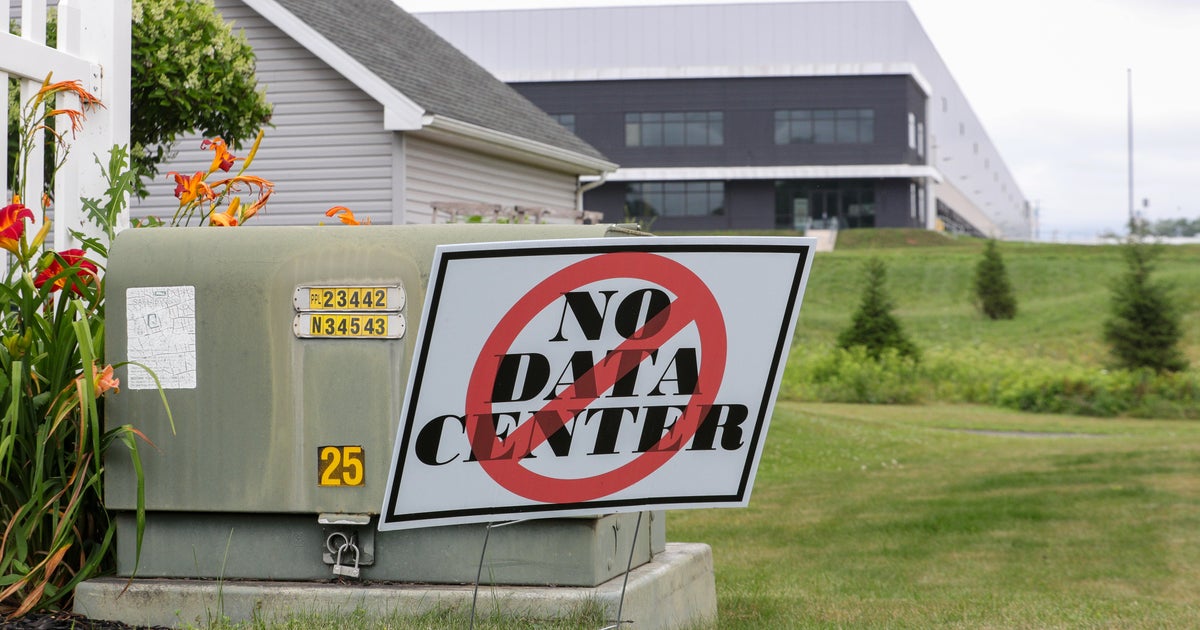
In the recent U.S. midterm elections, opposition to data centers emerged as a significant issue in hundreds of millions of dollars' worth of TV ads and campaign promises. Democrats who won governorships in several key states pledged stricter regulation on these energy-intensive facilities. For instance, Clayton Tucker in Texas attributed his victory partly to his stance against data center development due to concerns over water resources. With Democrats taking control in many state governments, a tougher regulatory environment for data centers is anticipated, despite potential resistance from President Trump.
Written by AI on 2026-11-06, from this article's own text only (the story summary below draws on all the coverage).
See how they differ ↓

AI analysis

Story summary

In the 2026 US midterm elections, voters across nine states overwhelmingly rejected data center projects, passing moratoriums and outright bans in more than 30 localities. Despite initial concerns and predictions that data centers would play a significant role in shaping election outcomes, the actual election results showed that most voters, including many self-identified Republicans, opposed having new data centers in their communities. This rejection of data centers benefited Democratic candidates, who campaigned against the rapid expansion of AI and data centers, highlighting concerns over job loss, surveillance, and economic impacts. Key Democratic victories in states like Ohio and Texas suggest that issues related to AI and data centers may become a central theme in future American politics, reflecting a growing anti-AI populism.

Written for “Data center backlash in midterms” on 2026-11-21, grounded in this article and the 34 other(s) covering the same event.

How they differ

17 outlets covered “Data center backlash in midterms”.

What each outlet says

One AI summary per outlet of its latest article on this story, written from that article alone and checked against it. Open the article for the outlet's own words.

ABC News (US)This outlet6 Nov

In the recent U.S. midterm elections, opposition to data centers emerged as a significant issue in hundreds of millions of dollars' worth of TV ads and campaign promises. Democrats who won governorships in several key states pledged stricter regulation on these energy-intensive facilities. For instance, Clayton Tucker in Texas attributed his victory partly to his stance against data center development due to…

Data centers took a beating in the midterm elections (this article)
CBS News6 Nov

Exit polls from the 2026 elections indicate that AI played a significant role for over half of the voters, although data centers were not the most critical issue. The polls showed majorities in all states opposed having new data centers built locally, benefiting Democratic candidates who campaigned against them. However, even many self-identified Republicans were resistant to data center construction despite voting…

Exit polls show data centers weren't winners in 2026 elections →7 articles from CBS News on this story
The Straits Times4 Nov

In the recent US midterm elections, voters in numerous towns across the country overwhelmingly rejected proposals related to data center developments. Notably, Harwood, North Dakota, was the sole exception where residents voted against a measure designed to limit such industrial projects. Around 430 out of about 800 residents cast their ballots, with approximately three-quarters opposing the initiative aimed at…

US midterms: Only one town out of dozens in US voted in favour of data centres →3 articles from The Straits Times on this story
Semafor5 Nov

After winning majorities in Congress, Democrats see artificial intelligence (AI) regulation as a key issue. However, internal disagreements between progressive and business-friendly factions within the party make it challenging to swiftly implement sweeping regulations. Conservative groups argue that voters are concerned about economic issues linked to rapid AI growth under the previous administration. Despite these…

Democrats are fired up on AI. Consensus is harder. →3 articles from Semafor on this story
South China Morning Post6 Nov

Forecasters are warning that the Democratic victory in the midterm elections may lead to regulatory changes that could stall up to 30% of planned artificial intelligence data centers in the United States. This potential clampdown includes project freezes proposed in Texas and increased federal oversight, which would significantly impact Big Tech's infrastructure spending plans.

Does the Democratic midterm victory spell the end of US AI data centre boom? →3 articles from South China Morning Post on this story
Washington Examiner5 Nov

Newly elected Democratic governors in several states are threatening to slow down or impose restrictions on data center development. In Texas, Governor-elect Gina Hinojosa plans to impose a moratorium until the state imposes regulatory guardrails, including requirements for hiring union workers and protecting water resources. Similarly, Georgia’s Governor-elect Keisha Lance Bottoms said she will sign an executive…

Daily on Energy: Newly elected Democratic governors threaten data center development →3 articles from Washington Examiner on this story
Show 10 more outlets
The Guardian9 Nov

Garrison Lovely argues that opposition to artificial intelligence (AI) is becoming a significant political force in America. The Democratic Party's success in the midterms was partly due to voter rejection of AI datacenters, with over 30 localities across nine states passing restrictions or moratoriums on such facilities. Voters cited AI as crucial in their decisions at a rate of 23%, and Democrats won these voters…

Anti-AI populism is the future of American politics | Garrison Lovely →3 articles from The Guardian on this story
404 Media4 Nov

In last night’s midterm elections across America, voters overwhelmingly rejected proposals related to AI data centers, with 38 out of over 40 ballot measures against them in 13 states. Six cities imposed outright bans while twelve others limited the power draw for such facilities. Candidates who supported data centers faced significant losses; notably, Texas Governor Gregg Abbott lost his bid for a fourth term as…

American Voters Overwhelmingly Reject AI Data Centers →2 articles from 404 Media on this story
Reason4 Nov

In the 2026 midterms, data centers became an unexpectedly significant political issue despite initial skepticism. Exit polls showed that AI data centers were crucial or a major factor for many voters, with most ballot initiatives proposing bans or restrictions on them passing overwhelmingly. Although some argued data center issues did not sway votes as strongly as expected based on pre-election polls, the results…

It Was a Data Center Election After All →2 articles from Reason on this story
New York Post2 Nov

The article reports that despite initial media hype about data centers becoming a significant political issue in US midterm elections, voter polls show it ranks among the least important concerns for Americans in key states like Texas and Ohio. Only around 3% of voters in Texas and 2% in Ohio named data centers as their top concern, according to recent CNN polls. Politicians who previously pushed regulations on data…

Data-center fury is a campaign dud →
Time4 Nov

In the 2026 midterm elections on November 3rd, a significant backlash against AI and data center expansion by voters resulted in major defeats for candidates backed by pro-AI industry groups. Democrats spent over $100 million on ads targeting Republicans’ ties to Big Tech, winning key races such as Ohio’s Senate election. Data center bans passed in multiple counties, and mayors supporting these projects were…

How AI Backlash Shaped the 2026 Midterms →
ABC News (AU)5 Nov

Voters in ten US states rejected data centre proposals in recent midterm elections, with about 41 measures overwhelmingly failing. Democrat Gina Hinojosa's victory in Texas, where she campaigned against data centre construction, further underscores the political toxicity of these projects. Political ads heavily criticized data centres, and exit polls showed that three-quarters of voters oppose such constructions in…

US rejection of data centres is a warning for Australia — and maybe leverage →
Mother Jones5 Nov

Voters across ten states rejected data center projects in nearly 40 towns during recent midterms, with only one measure passing in Harwood, North Dakota. Nationally, 77 percent of voters voted against data center development, largely driven by concerns over environmental justice and rising utility costs. In places like Joliet, Illinois, where communities have long fought industrial pollution, nearly 80 percent…

Midterm Rout for Data Centers: Voters in Nearly 40 Towns Rejected Projects →
The Intercept5 Nov

Midterm elections saw a significant victory for candidates and ballot measures restricting or halting data center development across several states. Newly elected Democratic governors in Georgia, Ohio, and Texas have promised moratoriums on new construction, echoing sentiments from local communities that overwhelmingly approved ballot initiatives against these facilities. Public policy experts attribute this trend…

Blue Tsunami’s Clearest Takeaway: People Hate Data Centers →
The Dispatch6 Nov

The article reports that despite expectations of significant influence, the AI industry faced numerous setbacks during the 2026 midterm elections. A deep-pocketed super PAC supported by Silicon Valley leaders aimed to shape election outcomes but encountered various problems instead. The piece highlights how efforts by corporate AI interests did not achieve their intended impact, reflecting a series of missteps and…

The Midterms’ Other Big Loser: AI →
BBC6 Nov

A recent US midterms voter poll suggests that data centers were a significant issue for many voters, with 56% saying they were crucial or major factors in their vote and 76% opposing new constructions locally. The poll highlights growing public opposition to the expansion of artificial intelligence infrastructure, particularly among those who voted Democrat. Although other issues like government corruption and cost…

Did a data centre revolt affect the US mid-term election results? →

Compared with similar articles

This article reads leans left and hedges 20% of its claims. Each row says how that neighbour differs.
Toronto Star
Leans left Hedges 10 of 48 claims Outlet record 65/100
The Straits Times
Hedges 1 of 26 claims Outlet record 64/100
404 Media
Leans strongly left further left than this Hedges 1 of 40 claims Outlet record 95/100
Reason
Leans left Hedges 1 of 23 claims Outlet record 67/100
CBS News
Leans left Hedges 6 of 27 claims Outlet record 66/100
Washington Examiner
Leans left Hedges 5 of 80 claims Outlet record 67/100
The Guardian
Leans left Hedges 1 of 20 claims Outlet record 64/100
ABC News (AU)
Leans left Hedges 4 of 50 claims Outlet record 67/100
The Intercept
Leans strongly left further left than this Hedges 7 of 53 claims Outlet record 96/100
CBS News
Centre further right than this Hedges 0 of 2 claims Outlet record 66/100

Story

Data center backlash in midterms
Politics · 35 article(s) covering the same event. See how they differ ↑
How this article was measured signals, leaning charts, publisher record, byline, topics and claims

Signals How these are calculated →

Claims extracted
51
sentences that state something as happening or true
Uncertain
20%
10 of 51 hedged ("reportedly", "may", "according to")
Leaning
Leans left
of the writing, not the subject · beta estimate
Publisher signals
66/100
ABC News (US)'s corrections and hedging, across everything collected from it. Not a measure of accuracy.
Outlets on this story
35
Politics
Same framing elsewhere
1
articles that frame the event the way this one does
Analyzed 2026-11-06 · how these are computed

How this is being covered How these are calculated →

Article leaning vs. publisher reliability
Source leaning vs. consistency

Publisher

ABC News (US) · 1720 article(s) · 5 correction(s) detected
Running correction rate · 5 correction(s)

Who wrote this

MARC LEVY Associated Press
1 article(s) here · 1 carrying a prediction
A tougher regulatory environment for artificial intelligence giants and data center developers is expected to follow, even if President Donald Trump — perhaps the industry’s biggest champion — stalls any federal crackdown.
2026-11-06 · assertive framing · Data centers took a beating in the midterm elections
Wire or desk byline, not an individual reporter.
Nothing else under this byline in the corpus.

Topics

Democrat Democrats Nevada Republican Texas

Subjects

Democrats NORP · 6× Crowley PERSON · 3× Congress ORG · 2× Democrat NORP · 2× Nevada GPE · 2× Republican NORP · 2× Texas GPE · 2× Wisconsin ORG · 2× HARRISBURG GPE · 1× U.S. GPE · 1×

Narrative

Data centers took a beating in the midterm elections Opposition to data centers was part of midterm races across the U.S., with campaigns featuring them in hundreds of millions of dollars' worth of TV ads and many winners pledging to clamp down on the energy-hungry behemoths HARRISBURG, Pa. --
framing: assertive · carried by 1 article(s) · first seen 2026-11-06
A tougher regulatory environment for artificial intelligence giants and data center developers is expected to follow, even if President Donald Trump — perhaps the industry’s biggest champion — stalls any federal crackdown.
2026-11-06 · ABC News (US)
Data centers took a beating in the midterm elections · assertive framing

Claims (51 extracted, 10 hedged)

Data centers took a beating in the midterm elections Opposition to data centers was part of midterm races across the U.S., with campaigns featuring them in hundreds of millions of dollars' worth of TV ads and many winners pledging to clamp down on the energy-hungry behemoths HARRISBURG, Pa. -- asserted
winners → take → behemoths
After a campaign season filled with outrage against data centers, the midterm elections ushered in a wave of Democrats pledging to clamp down on the energy-hungry behemoths. asserted
elections → fill → behemoths
A tougher regulatory environment for artificial intelligence giants and data center developers is expected to follow, even if President Donald Trump — perhaps the industry’s biggest champion — stalls any federal crackdown. asserted
Trump → expect → crackdown
But hardline stances against the server warehouses were woven into the platforms of many candidates, including the Democrats who upended longtime Republican control of the governorships in Texas, Ohio, Georgia, Nevada and Iowa, many of which are data center hotspots. asserted
many → weave → which
Skepticism of data centers, and their impact on electricity prices, often blended with the fight for affordability — a key campaign talking point for Democrats. asserted
Skepticism → blend → Democrats
In Texas, Clayton Tucker, the first Democrat elected state agriculture commissioner since 1986, said his pledge to fight data center development was critical to his victory. asserted
pledge → elect → victory
Everywhere he went, he said, ranchers worried that data centers posed an existential threat to their dwindling water supplies. asserted
centers → go → supplies
“You know, there’s an old saying around here that ‘whiskey’s for drinking and water’s for fighting,’” Tucker told The Associated Press. asserted
Tucker → know → Press
“And that’s exactly what happened.” asserted
what → ’ → ?
According to data from AdImpact, campaigns large and small spent more than $380 million on television ads mentioning data centers. uncertain
campaigns → accord → centers
Democrats outspent Republicans on the topic by more than three to one. asserted
Democrats → outspent → one
Sweeping wins by Democrats could have far-reaching implications for data centers. uncertain
wins → have → centers
Besides taking control of Congress, Democrats flipped at least five governors’ offices and took full control of state governments in five more states: Wisconsin, Minnesota, Pennsylvania, Nevada and Michigan. asserted
Democrats → take → states
Data Center Watch, a project of AI security consultancy 10a Labs, said it tracked winning candidates for Congress and governorships and found the vast majority had expressed support for stronger regulation or even a moratorium. asserted
majority → say → regulation
Among governors, 32 of the 34 victorious candidates in races where AP called a winner support stronger regulation or restrictions. asserted
AP → call → regulation
Twelve of the 34 support bans or moratoriums, it said. asserted
it → support → bans
During the campaign, Wisconsin Gov.-elect David Crowley, a Democrat, changed his position under pressure from his Republican opponent to take a harder line against data centers. asserted
Crowley → change → centers
Initially opposed to any moratorium, Crowley later said he supported one as well as abolishing the state’s sales tax exemption for data center operators and developers. asserted
he → oppose → operators
In an interview Thursday with AP, Crowley said he’s having discussions now about what he'll propose once he takes office. asserted
he → say → office
In the mix are things like requiring developers to disclose more about their water and energy consumption, ensuring a community supports a project before it can go forward and insulating ratepayers and taxpayers from the energy costs of the projects, Crowley said. asserted
Crowley → require → projects
AI giant OpenAI published a framework Thursday enumerating new commitments to the communities where it develops data centers. asserted
it → publish → centers
The company said it was asking federal, state and local policymakers to write “clear rules for how the industry builds.” asserted
industry → say → rules
“Lawmakers should establish rules to advance responsible investment, protect residents, and ensure that the benefits of AI infrastructure are broadly shared,” the post said. asserted
post → establish → infrastructure
An industry association, the Data Center Coalition, echoed the sentiment that developers need to keep trying to build trust with public officials and communities. asserted
developers → echo → officials
A coalition official, Dan Diorio, said the industry is aware many midterm winners have vowed to impose a moratorium. asserted
winners → say → moratorium
“We should expect them to want to deliver on those promises, but there are going to be real world consequences of that,” Diorio said in an interview. asserted
Diorio → expect → interview
Those consequences, Diorio said, could include host communities missing out on tax revenue or payments from tech companies. uncertain
communities → say → companies
Data centers are also driving a broader economic expansion that encourages investment in domestic manufacturing, he said. asserted
he → drive → manufacturing
The election of data center skeptics adds challenges to stock markets riding high on the AI boom. asserted
election → add → boom
On Thursday, the Nasdaq, which is full of AI-related and other tech stocks, sank 11% below its all-time high amid worries that data center construction may slow because it’s getting costlier to borrow money. uncertain
it → relate → money
AI data center construction is driving much of the U.S. economy’s growth, and any slowdown could have a broader chill. uncertain
slowdown → drive → chill
In an analyst report, Morgan Stanley said decisive results for Democrats carry "greater expectations for data center restrictions" that, under new state regulations, could “split the country into areas that are open to new data centers and those without.” uncertain
that → say → centers
It singled out Texas' election of Democrat Gina Hinojosa for governor as the “most important election result" for data center development. asserted
It → single → development
Hinojosa has said she’d block a permit for a data center if it wasn’t a good deal for Texans or residents hadn’t gotten a say in the matter. asserted
residents → say → matter
She defeated Republican Gov. Greg Abbott, who had touted Texas as "the epicenter of AI development” before trying to clamp down on it late in the campaign. asserted
who → defeat → campaign
Morgan Stanley also said Ohio's election of Democrat Dr. Amy Acton as governor “creates significant risk of data center project delays in the state.” asserted
election → say → state
Acton has pledged to block a data center project unless it meets certain standards. asserted
it → pledge → standards
Voters in local referendums cast ballots overwhelmingly in favor of restricting data centers, according to an analysis by polling and data science firm Redbud Consulting. uncertain
Voters → cast → Consulting
Redbud tracked 47 referendums in 44 municipalities in 12 states, including 21 in Ohio alone, eight in Maine, seven in Illinois and four in Kansas. asserted
Redbud → track → Kansas
Restrictions were approved in 44 of the 45 elections where counting was complete, Redbud reported. asserted
Redbud → approve → elections
…and 11 more, not listed.
Give feedback · no sign-in needed

No sign-in needed for now. Your note is sent without a name, so it cannot be answered.

History Support