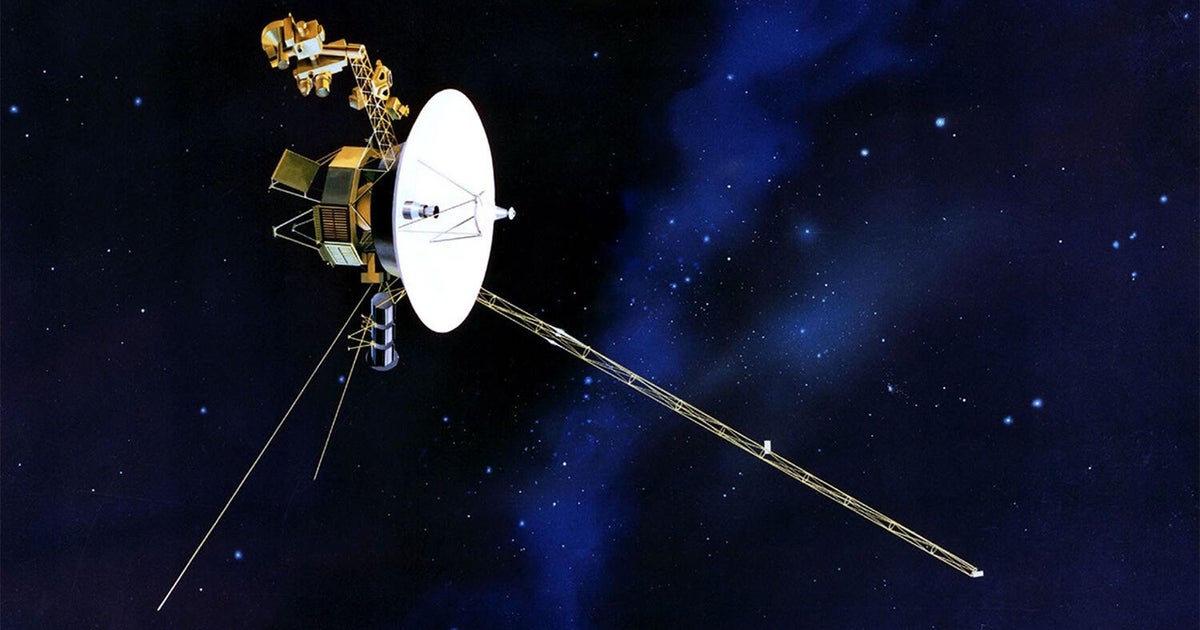
Photo via CBS News

Voyager 1 sets new distance record of one "light day" from Earth

Read the original at CBS News ↗
Cite

Harwood, W. (2026, November 18). Voyager 1 sets new distance record of one "light day" from Earth. CBS News. https://www.cbsnews.com/news/voyager-1-probe-light-day-earth-father-than-anything/

Dated from the outlet's own feed. Check the original for its byline.

CBS News · collected 2026-11-18 · by William Harwood

Quick Summary

NASA's Voyager 1 probe, launched in 1977, set a new distance record of one light day from Earth, which is more than 16 billion miles, on Wednesday. This makes it the farthest human-made object from Earth. Voyager 1 and its sister ship, Voyager 2, which reached interstellar space in 2018, continue to transmit data about interstellar space despite declining power levels. Voyager 1's signal, traveling at the speed of light, takes 24 hours to reach Earth, and confirmation of the milestone will be received on Thursday.
Written by AI on 2026-11-18, from this article's own text only (the story summary below draws on all the coverage).
See how they differ ↓

AI analysis

Story summary

On November 18, 2026, NASA's Voyager 1 became the first human-made object to reach one light-day from Earth, a distance of over 16 billion miles (26 billion kilometers). Launched in 1977, Voyager 1 crossed this historic threshold on its journey through interstellar space. The signal confirming this milestone took exactly 24 hours to reach Earth, marking the first time a human-made object has communicated from such a distant location. NASA celebrated this achievement by encouraging people worldwide to form a "wave of golden light" using Morse code to spell "V-G-R" (Voyager’s call sign) after sunset on November 17.

Written for “NASA Voyager 1 Reaches One Light-Day Milestone” on 2026-11-21, grounded in this article and the 18 other(s) covering the same event.

How they differ

16 outlets covered “NASA Voyager 1 Reaches One Light-Day Milestone”.

What each outlet says

One AI summary per outlet of its latest article on this story, written from that article alone and checked against it. Open the article for the outlet's own words.

CBS NewsThis outlet18 Nov

NASA's Voyager 1 probe, launched in 1977, set a new distance record of one light day from Earth, which is more than 16 billion miles, on Wednesday. This makes it the farthest human-made object from Earth. Voyager 1 and its sister ship, Voyager 2, which reached interstellar space in 2018, continue to transmit data about interstellar space despite declining power levels. Voyager 1's signal, traveling at the speed of…

Voyager 1 sets new distance record of one "light day" from Earth (this article)
Al Jazeera18 Nov

NASA’s Voyager 1 has traveled for 49 years and is now more than 16 billion miles from Earth, marking a new milestone as it is one light-day away. This means radio signals sent from Earth take 24 hours to reach the spacecraft, which continues to transmit data from interstellar space.

Voyager 1 reaches one light-day from Earth after 49 years in space →2 articles from Al Jazeera on this story
The Hindu18 Nov

NASA’s Voyager 1 probe reached a distance of one light-day from Earth on November 18, 2026, at 5:16 a.m. ET, approximately 16 billion miles away. The probe, launched in 1977, is now in interstellar space, and confirmation of this milestone will be discussed at an event on November 19. Project manager Suzanne Dodd noted that reaching this distance is an unexpected achievement, with the probe continuing to transmit…

NASA Voyager 1 probe believed to have reached ‘light-day’ milestone →2 articles from The Hindu on this story
Toronto Star14 Nov

NASA’s Voyager 1 is set to reach one light-day from Earth on Wednesday, marking a new distance record in interstellar space. Launched 49 years ago, the spacecraft will be over 16 billion miles away from Earth, and its radio signals will take exactly 24 hours to reach us. NASA project manager Suzanne Dodd considers Voyager 1 a "national treasure," and the organization is encouraging people worldwide to participate in…

NASA's Voyager 1 closes in on a light-day in interstellar space for a new distance record →
Los Angeles Times17 Nov

NASA’s Voyager 1 space probe is about to reach a distance where its signals will take a full day to travel from the spacecraft to Earth, marking a new engineering milestone expected around 2:16 a.m. Wednesday. Launched nearly 50 years ago, Voyager 1 has been traveling at 38,000 miles per hour and is now approximately 16 billion miles from Earth. Alan Cummings, a senior research scientist who has worked on the…

NASA's Voyager 1 will soon be so far away that its messages take a day to reach Earth →
Show 9 more outlets
ABC News (AU)17 Nov

NASA's Voyager 1 spacecraft is set to reach a distance of one light-day from Earth, or 25.9 billion kilometers, at 9:16 pm AEDT on November 18. Launched in 1977, Voyager 1 is now the farthest human-made object from Earth and has entered interstellar space. Project scientist Linda Spilker highlights the significance of this milestone, noting that Voyager 1's journey, originally intended to last only a decade, has…

NASA's Voyager 1 probe to reach historic light-day milestone today →
The Daily Wire18 Nov

The article discusses Voyager 1, which was launched on September 5, 1977, and is now one light-day (approximately 16.1 billion miles) from Earth. The author reflects on the significance of Voyager 1’s mission, which explored Jupiter and Saturn before leaving the solar system in 2012. The piece contrasts the technological achievement with current global issues, emphasizing the remarkable feat of human exploration and…

Voyager 1: In A World Gone Mad, Remember What Humanity Can Do →
CBC18 Nov

Voyager 1, launched in 1977, has reached a distance of 26 billion kilometers from Earth, marking a new milestone where it takes light one full day to travel from Earth to the spacecraft. This achievement underscores the vast scale of space and the longevity of human-made technology. Despite its age, Voyager 1 continues to communicate with Earth and operate two of its original instruments, which measure plasma waves…

The new milestone Voyager 1 just crossed in interstellar space →
The Straits Times18 Nov

NASA's Voyager 1 probe is believed to have reached a distance of one light-day from Earth, approximately 16 billion miles, on November 18. Launched in 1977, Voyager 1 entered interstellar space in 2012 and continues to gather scientific data, including measurements of magnetic fields, cosmic rays, and plasma waves. Officials at NASA's Jet Propulsion Laboratory will confirm the milestone once they receive a signal…

NASA Voyager 1 probe believed to have reached 'light-day' milestone →
The Guardian18 Nov

NASA’s Voyager 1 probe, launched in September 1977, has traveled for 49 years at a speed of 37,800 miles per hour and is now one light-day (16.1 billion miles) away from Earth. It took photos of Jupiter and Saturn before exiting the solar system’s protective heliopause in 2012. Voyager carries a golden record containing Earth’s cultural messages, including music, greetings in 55 languages, and images. In 1990, at…

After 49 years, Nasa’s Voyager 1 is one light-day away from us. Can we save this ‘pale blue dot’? | →
NBC News18 Nov

NASA’s Voyager spacecraft has reached a historic milestone, being the first human-made object to be one full light day away from Earth. This means it would take light, traveling at 670 million miles per hour, 24 hours to reach the spacecraft. Tom Costello of NBC reports on TODAY about the spacecraft's long and remarkable journey through space.

NASA Voyager Reaches One Full Light Day From Earth →
The Globe and Mail19 Nov

NASA’s Voyager 1 spacecraft has reached a distance of one light-day from Earth, marking a new milestone in its journey through interstellar space. The signal from the spacecraft, sent 24 hours earlier, traveled approximately 26 billion kilometers at the speed of light before being received by flight controllers at California’s Jet Propulsion Laboratory on Thursday. Launched in 1977, Voyager 1 has been transmitting…

NASA’s Voyager 1 is an awe-inspiring one light-day away from Earth →
Times of India20 Nov

NASA's Voyager 1 spacecraft has communicated with Earth from a distance of one light-day, which is approximately 16 billion miles. The signal took exactly 24 hours to travel from Voyager 1 to antennas near Madrid, Spain, and was confirmed by flight controllers at NASA’s Jet Propulsion Laboratory on Thursday. This achievement marks a new milestone in Voyager 1’s nearly 49-year journey, during which it has flown past…

Hello, Earth! Nasa's Voyager 1 phones home from beyond 16 billion miles →
Toronto Sun20 Nov

NASA’s Voyager 1 probe has reached one light-day from Earth, marking a historic milestone as the farthest human-made object from our planet. This distance is approximately 26 billion kilometers, and Voyager 1 has held this distinction since surpassing Pioneer 10 in 1998. Launched in September 1977, Voyager 1 was designed to operate for only five years but continues to function nearly 10 times longer than initially…

NASA’s Voyager 1 reaches one light-day from Earth in historic milestone →

Where they agree and split

Agreed

Reported by outlets on both sides of the middle

To celebrate this moment, NASA is urging people from all corners to grab their phone or a flashlight to create a wave of golden light after sunset Tuesday, using Morse code to spell the letters V-G-R, Voyager’s call sign, into the night sky.

4 outlets

Framing

How the first headlines put it

Stated as fact2
The headlines (2)

NASA's Voyager 1 closes in on a light-day in interstellar space for a new distance record Toronto Star · stated as fact

NASA’s Voyager 1 to hit new space distance record of one light-day Al Jazeera · stated as fact

The full story: what happened, how it changed, and all 19 articles →

Compared with similar articles

This article reads unscored and hedges 2% of its claims. Each row says how that neighbour differs.
ABC News (AU)
Hedges 4 of 47 claims Outlet record 67/100
Toronto Star
Hedges 2 of 32 claims Outlet record 64/100
Toronto Sun
Hedges 2 of 27 claims Outlet record 96/100
Al Jazeera
Hedges 0 of 2 claims Outlet record 60/100
NPR
Hedges 1 of 22 claims Outlet record 60/100
The Hindu
Hedges 2 of 25 claims Outlet record 78/100
The Daily Wire
Leans left Hedges 6 of 72 claims Outlet record 60/100
CBC News
Hedges 2 of 37 claims Outlet record 72/100
The Straits Times
Hedges 4 of 22 claims Outlet record 64/100
The Hindu
Hedges 4 of 21 claims Outlet record 78/100

Story

NASA Voyager 1 Reaches One Light-Day Milestone
Science · 19 article(s) covering the same event. Compare every outlet's account →
How this article was measured signals, leaning charts, publisher record, byline, topics and claims

Signals How these are calculated →

Claims extracted
51
sentences that state something as happening or true
Uncertain
2%
1 of 51 hedged ("reportedly", "may", "according to")
Leaning
not political
takes no side on a contested political question
Publisher signals
66/100
CBS News's corrections and hedging, across everything collected from it. Not a measure of accuracy.
Outlets on this story
19
Science
Same framing elsewhere
1
articles that frame the event the way this one does
Analyzed 2026-11-18 · how these are computed

How this is being covered How these are calculated →

Article leaning vs. publisher reliability
Source leaning vs. consistency

Publisher

CBS News · 5941 article(s) · 11 correction(s) detected
Running correction rate · 11 correction(s)

Who wrote this

William Harwood
8 article(s) here · 1 carrying a prediction
As of 5:16 a.m. EST Wednesday, Voyager 1, sailing through space at nearly 38,000 mph, was expected to pass the one-light-day milestone, so far away that radio signals, traveling at 186,000 miles every second, need 24 hours to reach flight controllers at NASA's Jet Propulsion Laboratory.
"We will work closely with our customer and other appropriate organizations to find the cause, determine the appropriate corrective action and return to flight as quickly as possible."
It was the first such recovery of a Starship from orbit — previous test flights ended with planned ocean splashdowns — marking a major milestone in SpaceX's drive to develop the first fully reusable orbit-class rocket, a vehicle company founder Elon Musk says will dramatically lower the cost of launching payloads to Earth orbit, the moon and, eventually, Mars.
If successful, the flight will mark a critical step in the development of the world's first fully reusable orbit-class rocket.
2026-11-13 · assertive framing · SpaceX launches first-iof-its-kind Starship test flight
Attachment and extension of the seventh panel last week was relatively straightforward because the 58-foot-long robot arm could easily carry Menon, holding onto a new IROSA, to its nearby installation point on a fixture at the base of an inboard left-side solar wing.
2026-11-05 · assertive framing · Spacewalkers complete space station solar power upgrade
Two astronauts stepped outside the International Space Station Thursday for the first of two spacewalks, one week apart, to install a final pair of roll-out solar blankets that will complete a complex, years-long upgrade of the lab's aging power system.
"We have had the most incredible of expeditions ... and we will never forget it, and never forget all of your hard work."
If the unpiloted test flight goes well, NASA and Boeing hope to launch a piloted Starliner flight in the mid-2028 time frame, officials said Monday, incorporating redesigned propulsion system valves, more robust subsystems and other modifications expected to prevent the sort of failures that occurred in 2024.
Also by William Harwood
Nothing else under this byline is closely related to this article, so these are simply their most recent.
All 8 articles by William Harwood →

Topics

NASA Voyager Voyager 1 Voyager 2 Voyagers

Subjects

NASA ORG · 2× American NORP · 1× Carl Sagan PERSON · 1× Chuck Berry PERSON · 1× J.S. Bach PERSON · 1× Jet Propulsion Laboratory ORG · 1× Johnny B. Goode PERSON · 1× Kareem Badaruddin PERSON · 1× Navajo NORP · 1×

Narrative

But in a million years, the silent spacecraft will have passed well beyond the confines of the solar system, reaching a distance of 56 light years while "remaining within the sun's local interstellar neighborhood — a low density region filled with diffuse hydrogen and helium gas and scattered stars: most are very dim, some are sun-like, and comparatively few are luminous." In 100 million years, Voyager 1 will be about 2,000 light years from Earth as the spacecraft and the distant solar system are carried along by the galaxy's rotation.
framing: assertive · carried by 1 article(s) · first seen 2026-11-18
As of 5:16 a.m. EST Wednesday, Voyager 1, sailing through space at nearly 38,000 mph, was expected to pass the one-light-day milestone, so far away that radio signals, traveling at 186,000 miles every second, need 24 hours to reach flight controllers at NASA's Jet Propulsion Laboratory.
2026-11-18 · CBS News
Voyager 1 sets new distance record of one "light day" from Earth · assertive framing

Claims (51 extracted, 1 hedged)

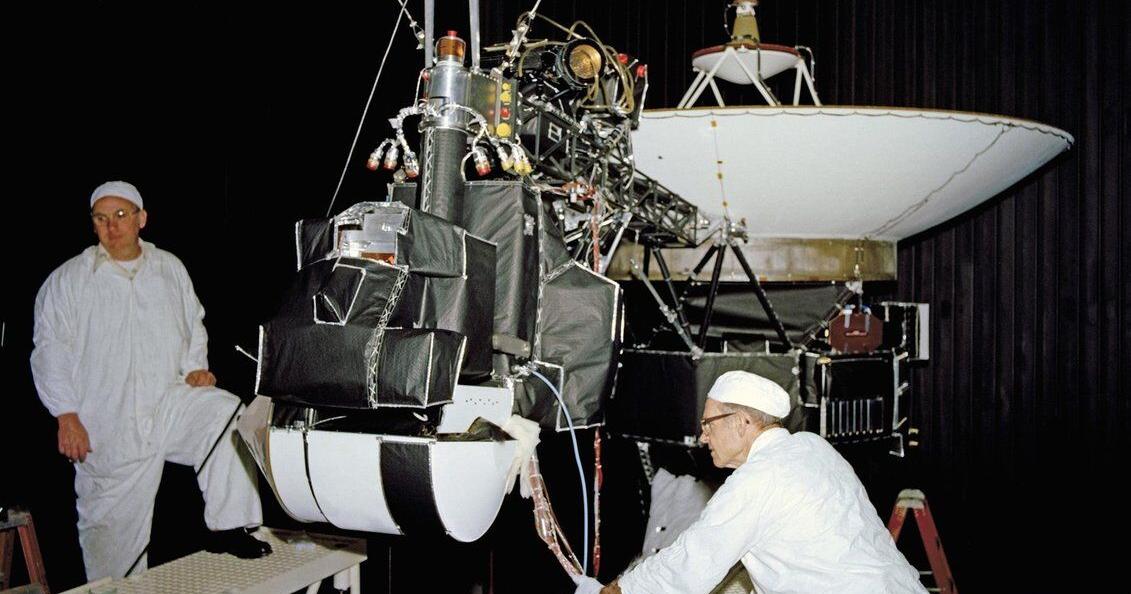
NASA's Voyager 1 probe, launched nearly a half century ago in 1977 to provide the first close-up views of Jupiter, Saturn and their assortment of moons, reached a distance from Earth early Wednesday of one light day — more than 16 billion miles — the farthest any human artifact has ever ventured from the home planet. asserted
artifact → launch → planet
Its sister ship Voyager 2, on a different trajectory, added Uranus and Neptune to the outer planets "Grand Tour" before following its sibling out of the solar system and into interstellar space in 2018, six years after Voyager 1. asserted
ship → add → Voyager
Both spacecraft continue to beam back data about the magnetic fields, charged particles and plasma waves in the space between the stars as their power steadily declines and their signals grow weaker and weaker. asserted
signals → continue → stars
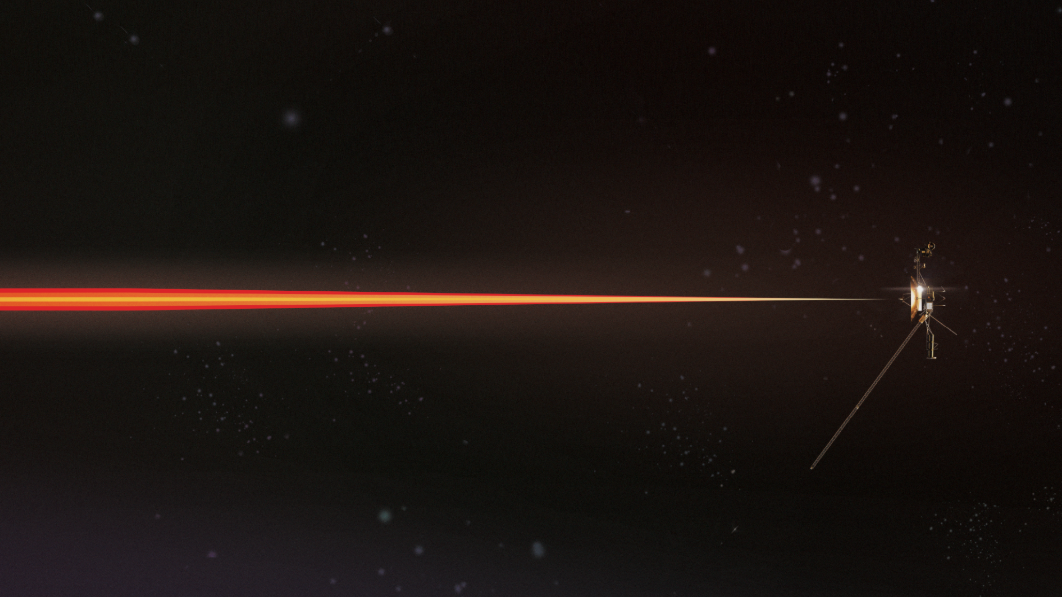
As of 5:16 a.m. EST Wednesday, Voyager 1, sailing through space at nearly 38,000 mph, was expected to pass the one-light-day milestone, so far away that radio signals, traveling at 186,000 miles every second, need 24 hours to reach flight controllers at NASA's Jet Propulsion Laboratory. asserted
signals → sail → Laboratory
That means the 13-member team will have to wait until Thursday for Voyager 1's first post-light-day signal to confirm the achievement. And what an achievement it is: No other space agency in the world has matched or even attempted a mission rivaling Voyager, one that many believe ranks with the Apollo moon landings as one of the greatest feats of American space flight. asserted
many → have → flight
"It's difficult to describe, difficult to put into words," said Voyager Interstellar Mission Manager Kareem Badaruddin, one of just three full-time team members keeping the aging Voyagers healthy and their antennas aimed at Earth. asserted
antennas → describe → Earth
"I feel like this mission is one of the great things that people have ever done, that humans have ever done. asserted
humans → feel → that
"All of us, every person, whether they've worked on this mission or not, can take some some pride in it and can feel like this is a part of what our civilization has accomplished." It's not known how long the Voyagers will continue to function as the plutonium in their nuclear power packs steadily decays. asserted
plutonium → work → packs
With luck and clever management, engineers hope to keep the data flowing for several more years before the signals finally stop. asserted
signals → hope → years
Voyager 1 started out with about 470 watts of power. asserted
Voyager → start → power
That's down to a little more than 210 watts now, enough to run just two of its 10 instruments while keeping the spacecraft properly oriented so it can beam magnetometer and plasma wave data back to Earth. asserted
it → run → Earth
Voyager 2 has a slightly more powerful generator and is operating on a bit more than 230 watts, enough to keep three instruments running. asserted
Voyager → have → instruments
But even after the power is exhausted, both Voyagers will continue on their way, expected to remain roughly intact, if powerless, for a billion years or more, almost certainly outlasting human civilization. asserted
Voyagers → exhaust → civilization
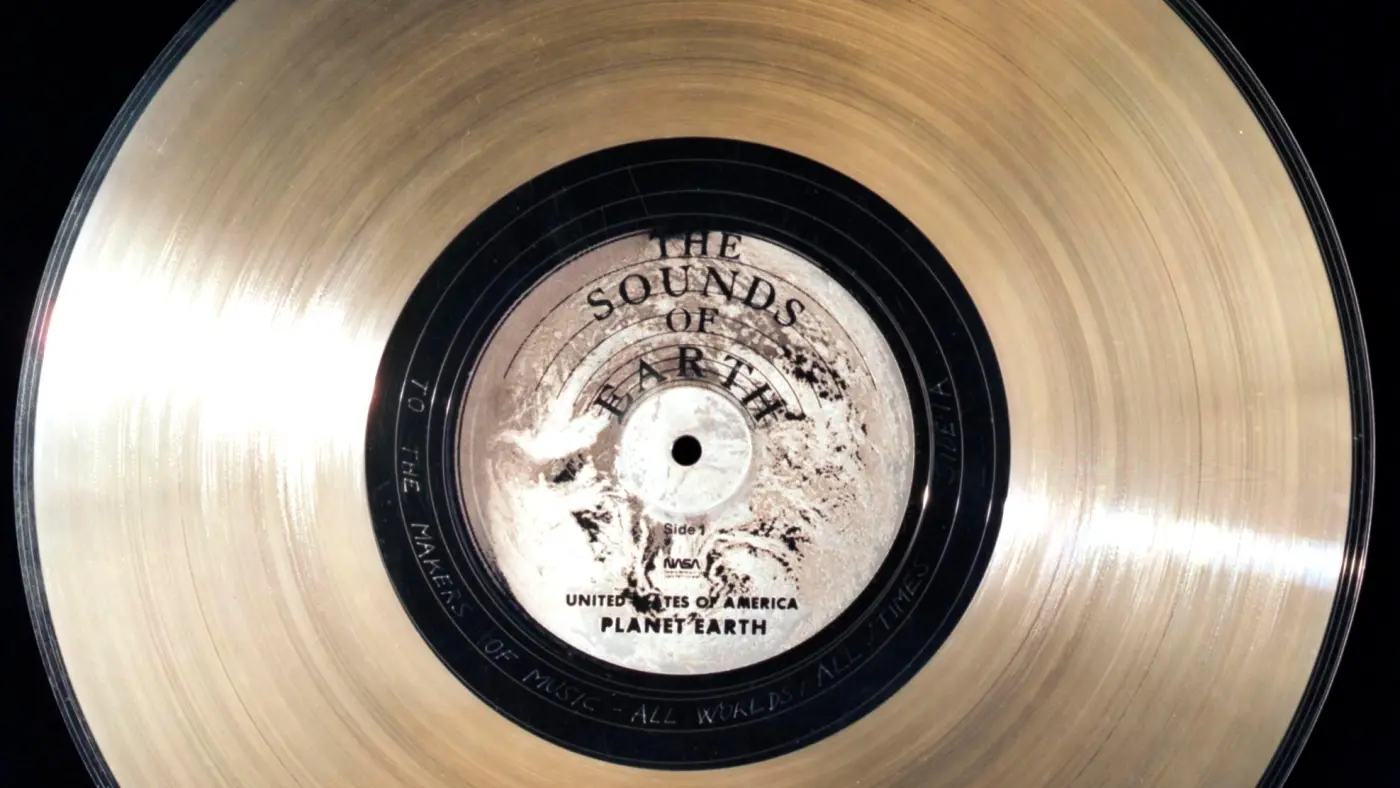
On the remote chance any aliens might one day stumble upon a Voyager in the cold reaches between the stars, both spacecraft are carrying what amount to messages in a bottle, gold phonograph records encoded with the sights and sounds of planet Earth. uncertain
what → stumble → Earth
The records include greetings in 55 languages, 115 photos of Earth's people, wildlife and technology, representative natural sounds and carefully selected art and music from multiple cultures, everything from J.S. Bach to Navajo chants to Chuck Berry singing "Johnny B. Goode." asserted
Berry → include → Goode
"If Voyager should, sometime in its distant future, encounter beings from some other civilization in space, it bears a message, a phonograph record ... with instructions for use," Carl Sagan, the late astronomer who led the golden record project, said in the 1980 "Cosmos" television series. " asserted
who → encounter → series
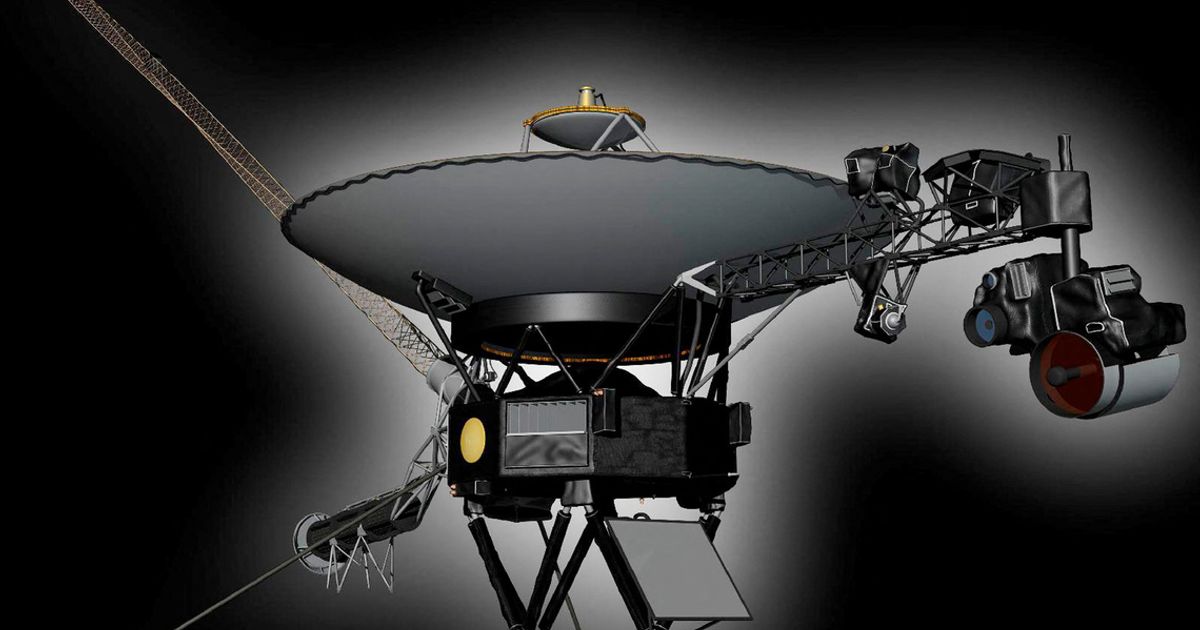
Now beyond the confines of Earth's solar system, the stream of ones and zeros describing the interstellar environment leave Voyager 1's 12-foot-wide dish antenna with less than half the power used by a typical 40-watt refrigerator bulb. asserted
stream → describe → bulb
By the time the signal reaches Earth 24 hours later, its strength is a tiny fraction of a trillionth of a watt, vastly less than the power needed to run a wristwatch — a signal so weak that giant 230-foot-wide antennas in NASA's globe-spanning Deep Space Network are needed to pull in the faint whispers. asserted
antennas → reach → whispers
Commands from flight controllers at JPL now take a full day to reach the spacecraft with another 24 hours required to find out if the commands were received and acted upon. asserted
commands → take → spacecraft
Fixing a problem is a glacial, nail-biting affair. asserted
Fixing → fix → problem
"If you want to say 'hello' to Voyager, you send your message and then you go home and you wait two days before you finally get a response," Suzanne Dodd, the Voyager project manager at JPL, said in a web posting. asserted
Dodd → want → posting
Voyager 1 and Voyager 2 are powered by electricity generated through the decay of radioactive plutonium 238 in compact nuclear power plants known as radioisotope thermoelectric generators, or RTGs. asserted
Voyager → power → generators
Both spacecraft have slowly but steadily lost power as the plutonium in their RTGs has decayed. asserted
plutonium → lose → RTGs
Flight controllers closely manage the available power and the resulting heat needed to keep fuel lines from freezing so thrusters can fire when needed to keep the spacecraft -- and their dish antennas -- locked onto Earth. asserted
thrusters → manage → Earth
Badaruddin said the small flight control team feels the weight of responsibility for keeping the Voyagers alive. asserted
team → say → Voyagers
"If ever you get that sense that oh, I made a mistake, I'm the one who caused a problem for the spacecraft, that's crushing," he said. asserted
he → get → spacecraft
"Every one of the team members feels they're committed to doing everything in our power to do our best for these spacecraft. asserted
they → feel → spacecraft
We're doing everything we can to keep them going for as long as we can." asserted
we → do → them
Two are retirees who worked on the project at launch and came back to help during the interstellar voyage while the rest split their time between Voyager and other projects. asserted
rest → work → Voyager
"I've been at JPL for 32 years, and everybody loves their spacecraft, and everybody feels like it's a family member and gives everything they've got for it," said Badaruddin. asserted
Badaruddin → love → it
And these two retirees have come back and given a tremendous amount of effort and time." The Voyager program was approved in the early 1970s when the outer planets were lined up in a way that would permit a so-called "Grand Tour" of them, enabling spacecraft to make velocity-boosting flybys to jump from one planet to the next, shaving years off the time needed to explore them all. But to reduce costs, the project was only funded for flybys of Jupiter and Saturn. asserted
project → come → Jupiter
Voyager 1 followed on Sept. 5. asserted
Voyager → follow → Sept.
Voyager 1 was on a faster trajectory and reached Jupiter first as planned, flying past the giant planet in 1979, sending back spectacular images of its Great Red Spot — a storm that has been churning for centuries, the planet's turbulent atmosphere and its major moons, including detailed looks at Europa, where an icy crust is thought to shield a global ocean, and Io, found to be the most volcanic world in the solar system. asserted
crust → reach → system
It then flew on to Saturn, wowing astronomers with fantastically detailed photos of the solar system's most spectacular planet, sending back never-before-seen views of its rings, small moons that shepherd the ring particles along, the planet's atmosphere and, as it departed, cloud-shrouded Titan. asserted
it → fly → particles
With the successful Titan flyby and the completion of the mission's major objectives, NASA approved sending Voyager 2 on a gravitational slingshot past Saturn and on to Uranus and Neptune in 1986 and 1989, respectively. asserted
NASA → approve → 1986
On Valentine's Day 1990, Voyager 1's cameras were used a final time to take a family portrait of the six largest planets -- Venus, Earth, Jupiter, Saturn, Uranus and Neptune -- from a distance of 3.7 billion miles. asserted
cameras → use → miles
Earth appeared as little more than a blue dot in the pinkish glow of reflected light within the camera. asserted
Earth → appear → camera
That's us," Sagan said of the photo. asserted
Sagan → say → photo
"On it everyone you love, everyone you know, everyone you ever heard of, every human being who ever was, lived out their lives ... on a mote of dust suspended in a sunbeam." asserted
who → love → sunbeam
He concluded by saying "there is perhaps no better demonstration of the folly of human conceits than this distant image of our tiny world. asserted
He → conclude → world
…and 11 more, not listed.
Give feedback · no sign-in needed

No sign-in needed for now. Your note is sent without a name, so it cannot be answered.

History Support