
Suggested from 15 outlets (3 usually left of the middle, 10 middle, 2 right of it): the fullest account of the event, no political position was found in its wording and its publisher is declared as reporting rather than commentary.
What happened
The outlets' own sentences, most widely reported first. Hover or tap one to see who reported it.
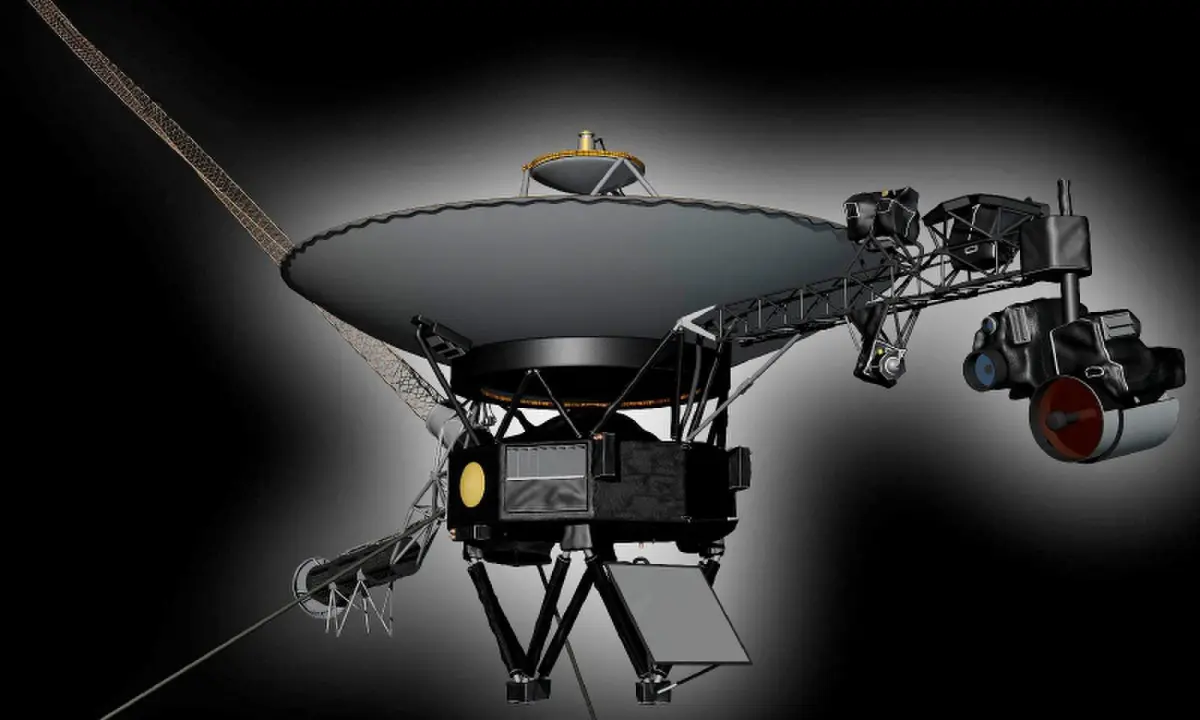
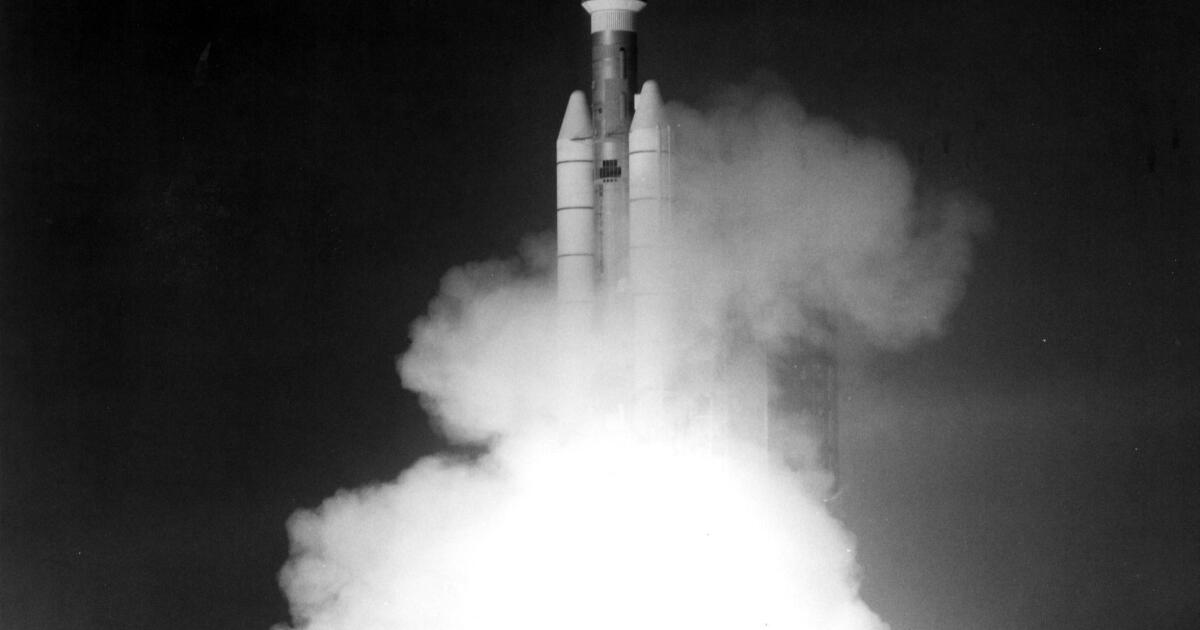
While on its journey, on Feb. 17, 1998, Voyager 1 overtook the U.S. space probe, Pioneer 10, becoming the most distant human-made object in existence.
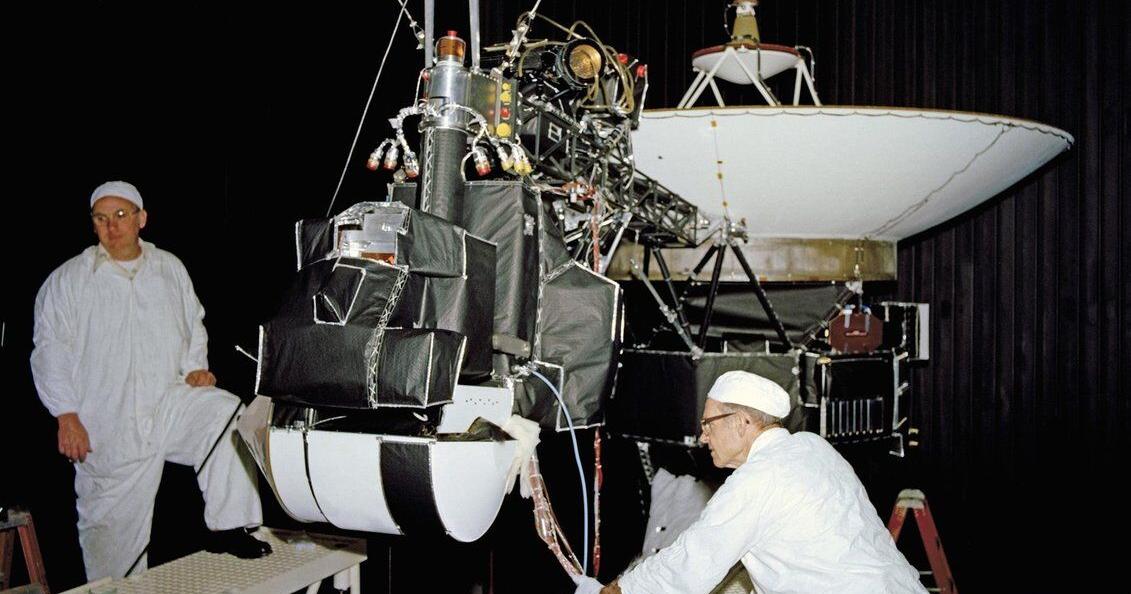
As engineers work to restore Voyager 1's science data transmission, the mission remains a continuing effort to extend humanity's understanding of the space beyond our solar system.
Over the course of its mission, Voyager 1 has conducted flybys of Jupiter and Saturn.
NASA expects it to take 18,000 years to travel a full light-year, and double that before it nears another star.
What each outlet says
One AI summary per outlet of its latest article on this story, written from that article alone and checked against it. Open the article for the outlet's own words.
Tiffany Kataria from NASA announced that Voyager 1, launched in 1977, has reached a distance of one light-day from Earth, approximately 26 billion kilometers away. This milestone highlights the vastness of space, emphasizing that many exoplanetary systems are several light-years distant. Voyager 1 and its twin Voyager 2 are the only spacecraft to have entered interstellar space, continuing to study cosmic phenomena…
After 49 years in space, Nasa’s Voyager 1 probe one light-day away from Earth →3 articles from Dawn on this storyNASA’s Voyager 1 has traveled for 49 years and is now more than 16 billion miles from Earth, marking a new milestone as it is one light-day away. This means radio signals sent from Earth take 24 hours to reach the spacecraft, which continues to transmit data from interstellar space.
Voyager 1 reaches one light-day from Earth after 49 years in space →2 articles from Al Jazeera on this storyNASA’s Voyager 1 probe reached a distance of one light-day from Earth on November 18, 2026, at 5:16 a.m. ET, approximately 16 billion miles away. The probe, launched in 1977, is now in interstellar space, and confirmation of this milestone will be discussed at an event on November 19. Project manager Suzanne Dodd noted that reaching this distance is an unexpected achievement, with the probe continuing to transmit…
NASA Voyager 1 probe believed to have reached ‘light-day’ milestone →2 articles from The Hindu on this storyBill Nye comments on NASA's Voyager 1 probe becoming the most distant human-made object in space, reaching a distance of one light day from Earth. This marks a new milestone as Voyager 1 surpasses all previous records for space exploration.
Bill Nye reacts to Voyager 1 becoming most distant human object in space →2 articles from CBS News on this storyNASA's Voyager 1, launched in 1977, has traveled over 16 billion miles and is now a light-day away from Earth. This makes it the most distant human-made object in space.
WATCH: NASA's Voyager 1 now a light-day away after 1977 launch →2 articles from ABC News (US) on this storyNASA’s Voyager 1 is set to reach one light-day from Earth on Wednesday, marking a new distance record in interstellar space. Launched 49 years ago, the spacecraft will be over 16 billion miles away from Earth, and its radio signals will take exactly 24 hours to reach us. NASA project manager Suzanne Dodd considers Voyager 1 a "national treasure," and the organization is encouraging people worldwide to participate in…
NASA's Voyager 1 closes in on a light-day in interstellar space for a new distance record →Show 10 more outlets
NASA’s Voyager 1 space probe is about to reach a distance where its signals will take a full day to travel from the spacecraft to Earth, marking a new engineering milestone expected around 2:16 a.m. Wednesday. Launched nearly 50 years ago, Voyager 1 has been traveling at 38,000 miles per hour and is now approximately 16 billion miles from Earth. Alan Cummings, a senior research scientist who has worked on the…
NASA's Voyager 1 will soon be so far away that its messages take a day to reach Earth →NASA's Voyager 1 spacecraft is set to reach a distance of one light-day from Earth, or 25.9 billion kilometers, at 9:16 pm AEDT on November 18. Launched in 1977, Voyager 1 is now the farthest human-made object from Earth and has entered interstellar space. Project scientist Linda Spilker highlights the significance of this milestone, noting that Voyager 1's journey, originally intended to last only a decade, has…
NASA's Voyager 1 probe to reach historic light-day milestone today →The article discusses Voyager 1, which was launched on September 5, 1977, and is now one light-day (approximately 16.1 billion miles) from Earth. The author reflects on the significance of Voyager 1’s mission, which explored Jupiter and Saturn before leaving the solar system in 2012. The piece contrasts the technological achievement with current global issues, emphasizing the remarkable feat of human exploration and…
Voyager 1: In A World Gone Mad, Remember What Humanity Can Do →Voyager 1, launched in 1977, has reached a distance of 26 billion kilometers from Earth, marking a new milestone where it takes light one full day to travel from Earth to the spacecraft. This achievement underscores the vast scale of space and the longevity of human-made technology. Despite its age, Voyager 1 continues to communicate with Earth and operate two of its original instruments, which measure plasma waves…
The new milestone Voyager 1 just crossed in interstellar space →NASA's Voyager 1 probe is believed to have reached a distance of one light-day from Earth, approximately 16 billion miles, on November 18. Launched in 1977, Voyager 1 entered interstellar space in 2012 and continues to gather scientific data, including measurements of magnetic fields, cosmic rays, and plasma waves. Officials at NASA's Jet Propulsion Laboratory will confirm the milestone once they receive a signal…
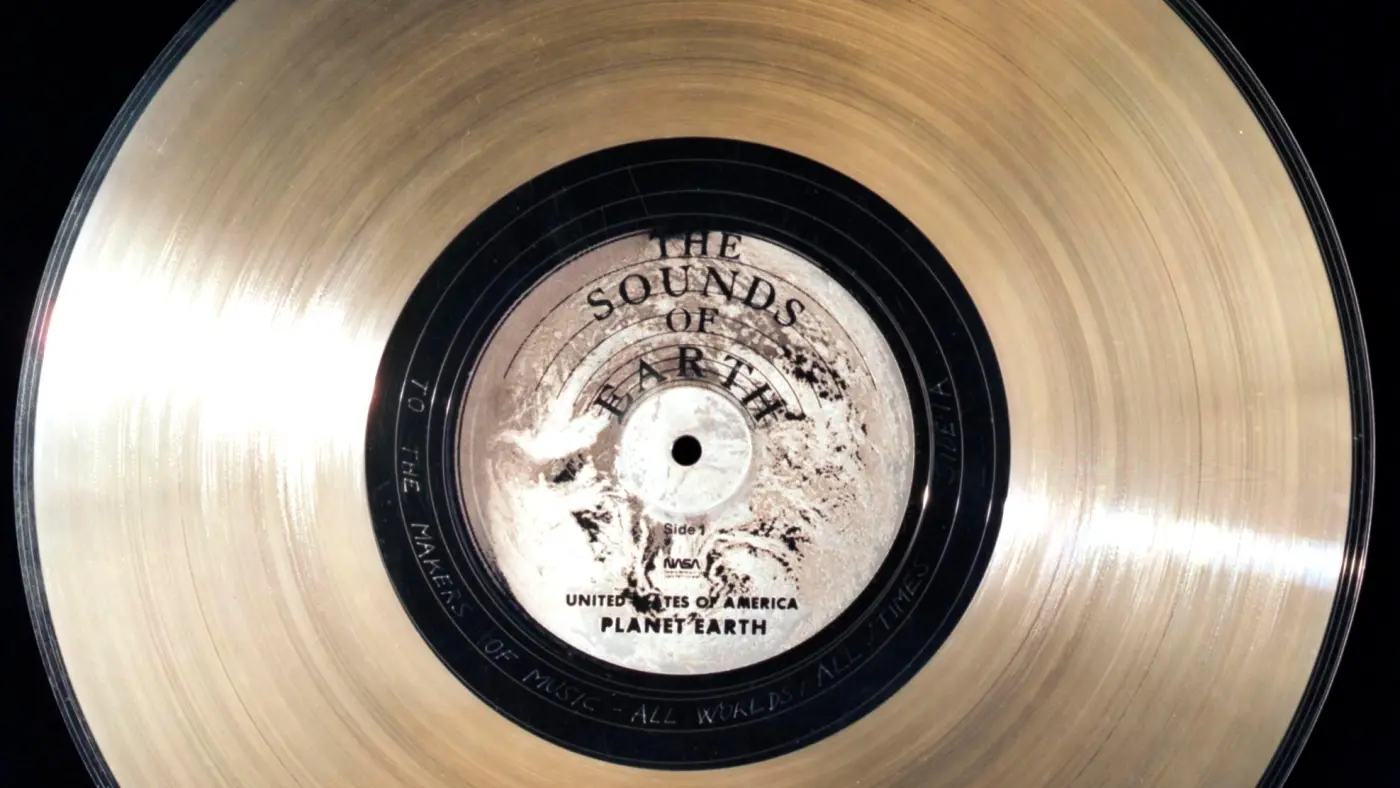
NASA Voyager 1 probe believed to have reached 'light-day' milestone →NASA’s Voyager 1 probe, launched in September 1977, has traveled for 49 years at a speed of 37,800 miles per hour and is now one light-day (16.1 billion miles) away from Earth. It took photos of Jupiter and Saturn before exiting the solar system’s protective heliopause in 2012. Voyager carries a golden record containing Earth’s cultural messages, including music, greetings in 55 languages, and images. In 1990, at…
After 49 years, Nasa’s Voyager 1 is one light-day away from us. Can we save this ‘pale blue dot’? | →NASA’s Voyager spacecraft has reached a historic milestone, being the first human-made object to be one full light day away from Earth. This means it would take light, traveling at 670 million miles per hour, 24 hours to reach the spacecraft. Tom Costello of NBC reports on TODAY about the spacecraft's long and remarkable journey through space.
NASA Voyager Reaches One Full Light Day From Earth →NASA’s Voyager 1 spacecraft has reached a distance of one light-day from Earth, marking a new milestone in its journey through interstellar space. The signal from the spacecraft, sent 24 hours earlier, traveled approximately 26 billion kilometers at the speed of light before being received by flight controllers at California’s Jet Propulsion Laboratory on Thursday. Launched in 1977, Voyager 1 has been transmitting…
NASA’s Voyager 1 is an awe-inspiring one light-day away from Earth →NASA's Voyager 1 spacecraft has communicated with Earth from a distance of one light-day, which is approximately 16 billion miles. The signal took exactly 24 hours to travel from Voyager 1 to antennas near Madrid, Spain, and was confirmed by flight controllers at NASA’s Jet Propulsion Laboratory on Thursday. This achievement marks a new milestone in Voyager 1’s nearly 49-year journey, during which it has flown past…
Hello, Earth! Nasa's Voyager 1 phones home from beyond 16 billion miles →NASA’s Voyager 1 probe has reached one light-day from Earth, marking a historic milestone as the farthest human-made object from our planet. This distance is approximately 26 billion kilometers, and Voyager 1 has held this distinction since surpassing Pioneer 10 in 1998. Launched in September 1977, Voyager 1 was designed to operate for only five years but continues to function nearly 10 times longer than initially…
NASA’s Voyager 1 reaches one light-day from Earth in historic milestone →Analysis
Agreed
Reported by outlets on both sides of the middle
To celebrate this moment, NASA is urging people from all corners to grab their phone or a flashlight to create a wave of golden light after sunset Tuesday, using Morse code to spell the letters V-G-R, Voyager’s call sign, into the night sky.
Framing
How the first headlines put it
The headlines (2)
NASA's Voyager 1 closes in on a light-day in interstellar space for a new distance record
NASA’s Voyager 1 to hit new space distance record of one light-day
How it changed
- 14 Nov
CAPE CANAVERAL, Fla. (AP) — NASA’s Voyager 1 is about to become humanity’s first object to reach one light-day from Earth as it pushes ever deeper into interstellar space.
- 15 Nov
The gold-plated record contains 115 images, natural sounds such as surf, wind and animals, and spoken greetings in 35 different languages.
- 17 Nov
After rewriting our understanding of the solar system nearly 50 years ago, it already became the most distant human-made object in 1998 as it flew away from Earth at 38,000 miles per hour.
- 18 Nov
Launched on September 2, 1977, Voyager 1 was originally designed for a four-year mission to study Jupiter and Saturn.
Coverage 23 articles
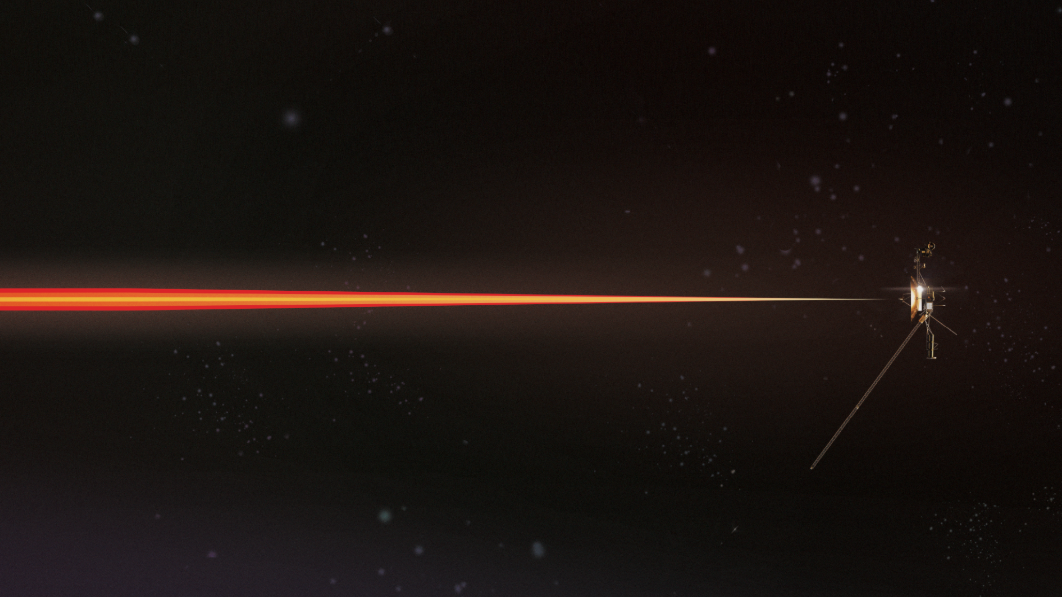 20 Nov NASA’s Voyager 1 reaches one light-day from Earth in historic milestoneNASA’s Voyager 1 probe has reached one light-day from Earth, marking a historic milestone as the farthest human-made object from our planet. This distance is approximately 26 billion kilometers, and Voyager 1 has held this distinction since surpassing Pioneer 10 in 1998. Launched in September 1977, Voyager 1 was designed to operate for only five years but continues to function nearly 10 times longer than initially…Toronto Sun
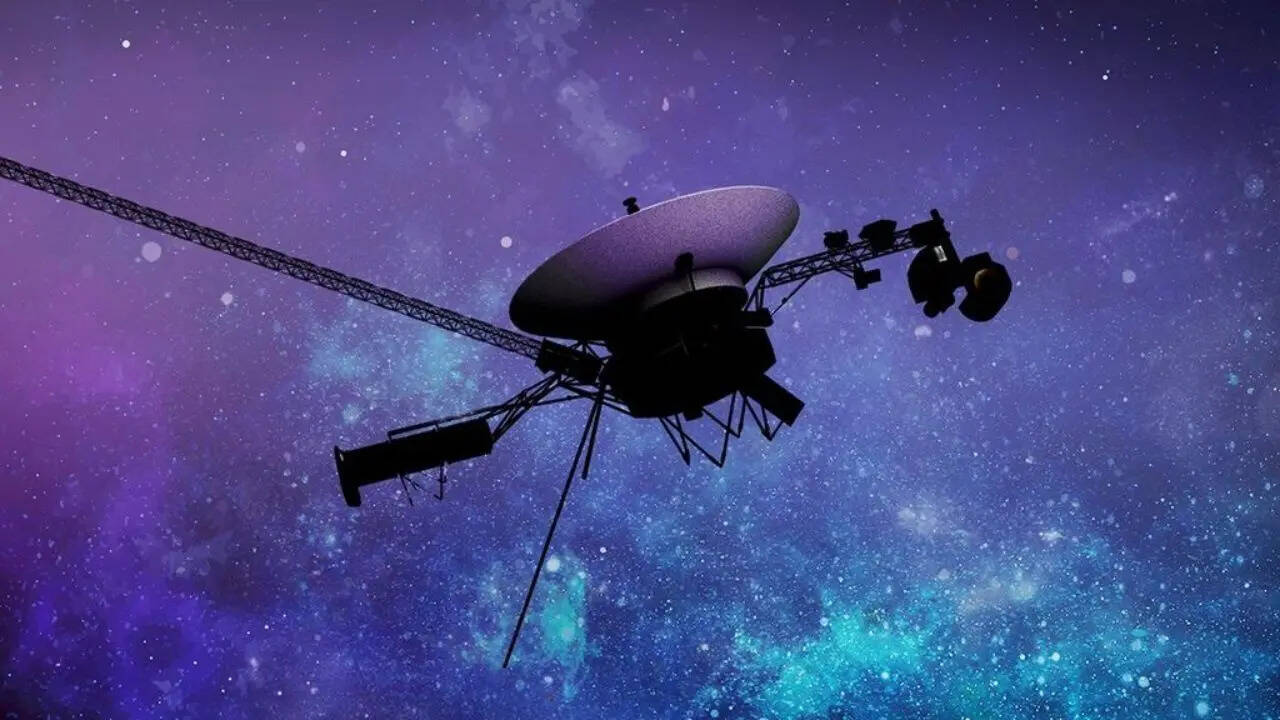 20 Nov Hello, Earth! Nasa's Voyager 1 phones home from beyond 16 billion milesNASA's Voyager 1 spacecraft has communicated with Earth from a distance of one light-day, which is approximately 16 billion miles. The signal took exactly 24 hours to travel from Voyager 1 to antennas near Madrid, Spain, and was confirmed by flight controllers at NASA’s Jet Propulsion Laboratory on Thursday. This achievement marks a new milestone in Voyager 1’s nearly 49-year journey, during which it has flown past…Times of India
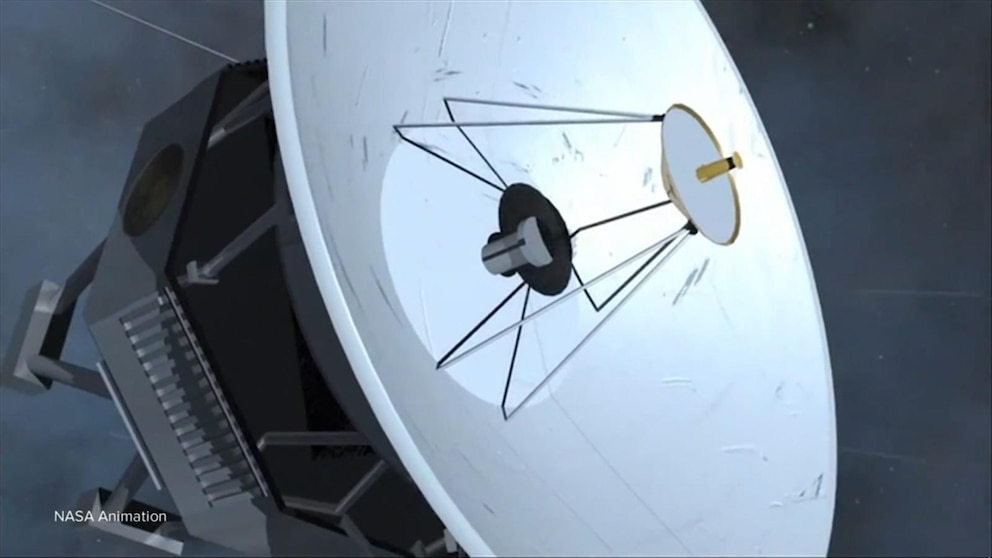 19 Nov WATCH: NASA's Voyager 1 now a light-day away after 1977 launchNASA's Voyager 1, launched in 1977, has traveled over 16 billion miles and is now a light-day away from Earth. This makes it the most distant human-made object in space.ABC News (US)
 19 Nov NASA’s Voyager 1 is an awe-inspiring one light-day away from EarthNASA’s Voyager 1 spacecraft has reached a distance of one light-day from Earth, marking a new milestone in its journey through interstellar space. The signal from the spacecraft, sent 24 hours earlier, traveled approximately 26 billion kilometers at the speed of light before being received by flight controllers at California’s Jet Propulsion Laboratory on Thursday. Launched in 1977, Voyager 1 has been transmitting…The Globe and Mail
 18 Nov Voyager 1 reaches one light-day from Earth after 49 years in spaceNASA’s Voyager 1 has traveled for 49 years and is now more than 16 billion miles from Earth, marking a new milestone as it is one light-day away. This means radio signals sent from Earth take 24 hours to reach the spacecraft, which continues to transmit data from interstellar space.Al Jazeera
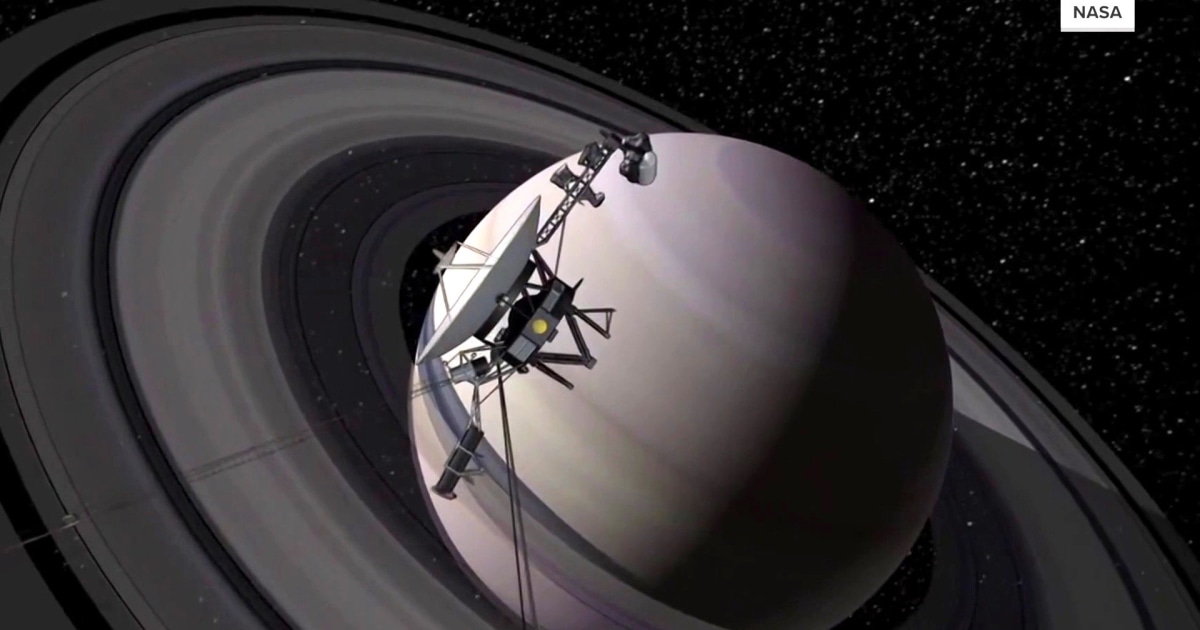 18 Nov NASA Voyager Reaches One Full Light Day From EarthNASA’s Voyager spacecraft has reached a historic milestone, being the first human-made object to be one full light day away from Earth. This means it would take light, traveling at 670 million miles per hour, 24 hours to reach the spacecraft. Tom Costello of NBC reports on TODAY about the spacecraft's long and remarkable journey through space.NBC News
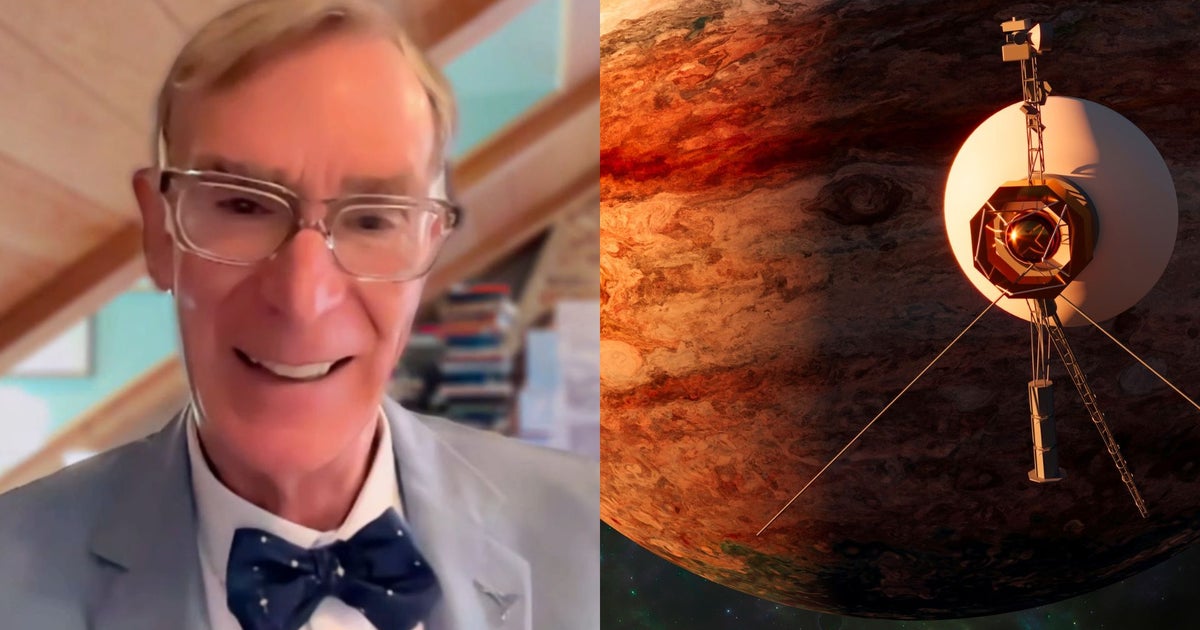 18 Nov Bill Nye reacts to Voyager 1 becoming most distant human object in spaceBill Nye comments on NASA's Voyager 1 probe becoming the most distant human-made object in space, reaching a distance of one light day from Earth. This marks a new milestone as Voyager 1 surpasses all previous records for space exploration.CBS News
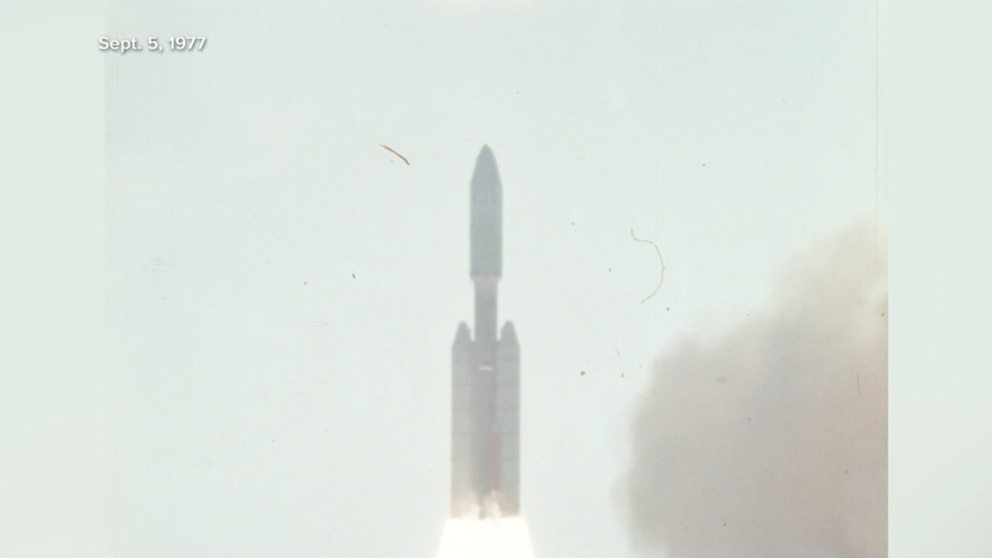 18 Nov WATCH: NASA’s Voyager 1 reaches major milestoneNASA’s Voyager 1 has reached a significant milestone in its journey, having traveled for nearly 50 years. The spacecraft is now approximately one light-day from Earth, equating to about 16 billion miles, making it the most distant human-made object in space.ABC News (US)
 18 Nov After 49 years in space, Nasa’s Voyager 1 probe one light-day away from EarthTiffany Kataria from NASA announced that Voyager 1, launched in 1977, has reached a distance of one light-day from Earth, approximately 26 billion kilometers away. This milestone highlights the vastness of space, emphasizing that many exoplanetary systems are several light-years distant. Voyager 1 and its twin Voyager 2 are the only spacecraft to have entered interstellar space, continuing to study cosmic phenomena…Dawn
 18 Nov After 49 years, Nasa’s Voyager 1 is one light-day away from us. Can we save this ‘pale blue dot’? |NASA’s Voyager 1 probe, launched in September 1977, has traveled for 49 years at a speed of 37,800 miles per hour and is now one light-day (16.1 billion miles) away from Earth. It took photos of Jupiter and Saturn before exiting the solar system’s protective heliopause in 2012. Voyager carries a golden record containing Earth’s cultural messages, including music, greetings in 55 languages, and images. In 1990, at…The Guardian
Show all 23 articles
 18 Nov One light day
Dawn- 18 Nov After 49 years in space, Voyager 1 reaches one light-day milestoneNASA’s Voyager 1 probe, launched in 1977, recently surpassed the one light-day distance from Earth, marking about 26 billion kilometers of travel. This achievement underscores the vastness of space, with stellar systems typically being several light-years away. Voyager 1 and its twin, Voyager 2, are the only spacecraft to have entered interstellar space, and they carry "Golden Records" intended for extraterrestrial…Dawn
 18 Nov NASA Voyager 1 probe believed to have reached ‘light-day’ milestoneNASA’s Voyager 1 probe reached a distance of one light-day from Earth on November 18, 2026, at 5:16 a.m. ET, approximately 16 billion miles away. The probe, launched in 1977, is now in interstellar space, and confirmation of this milestone will be discussed at an event on November 19. Project manager Suzanne Dodd noted that reaching this distance is an unexpected achievement, with the probe continuing to transmit…The Hindu
18 Nov NASA Voyager 1 probe believed to have reached 'light-day' milestoneNASA's Voyager 1 probe is believed to have reached a distance of one light-day from Earth, approximately 16 billion miles, on November 18. Launched in 1977, Voyager 1 entered interstellar space in 2012 and continues to gather scientific data, including measurements of magnetic fields, cosmic rays, and plasma waves. Officials at NASA's Jet Propulsion Laboratory will confirm the milestone once they receive a signal…The Straits Times
- 18 Nov The new milestone Voyager 1 just crossed in interstellar spaceVoyager 1, launched in 1977, has reached a distance of 26 billion kilometers from Earth, marking a new milestone where it takes light one full day to travel from Earth to the spacecraft. This achievement underscores the vast scale of space and the longevity of human-made technology. Despite its age, Voyager 1 continues to communicate with Earth and operate two of its original instruments, which measure plasma waves…CBC
 18 Nov Voyager 1: In A World Gone Mad, Remember What Humanity Can DoThe article discusses Voyager 1, which was launched on September 5, 1977, and is now one light-day (approximately 16.1 billion miles) from Earth. The author reflects on the significance of Voyager 1’s mission, which explored Jupiter and Saturn before leaving the solar system in 2012. The piece contrasts the technological achievement with current global issues, emphasizing the remarkable feat of human exploration and…The Daily Wire
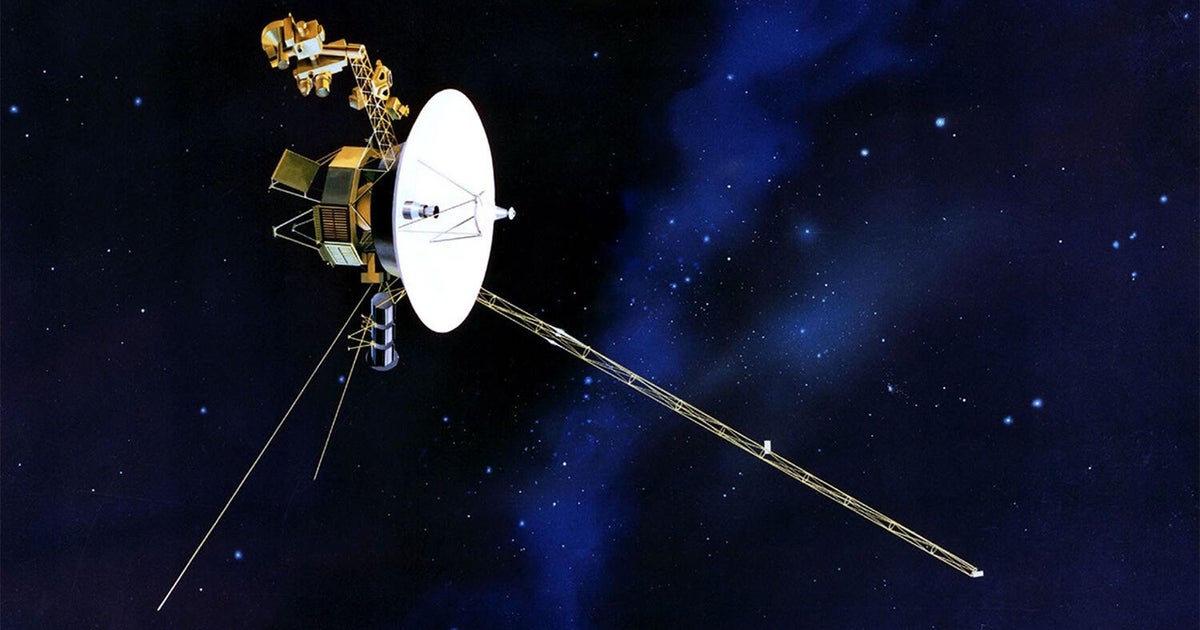 18 Nov Voyager 1 sets new distance record of one "light day" from EarthNASA's Voyager 1 probe, launched in 1977, set a new distance record of one light day from Earth, which is more than 16 billion miles, on Wednesday. This makes it the farthest human-made object from Earth. Voyager 1 and its sister ship, Voyager 2, which reached interstellar space in 2018, continue to transmit data about interstellar space despite declining power levels. Voyager 1's signal, traveling at the speed of…CBS News
 18 Nov NASA’s Voyager 1 reaches one light-day from Earth on November 18: What does it mean?NASA’s Voyager 1 is set to become the first human-made object to reach one light-day from Earth on November 18, 2026, at 5:16:07 a.m. EST. Launched in 1977, the probe has traveled for 49 years and will be over 16 billion miles away from Earth, with radio signals taking 24 hours to reach Earth at the speed of light. Voyager 1, now in interstellar space, continues to transmit data while facing power constraints due to…The Hindu
17 Nov NASA's Voyager 1 probe to reach historic light-day milestone todayNASA's Voyager 1 spacecraft is set to reach a distance of one light-day from Earth, or 25.9 billion kilometers, at 9:16 pm AEDT on November 18. Launched in 1977, Voyager 1 is now the farthest human-made object from Earth and has entered interstellar space. Project scientist Linda Spilker highlights the significance of this milestone, noting that Voyager 1's journey, originally intended to last only a decade, has…ABC News (AU)
 17 Nov NASA's Voyager 1 will soon be so far away that its messages take a day to reach EarthNASA’s Voyager 1 space probe is about to reach a distance where its signals will take a full day to travel from the spacecraft to Earth, marking a new engineering milestone expected around 2:16 a.m. Wednesday. Launched nearly 50 years ago, Voyager 1 has been traveling at 38,000 miles per hour and is now approximately 16 billion miles from Earth. Alan Cummings, a senior research scientist who has worked on the…Los Angeles Times
 15 Nov Far from home. Voyager 1 is now farther than anything man has sent into space
NPR 14 Nov NASA’s Voyager 1 to hit new space distance record of one light-dayNASA’s Voyager 1 probe is set to become the first human-made object to travel one light-day from Earth on Wednesday, covering a distance of 16 billion miles since its 1977 launch. The spacecraft, now in interstellar space, travels at about 36,000 miles per hour and is expected to take 18,000 years to travel a full light-year. Despite occasional technical issues, like a brief loss of communication in October, Voyager…Al Jazeera
 14 Nov NASA's Voyager 1 closes in on a light-day in interstellar space for a new distance recordNASA’s Voyager 1 is set to reach one light-day from Earth on Wednesday, marking a new distance record in interstellar space. Launched 49 years ago, the spacecraft will be over 16 billion miles away from Earth, and its radio signals will take exactly 24 hours to reach us. NASA project manager Suzanne Dodd considers Voyager 1 a "national treasure," and the organization is encouraging people worldwide to participate in…Toronto Star
Keep exploring
 Recent · 15–22 NovLabour Considering Rejoining EU
 Recent · 13–22 NovCOP31 Climate Talks Deadlocked Over Fossil Fuels
 Recent · 17–22 NovFlorida Faces Catastrophic Flooding
 Recent · 20–22 NovAustralia Wins Rugby Test Against Wales
 Recent · 20–22 NovStock Market Plunge Due to AI Selloff
 Recent · 20–22 NovMan Convicted of Starting Palisades Fire
 Recent · 21–22 NovBritish Swimmer Highlights War's Environmental Impact
 Recent · 19–22 NovKatie Zacharia Faces Bar Investigation
 Recent · 21–22 NovTrump Orders Contractors to Notify White House
 Recent · 21–22 NovMagnitude 6.9 Earthquake Shakes Peru
Built 2026-11-21 from 23 articles. Every sentence on this page is quoted from the linked article; nothing was written by a model except the Summary and the items marked AI, which cite their sources, and the questions and labels under "Disputed". Photos are from the outlets that covered the story, never from articles our check marks sensitive.