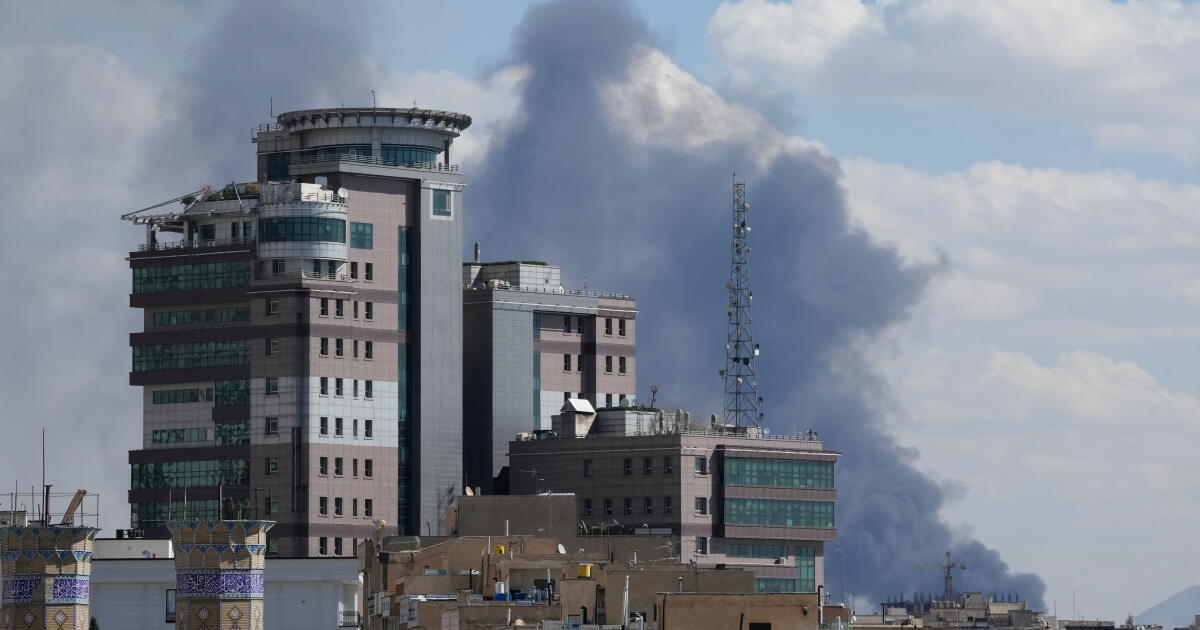
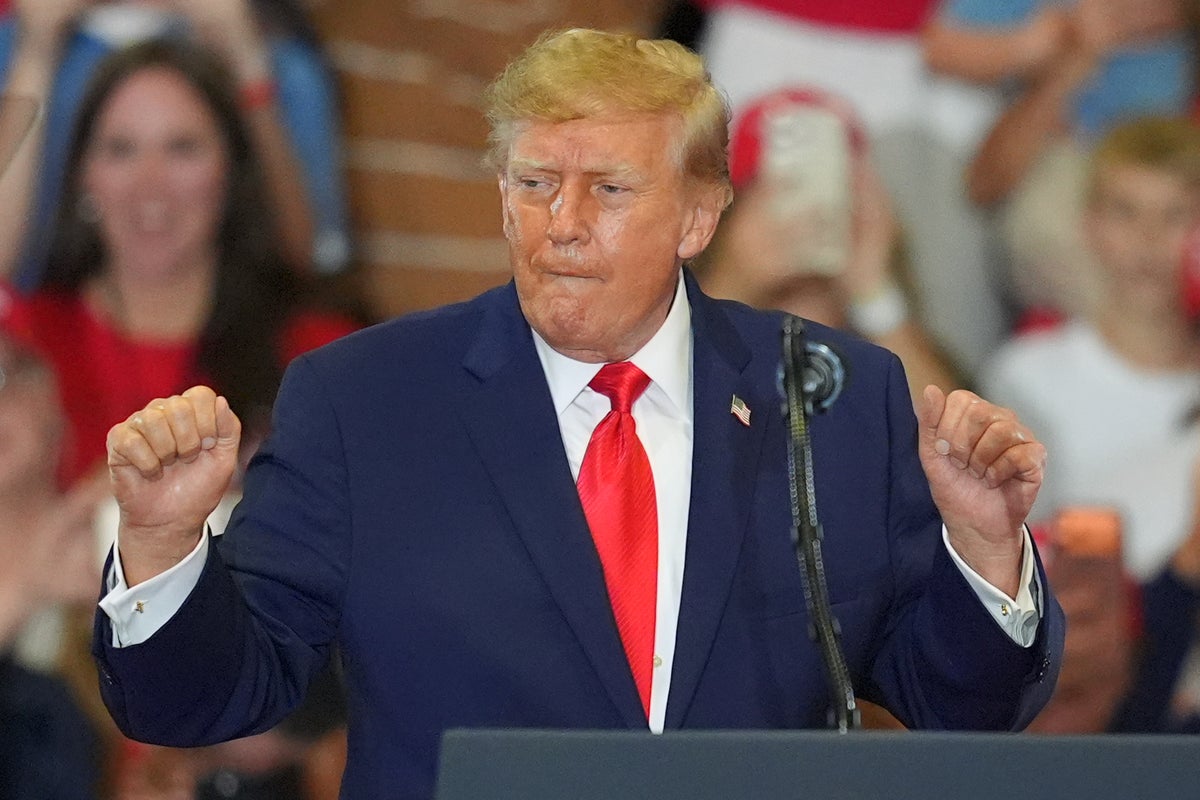
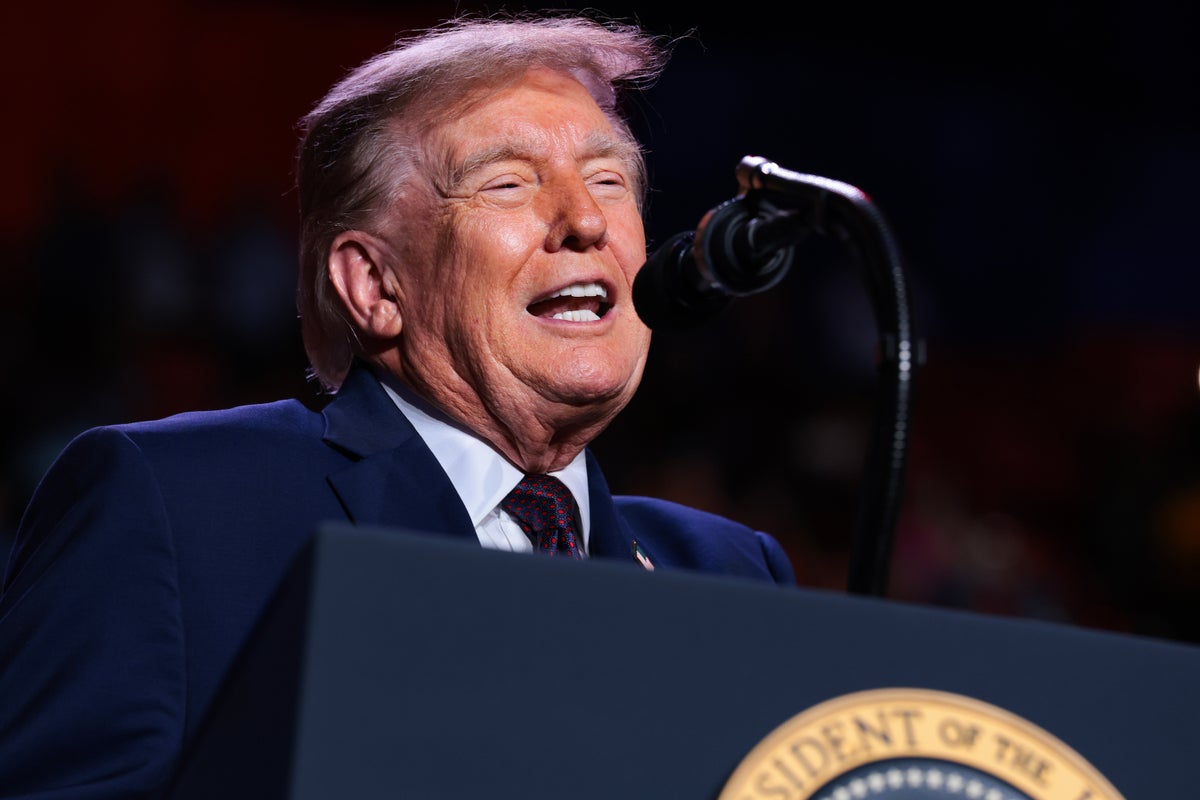
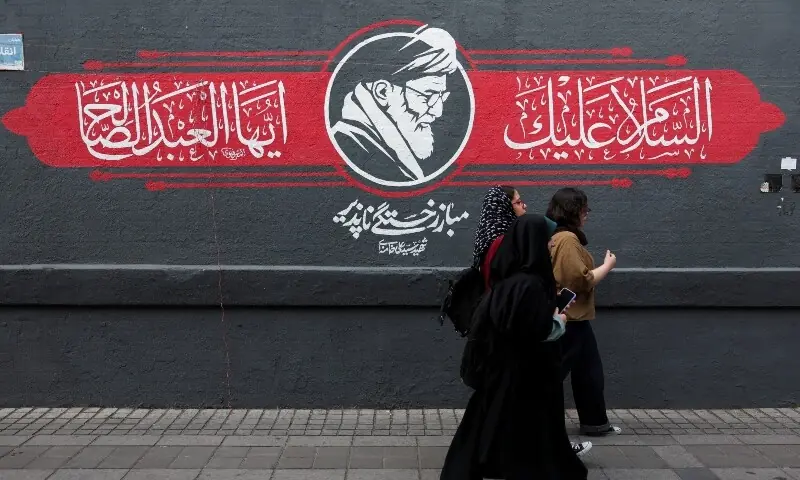
Photo via Los Angeles Times

Trump calls it a war, then a 'military conflict.' Why the Iran fighting keeps changing names

Read the original at Los Angeles Times ↗
Cite

Buchanan, C. (2026, October 5). Trump calls it a war, then a 'military conflict.' Why the Iran fighting keeps changing names. Los Angeles Times. https://www.latimes.com/politics/story/2026-10-05/why-trump-administration-is-reluctant-to-call-ongoing-conflict-with-iran-war

Dated when The Aporia collected the article, usually within hours of publication. Check the original for its exact date and byline.

Los Angeles Times · collected 2026-10-05 · by Christopher Buchanan

Quick Summary

President Trump and his administration have alternated between calling the conflict with Iran a "war" and less severe terms like "military operation." This renaming strategy aims to circumvent the need for congressional approval under the War Powers Resolution. Despite initial rhetoric using strong language, officials now prefer terms that minimize public perception of ongoing hostilities as full-scale war due to declining support and poll numbers.
Written by AI on 2026-10-05, from this article's own text only (the story summary below draws on all the coverage).

AI analysis

Story summary

In late September in the Oval Office, President Trump declared that "Iran will never have a nuclear weapon" and added, "We’re gonna win that war very soon." However, over seven months of conflict with Iran, Trump administration officials have been careful to avoid calling these hostilities a “war,” instead using terms like “military conflict.” This approach mirrors previous administrations under both Democratic and Republican presidents who aim to circumvent the requirement for congressional approval as stipulated by the War Powers Resolution. Trump has previously referred to Iran operations as "a noble mission," but generally steers clear of using the term "war" in public statements, likely due to polls showing widespread public opposition and waning support from Congress.

Written for “Iran Conflict Naming” on 2026-11-04, grounded in this article and the 0 other(s) covering the same event.

Story

📰 Iran Conflict Naming
Politics · 1 article(s) covering the same event.

Compared with similar articles

This article reads unscored and hedges 14% of its claims. Each row says how that neighbour differs.
Al Jazeera
⚖️ Leans left Hedges 9 of 46 claims Outlet record 60/100
“The articles discuss different time periods and contexts of US-Iran tensions under Trump's presidency, rather than the same specific incident.”
The Independent
Hedges 6 of 46 claims Outlet record 59/100
“The articles discuss different aspects of the Iran-US conflict and related rhetoric by President Trump over time, not a single specific incident.”
Washington Examiner
⚖️ Leans left Hedges 4 of 60 claims Outlet record 69/100
“While both articles discuss the ongoing conflict with Iran and the reluctance to call it a war, they describe different aspects of the naming issue over time rather than the same specific incident.”
The Independent
Hedges 10 of 45 claims Outlet record 59/100
“The articles discuss different aspects of the Iran-US conflict under Trump's administration and do not describe a single specific incident occurring at the same time and place.”
Dawn
Hedges 5 of 20 claims Outlet record 72/100
“The articles describe different stages of the Iran-US conflict over a period of time, not the same specific incident.”
CBS News
Hedges 1 of 2 claims Outlet record 65/100
“The articles discuss different aspects of Trump's comments and policies regarding Iran over a period of time, rather than the same specific incident.”
Al Jazeera
Hedges 0 of 2 claims Outlet record 60/100
“The articles discuss different aspects of the Iran and Yemen situation without describing the same specific incident.”
The Independent
⚖️ Leans strongly right Hedges 6 of 41 claims Outlet record 59/100
“The articles discuss different aspects of the ongoing conflict between Iran and the US, with Article A focusing on terminology used by President Trump to describe the conflict, while Article B covers a statement from Trump at a campaign rally about his reluctance towards peace negotiations.”
The Free Press
Hedges 1 of 9 claims Outlet record 96/100
“Article A reports on claims of victory by both US and Iran after a significant date (September 29), while Article B discusses the naming conventions used by Trump administration over seven months of conflict, without specifying a single event.”
Reason
⚖️ Leans strongly left Hedges 3 of 37 claims Outlet record 67/100
“The articles discuss different aspects of the U.S.-Iran conflict and do not describe the same specific incident or occurrence.”
How this article was measured signals, leaning charts, publisher record, byline, topics and claims

Signals How these are calculated →

Claims extracted
58
sentences that state something as happening or true
Uncertain
14%
8 of 58 hedged ("reportedly", "may", "according to")
Leaning
withheld
no quote in the article backed the model's score
Publisher signals
95/100
Los Angeles Times's corrections and hedging, across everything collected from it. Not a measure of accuracy.
Outlets on this story
1
Politics
Same framing elsewhere
1
articles that frame the event the way this one does
Analyzed 2026-10-05 · how these are computed

How this is being covered How these are calculated →

Article leaning vs. publisher reliability
Source leaning vs. consistency

Publisher

Los Angeles Times · 268 article(s) · 0 correction(s) detected
No corrections detected for this publisher. That may mean careful reporting, or simply that nothing has been checked.

Who wrote this

Christopher Buchanan
8 article(s) here · 1 carrying a prediction
🔮 Late September in the Oval Office, President Trump declared, “Iran will never have a nuclear weapon.
🔮 Recent polls have shown Democrats creeping up on or surpassing their Republican opponents as President Trump’s approval rating hovers under 40%, which may offer an opening in unexpected places.
🔮 Democrats will need to win at least four of them, while holding on to two contested seats currently held by their party, in order to flip the chamber.
🔮 - Civil rights advocates say the equipment will heighten mistrust of immigration agents who are already viewed unfavorably by a skeptical public.
🔮 “The magnitude of difference between official information from the Department of Defense and firsthand reports from the crew should be troubling, and may have serious implications about what else the Pentagon may be withholding regarding the conflict in Iran,” Roland added.
🔮 The results from Tuesday night also show that President Trump’s influence on his party’s base may be dwindling.
🔮 After an outcry from immigrant and civil rights advocates over plans to equip immigration officers with gloves capable of delivering electric shocks, California lawmakers on Thursday unveiled a bill that would ban the use of shock gloves by any law enforcement agent in the state.
🔮 - When once asked how long the U.S. and Israel could sustain its offensive in Iran, he replied, ‘It won’t be difficult.’
Also by Christopher Buchanan
Nothing else under this byline is closely related to this article, so these are simply their most recent.
All 8 articles by Christopher Buchanan →

Topics

Congress Democratic Iran Operation Epic Fury the War Powers Resolution

Subjects

Trump PERSON · 11× Iran GPE · 9× Congress ORG · 6× American NORP · 1× Democratic NORP · 1× Israeli NORP · 1× Republican NORP · 1× U.S. GPE · 1× WASHINGTON GPE · 1× the White House ORG · 1×

Narrative

Senior administration officials loosely tossed around “war” during the first stages of conflict, but with polls showing the war in unpopular and congressional support waning, “war” and even “Operation Epic Fury” have become taboo among members of the Trump administration.
framing: assertive · carried by 1 article(s) · first seen 2026-10-05
🔮 Late September in the Oval Office, President Trump declared, “Iran will never have a nuclear weapon.

Claims (58 extracted, 8 hedged)

Trump calls it a war, then a ‘military conflict.’ asserted
Trump → call → it
Why the Iran fighting keeps changing names - Click here to listen to this article - - Over seven months of conflict with Iran, Trump administration officials try to avoid calling the hostilities a ‘war.’ asserted
officials → keep → hostilities
- Like previous administrations, both Democratic and Republican, the White House aims to avoid having Congress invoke the War Powers Resolution. - asserted
Congress → aim → Resolution
Only Congress can declare war, so presidents have avoided the word to avoid securing congressional approval for military actions. asserted
presidents → declare → actions
Late September in the Oval Office, President Trump declared, “Iran will never have a nuclear weapon. asserted
Iran → declare → weapon
We’re gonna win that war very soon. asserted
We → go → war
It wasn’t the first time he’s described the hostilities as “war.” asserted
he → describe → war
On Feb. 28, the day U.S. and Israeli began bombarding Iran, he warned that “the lives of courageous American heroes may be lost, and we may have casualties. uncertain
we → begin → casualties
That often happens in war, but we’re doing this not for now. asserted
we → happen → this
We’re doing this for the future, and it is a noble mission.” asserted
it → do → future
But throughout seven months of back-and-forth strikes with Iran, Trump administration officials, and sometimes Trump himself, have performed verbal acrobatics to avoid the “W” word. asserted
officials → perform → word
Senior administration officials loosely tossed around “war” during the first stages of conflict, but with polls showing the war in unpopular and congressional support waning, “war” and even “Operation Epic Fury” have become taboo among members of the Trump administration. asserted
war → toss → administration
Trump has called attacks on Iran a “military operation,” “military decimation,” “excursion” and “skirmish.” asserted
Trump → call → Iran
At a White House press briefing last month, Vice President JD Vance attempted to clear the air when a reporter asked about a potential end to what she called a “war in Iran.” asserted
she → attempt → Iran
“I wouldn’t call it a war right now,” Vance said. asserted
Vance → call → it
“Major combat operations lasted for about six weeks.” asserted
operations → last → weeks
Defense Secretary Pete Hegseth tread carefully in front of the Senate Appropriations Committee in July, repeatedly referring to a “conflict” in Iran that needed additional funding to continue. asserted
that → tread → funding
On May 5, during the first of two delicate ceasefires with Iran, Secretary of State Marco Rubio announced an end to the objectives laid out in Operation Epic Fury and the beginning of “Project Freedom” — an effort to escort merchant ships through the Strait of Hormuz. uncertain
Rubio → announce → Hormuz
In April, Trump announced the blockade of Iranian ports. asserted
Trump → announce → ports
When asked about whether the blockade constituted an act of war, Rubio replied, “That’s not an act of war, that’s a defensive measure. asserted
that → ask → war
It’s a counter to what they have decided to do.” asserted
they → ’ → what
Senior Trump officials have maintained that the conflict can no longer be viewed as war because the intensity of strikes between the two countries has been reduced. asserted
intensity → maintain → countries
The “end” of Operation Epic Fury, the name Trump used when he announced hostilities on Feb. 28, was declared on May 5 — 60 days after the fighting began. uncertain
fighting → use → May
Under the War Powers Resolution of 1973, a president must cease all hostilities abroad after 60 days if there is no congressional declaration of war. asserted
president → cease → war
Under the Constitution, only Congress declares war, but past presidents have routinely circumvented this rule by exercising their authority to direct the military and initiate strikes on targeted nations. asserted
presidents → declare → nations
Nearly every modern president, from Dwight D. Eisenhower to Trump, has used this justification to undertake military action without the declaratory approval of Congress. asserted
president → use → Congress
Congress can also choose to approve an Authorization for Use of Military Force, which grants the president legal authority to conduct military operations overseas. asserted
which → choose → operations
Unless Congress sets a time limit on the authorization, authority to use the legal justification to launch military strikes can theoretically span multiple administrations. asserted
authority → set → administrations
Rep. Jamie Raskin (D-Md.), a former constitutional law professor at American University, said that presidents of both parties have avoided the term “war” when attempting to evade congressional approval of hostile action abroad. asserted
presidents → say → action
“Trump has followed some of his predecessors in playing word games with the war power,” Raskin said. asserted
Raskin → follow → power
“What makes his case so extreme is that he proudly described it as a war and depicted it in glorified military terms.” asserted
he → make → terms
In March, seven days into the fighting, Trump said, “The war itself is going unbelievably. asserted
war → say → fighting
It’s as good as it can be.” asserted
it → ’ → ?
Congress has not officially declared war since World War II. asserted
Congress → declare → II
The Vietnam War, the invasion of Afghanistan and both wars in Iraq were all approved by Congress under the umbrella of an Authorization for the Use of Military Force. asserted
War → approve → Force
This year Congress has not approved such an authorization for the action with Iran. asserted
Congress → approve → Iran
Fourteen Senate votes for a War Powers Resolution to curb Trump’s war efforts have failed in the chamber so far. asserted
votes → curb → chamber
According to a CNN/SSRS poll last month, only 26% of Americans approve of the Trump administration’s handling of the Iran war. uncertain
% → accord → war
Raskin said that he believes Trump’s terminology has shifted with the public mood, adding that he hasn’t heard any of his Republican colleagues “play along with the semantic games.” asserted
any → say → games
“When things have turned south in the fortunes of this war, he has tried to pretend it’s something else,” Raskin said. asserted
Raskin → turn → war
…and 18 more, not listed.

💬Give feedback
🕘History 🎫Support