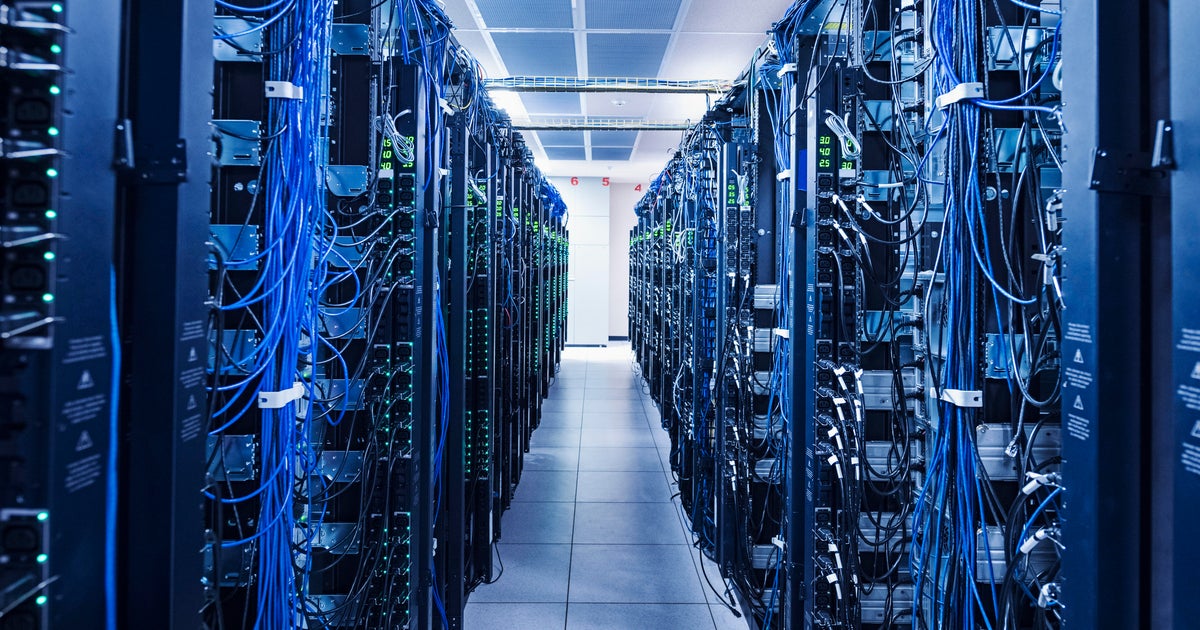
Photo via CBS News

Midterm elections could zap the data center buildout, experts say

Read the original at CBS News ↗
Cite

Cerullo, M. (2026, November 4). Midterm elections could zap the data center buildout, experts say. CBS News. https://www.cbsnews.com/news/midterm-election-results-data-center-buildout-artificial-intelligence-texas/

Dated from the outlet's own feed. Check the original for its byline.

CBS News · collected 2026-11-04 · by Megan Cerullo

Quick Summary

No summary of this article yet; the story summary below covers the event.
See how they differ ↓

AI analysis

Story summary

In the 2026 US midterm elections, voters across nine states overwhelmingly rejected data center projects, passing moratoriums and outright bans in more than 30 localities. Despite initial concerns and predictions that data centers would play a significant role in shaping election outcomes, the actual election results showed that most voters, including many self-identified Republicans, opposed having new data centers in their communities. This rejection of data centers benefited Democratic candidates, who campaigned against the rapid expansion of AI and data centers, highlighting concerns over job loss, surveillance, and economic impacts. Key Democratic victories in states like Ohio and Texas suggest that issues related to AI and data centers may become a central theme in future American politics, reflecting a growing anti-AI populism.

Written for “Data center backlash in midterms” on 2026-11-21, grounded in this article and the 34 other(s) covering the same event.

How they differ

17 outlets covered “Data center backlash in midterms”.

What each outlet says

One AI summary per outlet of its latest article on this story, written from that article alone and checked against it. Open the article for the outlet's own words.

CBS NewsThis outlet6 Nov

Exit polls from the 2026 elections indicate that AI played a significant role for over half of the voters, although data centers were not the most critical issue. The polls showed majorities in all states opposed having new data centers built locally, benefiting Democratic candidates who campaigned against them. However, even many self-identified Republicans were resistant to data center construction despite voting…

Exit polls show data centers weren't winners in 2026 elections →7 articles from CBS News on this story
The Straits Times4 Nov

In the recent US midterm elections, voters in numerous towns across the country overwhelmingly rejected proposals related to data center developments. Notably, Harwood, North Dakota, was the sole exception where residents voted against a measure designed to limit such industrial projects. Around 430 out of about 800 residents cast their ballots, with approximately three-quarters opposing the initiative aimed at…

US midterms: Only one town out of dozens in US voted in favour of data centres →3 articles from The Straits Times on this story
Semafor5 Nov

After winning majorities in Congress, Democrats see artificial intelligence (AI) regulation as a key issue. However, internal disagreements between progressive and business-friendly factions within the party make it challenging to swiftly implement sweeping regulations. Conservative groups argue that voters are concerned about economic issues linked to rapid AI growth under the previous administration. Despite these…

Democrats are fired up on AI. Consensus is harder. →3 articles from Semafor on this story
South China Morning Post6 Nov

Forecasters are warning that the Democratic victory in the midterm elections may lead to regulatory changes that could stall up to 30% of planned artificial intelligence data centers in the United States. This potential clampdown includes project freezes proposed in Texas and increased federal oversight, which would significantly impact Big Tech's infrastructure spending plans.

Does the Democratic midterm victory spell the end of US AI data centre boom? →3 articles from South China Morning Post on this story
Washington Examiner5 Nov

Newly elected Democratic governors in several states are threatening to slow down or impose restrictions on data center development. In Texas, Governor-elect Gina Hinojosa plans to impose a moratorium until the state imposes regulatory guardrails, including requirements for hiring union workers and protecting water resources. Similarly, Georgia’s Governor-elect Keisha Lance Bottoms said she will sign an executive…

Daily on Energy: Newly elected Democratic governors threaten data center development →3 articles from Washington Examiner on this story
The Guardian9 Nov

Garrison Lovely argues that opposition to artificial intelligence (AI) is becoming a significant political force in America. The Democratic Party's success in the midterms was partly due to voter rejection of AI datacenters, with over 30 localities across nine states passing restrictions or moratoriums on such facilities. Voters cited AI as crucial in their decisions at a rate of 23%, and Democrats won these voters…

Anti-AI populism is the future of American politics | Garrison Lovely →3 articles from The Guardian on this story
Show 10 more outlets
404 Media4 Nov

In last night’s midterm elections across America, voters overwhelmingly rejected proposals related to AI data centers, with 38 out of over 40 ballot measures against them in 13 states. Six cities imposed outright bans while twelve others limited the power draw for such facilities. Candidates who supported data centers faced significant losses; notably, Texas Governor Gregg Abbott lost his bid for a fourth term as…

American Voters Overwhelmingly Reject AI Data Centers →2 articles from 404 Media on this story
Reason4 Nov

In the 2026 midterms, data centers became an unexpectedly significant political issue despite initial skepticism. Exit polls showed that AI data centers were crucial or a major factor for many voters, with most ballot initiatives proposing bans or restrictions on them passing overwhelmingly. Although some argued data center issues did not sway votes as strongly as expected based on pre-election polls, the results…

It Was a Data Center Election After All →2 articles from Reason on this story
New York Post2 Nov

The article reports that despite initial media hype about data centers becoming a significant political issue in US midterm elections, voter polls show it ranks among the least important concerns for Americans in key states like Texas and Ohio. Only around 3% of voters in Texas and 2% in Ohio named data centers as their top concern, according to recent CNN polls. Politicians who previously pushed regulations on data…

Data-center fury is a campaign dud →
Time4 Nov

In the 2026 midterm elections on November 3rd, a significant backlash against AI and data center expansion by voters resulted in major defeats for candidates backed by pro-AI industry groups. Democrats spent over $100 million on ads targeting Republicans’ ties to Big Tech, winning key races such as Ohio’s Senate election. Data center bans passed in multiple counties, and mayors supporting these projects were…

How AI Backlash Shaped the 2026 Midterms →
ABC News (AU)5 Nov

Voters in ten US states rejected data centre proposals in recent midterm elections, with about 41 measures overwhelmingly failing. Democrat Gina Hinojosa's victory in Texas, where she campaigned against data centre construction, further underscores the political toxicity of these projects. Political ads heavily criticized data centres, and exit polls showed that three-quarters of voters oppose such constructions in…

US rejection of data centres is a warning for Australia — and maybe leverage →
Mother Jones5 Nov

Voters across ten states rejected data center projects in nearly 40 towns during recent midterms, with only one measure passing in Harwood, North Dakota. Nationally, 77 percent of voters voted against data center development, largely driven by concerns over environmental justice and rising utility costs. In places like Joliet, Illinois, where communities have long fought industrial pollution, nearly 80 percent…

Midterm Rout for Data Centers: Voters in Nearly 40 Towns Rejected Projects →
The Intercept5 Nov

Midterm elections saw a significant victory for candidates and ballot measures restricting or halting data center development across several states. Newly elected Democratic governors in Georgia, Ohio, and Texas have promised moratoriums on new construction, echoing sentiments from local communities that overwhelmingly approved ballot initiatives against these facilities. Public policy experts attribute this trend…

Blue Tsunami’s Clearest Takeaway: People Hate Data Centers →
The Dispatch6 Nov

The article reports that despite expectations of significant influence, the AI industry faced numerous setbacks during the 2026 midterm elections. A deep-pocketed super PAC supported by Silicon Valley leaders aimed to shape election outcomes but encountered various problems instead. The piece highlights how efforts by corporate AI interests did not achieve their intended impact, reflecting a series of missteps and…

The Midterms’ Other Big Loser: AI →
ABC News (US)6 Nov

In the recent U.S. midterm elections, opposition to data centers emerged as a significant issue in hundreds of millions of dollars' worth of TV ads and campaign promises. Democrats who won governorships in several key states pledged stricter regulation on these energy-intensive facilities. For instance, Clayton Tucker in Texas attributed his victory partly to his stance against data center development due to…

Data centers took a beating in the midterm elections →
BBC6 Nov

A recent US midterms voter poll suggests that data centers were a significant issue for many voters, with 56% saying they were crucial or major factors in their vote and 76% opposing new constructions locally. The poll highlights growing public opposition to the expansion of artificial intelligence infrastructure, particularly among those who voted Democrat. Although other issues like government corruption and cost…

Did a data centre revolt affect the US mid-term election results? →

Compared with similar articles

This article reads leans left and hedges 22% of its claims. Each row says how that neighbour differs.
The Straits Times
Leans left Hedges 2 of 26 claims Outlet record 64/100
CBS News
Leans left Hedges 6 of 27 claims Outlet record 66/100
404 Media
Leans strongly left further left than this Hedges 1 of 40 claims Outlet record 95/100
Semafor
Leans right further right than this Hedges 4 of 18 claims Outlet record 64/100
The Guardian
Leans left Hedges 1 of 20 claims Outlet record 64/100
Mother Jones
Leans strongly left further left than this Hedges 3 of 34 claims Outlet record 60/100
The Intercept
Leans strongly left further left than this Hedges 7 of 53 claims Outlet record 96/100
CBS News
Centre further right than this Hedges 0 of 2 claims Outlet record 66/100
The Independent
Hedges 6 of 31 claims Outlet record 59/100
“Article A discusses voter approval of ballot measures restricting data centers after the midterm elections, while Article B talks about a bipartisan energy bill in Congress addressing concerns over data centers and electricity costs.”
Reason
Leans left Hedges 3 of 46 claims Outlet record 67/100
“Both articles discuss the impact of the midterm elections on data centers, but they cover different aspects and details without clearly referring to the exact same specific incident or outcome.”

Story

Data center backlash in midterms
Politics · 35 article(s) covering the same event. See how they differ ↑
How this article was measured signals, leaning charts, publisher record, byline, topics and claims

Signals How these are calculated →

Claims extracted
27
sentences that state something as happening or true
Uncertain
22%
6 of 27 hedged ("reportedly", "may", "according to")
Leaning
Leans left
of the writing, not the subject · beta estimate
Publisher signals
66/100
CBS News's corrections and hedging, across everything collected from it. Not a measure of accuracy.
Outlets on this story
35
Politics
Same framing elsewhere
1
articles that frame the event the way this one does
Analyzed 2026-11-05 · how these are computed

How this is being covered How these are calculated →

Article leaning vs. publisher reliability
Source leaning vs. consistency

Publisher

CBS News · 5942 article(s) · 11 correction(s) detected
Running correction rate · 11 correction(s)

Who wrote this

Megan Cerullo
50 article(s) here · 1 carrying a prediction
Anthropic co-founder and CEO Dario Amodei said in a post on X in August that he believes "it will actually be possible to cure most human disease in ~5-10 years, as crazy as it may sound to ordinary people and frankly to biologists as well (I used to be one!).
"Things could need to escalate quite a bit for this to go from level one to level three, which would maybe start to move the needle for some companies.
Harvard scientist Gianluca Guidi, the lead author of the paper published in Nature Sustainability this week, told CBS News that it took two years to analyze the electricity use and carbon dioxide emissions of 403 hyperscale data centers between May 2024 and April 2025.
Nvidia reported robust growth on Tuesday, with interim CEO Colette Kress set to host her first earnings call since company founder and former chief executive Jensen Huang after revelations of multiple extramarital affairs.
Nvidia co-founder Jensen Huang broke his silence after from the company following revelations of multiple affairs, saying he'd be willing to return as its CEO."I
Huang's exit has heightened concerns that China and other nations could access Nvidia's advanced chips by renting computing resources through data centers in Southeast Asia.
A proposed order bans Family Dollar from misleading customers on prices and requires the company to adopt what the FTC described as a "pricing accuracy program" that is independently assessed and certified annually. "Today's order will ensure Family Dollar stops deceiving consumers about its prices and returns money to consumers harmed by these practices," Christopher Mufarrige, director of the FTC's Bureau of Consumer Protection, said in a statement on Thursday.
Analysts at TD Securities also predict three straight quarter-point hikes, up from their previous forecast of two, because hotter inflation signals that price pressures across the U.S. are broadening.
"It's very stressful knowing that every time the phone rings, you have to pick it up and talk to someone who says you owe them thousands of dollars for something you couldn't help," Coy, 32, a Cypress, Texas, resident, told CBS News. 40% of Americans The phone is also ringing off the hook for millions of other people facing overdue healthcare bills.
Yet Huang's long-range strategic vision, unique qualities as a leader and deep connections in the tech world will be hard to replace, Ives emphasized.
Also by Megan Cerullo
Nothing else under this byline is closely related to this article, so these are simply their most recent.
All 50 articles by Megan Cerullo →

Topics

Abbott CBS News Democrats Texas U.S.

Subjects

U.S. GPE · 5× Texas GPE · 4× Abbott PERSON · 3× CBS News ORG · 3× Franklin Templeton PERSON · 2× Hinojosa PERSON · 2× Ives PERSON · 2× California GPE · 1× Democrats NORP · 1× Illinois GPE · 1×

Narrative

Bottoms, who campaigned on pausing new data center construction in the state, on Wednesday that she would immediately "sign an executive order for that pause, and then we will determine what else we need to do administratively to take that pause into effect.
framing: mixed · carried by 1 article(s) · first seen 2026-11-05
Focus on Texas Franklin Templeton chief market strategist Stephen Dover predicted that the election results will lead to a "slowdown in data centers being built," bringing new regulations and costs for their developers.

Claims (27 extracted, 6 hedged)

As of Wednesday afternoon, voters had approved 37 ballot measures restricting data centers in communities across California, Illinois, Maine, Ohio, New York and other states, according to an analysis from political research firm Redbud Consulting. uncertain
voters → approve → Consulting
Residents in Harwood, North Dakota, were the only voters to approve a data center. asserted
Residents → approve → center
The election also elevates a number of state and gubernatorial candidates who made stricter regulation of data centers a key part of their campaigns. asserted
regulation → elevate → campaigns
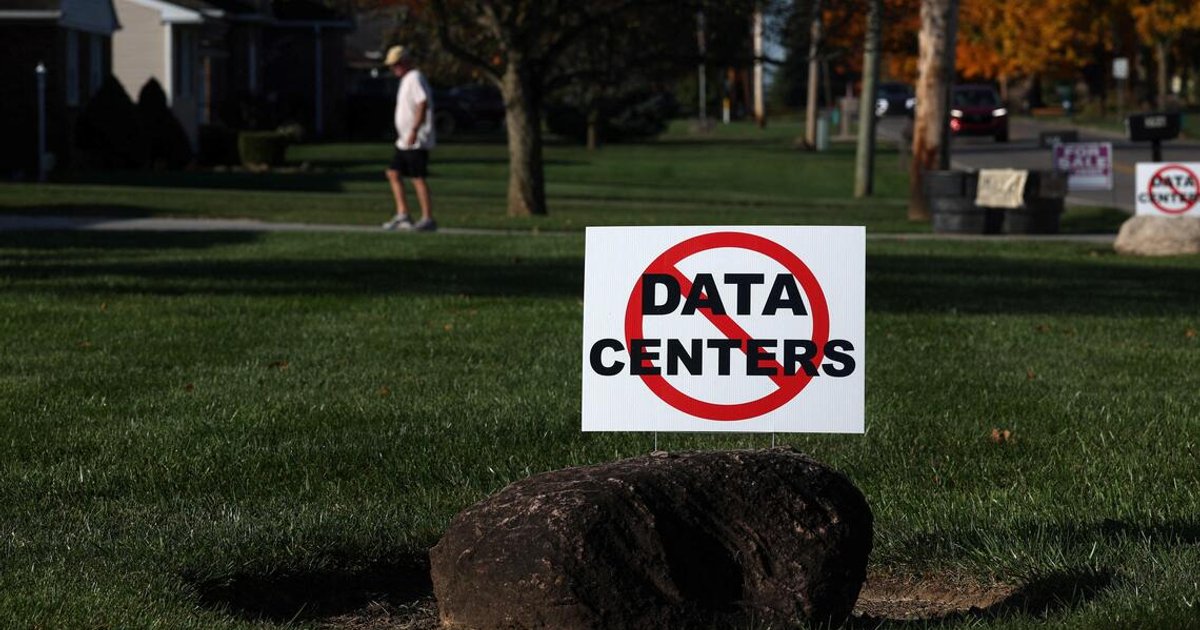
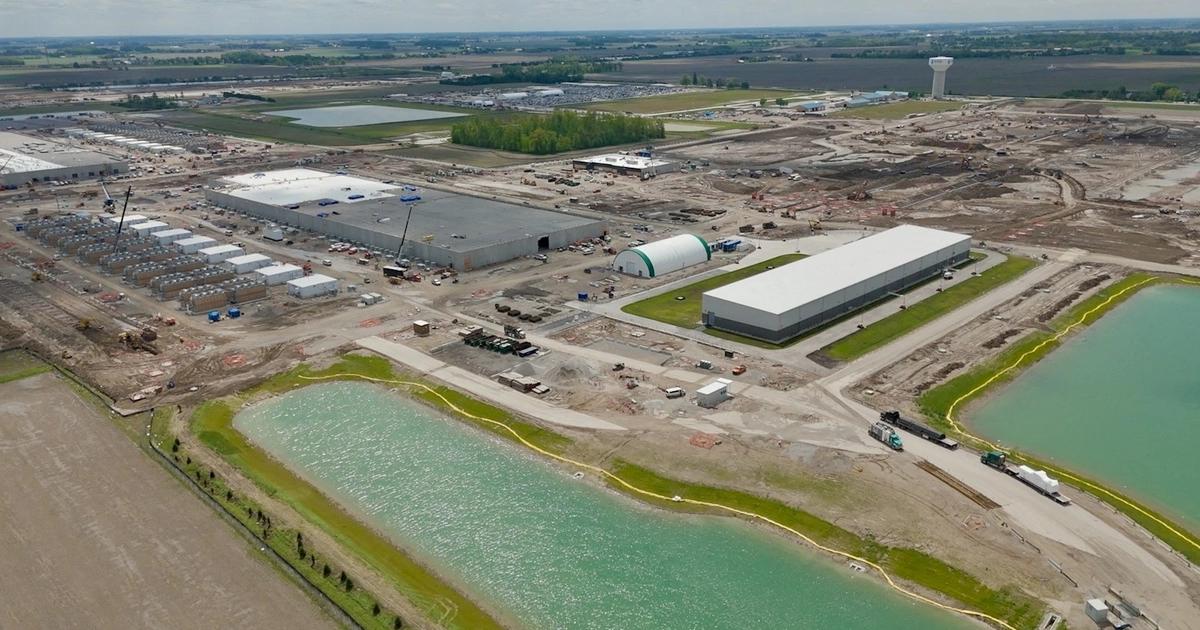
The rapid development of data centers around the U.S. to help power artificial intelligence has provoked widespread public backlash. asserted
development → power → backlash
By a margin of more than 2-to-1, more Americans oppose than favor building a new data center in their area, a found this summer. asserted
Americans → oppose → area
Focus on Texas Franklin Templeton chief market strategist Stephen Dover predicted that the election results will lead to a "slowdown in data centers being built," bringing new regulations and costs for their developers. asserted
results → predict → developers
"For tech investors, the big focus is will these midterm elections slow the pace of the planned 800 to 1,000 data centers across the U.S. fueling the AI Revolution," Yorkville Ives & Co. technology analyst Dan Ives said in a report. asserted
Ives → slow → report
Ives pointed to Texas, which accounts for 25% to 30% of the expected to come online by 2030, as one state that could be affected. uncertain
that → point → state
Democrat Gina Hinojosa, who defeated Republican i in the race for governor, proposed a temporary ban on data center construction during her campaign. asserted
who → defeat → campaign
"Texas is the foundation of the AI buildout in the U.S.," Ives told CBS News. asserted
Ives → tell → News
Hinojosa's win over Abbott could stall the addition of 13 gigawatts of data-center power in Texas, according to Gordon Johnson, CEO and founder of the investment adviser GLJ Research. uncertain
win → stall → adviser
Abbott had already suspended data center approvals, which makes it easy for Hinojosa to extend the moratorium. asserted
Hinojosa → suspend → moratorium
"Texas already has a moratorium — Abbott built it. asserted
Abbott → have → it
All the new governor has to do is keep it in place. asserted
governor → have → place
She doesn't need a new law to keep data center permits frozen," Johnson told CBS News. asserted
Johnson → need → News
Keisha Lance Bottoms' , the third-largest data center market, also has significant implications for the infrastructure buildout. asserted
Bottoms → have → buildout
Bottoms, who campaigned on pausing new data center construction in the state, on Wednesday that she would immediately "sign an executive order for that pause, and then we will determine what else we need to do administratively to take that pause into effect. asserted
we → campaign → effect
"Bottoms also said she plans to review tax incentives offered in Georgia that have spurred data center development. asserted
that → say → development
"So, of course, we are going to have to take a look at what those agreements entail and determine what our remedies are to enact that pause, but I don't think we're going to get a lot of pushback across the state," she said. asserted
she → go → state
"Many local governments have already taken that first step." asserted
governments → take → step
Seema Shah, chief global strategist at Principal Asset Management, thinks data center developers could face additional requirements to invest in electrical grids and potentially lose tax incentives, thereby raising their costs. uncertain
developers → think → costs
Massive investment in data centers and the artificial intelligence sector more broadly has helped propel U.S. economic growth and drive stock market gains. asserted
investment → help → gains
In the long term, however, a slower data center buildout is unlikely to hamstring the economy, Dover of Franklin Templeton told CBS News. asserted
Dover → hamstring → News
"It's possible to argue that the AI trade and data center buildout was getting overheated, and this could dampen some of the excessive investment that might not have a good return on capital, which investors have questioned anyway," he said. uncertain
he → argue → which
"So unbridled expansion will be tempered a bit, but probably not a lot." asserted
expansion → temper → ?
Although data center moratoriums may delay construction, they're unlikely to torpedo capital spending on AI or short-circuit broader growth, according to economists. uncertain
they → delay → economists
"A more restrictive stance toward data centers would stretch the timelines of future projects, and slower construction in the medium to long term wouldn't necessarily be a bad outcome for the macroeconomy," analysts with Oxford Economics said in a report. asserted
analysts → stretch → report
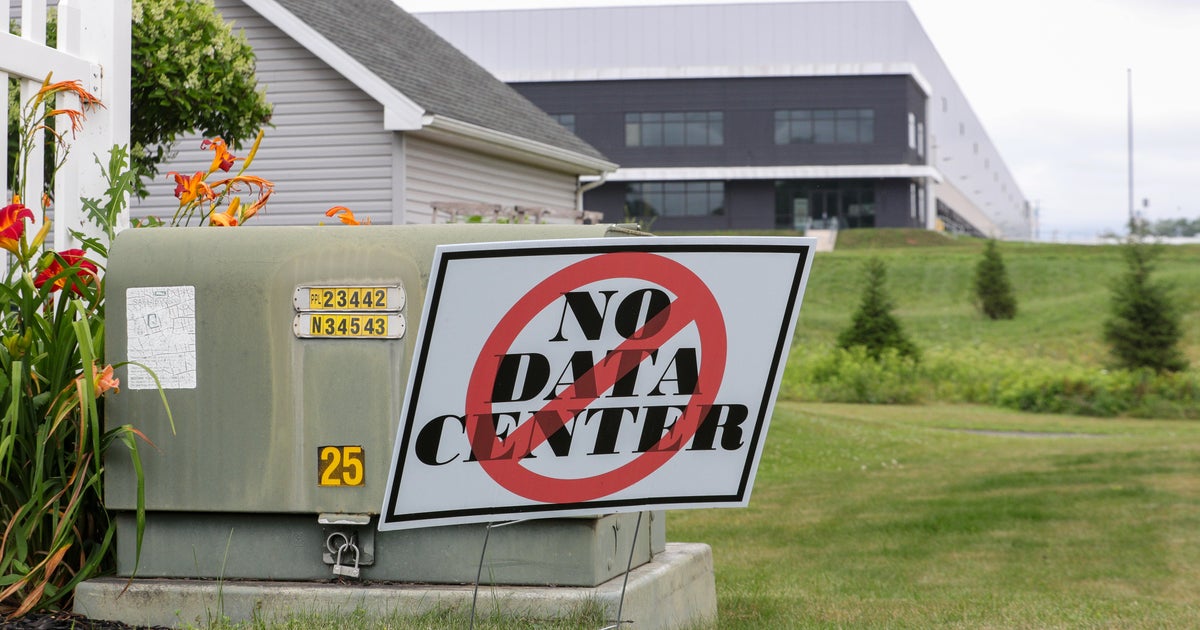
Give feedback · no sign-in needed

No sign-in needed for now. Your note is sent without a name, so it cannot be answered.

History Support